Window Tint Visibility Simulator
It is 2:00 AM on a rainy Tuesday. You are sitting in your parked car, waiting for a friend to pick you up. A stranger walks by, glances at your rear window, and pauses. Did they see your face? Did they notice the phone on your passenger seat? If your windows are covered in 20% window tint is a film that allows only 20% of visible light to pass through while blocking 80%, this question keeps many drivers awake. The short answer is: yes, but it depends entirely on the lighting conditions. There is no single "yes" or "no" because human vision adapts to light levels in ways that static percentages don't capture. To understand exactly what others can see, we need to break down how Visible Light Transmission (VLT) works, how it behaves during the day versus at night, and where the legal lines are drawn.
Understanding the Math Behind 20% Tint
Visible Light Transmission (VLT) is the percentage of visible light that passes through a window pane. When you buy a 20% tint, you are buying a film that blocks 80% of that light. This is significantly darker than the standard factory glass found in most modern vehicles, which typically has a VLT of around 70% to 80%.
Think of it like a filter. If 100 photons hit the outside of your car, only 20 make it inside. Conversely, if 100 photons from your interior try to exit, only 20 escape. This bidirectional nature is crucial. It means the tint doesn't just hide you from the outside; it also reduces the amount of light leaving your cabin. However, because the sun is an incredibly powerful light source compared to the dim glow of a dashboard or a streetlamp, the physics of reflection and transmission create different visual experiences depending on the time of day.
Daytime Visibility: The One-Way Mirror Effect
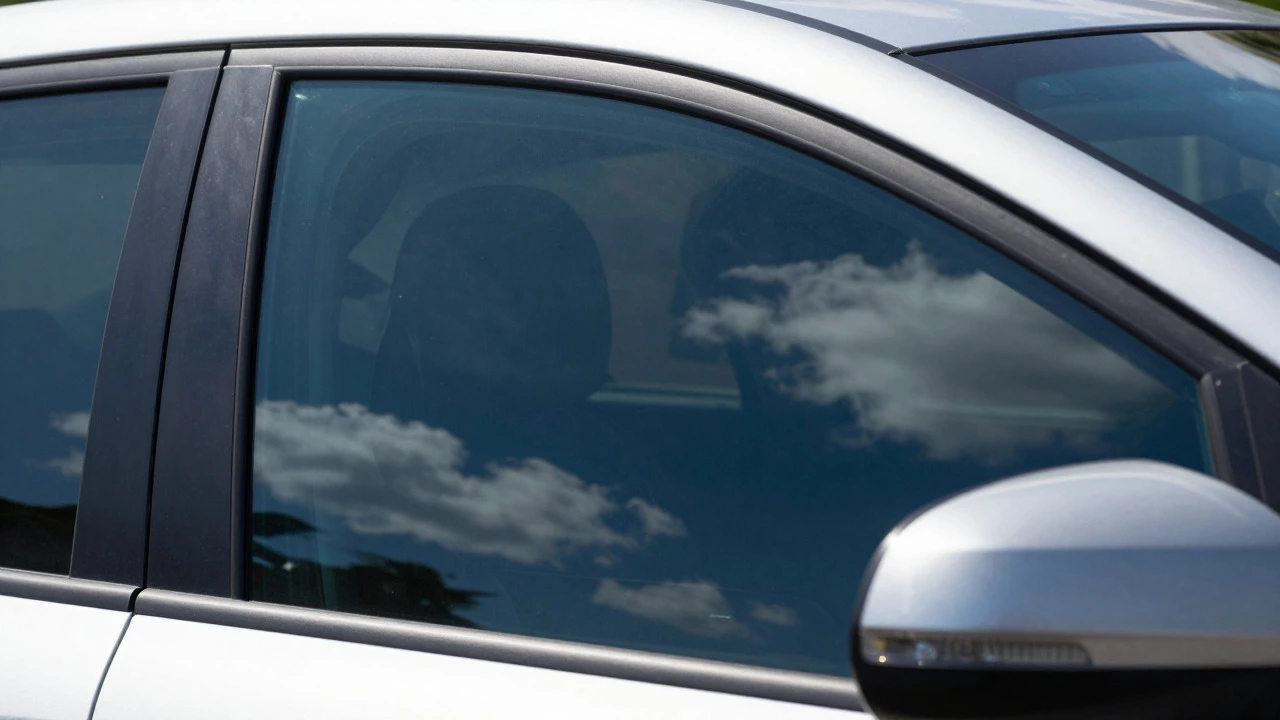
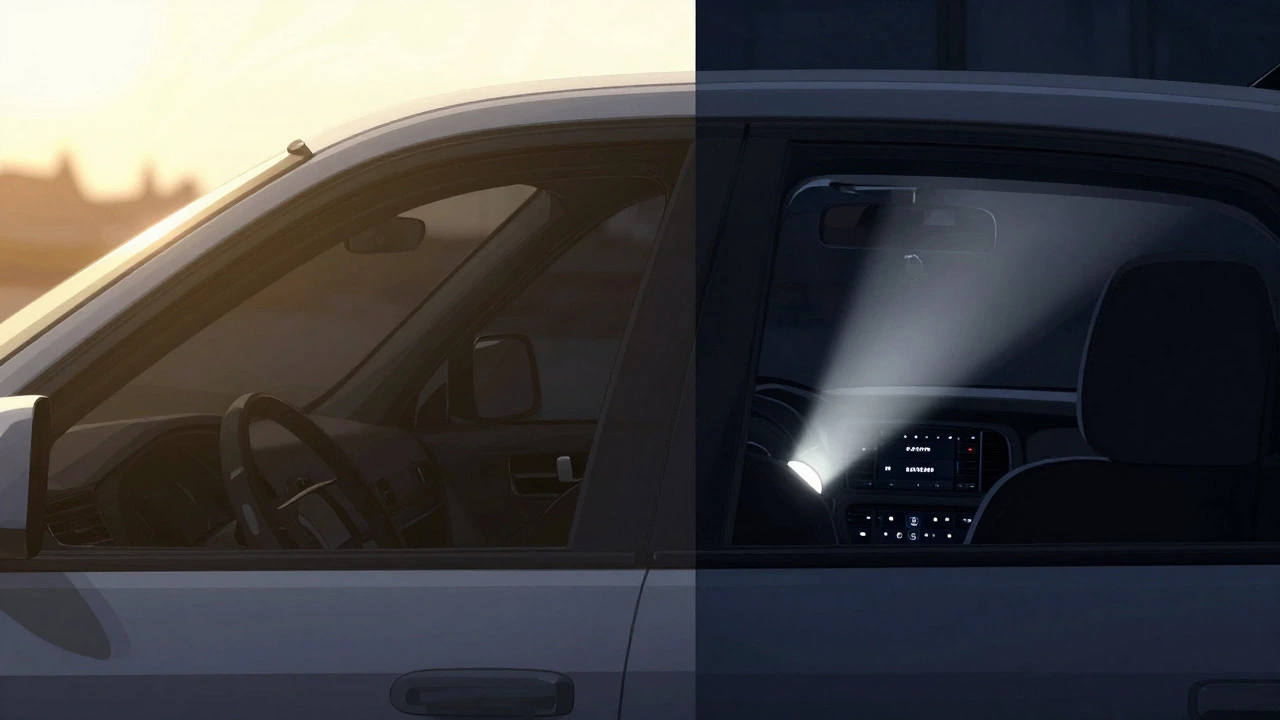
During bright daylight hours, 20% tint acts almost like a one-way mirror. Here is why: the sunlight hitting the exterior of your car is vastly stronger than the ambient light inside your vehicle. Most of the light hits the tinted surface and reflects back out, creating a glossy, dark appearance. Only a small fraction penetrates the film to illuminate your interior.
In these conditions, an observer standing outside sees mostly their own reflection and the surrounding environment superimposed over your dark interior. While they might catch a glimpse of a silhouette if you move suddenly, seeing specific details like your facial features, the color of your shirt, or objects on your seats is difficult. The contrast ratio is too high. Your eyes struggle to focus on the dark interior against the bright background.
- Bright Sunny Day: Visibility is minimal. Passersby see reflections, not people.
- Overcast Day: Visibility increases slightly as the difference between outside and inside light levels decreases.
- Shaded Areas: If your car is in deep shade but the observer is in the sun, the effect reverses, making it easier for them to see in.
Nighttime Visibility: The Reversal
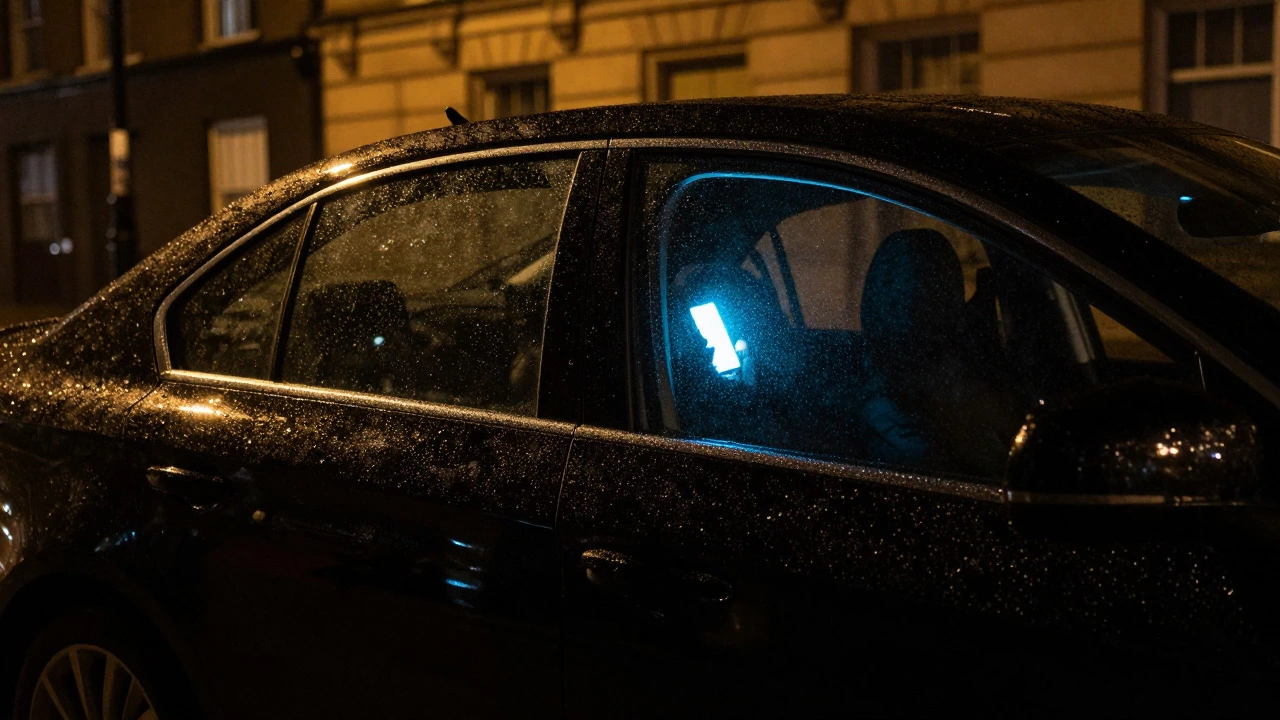
This is where the misconception usually lives. Many people believe that once the sun goes down, 20% tint becomes invisible to the outside world. In reality, the dynamic flips. At night, the light sources inside your car (dashboard lights, phone screens, reading lamps, and external streetlights illuminating the interior) become brighter than the dark exterior.
Because less light escapes the car due to the 80% blockage, the interior appears darker to the naked eye than it actually is. However, this darkness is deceptive. An observer with good night vision, or someone using a flashlight, can easily see into a 20% tinted window. The film does not block infrared or ultraviolet light completely, and human eyes are surprisingly sensitive to low-light contrasts. If you are holding a glowing smartphone, that screen will shine through the tint like a beacon. Similarly, if a police officer shines a spotlight on your car, the interior becomes fully visible within seconds.
For the driver, the challenge is different. Looking *out* through 20% tint at night requires more effort. Your pupils dilate to let in more light, but the film restricts that influx. This can lead to eye strain and slower reaction times when spotting pedestrians or hazards in the periphery. This is why many safety experts recommend lighter tints for front side windows.
Legal Limits and Compliance
Before you worry about privacy, you need to worry about legality. Window tint laws vary by state, province, and even country. In the United States, regulations are set at the state level. For example, California allows 35% VLT on front side windows, while Texas allows 25%. Some states have no limit on rear windows or backshades, provided the glass itself is not mirrored.
Here is the critical trap: Factory Glass Tint is pre-existing tinting applied to the glass during manufacturing. If your car came with 30% factory tint on the front doors and you add a 20% aftermarket film, the combined VLT is not simply 20%. It is calculated multiplicatively. 30% of 20% equals 6% total transmission. This makes the window extremely dark, potentially illegal for front side windows in most jurisdictions, though often allowed for rear windows.
| Tint Percentage | Daytime Privacy | Nighttime Privacy | Typical Legal Use (US Avg.) |
|---|---|---|---|
| 70% (Light) | Low | Very Low | All Windows |
| 50% (Medium) | Moderate | Low | Front Side Windows |
| 35% (Dark) | High | Moderate | Front Side (Some States) |
| 20% (Very Dark) | Very High | Moderate-High | Rear Windows / Backshade |
| 5% (Limousine) | Extreme | High | Rear Windows Only |
The Role of Glare Reduction and Heat Rejection
While privacy is a major factor, the primary technical benefit of 20% tint is comfort. By blocking 80% of visible light, it significantly reduces glare from oncoming headlights and the sun. More importantly, high-quality ceramic or carbon films reject a substantial portion of infrared heat. This keeps the cabin cooler, reducing the load on your air conditioning system. Studies show that a well-tinted car can remain several degrees cooler than an untinted one in direct sunlight, which improves fuel efficiency slightly and enhances passenger comfort.
However, not all 20% tints are created equal. Dyed tints are cheaper but fade over time and offer less heat rejection. Ceramic tints are more expensive but maintain their color and performance for years. When evaluating visibility, remember that a dyed 20% tint may look purple or blue under certain lights, which can alter how much detail is visible compared to a neutral black ceramic film.
Practical Tips for Drivers with 20% Tint
If you decide to go with 20% tint, here are some practical adjustments to consider:
- Check Local Laws: Verify the exact VLT limit for front side windows in your jurisdiction. Keep a sticker or certificate from the installer in your glovebox as proof of compliance.
- Test Night Driving: Before committing, ask a friend to sit in the car at night while you drive. Can you see clearly? Is the dashboard too dim?
- Use Mirrors Strategically: Since peripheral vision is reduced, rely more on your side mirrors to check blind spots.
- Avoid Bright Interior Lights: Dim your dashboard and phone screens at night to reduce the "light leak" effect that reveals your position to outsiders.
- Consider Rear-View Cameras: With darker rear windows, reversing can be trickier. A backup camera mitigates this risk effectively.
Frequently Asked Questions
Can police see me through 20% tint at night?
Yes. While the interior appears darker to the naked eye, officers use spotlights and flashlights to illuminate the cabin. Any light source inside the car, such as a phone or dashboard, will shine through the tint. The film reduces brightness but does not create true opacity.
Is 20% tint too dark for front windows?
In many US states, 20% is below the legal limit for front side windows, which often range from 25% to 35%. Check your local regulations. If it is legal, it is generally safe for daytime driving but may cause eye strain at night due to reduced light intake.
Does 20% tint block UV rays?
Most quality 20% films block 99% of UV rays regardless of the VLT percentage. UV protection is determined by the chemical composition of the film, not its darkness. This helps prevent skin damage and fading of interior materials.
What happens if I put 20% tint on already tinted glass?
The darkness multiplies. If your glass is 30% and you add 20% film, the result is approximately 6% VLT. This is very dark and likely illegal for front windows. Always measure the final VLT after installation to ensure compliance.
Which is better for privacy: 20% or 35% tint?
20% offers superior privacy during the day because it reflects more light and transmits less. However, 35% is often the sweet spot for balance, offering good privacy without compromising nighttime visibility or violating strict legal limits.