LED Headlight Compatibility Checker
Check if LED Headlights Are Right for Your Car
This tool helps determine if LED headlights are safe, legal, and appropriate for your specific vehicle based on key factors from the article.
Results
LED headlights look sharp. They’re bright, energy-efficient, and last longer than halogens. But just because they’re popular doesn’t mean they’re right for every car-or every situation. In fact, there are times when putting LED bulbs in your headlights is a bad idea, even illegal. And no, it’s not just about the glare you’re causing the driver ahead of you.
Your Car Wasn’t Designed for LEDs
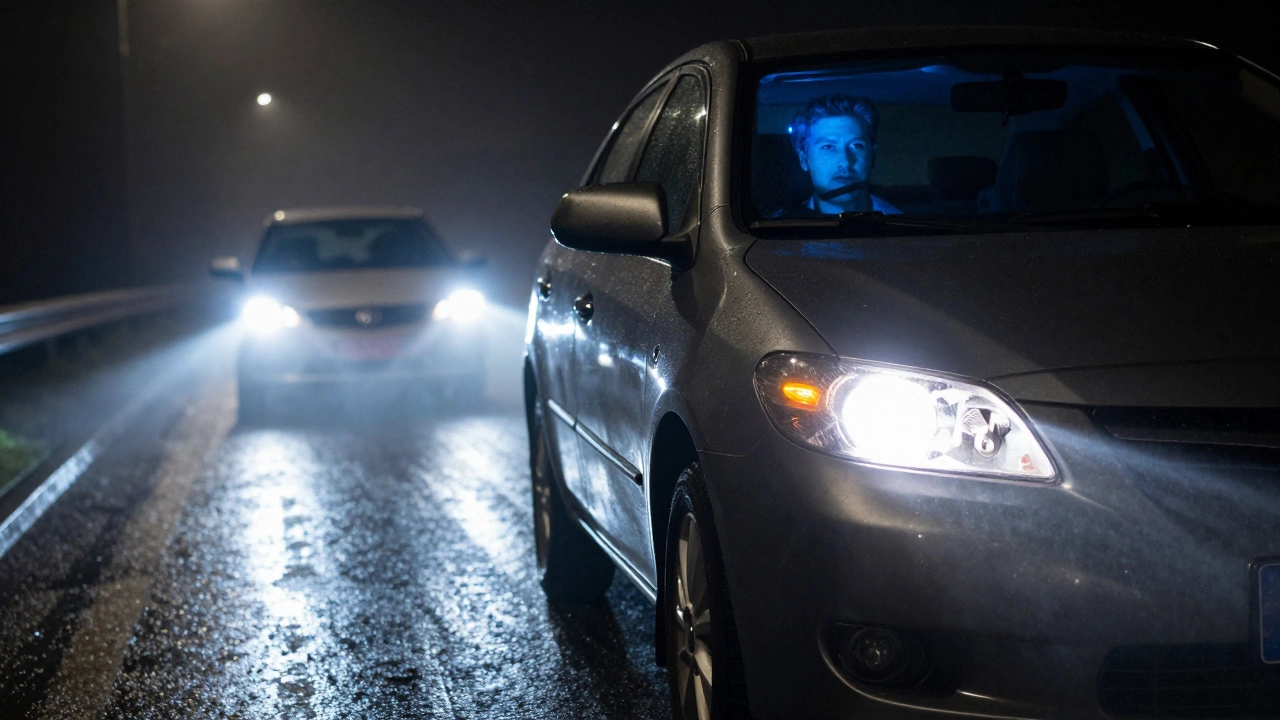
Most older cars-especially those made before 2010-were built with halogen or HID headlight housings. These housings are shaped to focus light in a very specific pattern. Halogen bulbs have a single filament in a precise location. LED bulbs, even the ones labeled "plug-and-play," don’t replicate that exact shape. They’re made of multiple tiny diodes spread across a flat surface. That means the light doesn’t reflect the same way off the reflector bowl or through the lens.Result? You get hot spots, dark patches, and scattered beams that blind oncoming traffic. A 2008 Toyota Corolla with LED bulbs might look brighter to you, but it’s actually worse for everyone else on the road. The beam pattern is chaotic. It’s not just annoying-it’s dangerous.
Some people swear they’ve installed LED kits without issues. But if your headlights don’t have a proper lens or reflector designed for LEDs, you’re not improving safety-you’re gambling with someone else’s vision. Real LED headlights aren’t just bulbs. They’re entire systems: housing, lens, cooling, and electronic drivers-all engineered together.
It’s Illegal in Most Places
In Australia, the United States, and across the EU, retrofitting LED bulbs into halogen housings violates road safety regulations. In Australia, the LED headlights must comply with Australian Design Rule 47/04. That rule says headlights must be type-approved as a complete unit. Swapping bulbs doesn’t count.Police in Queensland and New South Wales have started pulling over vehicles with aftermarket LED headlights. Fines can be over $500. In some cases, your vehicle fails its annual inspection outright. Even if you think your LEDs are "not too bright," inspectors check beam pattern, color temperature, and whether the bulb is certified for road use. Most aftermarket kits aren’t.
There’s a difference between factory-installed LED headlights and a $30 kit from eBay. Factory LEDs come with projectors, auto-leveling, and washers. Aftermarket LEDs have none of that. And regulators know the difference.
Your Car Has No Auto-Leveling or Washer System
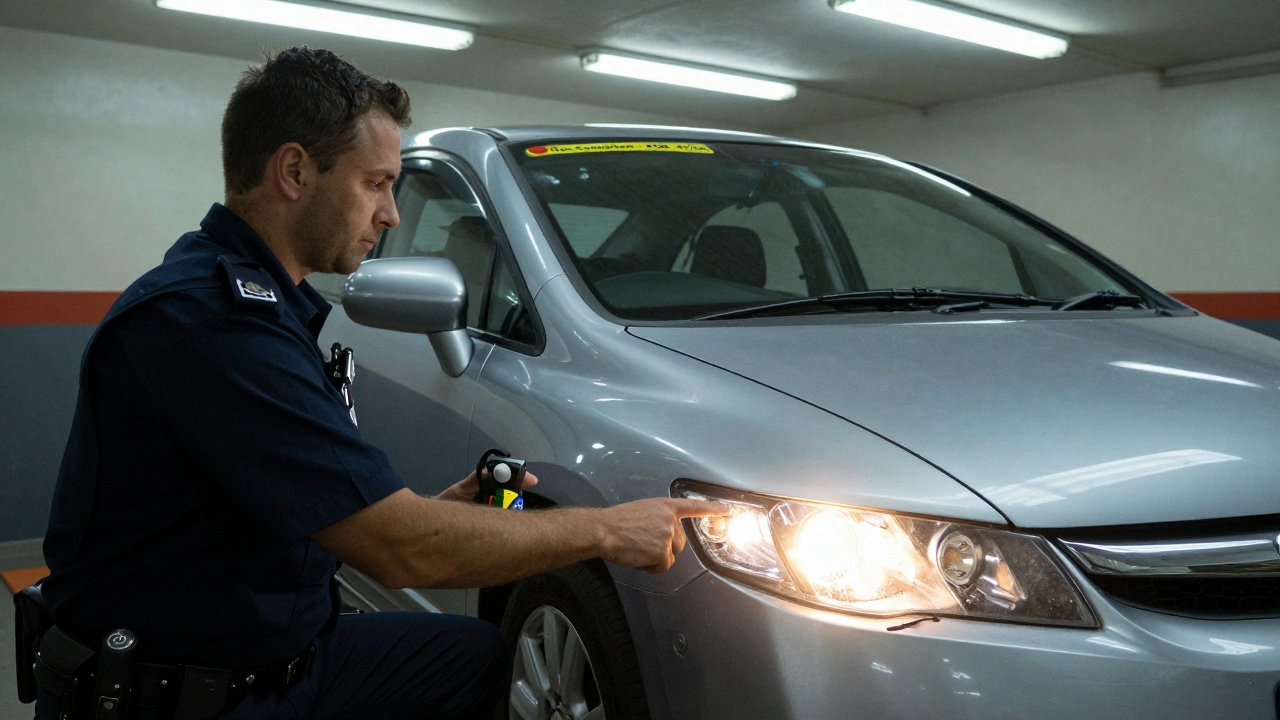
High-intensity lights like LEDs need more than just a good bulb. If your car doesn’t have auto-leveling, the headlights point too high when you’re carrying passengers or luggage. That’s a recipe for blinding other drivers on hills or curves. Factory LED systems adjust automatically. Aftermarket kits don’t.And if you drive in rain or dust? Halogen bulbs are fine. But LEDs? Dirt and grime stick to the lens and scatter light even more. Factory LED cars have headlight washers. Your 2007 Honda Civic doesn’t. So your bright LEDs turn into a foggy mess after a week of driving on unpaved roads.
It Overloads Your Electrical System
A lot of people think LEDs use less power, so they’re safe. That’s true-but only if the system is designed for it. The problem isn’t the LED itself. It’s the driver circuit inside the bulb.Many cheap LED kits have poorly designed drivers that draw inconsistent power. They can cause flickering, error messages on your dashboard, or even damage your car’s CAN bus system. Some cars detect a bulb failure if the wattage drops too low. LED bulbs draw less power than halogens, so your car thinks the bulb is blown. That triggers the "Bulb Out" warning, even when the light works.
Fixing this often requires adding resistors or CAN bus decoders. But even then, you’re adding complexity to a system that wasn’t meant to handle it. Over time, those extra components can overheat, melt, or short out. I’ve seen two Honda Accords in Brisbane with melted headlight wiring harnesses because of bad LED kits.
Your Headlights Are Fogged or Yellowed
If your headlight lenses are cloudy or yellowed, no amount of LED brightness will fix it. In fact, it makes it worse. LED light is whiter and more intense than halogen. That means any haze or oxidation on the lens scatters the light even more. You’re not seeing better-you’re creating glare for yourself.Before you even think about upgrading bulbs, clean and restore your lenses. Sand them down with 800-2000 grit sandpaper, polish them, and seal with a UV-resistant coating. You’ll get 50% more usable light from clean halogens than from dirty LEDs.
You’re Driving in Extreme Weather
LEDs don’t generate heat the same way halogens do. That’s good for efficiency-but bad in freezing conditions. Halogen bulbs produce enough heat to melt snow and ice off the lens. LEDs? They stay cold. In Brisbane, snow isn’t an issue. But if you ever drive in the Snowy Mountains, the Blue Mountains in winter, or even just a heavy frosty morning, your LED headlights can fog up from the inside or get covered in ice.That’s not just inconvenient. It’s a safety hazard. You can’t see the road. And you can’t clear the lens without stopping and manually wiping it. Halogens? They self-clear. LEDs? You’re stuck.
You’re on a Tight Budget
LED kits seem cheap. But if you’re doing it right, you’re not just buying bulbs. You need:- Projector housings compatible with LEDs
- Proper heat sinks and cooling fans
- CAN bus decoders
- Professional installation
- Legal certification (if available)
That’s $800-$1,500. For the same money, you could buy a used car with factory LED headlights. Or just replace your halogens with high-quality xenon HID kits-which are legal in some cases if paired with projectors.
Don’t fall for the myth that LEDs are the cheapest upgrade. If you’re not doing it right, you’ll end up spending more fixing the damage they cause.
What Should You Do Instead?
If you want better nighttime visibility without the risks:- Upgrade to premium halogen bulbs like Philips X-tremeVision or Osram Night Breaker. They’re 150% brighter than stock and legal.
- Restore your headlight lenses. It’s cheap and makes a huge difference.
- If you want LED performance, buy a car that came with factory LED headlights. They’re designed as a system.
- Consider upgrading to full LED projector assemblies-but only if you’re willing to pay for proper installation and legal compliance.
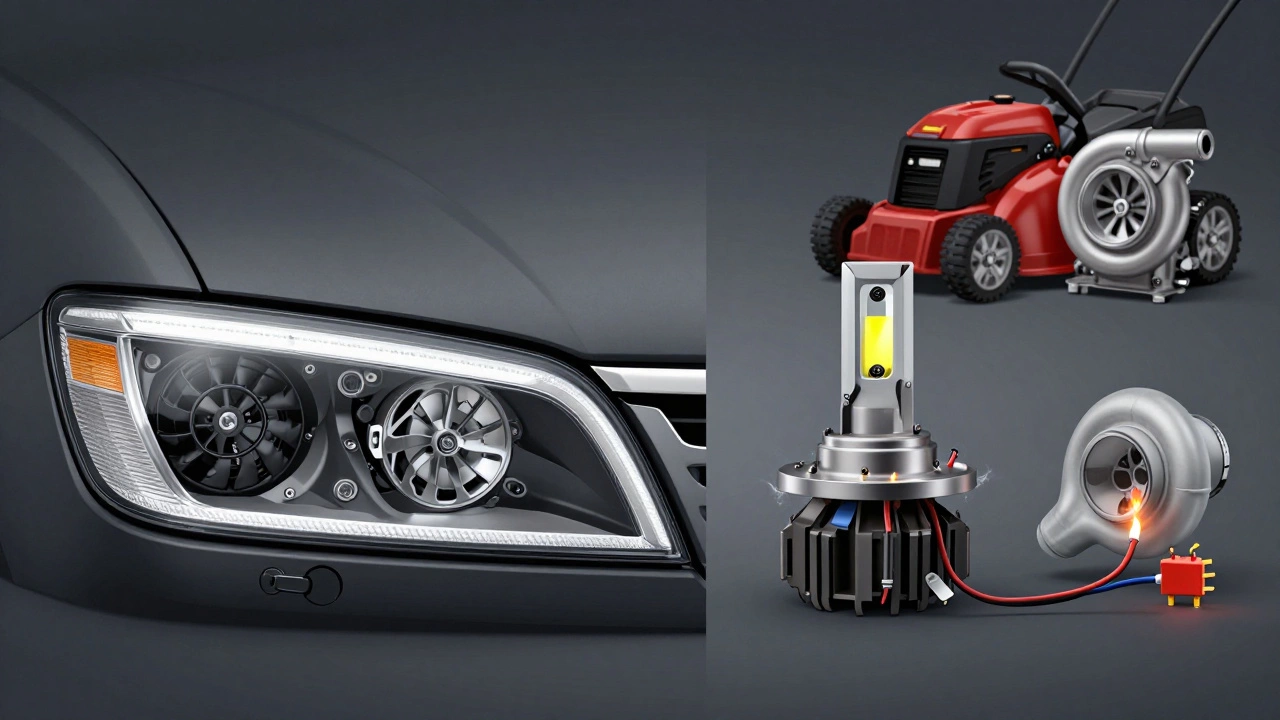
There’s no shortcut. LED headlights aren’t magic. They’re engineering solutions. And engineering solutions need to be matched to the vehicle. Trying to force them into the wrong housing is like putting a turbocharger on a lawn mower. It might spin faster-but it won’t work right, and it might break everything around it.
Are LED headlights legal in Australia?
Factory-installed LED headlights are legal in Australia if they meet Australian Design Rule 47/04. Aftermarket LED bulb replacements in halogen housings are not legal. Police and road safety inspectors can issue fines or fail your vehicle inspection if your headlights don’t meet the required beam pattern and certification standards.
Why do LED headlights cause glare?
LED bulbs don’t have the same physical shape as halogen filaments. Halogen housings are designed to reflect light from a single point. LEDs emit light from multiple points across a flat surface. This mismatch causes light to scatter in unpredictable directions, creating hot spots and blinding glare for other drivers.
Can I just add a lens or projector to fix LED glare?
You can, but it’s not simple. Replacing the entire headlight housing with a projector-based LED unit is the only reliable fix. This requires disassembly, rewiring, and often custom mounting. Most DIYers don’t have the tools or expertise. Even then, the new unit must be certified for road use. It’s not a quick fix-it’s a full upgrade.
Do LED headlights last longer than halogens?
Yes, LED bulbs typically last 20,000-30,000 hours, compared to 500-1,000 for halogens. But in a car not designed for them, the driver circuit or heat sink often fails first. Many aftermarket LEDs die within 1-2 years due to overheating or electrical surges. The lifespan only matters if the system is properly engineered.
What’s the best alternative to LED headlights?
For most older cars, the best upgrade is high-performance halogen bulbs like Philips X-tremeVision or Osram Night Breaker. They’re legal, affordable, and deliver a major brightness boost without changing the housing. Pair them with cleaned and restored lenses, and you’ll get 80% of the benefit of LEDs-without the risks.