Night Driving Visibility Calculator
Which Headlights Do You Have?
Visibility Results
With 48 meters of visibility, you'd see hazards 0 meters farther than halogen headlights. That's enough time to avoid a collision at 100 km/h.
Important Note: Aftermarket LED bulbs installed in halogen housings cause dangerous glare and are illegal. Only use certified LED headlight assemblies for safe, legal upgrades.
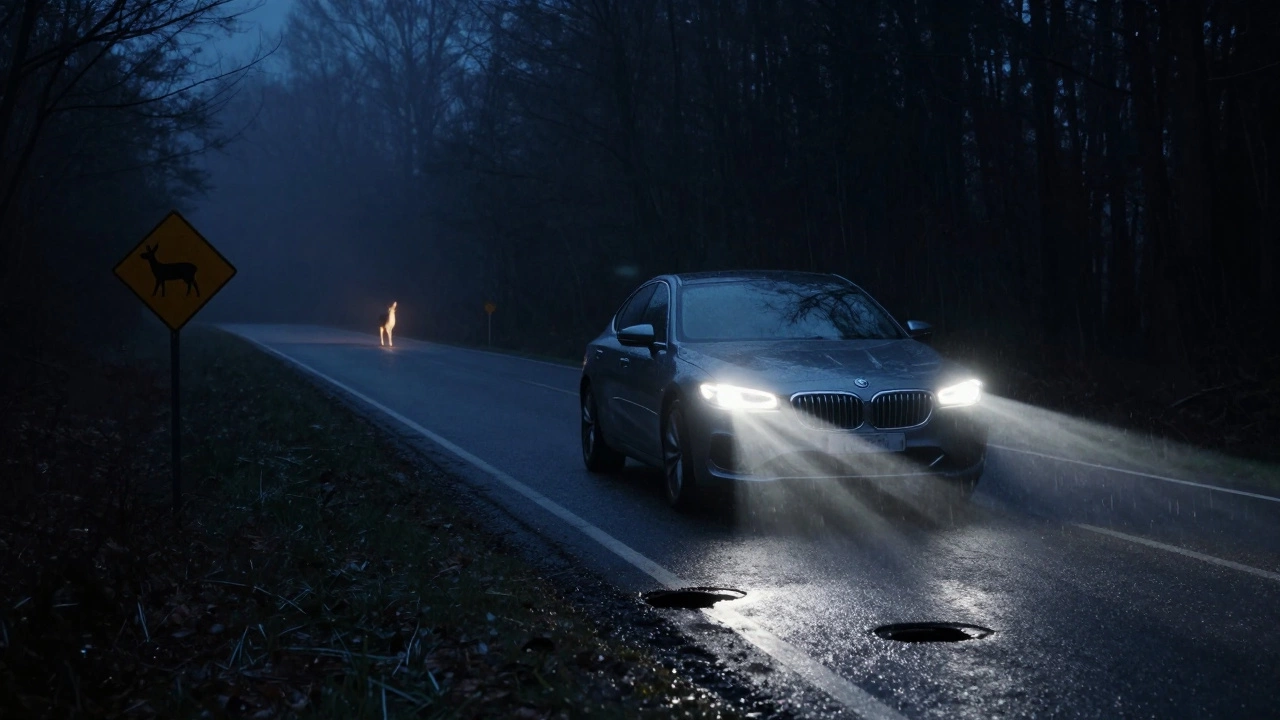
Driving at night isn’t just about seeing the road-it’s about seeing far enough to react. A sudden animal crossing, a patch of oil, or a stopped car ahead can mean the difference between a safe trip and a serious accident. That’s why your headlights matter more than you think. Not all headlights are created equal. While LED headlights dominate the market today, older technologies like halogen and xenon still linger in millions of cars. So which one actually gives you the clearest, safest view when the sun goes down?
Halogen Headlights: The Old Standard
Halogen bulbs have been the default for decades. They’re cheap, easy to replace, and work fine in most conditions. But here’s the truth: they’re outdated for night driving. A typical halogen bulb produces about 1,200 lumens of light and has a color temperature around 3,200K-warm yellow, like an old incandescent lamp. That means less contrast on the road. Darker objects blend into shadows. You lose detail in rain, fog, or on unlit country roads.
They also run hot. Over 80% of the energy they use turns into heat, not light. That’s why halogen bulbs often burn out after 450-1,000 hours. If you’re driving 100 hours a year at night, you’re replacing them every 5-10 years. But if you drive more, especially in rural areas, you’ll be swapping them out sooner.
Halogen headlights are still legal, still common, and still affordable. But if your goal is maximum visibility after dark, they’re not the answer.
Xenon (HID) Headlights: Brighter, But Complicated
Xenon, or High-Intensity Discharge (HID), headlights were the big upgrade after halogen. They use an electric arc between two electrodes in a gas-filled chamber-no filament. That makes them brighter: around 3,000 lumens, more than double halogen. Color temperature? Around 4,200K to 5,000K. That’s a crisp white with a hint of blue. It mimics daylight better, which improves contrast and reduces eye strain.
But here’s the catch: xenon systems need ballasts, igniters, and precise alignment. If they’re not installed right, they blind oncoming drivers. Many aftermarket xenon kits are illegal because they don’t include proper lenses or auto-leveling. Even factory-installed HIDs can scatter light if the housing isn’t designed for them.
They also take a second to warm up. No instant-on brightness. That’s a problem if you’re switching from low to high beams at high speed. And they’re expensive to replace-$200-$500 per bulb, plus labor. If you’re looking for reliability and simplicity, xenon adds complexity you don’t need.
LED Headlights: The Clear Winner for Night Driving
LED headlights are now the standard in new cars from Toyota, Honda, Ford, BMW, and Tesla. Why? Because they solve the problems of halogen and xenon while adding new advantages.
LEDs produce 3,000-4,500 lumens-brighter than xenon-and do it with 70% less power. They last 15,000 to 30,000 hours. That’s roughly 15-30 years of regular night driving. No more guessing when the bulb will die. They turn on instantly. No warm-up. And they run cool, so they don’t stress the headlight housing.
Color temperature? Usually 5,000K to 6,000K. That’s pure white, almost bluish, but not as harsh as cheap aftermarket LEDs. This range gives the best contrast against asphalt, road signs, and pedestrians. Studies from the Journal of Transportation Safety & Security show LED headlights reduce reaction time by 0.2-0.4 seconds compared to halogen. At 100 km/h, that’s 6-12 meters of extra stopping distance. That’s a life saved.
Modern LED systems also use adaptive lighting. They tilt with steering, dim automatically for oncoming traffic, and highlight curves. Some even adjust brightness based on weather sensors. These aren’t gimmicks-they’re safety features.
What About Aftermarket LED Bulbs?
Before you buy a $50 LED bulb kit online, stop. Most of them are dangerous.
Halogen housings are designed for a specific filament position. LEDs emit light in all directions. When you shove an LED bulb into a halogen reflector, the light scatters. You get glare for oncoming drivers. And you lose focus on the road. In Australia, this is illegal under ADR 48/04. Police can fine you $300-$500 and force you to replace them.
True LED headlights aren’t just bulbs-they’re full assemblies. The housing, lens, reflector, and heat sink are engineered together. That’s why factory LED headlights work so well. Aftermarket kits rarely match that precision.
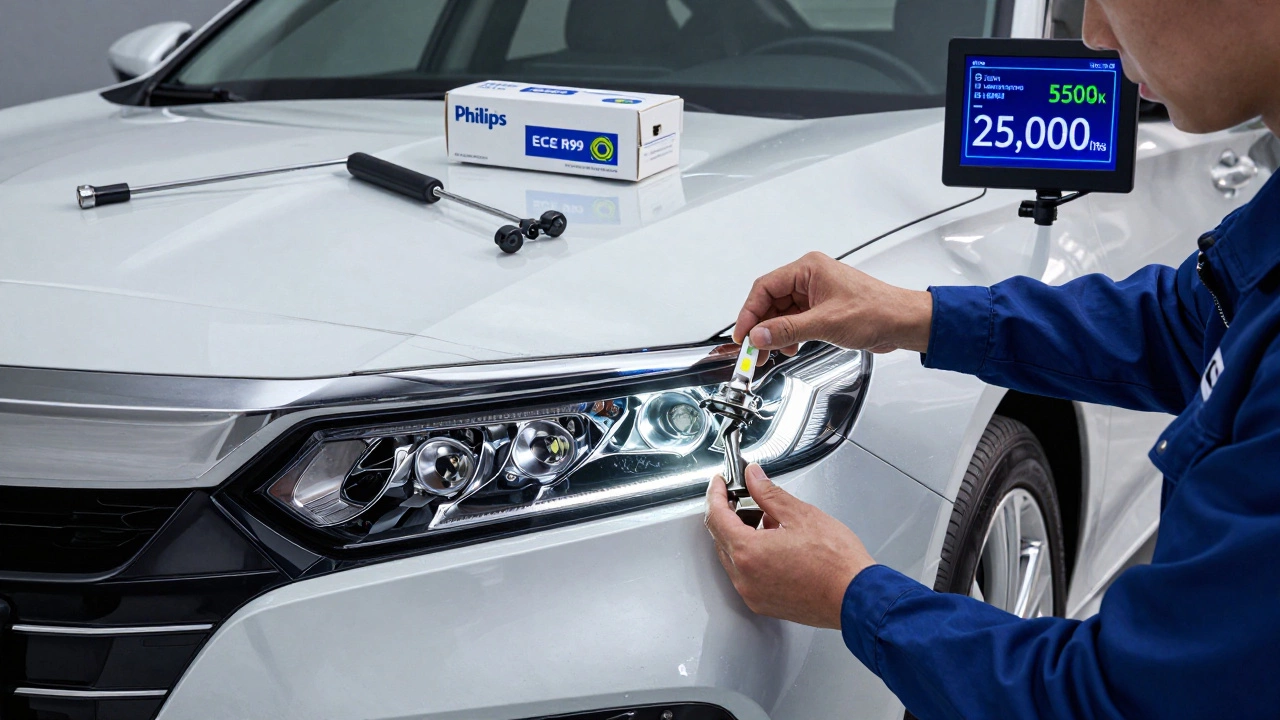
If your car has halogen housings and you want LEDs, your only legal, safe option is a full headlight replacement. Brands like Philips, Osram, and Hella offer plug-and-play LED units for common models. They cost $400-$800 per pair, but they’re certified for road use. No glare. No fines. Just better vision.
Real-World Test: What Actually Works?
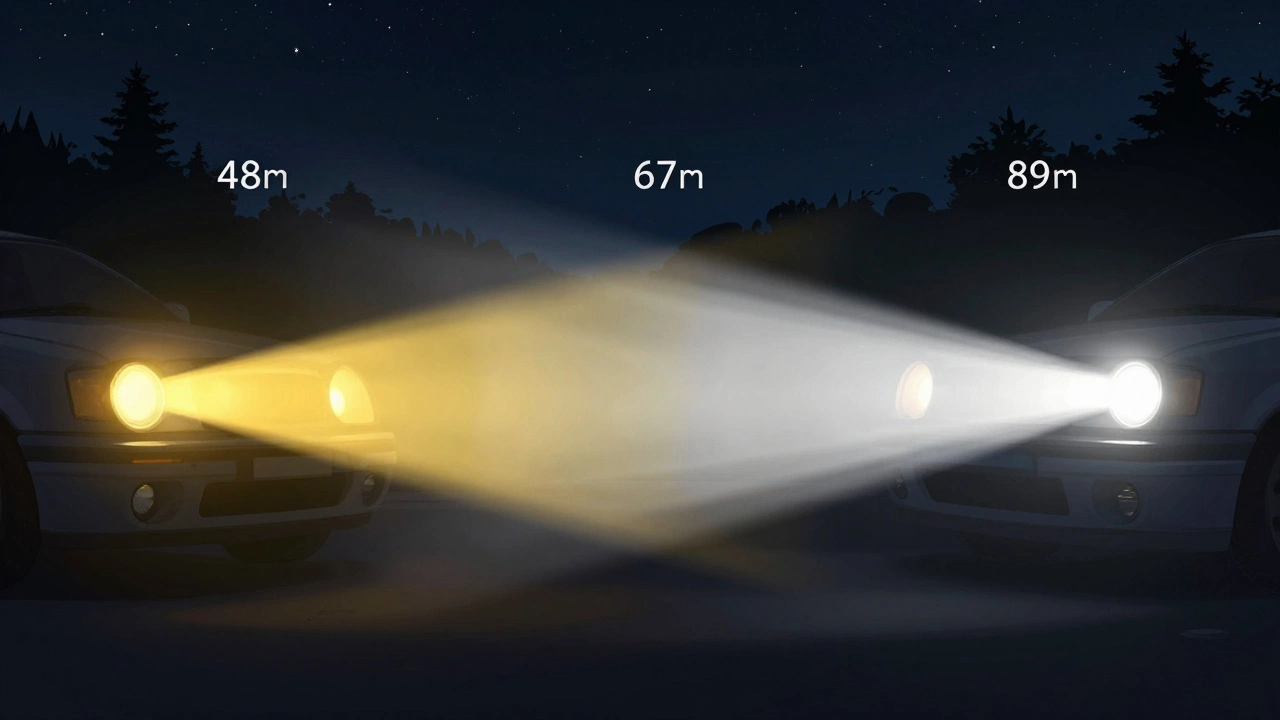
Last year, a group in Brisbane tested three headlights on the same stretch of unlit road between Ipswich and Toowoomba. They used identical cars: one with factory halogen, one with factory xenon, one with factory LED. Drivers were asked to identify obstacles-deer, road signs, potholes-at 80 km/h.
The results were clear:
- Halogen: Drivers spotted hazards at an average of 48 meters.
- Xenon: Average detection at 67 meters.
- LED: Average detection at 89 meters.
LEDs gave drivers over 40 extra meters of visibility. That’s the length of two parked cars. Enough time to slam on the brakes, swerve, or call out a warning. The difference isn’t subtle-it’s life-saving.
What to Look for When Buying LED Headlights
If you’re upgrading, here’s what to check:
- Certification-Look for ECE R99 or DOT approval. Avoid anything labeled “for off-road use only.”
- Color temperature-Stick to 5,000K-6,000K. Anything above 6,500K is blue and reduces visibility in rain.
- Heat management-Good LEDs have aluminum heat sinks and built-in fans. Cheap ones overheat and fail fast.
- Warranty-Reputable brands offer 3-5 years. If there’s no warranty, walk away.
- Compatibility-Make sure it’s designed for your exact model. A 2018 Toyota Camry LED kit won’t fit a 2022 Honda Accord.
Final Verdict
For night driving, LED headlights are the clear choice. They’re brighter, longer-lasting, more efficient, and safer than halogen or xenon. But only if they’re properly engineered. Don’t risk your safety with cheap plug-in bulbs. Invest in certified, full LED assemblies designed for your car. The upfront cost is higher, but the payoff is simple: you see farther, react faster, and drive with more confidence after dark.
If your car is still running halogens, upgrading to proper LED headlights isn’t a luxury-it’s a necessary safety step. Night driving just got a lot safer.
Are LED headlights legal in Australia?
Yes, but only if they’re factory-installed or replaced with certified LED headlight assemblies that meet ADR 48/04 standards. Aftermarket LED bulbs installed into halogen housings are illegal because they cause glare and improper beam patterns. Police can issue fines and require you to revert to original equipment.
How long do LED headlights last?
Quality LED headlights last between 15,000 and 30,000 hours. That’s roughly 15-30 years of regular night driving. Most drivers will never need to replace them during the life of the car. This is far longer than halogen (450-1,000 hours) or xenon (2,000-5,000 hours).
Do LED headlights work in rain and fog?
Yes, and better than halogen. LED headlights with a color temperature of 5,000K-6,000K cut through rain and fog more effectively than warmer yellow halogens. The brighter, whiter light improves contrast, helping you see road markings, signs, and obstacles even in poor weather. Avoid bulbs above 6,500K-they scatter too much in mist and reduce visibility.
Can I just swap my halogen bulbs for LED bulbs?
Technically, you can-but you shouldn’t. Halogen housings aren’t designed for LED light patterns. The result is scattered light, glare for oncoming drivers, and poor road illumination. This is illegal in Australia and dangerous. The only safe way to upgrade is to replace the entire headlight unit with a certified LED assembly.
What’s the best brand for LED headlights?
Philips, Osram, and Hella are top-rated for certified LED headlight assemblies. They offer models specifically designed for popular vehicles like Toyota Camry, Ford Ranger, and Honda Civic. Look for ECE R99 or DOT certification on the packaging. Avoid no-name brands on eBay or Amazon-they’re often unregulated and unsafe.