Car Interior Heat Estimator
*Estimation based on the Greenhouse Effect. Actual temperatures can vary by vehicle model and glass type.
Ever stepped into your car on a summer afternoon and felt like you walked straight into a preheated oven? It's a brutal experience, especially when the steering wheel is too hot to touch and the air feels thick. You might wonder why a vehicle, designed to protect us from the elements, suddenly becomes a heat trap. The short answer is that your car is essentially a glass box that captures energy and refuses to let it go.
Quick Takeaways for Beating the Heat
- The Greenhouse Effect: Glass lets light in but traps heat inside.
- Material Matters: Dark leather and plastic absorb more thermal energy than fabric.
- Airflow: Without ventilation, heat builds up in a cycle called heat soak.
- Best Fixes: High-quality window tinting and ceramic coatings are the most effective long-term solutions.
The Science of the Glass Oven
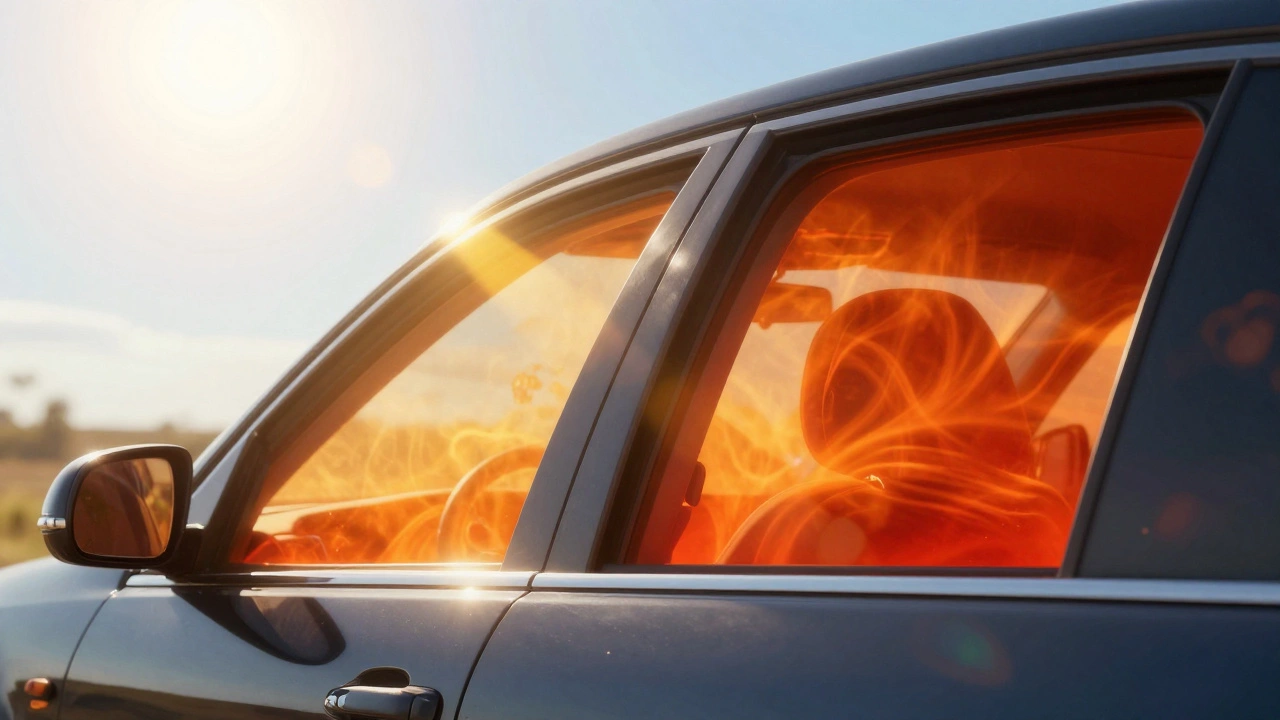
To understand why your car feels like a sauna, we have to look at Solar Energy is electromagnetic radiation emitted from the sun, consisting of visible light and infrared rays. When the sun hits your car, the short-wave radiation passes easily through the glass windows. Once that light hits your dashboard, seats, and carpets, it transforms into long-wave infrared radiation-basically, heat.
Here is the catch: while glass is great at letting short-wave light in, it's surprisingly good at blocking long-wave infrared radiation from leaving. This creates a Greenhouse Effect, where the interior surfaces act as radiators, pumping heat back into the cabin air. Because the glass acts as a barrier, the heat stays trapped, causing the internal temperature to skyrocket far beyond the outside air temperature. In a typical summer scenario, if it's 32°C outside, the inside of your car can hit 50°C in under an hour.
Why Some Interiors Feel Hotter Than Others
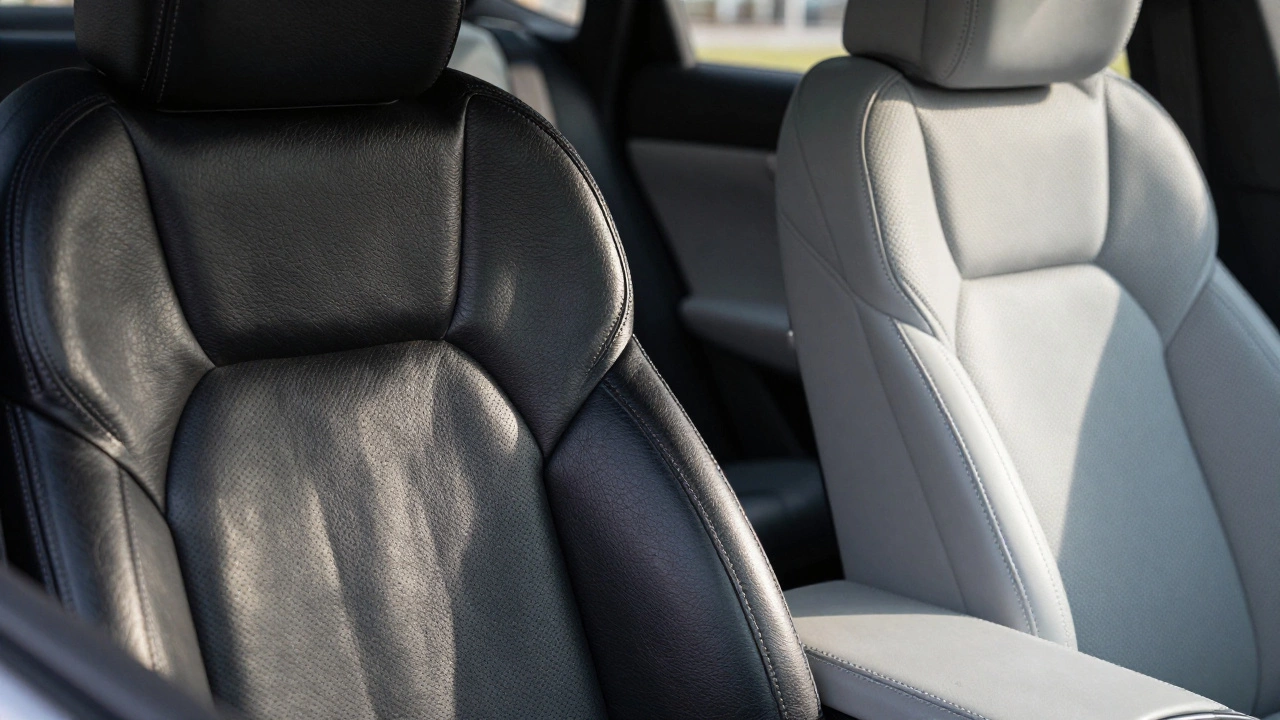
Not all cars heat up at the same rate. A lot of this comes down to car interior heat management and the materials used in the cabin. If you have a black leather interior, you're dealing with a much higher absorption rate than someone with a light gray cloth interior.
Dark colors absorb more of the spectrum of light, which means they convert more solar energy into heat. This is why a black leather seat can actually cause a skin burn if you sit on it without a towel. On the other hand, light colors reflect a larger portion of the light, keeping the surfaces cooler. Plastics and vinyls also play a role; they have a high thermal mass, meaning they hold onto heat for a long time even after you've started the air conditioning.
| Material | Heat Absorption | Cool-down Speed | Comfort Level |
|---|---|---|---|
| Black Leather | Very High | Slow | Low (Hot) |
| Grey Fabric | Moderate | Fast | High (Cooler) |
| Dark Plastic/Vinyl | High | Moderate | Low (Sticky) |
| White/Beige Leather | Low | Moderate | Moderate |
The Role of Heat Soak and Air Stagnation
When your car is parked and the windows are rolled up, you encounter a phenomenon known as Heat Soak. This happens when the heat has nowhere to go, so it begins to saturate every single component of the interior. The air doesn't just get hot; the actual structure of the seats, the plastic trim, and the headliner become heat reservoirs.
This is why, even after you've been driving with the AC on blast for ten minutes, the seats still feel warm. The air is cool, but the materials are still radiating the energy they soaked up while parked. Without a way to vent this hot air, the cabin becomes a pressurized chamber of heat. This is especially dangerous for pets or children, as the temperature in the back seat can be several degrees higher than in the front due to limited airflow.
How to Stop the Heat Before It Starts
If you're tired of the "door handle burn," there are several ways to tackle the problem. The most effective method is treating the glass. Since the windows are the entry point for the energy, stopping it there is the smartest move. Window Tinting is the process of applying a thin, solar-control film to the glass to block infrared and UV rays. A high-quality ceramic tint can block up to 99% of UV rays and a massive chunk of infrared heat, which keeps the interior surfaces from ever getting that hot in the first place.
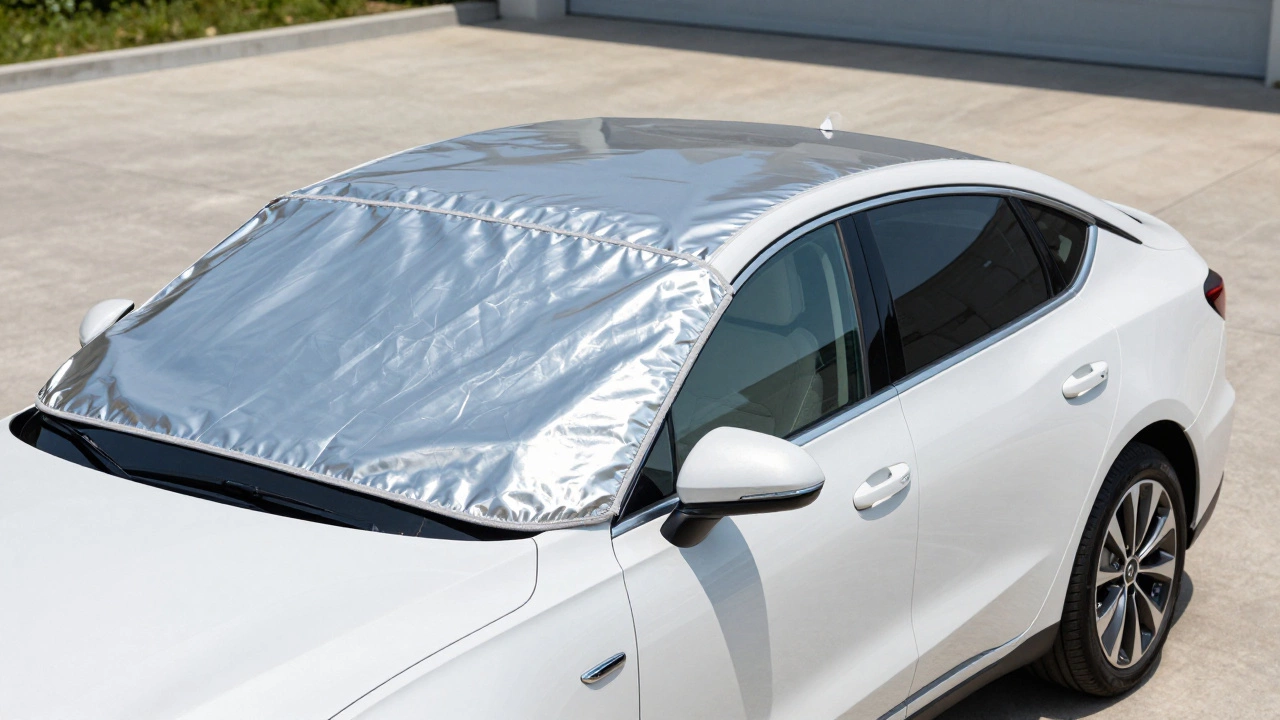
Another great move is using a reflective sunshade. These aren't just pieces of cardboard; the silver coating is designed to reflect the light back out through the windshield before it can hit the dashboard. If you've ever noticed that the dashboard is the hottest part of the car, it's because it's the first point of contact for the sun's rays. Covering it with a reflective barrier stops the heat at the source.
Quick Tips for Rapidly Cooling Your Car
So, you've just walked up to a car that feels like a furnace. What's the fastest way to get it habitable? Most people just crank the AC and hope for the best, but there's a more efficient way to move the air.
- The Exhaust Method: Roll down the passenger side window and the driver's side window. Start the car and drive for a minute with the windows open. This pushes the hot air out of the cabin using the car's own forward motion.
- The Cross-Ventilation Trick: Open all the doors for 30 seconds. This allows the heavy, hot air to escape and be replaced by slightly cooler outside air instantly.
- AC Management: Start with the AC on a low setting and the windows open. Once the interior temperature drops to meet the outside temperature, roll the windows up and crank the AC to maximum. This prevents the AC from fighting a losing battle against a 60°C cabin.
Long-Term Interior Styling Choices for Heat
If you're looking to upgrade your interior and want to avoid the heat, think about your material choices. While black leather looks sleek and professional, it's a thermal nightmare. Consider Alcantara or high-quality breathable fabrics. These materials don't hold heat as intensely as solid leather or vinyl.
You can also look into ceramic coatings for the exterior paint. While this helps the car's body, it reduces the overall thermal load on the vehicle. When the exterior shell doesn't absorb as much heat, there's less thermal energy transferring through the metal pillars into the cabin. It's all about reducing the total amount of energy the car captures.
Does cracking the windows actually help keep a car cool?
Yes, it helps a bit by allowing a small amount of convection. However, it won't stop the greenhouse effect. The sun will still heat the surfaces, and if there's no breeze, the air will still get very hot. It's better than nothing, but not as effective as a sunshade or tint.
Why does the steering wheel get hotter than the seats?
The steering wheel is usually positioned directly in the path of the sunlight coming through the windshield. Additionally, steering wheels are often made of dense plastics or leather that absorb heat rapidly and have very little airflow around them, making them feel scorching.
Are ceramic tints better than standard dyed tints?
Absolutely. Standard dyed tints just make the window darker, which can actually absorb more heat into the glass. Ceramic tints use nano-ceramic particles to specifically block infrared radiation (heat) without needing to be pitch black. This keeps the interior cooler without sacrificing visibility.
Can a car's interior temperature actually reach 70°C?
In extreme conditions-like a cloudless day in a desert or a peak Australian summer-yes. If the outside temperature is 38°C, the dashboard can easily exceed 70°C because it is absorbing direct solar radiation and trapping it. This is why leaving electronics or water bottles in a car can be dangerous.
Do seat covers help with heat?
If you use light-colored, breathable fabric covers over black leather, they will definitely help. They create a physical barrier between your skin and the hot leather and reflect more light, reducing the amount of heat the seat absorbs.
What to do next
If you're dealing with a car that turns into a furnace every summer, start with the easy wins. Buy a high-quality reflective sunshade for your windshield today. If that's not enough, look into professional ceramic window tinting-it's the single best investment for interior comfort. If you're in the process of choosing a new car or reupholstering your current one, lean toward lighter colors and breathable materials to keep your drives comfortable.