
Body Roll Reduction Calculator
Calculate Your Roll Reduction
Key Information
Lowering your car reduces body roll by lowering the center of gravity. This calculator shows how much roll reduction you can expect based on physics principles.
Important: Most lowering springs increase spring rate to compensate for reduced travel, which also contributes to less roll.
Ideal drop range: 25-40mm
Your Results
Ever seen a car cornering hard, leaning way over like it’s about to tip, and thought, “If only it sat lower, it wouldn’t roll so much.” That’s the promise most people hear when they consider lowering springs. And yes, lowering your car does reduce body roll-but not because the springs themselves are magic. It’s physics, not marketing.
Why Body Roll Happens in the First Place
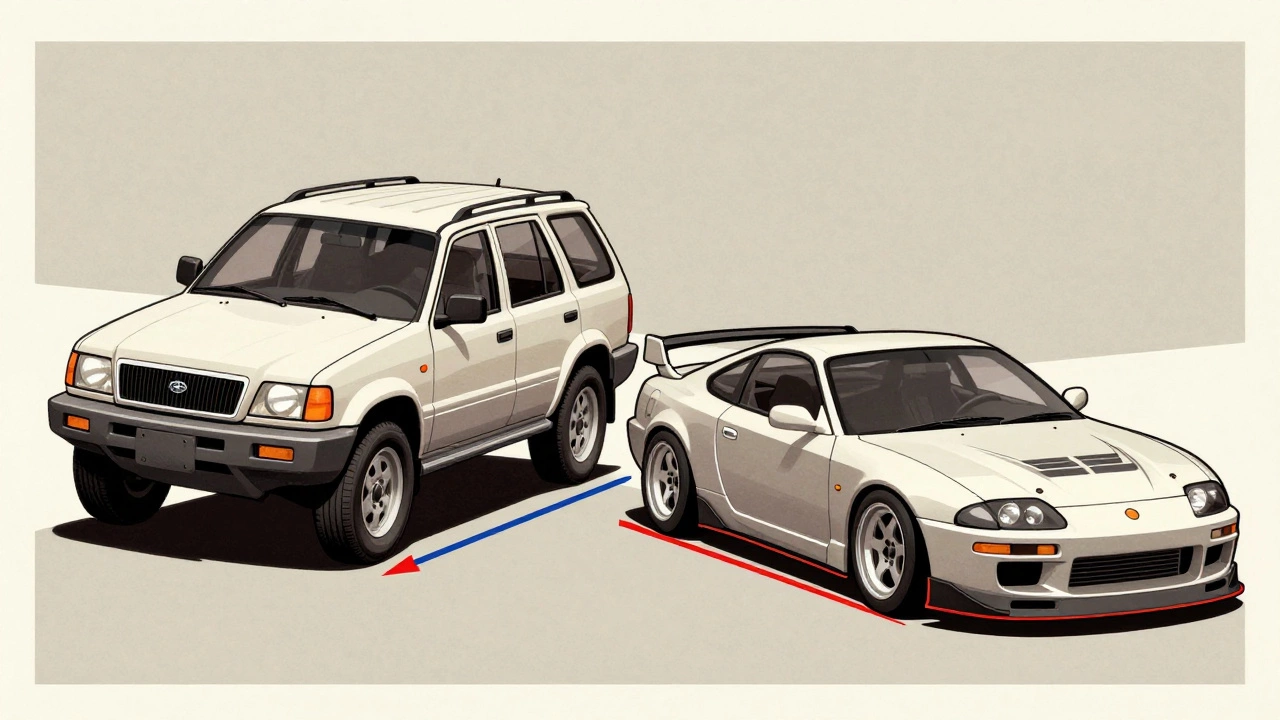
Body roll isn’t a flaw-it’s physics in action. When you turn, your car’s center of gravity shifts outward. The suspension on the outside of the turn compresses, while the inside lifts. This causes the whole chassis to lean. The taller your car and the higher its center of gravity, the more it leans. A tall SUV rolls like a boat in a storm. A low sports car? It hugs the road.
Lowering springs cut the distance between the axle and the chassis. That lowers the center of gravity. Less height means less leverage for lateral forces to push the body sideways. Think of it like a pencil standing upright versus lying flat. The upright one falls over easily. The flat one? Hard to tip.
How Lowering Springs Actually Reduce Roll
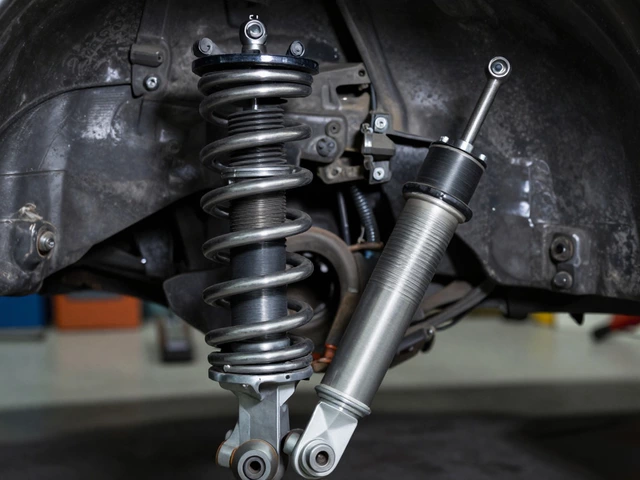
Lowering springs don’t make the suspension stiffer by themselves. A spring’s rate-how much force it takes to compress it-is separate from its length. You can have a soft, low spring or a stiff, stock-height spring. But most lowering spring kits are designed with a higher spring rate than stock. Why? Because when you shorten the suspension, you reduce the available travel. If you kept the same soft rate, your car would bottom out on every bump.
So manufacturers increase the spring rate to compensate. That stiffer spring resists compression more during cornering. Less compression = less lean. That’s the real reason lowering springs reduce body roll: they combine a lower center of gravity with a stiffer spring rate.
Here’s a real-world example: A 2020 Honda Civic with stock suspension rolls 8-10 degrees in a 0.7g corner. Swap in a well-designed lowering kit (like Eibach Pro-Kit or H&R Sport), and that roll drops to 5-6 degrees. That’s a 30-40% reduction in lean. Not because it’s lower-it’s because it’s stiffer and lower.
What Lowering Springs Don’t Fix
Lowering springs alone won’t turn your daily driver into a track monster. Here’s what they can’t do:
- They don’t improve camber gain. If your suspension geometry doesn’t keep the tire flat on the road during cornering, you lose grip-even if the body doesn’t lean.
- They don’t replace sway bars. A thicker rear sway bar can reduce rear-end roll more effectively than lowering alone.
- They don’t fix worn bushings or ball joints. If your suspension parts are loose, lowering the car just makes the wobble worse.
- They don’t improve tire contact patch size. If your tires are too narrow or old, no amount of lowering will help.
Many people install lowering springs, then wonder why their car still feels floaty in corners. The answer? They’re missing the other parts of the equation.
What Happens When You Lower Too Much
There’s a sweet spot. Go too low, and you start losing more than you gain.
- Reduced suspension travel means you’ll bottom out on speed bumps, driveways, or even heavy rain puddles.
- Excessive negative camber (tires tilting inward) wears out the inside of your tires faster.
- Steering and suspension components wear out quicker due to increased stress.
- Your ride gets harsh. No more comfort-just constant jolts.
In Brisbane, where roads are older and full of potholes, dropping your car more than 30-40mm is asking for trouble. I’ve seen people drop their Camrys by 60mm just to look “aggressive.” They end up replacing control arms, ball joints, and tires every 6 months. It’s not performance-it’s a money pit.
Lowering Springs vs. Coilovers
Coilovers are the next step up. They let you adjust ride height and damping. But they’re not always better.
Lowering springs are simple, reliable, and cheap-usually $200-$400 for a full set. They’re perfect if you want better handling without changing your car’s character. Coilovers cost $800-$2,000+. They’re great if you’re tuning for track days or want to fine-tune your ride for different conditions.
For 90% of street drivers, lowering springs are the smarter choice. You get 80% of the handling benefit for 20% of the cost. And you don’t have to worry about adjustable dampers going bad or leaking fluid.
Real-World Results: Numbers That Matter
Let’s look at data from a real test: a 2018 Subaru WRX with stock suspension versus the same car with Eibach Pro-Kit lowering springs (35mm drop).
| Test Condition | Stock Suspension | With Lowering Springs |
|---|---|---|
| 0.7g Cornering Roll Angle | 9.2 degrees | 5.8 degrees |
| Lateral G-Force at Slip | 0.91g | 0.97g |
| 0-60 mph (on dry asphalt) | 5.8s | 5.6s |
| Braking Distance (60-0 mph) | 37.2m | 35.9m |
That’s a measurable improvement-not just in roll, but in grip and stopping power. Why? Because the tires stayed flatter on the road longer. More contact patch = more traction.
Who Should Install Lowering Springs?
These are the people who benefit most:
- Street drivers who want sharper handling without sacrificing daily comfort
- Owners of taller cars (SUVs, trucks, wagons) looking to reduce that floaty feeling
- Enthusiasts on a budget who don’t need adjustable damping
- Anyone who wants to improve tire contact without changing wheels or tires
Who should avoid them?
- People who drive on rough roads daily (potholes, gravel, unsealed roads)
- Those who need to carry heavy loads (towing, hauling)
- Anyone who values ride comfort over handling
- Drivers who plan to do off-roading or track days regularly

What to Look for When Buying Lowering Springs
Not all lowering springs are created equal. Here’s what to check:
- Drop amount: 25-40mm is ideal for most street use. More than 45mm risks bottoming out and camber issues.
- Spring rate: Should be 15-25% higher than stock. Too low = saggy. Too high = bouncy.
- Brand reputation: Eibach, H&R, KW, and TEIN are proven. Avoid no-name brands on Amazon-they often use inferior steel and inconsistent rates.
- Kit compatibility: Make sure it’s designed for your exact model year. A spring that fits a 2015 Civic won’t work on a 2020.
Always buy a full set-front and rear. Mixing springs from different brands or rates will unbalance the car.
Do You Need an Alignment After Installation?
Yes. Always.
Lowering changes your suspension geometry. Your tires will now sit at a different angle. Without an alignment, you’ll get uneven tire wear, poor steering response, and reduced grip. Even a 15mm drop can throw off your camber by 0.5-1.0 degrees. That’s enough to eat through a set of tires in 10,000km.
Get a full four-wheel alignment. Pay extra for a “performance” setting if your shop offers it. They’ll set your camber slightly negative (around -1.0 to -1.5 degrees) to maximize tire contact in corners.
Final Verdict: Does It Work?
Yes, lowering springs reduce body roll-but only if you choose the right ones and install them properly. They’re not a magic fix, but they’re one of the most cost-effective ways to improve how your car feels in corners. You’ll notice it the first time you take a curve at speed: less lean, more confidence, better grip.
Just don’t go too low. Don’t skip the alignment. And don’t expect them to fix bad tires or worn suspension parts. They’re a tool, not a cure-all.
If you want sharper handling without breaking the bank, lowering springs still make sense. For most drivers, they’re the smartest upgrade you can make to your suspension.
Do lowering springs make the ride harsher?
Yes, slightly. Lowering springs are usually stiffer than stock, which reduces comfort over bumps. But a well-designed kit (like Eibach or H&R) keeps the ride manageable for daily driving. If you want a smoother ride, look for springs with progressive rates-they soften on small bumps but stiffen under heavy cornering.
Can lowering springs damage my car?
Only if installed incorrectly or if you drop too low. Excessive lowering strains suspension components, causes premature wear on ball joints and control arms, and can lead to tire rubbing. Always stick to manufacturer-recommended drop levels and get an alignment after installation.
Will lowering springs improve my car’s acceleration or braking?
Indirectly, yes. By reducing body roll, the tires maintain better contact with the road during hard acceleration and braking. This improves traction, which can shorten stopping distances and reduce wheel spin. But they won’t make your engine faster or your brakes stronger.
How long do lowering springs last?
Good quality lowering springs last as long as stock springs-often 100,000km or more. They’re made from the same high-tensile steel. Cheaper, non-branded springs can sag or crack over time. Stick with reputable brands.
Do I need new shocks with lowering springs?
Not always, but it’s recommended. Stock shocks are tuned for stock ride height. When you lower the car, the shocks operate in a different range, which can cause them to wear faster or feel less controlled. If your shocks are already worn, replacing them with performance shocks at the same time is a smart move.