Carbon Fiber Blade Selector
Select your project goal to find the recommended blade and the necessary safety precautions.
Recommended: -
Select an option above to see the recommendation.
💡 Pro Tip for All Cuts:
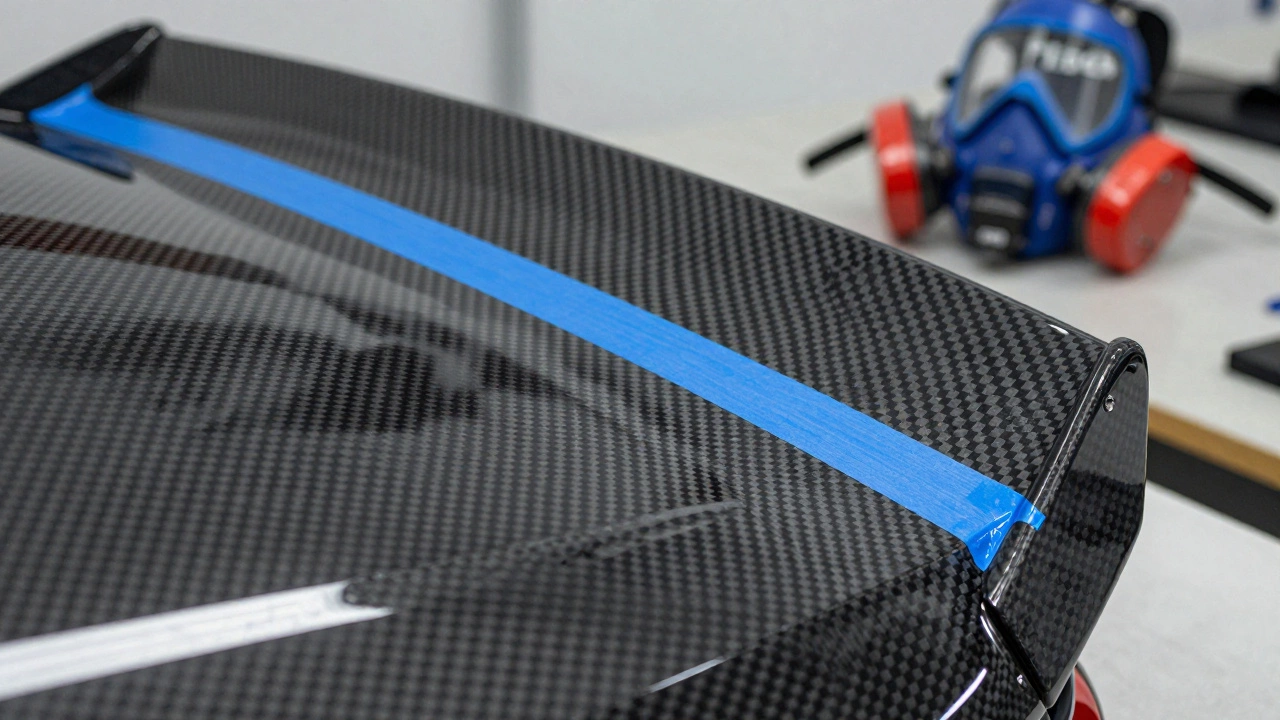
Always apply masking tape to the cut line to prevent splintering and use a P100 respirator to protect your lungs from hazardous carbon dust.
Quick Tips for a Clean Cut
- Use a diamond-grit or carbide-tipped blade for the cleanest edges.
- Always apply masking tape to the cut line to prevent splintering.
- Wear a P100 respirator; carbon dust is hazardous to your health.
- Keep the blade speed high but the feed rate slow to avoid burning the resin.
The Reality of Cutting Carbon Fiber
Before we pick a tool, we need to understand what we're dealing with. Carbon Fiber is a composite material consisting of thin, strong crystalline filaments of carbon woven together and embedded in a polymer resin. Because it's a mix of a hard mineral-like fiber and a plastic-like resin, it behaves like both a rock and a piece of wood. Most steel blades will dull the moment they touch the fibers, leading to jagged edges and "tear-out," where the weave pulls away from the resin.
When you're modifying carbon fiber spoilers, you aren't just cutting a board; you're slicing through thousands of tiny, abrasive needles. This is why the cutting carbon fiber process requires a blade that can maintain its edge despite the friction.
Diamond Grit Blades: The Gold Standard
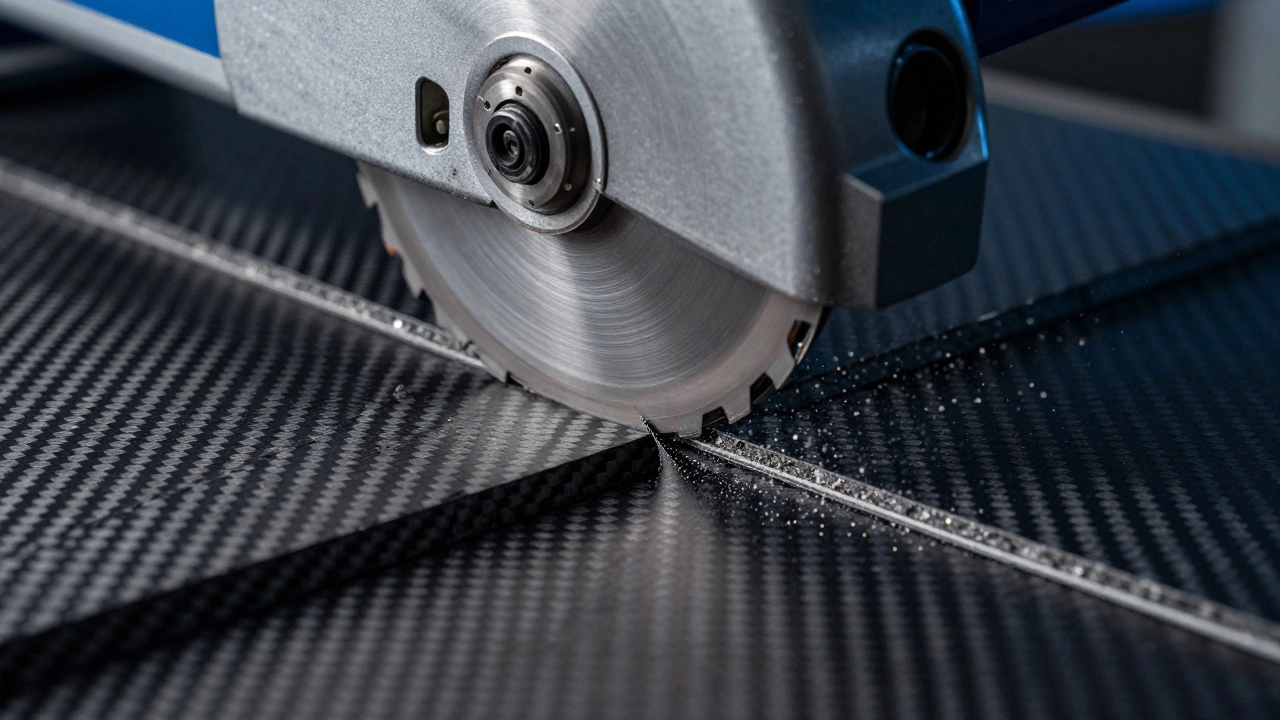
If you want a factory-finish edge, a Diamond Saw Blade is the best choice. Unlike traditional teeth that "chop" the material, diamond blades use industrial diamond particles embedded in the metal to grind through the fibers. This produces a much smoother finish and significantly reduces the chance of the composite delaminating.
I've seen builders use these on a table saw or a handheld circular saw for long, straight cuts on wide spoilers. The key is that they don't pull the material; they shave it. Because the diamond particles are harder than the carbon filaments, the blade doesn't dull nearly as fast. If you're working on a high-end project where you can't afford a single chip in the weave, this is the only way to go.
Carbide-Tipped Blades: The Versatile Alternative
For those who don't have a specialized diamond setup, a Carbide-Tipped Blade with a high tooth count is the next best thing. Carbide is much harder than standard high-carbon steel. You want a blade with a "Fine Finish" or "Crosscut" designation, typically featuring 60 to 80 teeth for a 10-inch blade. The goal here is to have the teeth slice the fibers before they have a chance to pull and crack the resin.
The downside? Carbide will eventually wear down. After a few long cuts on a thick spoiler, you'll notice the edges becoming slightly more ragged. To combat this, many pros use a "sacrificial" piece of scrap carbon fiber to test the blade's sharpness before hitting the actual part.
Abrasive Discs and Dremels: For Detail Work
Not every cut is a straight line. When you're trimming the edges of a spoiler to fit a specific bumper or carving out mounting holes, a circular saw is too clumsy. This is where Abrasive Discs (like those found on a Dremel or rotary tool) come into play. These don't cut so much as they erode the material away.
Using a reinforced cutoff wheel allows you to make tight radii cuts and intricate notches. However, be warned: these generate a massive amount of heat. Since the resin in carbon fiber is essentially a high-strength plastic, too much heat will melt the resin, leaving a gooey, burnt edge that looks terrible and weakens the structural integrity of the part. Use short bursts and let the material cool between passes.
Comparing Blade Types for Carbon Fiber
| Blade Type | Edge Quality | Durability | Best Use Case |
|---|---|---|---|
| Diamond Grit | Excellent | Very High | Long, straight structural cuts |
| Carbide-Tipped | Good | Medium | General modifications/trimming |
| Abrasive Disc | Fair (Requires sanding) | Low | Small notches and curves |
Pro Techniques to Avoid Ruins
Even with the best blade, you can still mess up a carbon fiber spoiler if your technique is off. The biggest enemy is "splintering." To stop this, apply a strip of high-quality painter's tape or masking tape exactly where you plan to cut. Press it down firmly. The tape holds the top layer of fibers in place, forcing the blade to cut through them without pulling them upward.
Another trick is the "score and snap" method for very thin pieces, though this is rare for spoilers. For thicker parts, always cut from the back. If you are using a handheld tool, keep the blade moving. If you dwell in one spot for too many seconds, the friction creates heat, and that heat melts the Epoxy Resin-the glue that holds the fibers together. Once the resin melts, the fibers lose their support and the piece can simply collapse or fray.
Safety First: The Hidden Danger
Let's be very clear: carbon fiber dust is not like sawdust. It is composed of tiny, conductive, and extremely sharp shards. If you inhale them, they stay in your lung tissue. If they get on your skin, they cause intense itching. If they get into your electrical tools, they can actually cause a short circuit because carbon conducts electricity.
Always use a vacuum attachment on your saw. If you don't have one, set up your workspace outdoors. Use a wet rag to wipe down your surfaces immediately after cutting to trap the dust before it can float back into the air. A standard dust mask isn't enough; get a proper respirator with a fine particulate filter.
Finishing the Cut
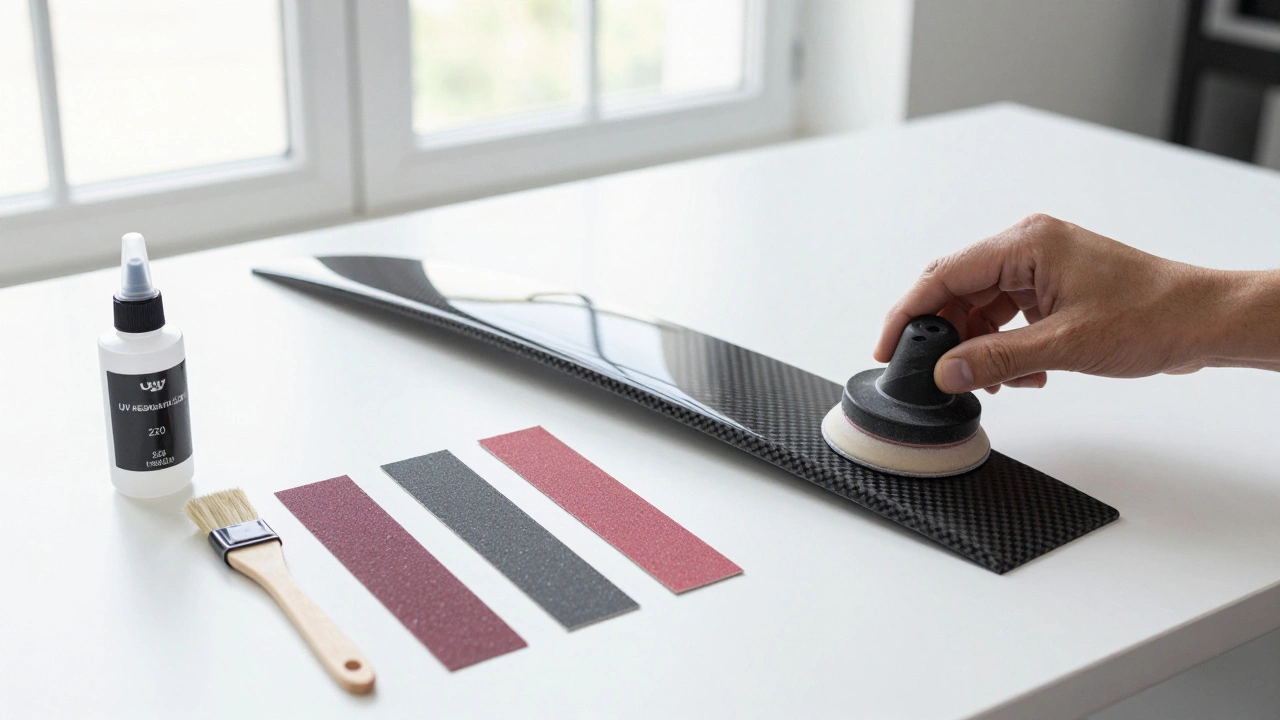
No matter which blade you use, the edge will likely need some love. Use a Sanding Block with a progression of grits-starting at 220 and moving up to 600. Sand in the direction of the cut, not across it, to avoid scratching the resin. Once the edge is smooth, you can apply a thin coat of UV-resistant clear coat to seal the exposed fibers. This prevents moisture from seeping into the edges, which could cause the spoiler to delaminate over time when exposed to rain and sun.
Can I use a hacksaw to cut carbon fiber?
You can, but it's not recommended for spoilers. A hacksaw blade is too coarse and will likely cause significant splintering and jagged edges. If you must use one, choose a blade with the highest TPI (teeth per inch) possible and use the masking tape trick to hold the fibers in place.
Why does my carbon fiber keep splintering?
Splintering usually happens because the blade is too dull or has too few teeth. The teeth are "grabbing" the fibers and pulling them out of the resin instead of slicing through them. Switching to a diamond blade or a high-tooth-count carbide blade usually solves this.
Do I need a wet saw for carbon fiber?
A wet saw is a huge advantage because the water suppresses the dangerous dust and keeps the blade cool, preventing the resin from melting. While not strictly necessary for a small spoiler modification, it is the safest and cleanest method.
What is the best way to clean up carbon dust?
Avoid using a standard household vacuum, as the fine dust can pass through the filter and be blown back into the room. Use a HEPA-rated vacuum or a damp cloth to wipe everything down, then dispose of the cloth in a sealed bag.
Will a diamond blade work on a standard circular saw?
Yes, as long as the arbor size and diameter match your saw. Just be careful with the speed; diamond blades often require different RPMs than wood blades to avoid overheating the material.
Next Steps and Troubleshooting
If you've already made a cut and it's looking ragged, don't panic. You can often save the piece by using a file or a sanding block to gradually bring the edge back to a clean line. If you've caused a large area of delamination (where the layers are peeling apart), you may need to inject a small amount of clear epoxy resin into the gap, clamp it firmly, and let it cure before sanding it flat.
For those planning a complex modification, I suggest practicing on a piece of carbon fiber scrap first. This lets you dial in your saw speed and feed rate without risking an expensive automotive part. If the blade starts to smoke, slow down or stop to let the material cool.