Carbon Fiber Cutting Tool Selector
Answer the questions below to find the ideal tool for your carbon fiber spoiler or part modification.
Recommended Tool:
Performance Metrics
Critical Safety Tip
Always wear a P100 respirator. Carbon dust is a mechanical irritant that can damage lungs over time. Standard N95 masks are often insufficient for fine dry cutting.
Pro Technique
- Use masking tape on cut lines to prevent fraying.
- Cut slowly to avoid melting the resin.
- Seal edges after sanding to protect against moisture.
You just bought a sweet carbon fiber spoiler, but it’s two inches too wide for your trunk lid. You grab your trusty angle grinder, fire it up, and within ten seconds, you’re choking on black dust while the edge of your new part looks like it got chewed by a dog. Sound familiar? Cutting carbon fiber reinforced polymer (CFRP) isn’t like cutting steel or aluminum. It’s abrasive, brittle, and incredibly unforgiving if you use the wrong gear.
The truth is, there is no single "best" tool that works for every scenario. The right choice depends entirely on whether you’re trimming a thin lip on a spoiler, slicing through thick structural tubing, or making curved cuts. Using a standard wood saw will shred your investment. Using a metal-cutting disc might melt the resin matrix. This guide breaks down exactly which tools survive contact with carbon fiber, how to manage the hazardous dust, and why your technique matters more than the brand on the box.
Why Standard Tools Fail on Carbon Fiber
Before we pick a tool, you need to understand what you’re fighting. Carbon fiber consists of thin strands of carbon locked together by a plastic resin, usually epoxy. When you cut this composite, you aren't just shearing metal; you're tearing apart glass-like fibers and melting plastic simultaneously.
Standard high-speed steel (HSS) blades dull instantly because the carbon abrasives grind away the steel teeth. Worse, friction generates heat. If the blade gets too hot, the epoxy resin softens and smears instead of chipping away cleanly. This causes delamination-where the layers separate-and leaves a fuzzy, frayed edge that looks cheap and ruins the aerodynamic profile. To get a clean cut, you need a tool that stays cool, stays sharp, and removes material without pulling at the fibers.
The Gold Standard: Diamond-Coated Abrasive Blades
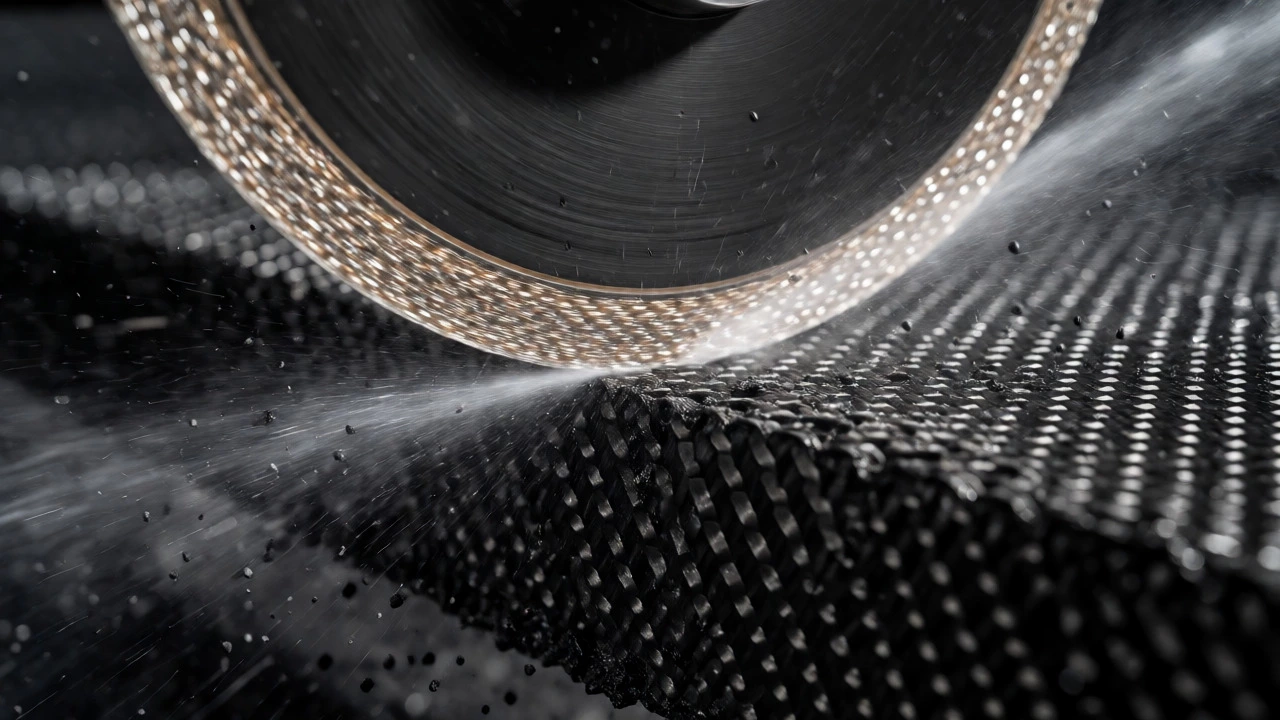
If you want professional results, you need a diamond-coated abrasive blade. These aren't the diamond blades used for concrete, which have large segments. For carbon fiber, you want a continuous rim diamond blade designed specifically for composites. The microscopic diamond particles embedded in the steel core act as thousands of tiny cutting points. They don't have "teeth" to catch on fibers, so they slice smoothly rather than tearing.
This is the go-to choice for cutting carbon fiber spoilers, hoods, and roof panels. Brands like Freud or specialized automotive suppliers offer blades labeled "for fiberglass and carbon." They cost between $30 and $80 AUD, which feels steep until you realize one ruined spoiler costs five times that amount. The key here is RPM management. Run these blades at moderate speeds. Too fast, and you burn the resin; too slow, and the blade clogs with melted plastic.
For Thick Sections: Water-Cooled Band Saws
If you’re dealing with thicker components, like a rear diffuser wing mount or roll cage tubing, an angle grinder becomes dangerous due to kickback and heat buildup. Here, a water-cooled band saw with a carbide-tipped blade is superior. The water coolant serves two critical functions: it keeps the blade temperature low to prevent resin melting, and it suppresses the dust cloud before it escapes into your lungs.
Carbide grit blades are tougher than diamond in terms of impact resistance, making them better for rough cuts where the material might shift. However, they require precise tensioning. A loose blade will wander and fray the edges. If you don’t own a band saw, many local machine shops in Brisbane will let you pay for time on their equipment. It’s often cheaper than buying a new setup for a one-off project.
Hand Tools for Precision Trims
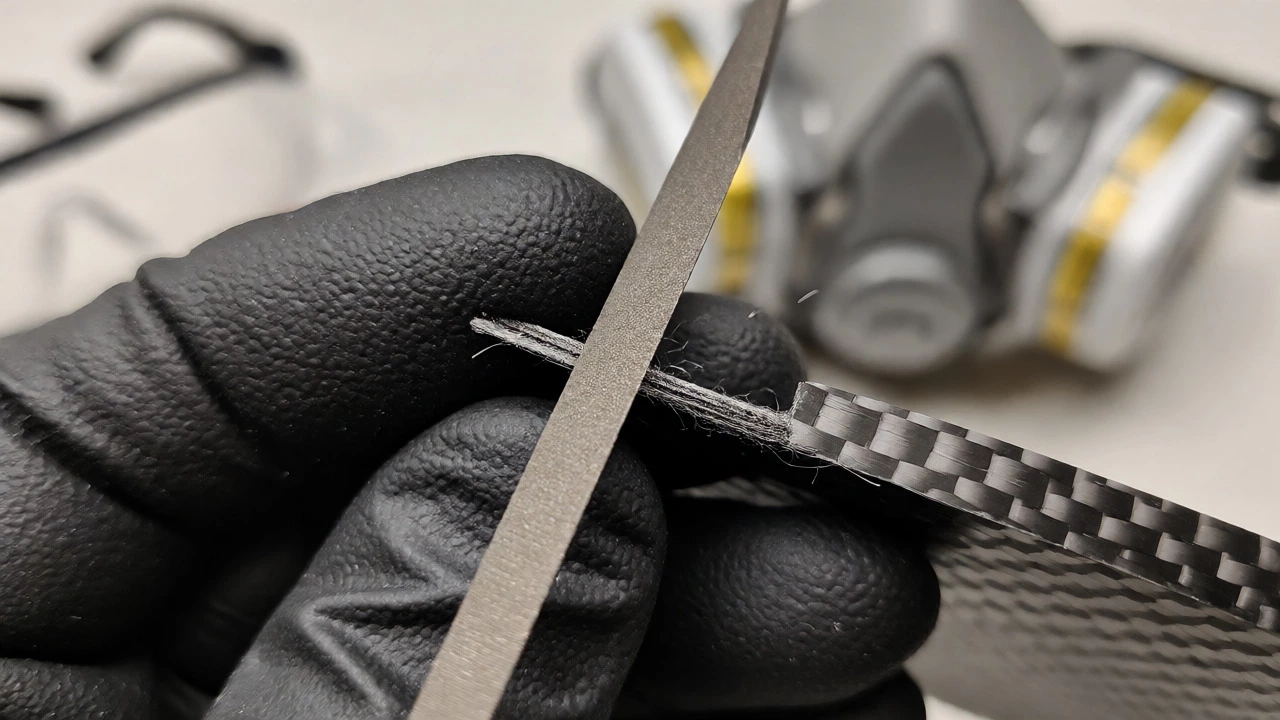
Sometimes you don’t need power. For trimming excess flash from a molded part or shaving a millimeter off a mounting tab, hand tools are safer and more controlled. A tungsten carbide file is essential. Unlike steel files, carbide won’t dull after three strokes. Use a coarse grit for bulk removal and a fine grit for finishing. Always file in one direction-pushing away from the edge-to avoid lifting fibers.
Another secret weapon is the oscillating multi-tool fitted with a rigid sandpaper or carbide grit attachment. While not ideal for deep cuts, it excels at flush cuts against a surface. If you’re fitting a spoiler close to a boot seal, an oscillating tool lets you nibble away material with surgical precision without risking a slip that gouges your paintwork.
Managing the Hazardous Dust
Let’s address the elephant in the room: carbon fiber dust. It’s not just messy; it’s a health hazard. The microscopic shards can penetrate skin, causing irritation, and inhalation can lead to respiratory issues similar to asbestos exposure, though less severe. Never work without protection.
A standard N95 mask is barely adequate. You need a P100 respirator with dual cartridges. Furthermore, static electricity makes carbon dust cling to everything. Wet sanding techniques help, but only if your tool supports it. If you’re using an angle grinder, attach a shroud with a vacuum port connected to a HEPA-filtered shop vac. This captures 99% of the particulate matter at the source. Remember, cleaning up dry dust requires a vacuum rated for fine particulates; a regular household vacuum might blow the dust back out the exhaust filter.
Tool Comparison for Carbon Fiber Projects
| Tool Type | Best For | Dust Control | Edge Quality | Cost (AUD) |
|---|---|---|---|---|
| Diamond Abrasive Blade | Flat sheets, spoilers, panels | Poor (needs vacuum shroud) | Excellent | $40 - $90 |
| Water-Cooled Band Saw | Thick tubes, structural parts | Excellent (wet cutting) | Very Good | $500+ (machine) |
| Tungsten Carbide File | Deburring, small trims | Moderate (manual) | Good (with skill) | $20 - $50 |
| Oscillating Tool | Flush cuts, tight spaces | Moderate | Fair | $80 - $200 |
Technique Matters More Than Gear
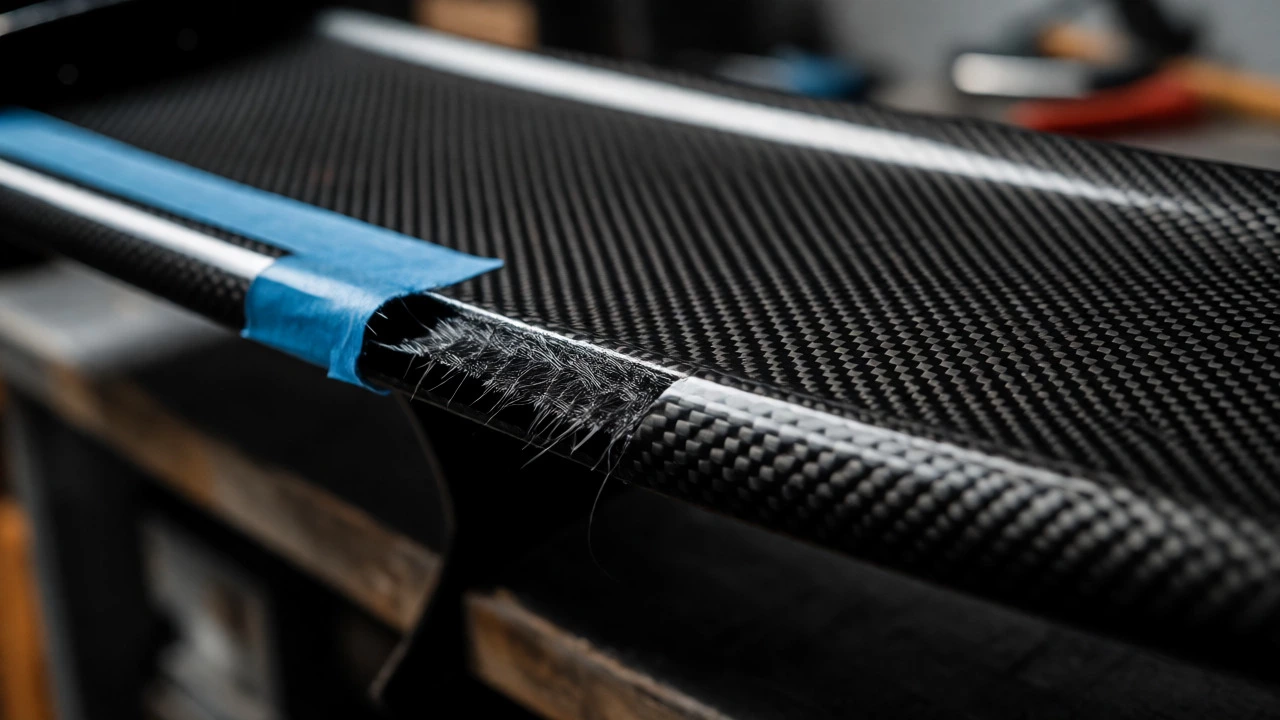
Even with the best diamond blade, poor technique ruins parts. Start by marking your cut line with masking tape. Apply a wide strip of blue painter's tape along the cut line on both sides of the carbon piece. This simple step reduces fraying significantly by holding the top layer of fibers down during the initial bite of the blade.
When cutting, do not force the tool. Let the blade do the work. Pushing hard increases friction, heat, and the chance of binding. Make multiple shallow passes rather than one deep cut. If you feel the blade slowing down or smelling burnt plastic, stop immediately. Let it cool, clear the debris, and resume. Patience saves money. After cutting, deburr the edges with a fine-grit carbide file or wet sandpaper starting at 220 grit and moving up to 600. Finish with a clear coat or edge sealer to lock in any loose fibers and protect the resin from UV degradation.
Can I use a jigsaw to cut carbon fiber?
Yes, but only with specific blades. Use a reverse-tooth blade made for laminates or composites. Standard wood blades will tear the top surface. Keep the speed low and feed slowly to prevent delamination. It’s suitable for straight cuts on thinner panels but struggles with curves and thick sections.
Is carbon fiber dust toxic?
It is a mechanical irritant. Inhaling fine carbon dust can cause coughing and shortness of breath, and skin contact causes itching and rashes. While not chemically toxic like lead, long-term exposure without protection can damage lung tissue. Always wear a P100 respirator and gloves.
What happens if I overheat carbon fiber while cutting?
Overheating melts the epoxy resin binding the fibers. This leads to "resin smear," where the black powder turns into a sticky paste that clogs the blade and creates a weak, glossy, uneven edge. It also destroys the structural integrity of the cut area, making it prone to cracking under stress.
Do I need to seal the cut edges of my spoiler?
Absolutely. Cutting exposes raw fibers and resin. Without sealing, moisture can wick into the laminate, causing swelling or delamination over time. Apply a clear coat, epoxy sealant, or even super glue to the cut edges after sanding to lock everything in place.
Which is better: diamond blade or carbide blade?
Diamond blades are better for flat, sheet-like materials like spoilers and hoods because they produce smoother finishes. Carbide blades are more durable for thick, tubular structures and handle impact better, but they leave a rougher finish that requires more post-processing.