Car Wash Cost Calculator
Enter Your Washing Habits
All prices in AUD ($)
Comparison Results
Strips Wax & Risks Damage
Safe & Protective
You’ve got a bucket of water, a sponge, and that bottle of Dawn sitting in your kitchen cupboard. It’s cheap, it cuts grease like nothing else, and you’re wondering if it can double as your car shampoo. The short answer is yes, you physically *can* use it. But should you? If you care about keeping your car’s finish looking new for more than a few months, the answer is a hard no.
Using household dish detergent on your vehicle is one of the most common mistakes people make when they start washing their cars. It feels logical-dirty car, strong soap, clean result. But car paint isn’t just dirt; it’s a delicate layer of clear coat and protective sealants that dish soap is chemically designed to destroy. Let’s break down exactly what happens when you mix these two worlds and why switching to a dedicated car wash product saves you money in the long run.
The Chemistry: Why Dish Soap Strips Protection
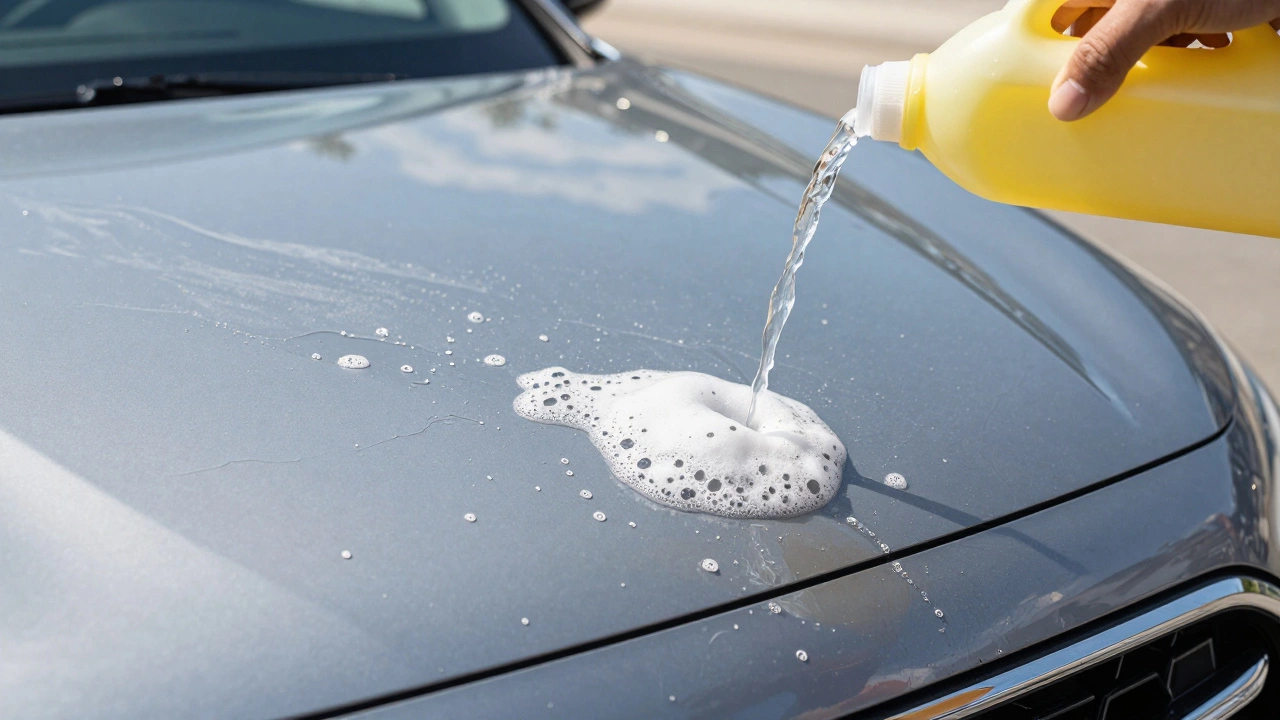
To understand why Dawn Ultra is bad for your car, you have to look at what it’s built to do. Dish soap is formulated with high-pH surfactants designed to strip food oils, animal fats, and stubborn grease from non-porous surfaces like ceramic plates. Its job is to remove everything that isn't the plate itself.
Your car’s exterior, however, relies on a layer of protection. Whether you’ve applied a synthetic sealant, a natural Carnauba wax, or a ceramic coating, the goal is to create a hydrophobic barrier that repels water and contaminants. When you apply a heavy-duty degreaser like Dawn to this surface, it doesn’t just lift the road grime. It dissolves the wax and sealants underneath.
Think of it like using industrial oven cleaner to wash a delicate silk shirt. Sure, the stain might come out, but you’re ruining the fabric in the process. Every time you wash your car with dish soap, you are resetting your protection clock to zero. This means you’ll need to re-wax or re-seal your car far more often than necessary, which costs more in products and time than buying a proper car shampoo ever would.
The Physical Risk: Swirl Marks and Scratches
Beyond the chemical stripping, there is the physical act of washing. Dish soap is not lubricated for automotive use. Proper car shampoos contain lubricants (often polymers or oils) that allow the wash mitt to glide over the paint without dragging abrasive particles across the surface.
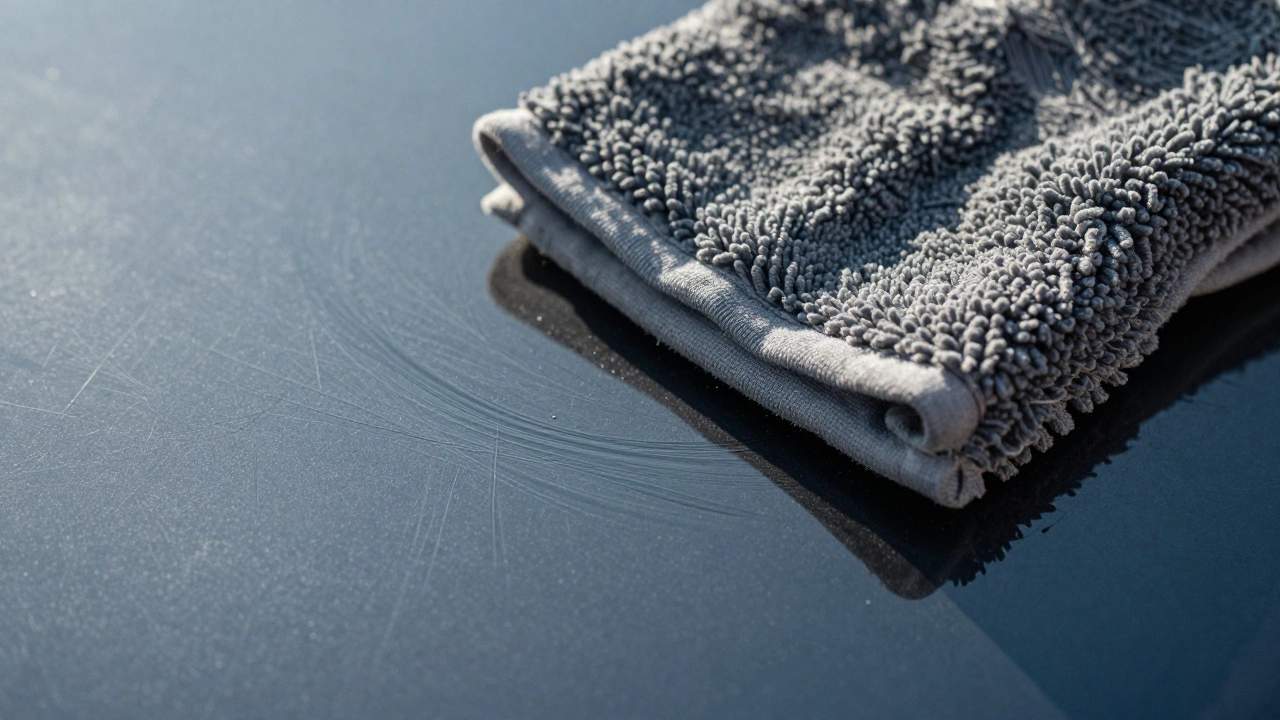
When you use dish soap, the low lubrication means that dust, sand, and brake dust trapped in your sponge get dragged directly against your clear coat. This creates microscopic scratches known as swirl marks. You won’t see them immediately, but after a few washes, your paint will lose its deep gloss and look hazy or dull, especially under direct sunlight.
In Brisbane, where we deal with fine red dust and occasional silica-heavy pollen, this risk is amplified. That grit acts like sandpaper. Without the slickness provided by automotive-specific detergents, you are essentially polishing your paint off every time you scrub.
When Is Dawn Actually Useful?
I’m not saying you should throw the bottle away. There are specific scenarios where Dawn is the right tool for the job, but they are limited to pre-cleaning stages, not the final wash.
- Heavy Grease Spots: If you have a bird dropping, bug splatter, or an oil spot on your bumper, a diluted mix of Dawn and water on a microfiber towel can help break down the residue before you rinse the whole car.
- Wheel Cleaning: Wheels are made of metal, plastic, or alloy, and they don’t have wax on them. Using a diluted Dawn solution to soak wheel wells and tires can cut through brake dust and road tar effectively.
- Interior Plastics: For cleaning vinyl dashboards or door panels that have become sticky or greasy, a tiny amount of Dawn on a damp cloth works wonders. Just wipe it dry immediately to prevent residue buildup.
The key here is dilution and spot treatment. Never use undiluted dish soap, and never use it as the primary agent for washing the painted body panels.
| Feature | Dish Soap (e.g., Dawn) | Automotive Car Shampoo |
|---|---|---|
| pH Level | High (Alkaline, strips wax) | Neutral (Safe for clear coat) |
| Lubricity | Low (Increases scratch risk) | High (Glides over dirt) |
| Primary Goal | Remove organic grease/oils | Remove dirt while preserving wax |
| Effect on Wax | Dissolves and strips | Maintains and enhances |
| Cost per Wash | Very Low ($0.10) | Low ($0.30 - $0.50) |
The Cost of Cutting Corners
Let’s talk numbers. A gallon of generic car shampoo might cost you around $20 AUD. It lasts for dozens of washes because you only need a small capful per bucket. A bottle of Dawn is cheaper upfront, perhaps $8 AUD, but let’s look at the hidden costs.
If you strip your wax with dish soap, you lose the UV protection that prevents your clear coat from oxidizing. In the Australian sun, oxidation turns paint chalky and gray. Fixing oxidation requires machine polishing and compounding, a service that can cost between $300 and $600 depending on the size of your car.
Furthermore, if you develop swirl marks from low-lubricity washing, you’ll eventually need a correction polish to restore clarity. That’s another $100+ in labor or products. So, saving $5 on soap today could lead to a $400 paint correction bill next year. It’s a classic case of false economy.
How to Wash Your Car Correctly
If you want to keep your car looking showroom-fresh without breaking the bank, follow this simple routine. It takes a bit longer than a quick scrub, but the results are night and day.
- Pre-Rinse: Use a hose or pressure washer to knock off loose dirt. Do not touch the car with a mitt until the bulk of the debris is gone.
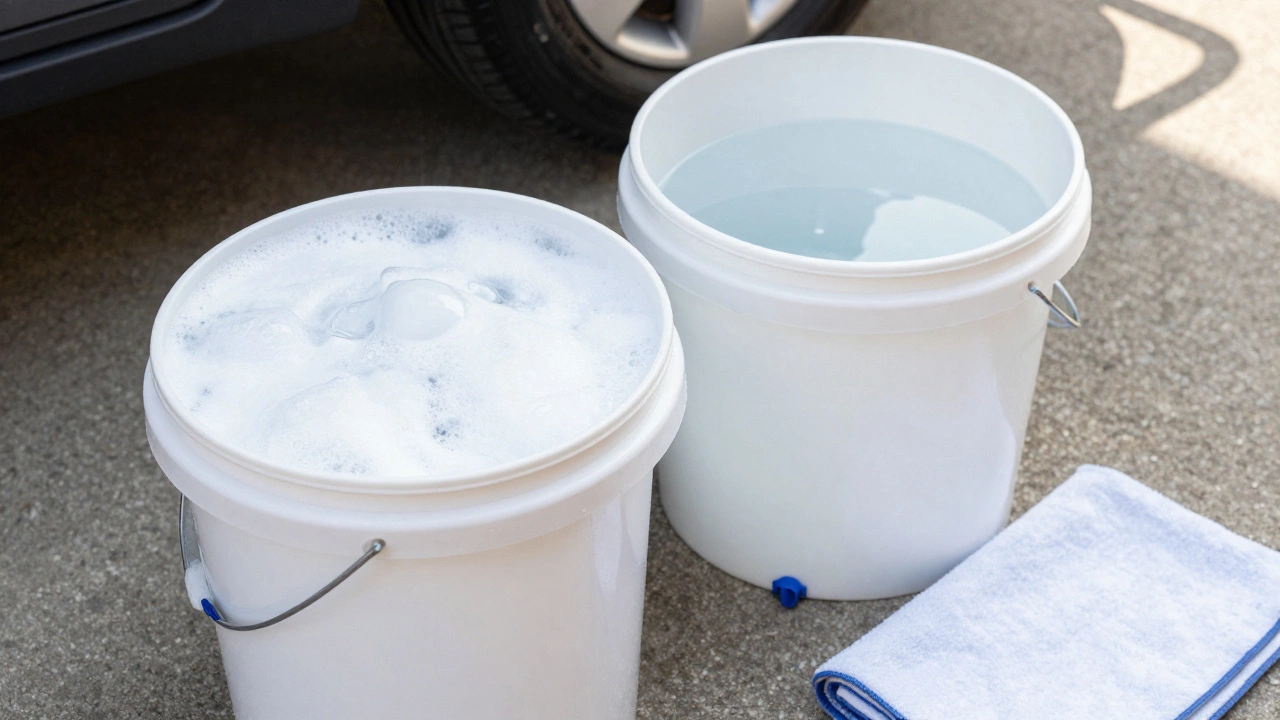
- Two-Bucket Method: Fill one bucket with soapy water (using pH-neutral car shampoo) and another with plain water for rinsing your mitt. Place a grit guard at the bottom of each bucket to trap sediment.
- Wash Top-Down: Start at the roof and work your way down. The lower panels are the dirtiest, so save them for last to avoid dragging mud onto the clean upper sections.
- Rinse Frequently: Rinse your mitt in the clean water bucket after every panel. If it feels gritty, stop and check your buckets.
- Dry Gently: Use a large, plush microfiber drying towel. Pat the water away rather than dragging the towel across the surface. Blowing out door jambs with compressed air helps too.
Alternatives to Dish Soap
If you don’t have car shampoo on hand, what can you use in a pinch? While nothing beats a dedicated automotive detergent, some household items are safer than others.
Baby Shampoo: This is a popular DIY alternative. It is generally pH-balanced and gentle enough not to strip wax aggressively. However, it lacks the lubricants found in car shampoos, so be extra careful with your technique to avoid swirls.
Laundry Detergent Pods: Avoid these. They contain enzymes and brighteners that can leave residues on glass and paint, leading to streaking and potential haze.
The best investment you can make is a concentrated car wash soap. Brands like Meguiar’s, Chemical Guys, or even local Australian brands like Mothers offer formulations that clean effectively while maintaining your paint’s integrity. Look for terms like "pH neutral," "safe for wax," and "high lubricity" on the label.
Will one wash with Dawn ruin my car's paint?
No, a single accidental wash with Dawn will not permanently damage your clear coat. However, it will likely strip away any existing wax or sealant. You should reapply a protective layer after drying the car to restore UV protection and hydrophobic properties.
Is Dawn safe for ceramic coatings?
Absolutely not. Ceramic coatings are semi-permanent bonds to the paint. Dish soap is too harsh and alkaline, which can degrade the coating's hydrophobic performance and shorten its lifespan significantly. Always use a pH-neutral shampoo specifically labeled as safe for ceramic coatings.
Can I use Dawn to clean my car windows?
It is not recommended. Dish soap can leave a filmy residue on glass that causes streaking and reduces visibility, especially at night. Use a dedicated automotive glass cleaner or a mixture of vinegar and water for streak-free results.
What is the best way to remove bird droppings without damaging paint?
Soak the area with plenty of water or a quick detailer spray for several minutes to soften the droppings. Gently lift them away with a soft microfiber towel. If they are dried on, use a clay bar or a specialized bug remover. Avoid scraping with dry fingers or rough cloths.
Does the color of Dawn matter?
Not really. Whether it's blue Dawn, Dawn Platinum, or scented varieties, the base chemistry remains a strong degreaser. All variants are too harsh for regular use on automotive paint and will strip wax regardless of the scent or specific formulation additives.