
Performance Filter vs. OEM Paper Cost Calculator
Configuration
Paper Filter Costs
Performance Filter Costs
Results Breakdown
| Metric | Paper Filter | Performance Filter |
|---|---|---|
| Total Cost Over Time | $0.00 | $0.00 |
| Number of Replacements/Cleanings | 0 | 0 |
| Average Annual Cost | $0.00 | $0.00 |
| Total Savings | $0.00 | |
There is a persistent myth in the car community that if you want more horsepower, you have to sacrifice cleanliness. You’ve probably heard it: "That performance filter lets in more air, so it must let in more dust." It sounds logical on the surface. If you open a window wider, more bugs fly in. But engines don’t work like windows, and high-quality performance air filters are not just holes with mesh inside.
The short answer is no, they do not inherently let in more dirt than a standard paper filter-if they are designed correctly and maintained properly. In fact, many modern reusable filters offer superior filtration efficiency compared to cheap disposable ones. However, there are nuances. A poorly installed intake or a damaged filter can indeed become a gateway for contaminants. Let’s look at how these filters actually work, why the dirt myth exists, and what you need to do to keep your engine safe.
How Air Filters Actually Work
To understand whether a filter lets in dirt, you first need to understand how it stops dirt. An air filter’s job is simple: allow maximum airflow while trapping particulate matter. Particulate matter includes dust, pollen, sand, and microscopic debris. If this stuff gets into your engine cylinders, it acts like sandpaper on your pistons and cylinder walls. That is called abrasive wear, and it kills engines faster than almost anything else.
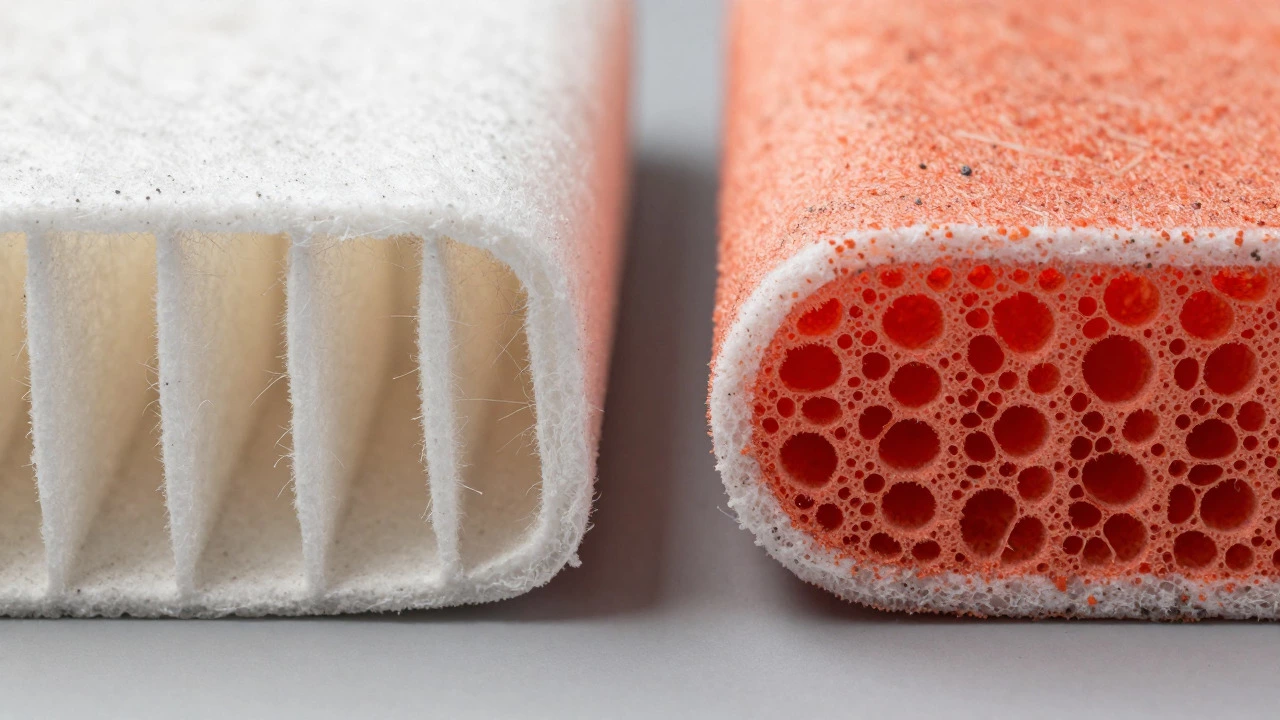
Standard OEM (Original Equipment Manufacturer) filters use dry paper. Think of it like coffee filter paper. It relies on a dense mat of fibers to catch particles. When the paper gets clogged, airflow drops. To fix this, you replace the filter. Simple.
Performance air filters are reusable filters typically made from oiled cotton gauze, foam, or pleated synthetic materials designed to increase airflow while maintaining filtration. Unlike paper, these materials are porous. They rely on oil or electrostatic charges to trap particles. The oil creates a sticky barrier that catches dust before it passes through the weave. This allows larger pores for better breathing without sacrificing the capture rate.
The key metric here is filtration efficiency. Most reputable brands test their filters against ISO standards. A good performance filter will trap 99%+ of particles down to 5 microns. For context, human hair is about 70 microns thick. Sand is around 100-200 microns. So we are talking about very fine dust.
The Myth of the "Dirty" Filter
Why do people think performance filters are dirty? There are two main reasons.
First, visual confusion. When you pull out an old paper filter, it looks gray and caked with dirt. When you pull out a used oiled cotton filter, it might look cleaner because the dirt sits on the surface rather than embedding deep in the fibers. Some owners mistake this surface-level appearance for poor performance. In reality, the dirt is still trapped; it’s just easier to wash off.
Second, bad products exist. The aftermarket is flooded with cheap, unbranded filters that claim to be "high flow" but are essentially thin screens. These do let in dirt. If you buy a $15 filter from a gas station that claims to boost power, you are likely buying a risk. Reputable brands like K&N, BMC, and AFE spend millions on wind tunnel testing and particle counting labs. Their filters are engineered to balance flow and filtration.
| Feature | OEM Paper Filter | Oiled Cotton Performance Filter |
|---|---|---|
| Filtration Method | Dry fiber density | Oil-coated mesh + electrostatic charge |
| Airflow Capacity | Moderate (restricts as it ages) | High (consistent over lifespan) |
| Lifespan | 15,000 - 30,000 miles | 100,000+ miles (with cleaning) |
| Dirt Visibility | Embedded in fibers (hard to see) | Sits on surface (easy to clean) |
| Risk of Bypass | Low (unless torn) | Medium (if over-oiled or damaged) |
When Do Performance Filters Fail?
A performance filter is only as good as its installation and maintenance. Here is where the "letting in dirt" problem actually happens.
Over-oiling: This is the biggest mistake. Owners think more oil means better filtration. Wrong. Excess oil can drip past the filter media and coat your Mass Air Flow (MAF) sensor. The MAF sensor measures incoming air volume. If it gets oily, it sends wrong data to the Engine Control Unit (ECU). This causes rough idling, poor fuel economy, and sometimes check engine lights. While this doesn’t directly let dirt in, it ruins the engine’s ability to manage that air efficiently.
Physical Damage: Oiled cotton is durable, but it isn’t indestructible. If you drop the filter during installation, or if a rodent chews through it, you have a hole. Air follows the path of least resistance. If there is a tear, unfiltered air will bypass the filter media entirely. Always inspect your filter for tears before reinstalling.
Poor Sealing: Many performance upgrades involve swapping the stock air box for a "cold air intake" tube. If the silicone couplers aren’t clamped tightly, or if the rubber boot cracks, ambient air can leak in before hitting the filter. This is called unmetered air. It’s dangerous because the ECU doesn’t know it’s happening, leading to lean conditions and potential engine damage.
Real-World Testing Data
We don’t have to guess. Independent laboratories have tested this repeatedly. In tests conducted by organizations like SAE International, top-tier performance filters consistently matched or exceeded OEM paper filters in particle retention rates.
For example, a study comparing a leading brand’s oiled filter against a generic paper filter showed both trapped 99.5% of particles between 5 and 50 microns. The difference was in airflow pressure drop. The performance filter allowed air to pass with less resistance, meaning the engine didn’t have to work as hard to breathe. Less restriction equals slightly better throttle response and, in some cases, a small horsepower gain (usually 3-5 HP).
However, low-cost alternatives failed miserably. Unbranded filters often had filtration rates below 80%, letting significant amounts of fine dust into the engine. This confirms that brand reputation matters. Stick to manufacturers who publish their filtration data.
Maintenance: Keeping Your Engine Clean
If you install a performance filter, you commit to maintenance. Paper filters are disposable; performance filters are reusable. This is a feature, not a bug, but it requires discipline.
- Clean every 60,000 to 100,000 miles: Or sooner if you drive in dusty areas. Brisbane summers can be dry and dusty, especially after bushfires. If you live in a region with high airborne particulate matter, check your filter every 30,000 miles.
- Use the right cleaner: Don’t use household degreasers. Use the manufacturer’s specific cleaning kit. These solutions dissolve the old oil and dirt without damaging the cotton gauze.
- Dry completely: After washing, let the filter air-dry fully. Never use compressed air to dry it, as high-pressure air can blow the fibers apart, creating micro-tears.
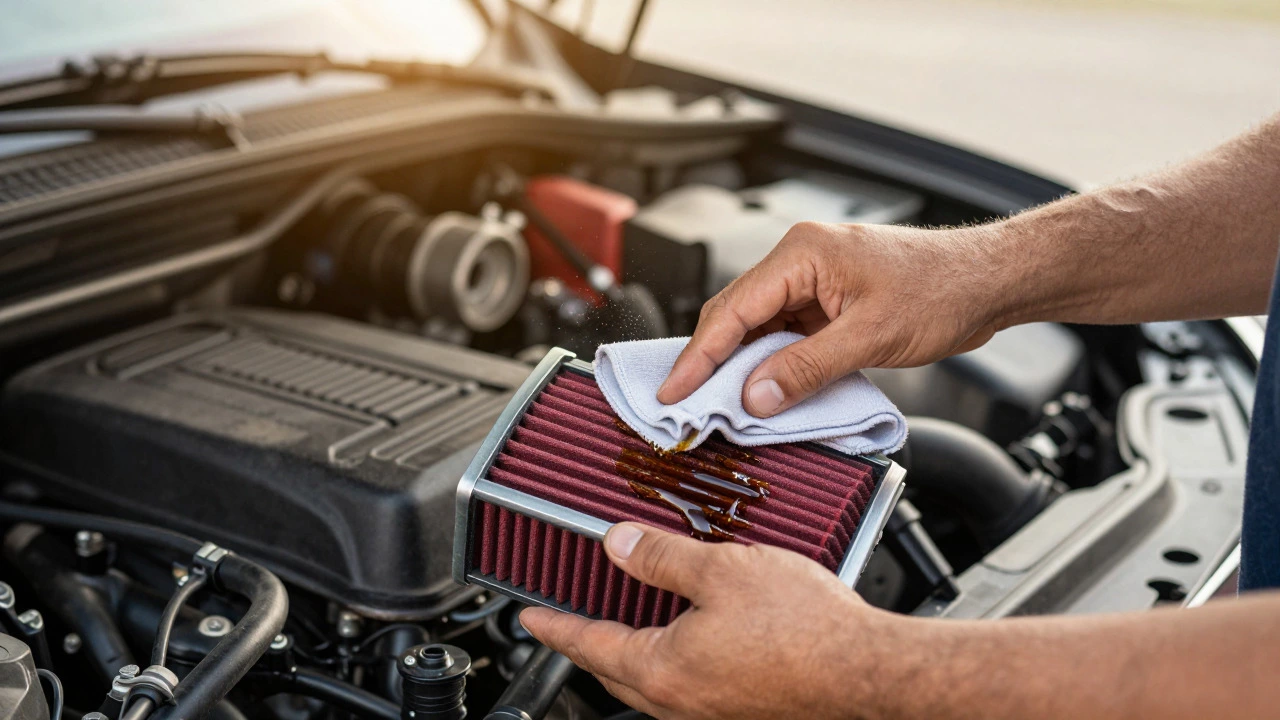
- Re-oil lightly: Apply the new oil evenly until the fabric appears uniformly pink or red (depending on the brand). Wipe away any excess with a clean cloth. You should not see oil dripping off the filter.
Skipping the drying step is a common error. If you re-oil a damp filter, the water traps dirt inside the fibers, reducing filtration efficiency over time.
Who Should Avoid Performance Filters?
Not everyone needs a performance filter. If you drive a commuter car in a clean city environment, the stock paper filter is perfectly adequate. It’s cheaper, easier to replace, and carries zero risk of user error.
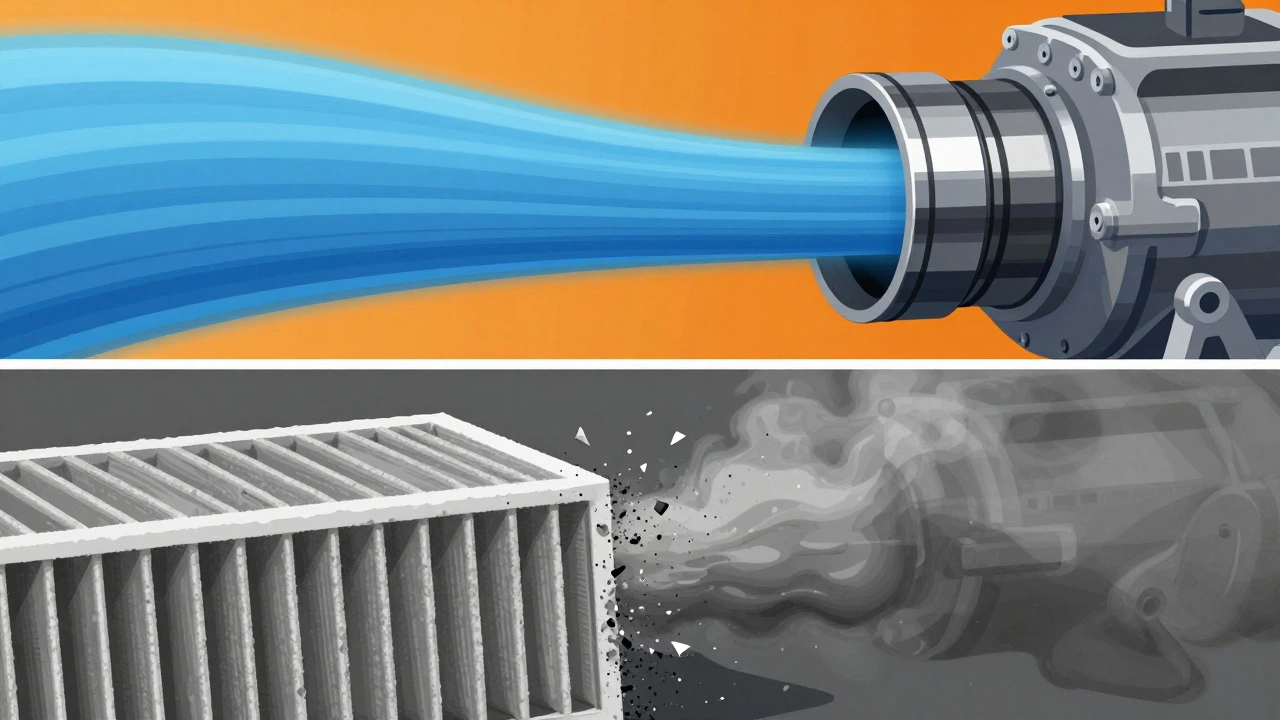
Performance filters shine when you have modified the rest of the engine. If you’ve added a turbocharger, supercharger, or tuned the ECU for higher RPMs, the engine demands more air. A restrictive paper filter becomes a bottleneck. In these scenarios, a high-flow filter ensures the engine gets the oxygen it needs to burn fuel efficiently.
Also, consider your driving environment. If you frequently drive on unpaved roads, track days with gravel runoff, or in desert climates, the increased surface area of a performance filter can handle heavy loads better than paper, which might tear under high suction forces.
Final Verdict
Do performance air filters let in more dirt? No. High-quality, properly maintained performance filters provide equal or better filtration than OEM paper filters. The idea that they are "dirty" stems from misinformation and bad experiences with cheap, untested products.
The real risks are user error: over-oiling, poor sealing, and neglecting maintenance. If you treat your filter with respect, it will protect your engine while allowing it to breathe easier. Just remember, the best filter is one that is clean, sealed tight, and installed correctly.
Can a performance air filter void my warranty?
In many regions, including Australia and the US, laws protect consumers from blanket warranty voids. Under the Magnuson-Moss Warranty Act (US) and similar consumer laws elsewhere, a dealer cannot void your warranty simply because you installed a performance filter. They must prove that the filter directly caused the damage. For example, if your engine fails due to dirt ingestion, and they can show your filter was torn or missing, they may deny the claim. However, if your transmission fails, the filter is irrelevant. Keep records of your maintenance to prove proper care.
How much horsepower does a performance air filter add?
On a stock vehicle, the gains are minimal, typically 1-5 horsepower. You won’t feel a dramatic difference in acceleration. The primary benefit is improved throttle response and slightly better engine breathing. Significant horsepower gains usually require supporting modifications like exhaust upgrades, tuning, or forced induction. Don’t buy a performance filter expecting a massive power spike; buy it for longevity and marginal efficiency improvements.
What happens if I put too much oil on my filter?
Excess oil can drip onto your Mass Air Flow (MAF) sensor. The MAF sensor uses delicate wires to measure air velocity. Oil coats these wires, causing inaccurate readings. This leads to rich fuel mixtures, poor mileage, rough idling, and potentially a Check Engine Light. If this happens, clean the MAF sensor with specialized MAF cleaner spray, not carburetor cleaner, which can damage the sensor elements.
Should I wash my performance filter with soap and water?
No. Household soaps and detergents can leave residues that interfere with the new oil application. Use the manufacturer’s recommended cleaning solution. These kits are formulated to break down the specific type of oil used in the filter without damaging the cotton gauze structure. Improper cleaning can reduce the filter’s lifespan and filtration efficiency.
Is a cold air intake better than a drop-in performance filter?
A cold air intake replaces the entire airbox with a tube that draws air from outside the engine bay, where it is cooler. Cooler air is denser and contains more oxygen, which can improve combustion. A drop-in filter just swaps the filter element inside the existing box. Cold air intakes offer more potential for performance gains but are more expensive and carry a higher risk of heat soak or water ingestion if not designed well. Drop-in filters are safer, cheaper, and easier to install.