Carbon Fiber Longevity & Health Calculator
Estimated Structural Health
Enter details to analyze
Provide information about your carbon fiber part's age, quality, and environment to get an estimate of its current condition and expected lifespan.
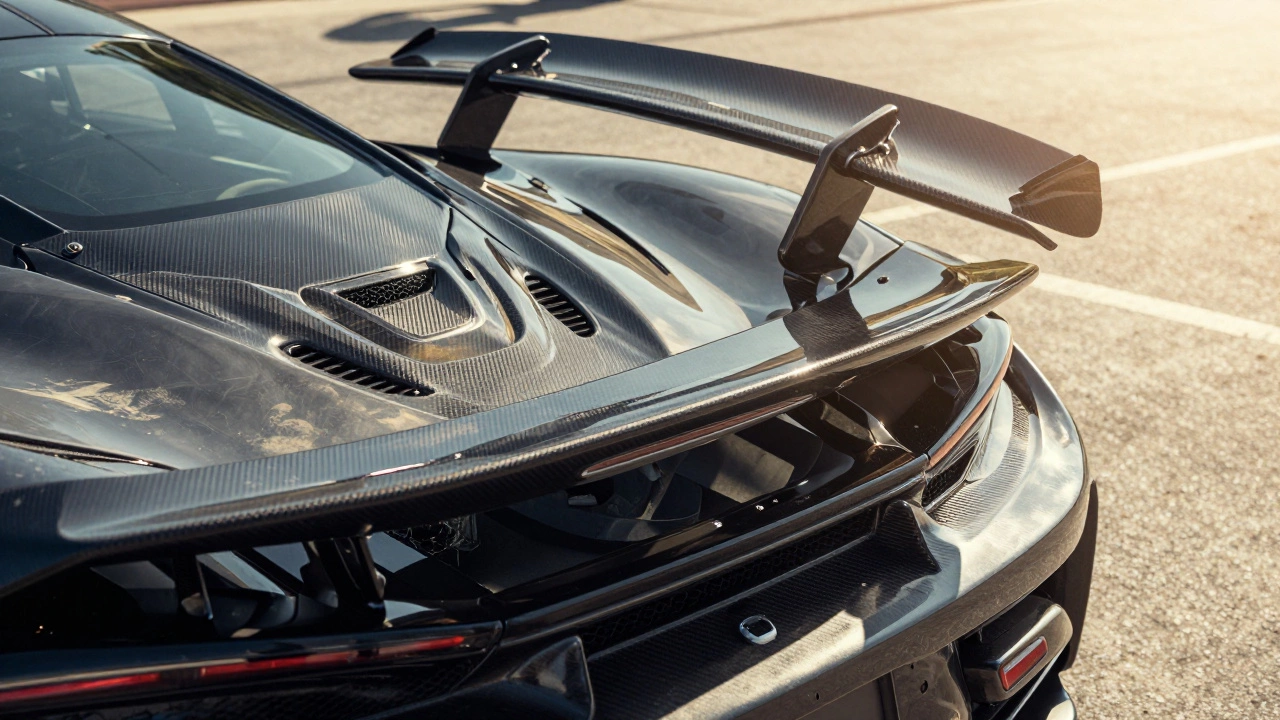
There is a persistent myth in the car community that carbon fiber is immortal. You buy a sleek rear wing or a front splitter, and you expect it to last forever without care. But if you have ever seen a yellowed, brittle composite part on an old track car, you know reality is different. The short answer is yes, carbon fiber components can weaken over time, but not for the reason most people think. The carbon strands themselves do not age; the glue holding them together does.
Understanding this distinction is crucial for anyone investing in aerodynamic upgrades. If you treat your parts like plastic bumpers, they will fail. If you understand the chemistry of the material, you can keep your setup looking fresh and performing safely for decades. Let’s break down what actually happens to these materials when they sit under the sun, rain, and road salt.
The Material Breakdown: Strands vs. Resin
To understand why parts degrade, we need to look at what they are made of. A typical automotive component, like a spoiler, consists of two main ingredients: the reinforcement and the matrix. The reinforcement is the Carbon Fiber, which provides the tensile strength and stiffness. This is essentially woven graphite threads. These threads are chemically inert. They do not rust, they do not rot, and they do not degrade from UV exposure. In fact, archaeologists have found carbon-based structures that have remained intact for thousands of years.
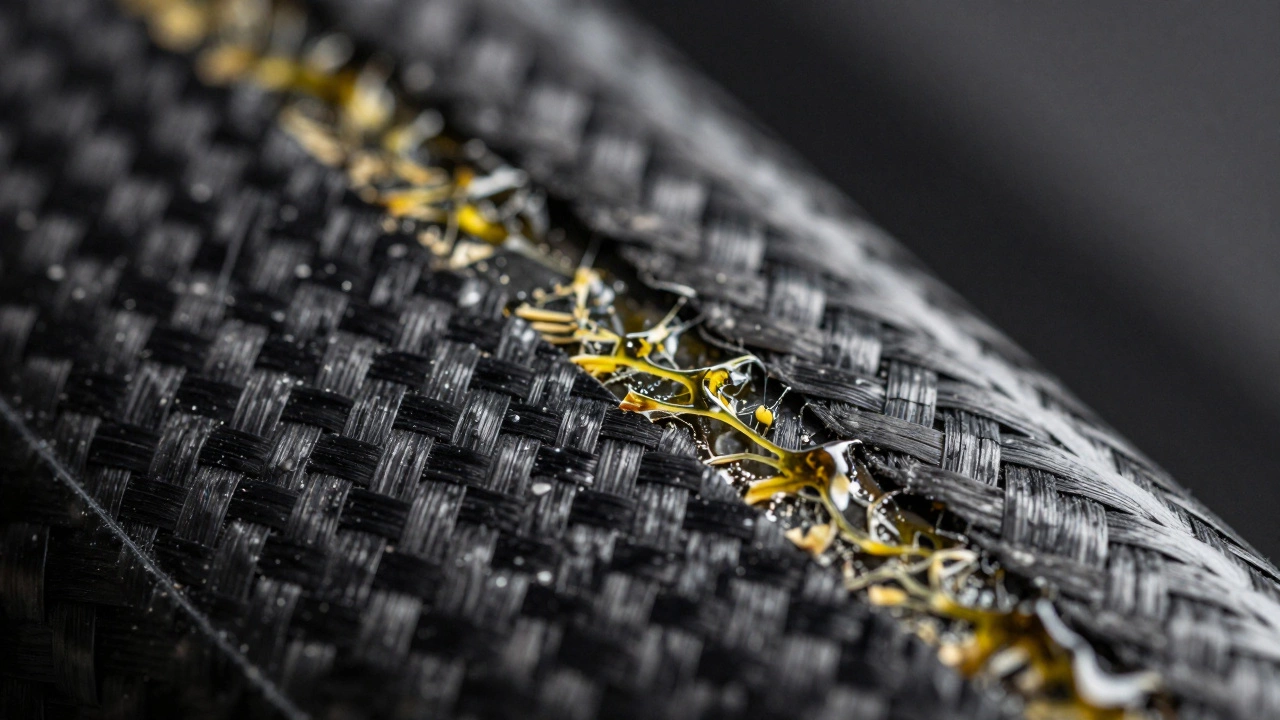
The problem lies in the second ingredient: the Polymer Matrix (or resin). This is the epoxy or polyester glue that binds the fibers together. It transfers the load between the strands and gives the part its shape. Unlike the fibers, this resin is organic. It reacts to environmental factors. When people say "carbon fiber breaks," they are usually describing the resin failing, causing the fibers to delaminate or separate.
| Component | Function | Vulnerability to Aging |
|---|---|---|
| Carbon Fibers | Provides structural strength and rigidity | Negligible. Chemically stable and inert. |
| Epoxy/Polyester Resin | Binds fibers, transfers load, shapes part | High. Susceptible to UV, heat, and moisture. |
| Clear Coat/Gelcoat | Protective outer layer against elements | Critical. First line of defense; fails first. |
The Silent Killer: UV Radiation
If you live in Brisbane, as I do, you know the sun is no joke. Ultraviolet (UV) radiation is the number one enemy of composite materials. When UV rays hit the surface of your spoiler, they don't just fade the color; they break down the chemical bonds in the resin and the clear coat. This process is called photo-degradation.
Here is what happens step-by-step:
- Surface Chalking: The top layer of the clear coat begins to oxidize. It turns white and dusty. This is cosmetic but indicates the barrier is breaking.
- Resin Yellowing: Once the clear coat fails, UV hits the resin. Epoxy resins tend to turn amber or yellow. This doesn't always mean weakness yet, but it signals exposure.
- Micro-Cracking: As the resin degrades, it becomes brittle. Tiny cracks form on the surface. These are often invisible to the naked eye until you run your finger over them.
- Moisture Ingress: Water gets into those micro-cracks. When the temperature drops at night, the water expands. This pushes the fibers apart, leading to delamination.
A study by the National Renewable Energy Laboratory (NREL) on polymer composites showed that unprotected epoxy resins can lose up to 30% of their interlaminar shear strength after just 1,000 hours of accelerated UV exposure. For a daily driver parked outside, that could mean significant weakening in three to five years without proper protection.
Heat Cycles and Moisture Absorption
It’s not just the sun. Heat cycles play a massive role. During the day, your carbon fiber hood or splitter absorbs heat from the engine bay and the sun. At night, it cools down. Materials expand when hot and contract when cold. Over thousands of cycles, this thermal stress creates fatigue in the bond between the fiber and the resin.
Moisture absorption is another factor. Carbon fiber itself does not absorb water, but the resin does. Polyester resins, which are cheaper and often used in lower-quality aftermarket parts, are more porous than high-grade epoxies. If water penetrates the matrix, it can cause osmotic blistering. Imagine a bubble forming inside the material. When you drive over a speed bump, that weak spot can crack suddenly. This is why you sometimes see a part snap cleanly rather than bend.
Manufacturing Quality Matters More Than Age
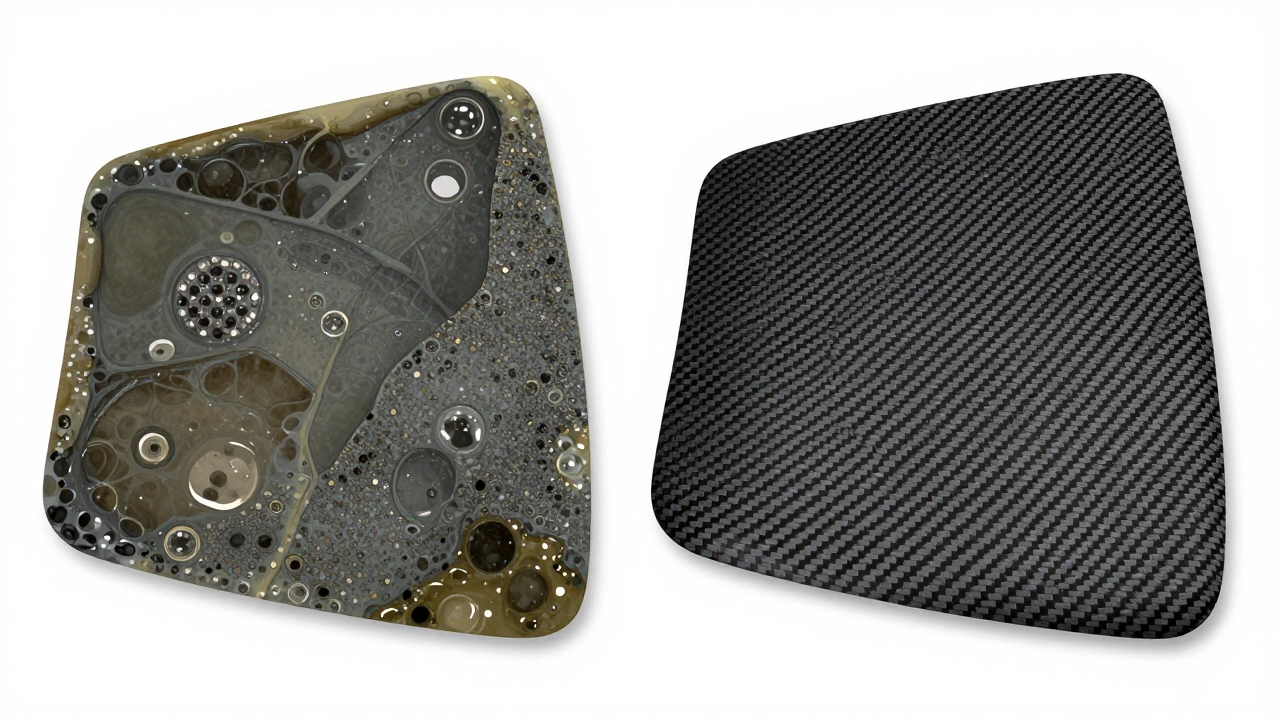
Not all carbon fiber is created equal. The longevity of your spoiler depends heavily on how it was made. There are two main manufacturing methods you will encounter:
- Wet Layup: Fibers are hand-laid into a mold and saturated with resin. This method is prone to air bubbles and inconsistent resin-to-fiber ratios. Parts made this way are heavier and weaker. They degrade faster because excess resin acts as a stress point.
- Preg (Pre-impregnated): Fibers are pre-soaked with a precise amount of resin and frozen. They are laid into the mold and cured under high pressure and temperature (autoclave curing). This results in a denser, stronger part with fewer voids. Preg parts resist moisture and UV much better because the structure is tighter.
If you bought a cheap, wet-layup splitter from an unknown brand, it might start showing signs of wear in two years. A high-quality, autoclave-cured wing from a reputable manufacturer like Vorsteiner or Novitec can last ten years or more with minimal care. The difference isn't magic; it's engineering precision.
Signs Your Carbon Fiber Is Failing
You don't need a lab test to tell if your part is getting weak. Look for these visual and tactile cues:
- Fading or Discoloration: If the black weave looks gray or washed out, the UV inhibitors are gone.
- Soft Spots: Press gently on flat areas. If it feels spongy or flexes where it shouldn't, the internal structure may be compromised.
- Visible Delamination: Look closely at the edges. If you see layers separating or bubbling, moisture has gotten in.
- Crazing: A network of fine cracks on the surface. This is the resin giving up.
If you notice any of these, especially on a safety-critical part like a roof scoop or a heavy rear wing, consider replacing it. Aerodynamic forces increase with the square of speed. A weakened part that holds up at 60 km/h might shatter at 120 km/h.
How to Extend the Life of Your Parts
You can significantly slow down the aging process with simple maintenance. You don't need expensive tools, just consistency.
- Apply UV Sealant: Use a dedicated ceramic coating or a high-quality UV-resistant sealant designed for composites. Reapply this every six months. This acts as sunscreen for your car.
- Wash Regularly: Bird droppings and tree sap are acidic. They eat away at the clear coat and resin faster than UV rays. Wash your car weekly, paying attention to aerodynamic parts.
- Avoid Harsh Chemicals: Do not use abrasive polishes or strong solvents on carbon fiber. They strip the protective layers. Stick to pH-neutral car shampoos.
- Store Indoors When Possible: If you aren't driving the car for weeks, park it in a garage. Even partial shade makes a huge difference in reducing thermal cycling and UV exposure.
Repairing vs. Replacing
If your part is damaged, can you fix it? Minor surface scratches can be polished out. Small chips can be filled with epoxy putty and repainted. However, if there is structural damage-like a crack running through the main spar of a wing-repair is rarely worth the risk. The integrity of the laminate is broken. Professional repair involves sanding down to the bare fiber, applying new prepreg layers, and re-curing, which is costly and complex. For most enthusiasts, buying a new, high-quality part is safer and often more economical than attempting a structural repair.
Conclusion on Durability
Carbon fiber does not "expire" like milk, but it does wear out. The fibers remain strong, but the resin matrix degrades due to UV, heat, and moisture. By choosing high-quality preg-manufactured parts and maintaining a rigorous cleaning and sealing routine, you can ensure your aerodynamic upgrades look sharp and perform safely for many years. Don't let the myth of invincibility trick you into neglecting care. Treat the material with respect, and it will reward you with performance and style.
How long does a carbon fiber spoiler last?
With proper care and high-quality manufacturing (preg/autoclave), a carbon fiber spoiler can last 10-15 years or more. Lower quality wet-layup parts may show significant degradation in 3-5 years, especially in harsh climates with high UV exposure.
Does carbon fiber rust?
No, carbon fiber does not rust because it is not metal. However, the mounting hardware (bolts, brackets) attached to the carbon fiber part can rust if they are not stainless steel or properly coated. Always check your fasteners.
Can you repair cracked carbon fiber?
Minor surface cracks can be repaired with epoxy filler. Structural cracks, especially in load-bearing areas like wing spars, should generally lead to replacement. Repairs rarely restore 100% of the original strength and can be a safety risk at high speeds.
Why is my carbon fiber turning yellow?
Yellowing is caused by UV degradation of the epoxy resin. It means the protective clear coat has failed or worn off. Applying a UV-inhibiting ceramic coating or sealant can prevent further yellowing, though existing discoloration may not fully reverse.
Is dry carbon fiber stronger than standard carbon fiber?
Yes, dry carbon fiber (prepreg) is significantly stronger and lighter than wet-layup carbon fiber. It is manufactured under high pressure and heat, resulting in higher fiber content and fewer voids, making it more resistant to impact and environmental degradation.