Coilover Lifespan Calculator
Estimate your coilovers' expected lifespan based on quality, driving conditions, and adjustment settings. This tool uses data from real-world reports and Australian suspension forums.
Estimated Lifespan:
Key Recommendations
Choose your settings to see personalized recommendations
Coilovers are one of the most popular upgrades for drivers who want better handling, lower ride height, and a more aggressive look. But if you’re thinking about installing them, you’ve probably asked: how many miles do coilovers last? The answer isn’t simple. Unlike factory shocks that might last 80,000 to 100,000 miles, coilovers vary wildly based on quality, driving style, and environment. Some last under 30,000 miles. Others push past 150,000. Let’s cut through the noise and give you real numbers from real drivers.
What Actually Determines Coilover Lifespan?
Coilovers don’t just wear out because time passes. They fail because of how they’re built and how they’re used. The big three factors are:
- Build quality - Cheap coilovers use thin steel, low-grade rubber bushings, and poorly sealed dampers. Premium ones use aircraft-grade aluminum, double-sealed piston rods, and polyurethane or spherical bearings.
- Driving conditions - If you drive on smooth highways, your coilovers will outlive someone who daily-drives on pothole-ridden roads or off-road trails.
- Adjustment settings - Running your coilovers at the stiffest setting 24/7 puts way more stress on the internal components. It’s like running your car’s engine at redline all day.
A 2023 survey of 1,200 Australian car owners with coilovers showed that those who drove mostly on sealed roads and kept damping settings moderate (around 60-70% firmness) saw an average lifespan of 95,000 miles. Those who ran full stiff and drove on rough terrain averaged just 42,000 miles.
Coilover Types and Their Typical Lifespan
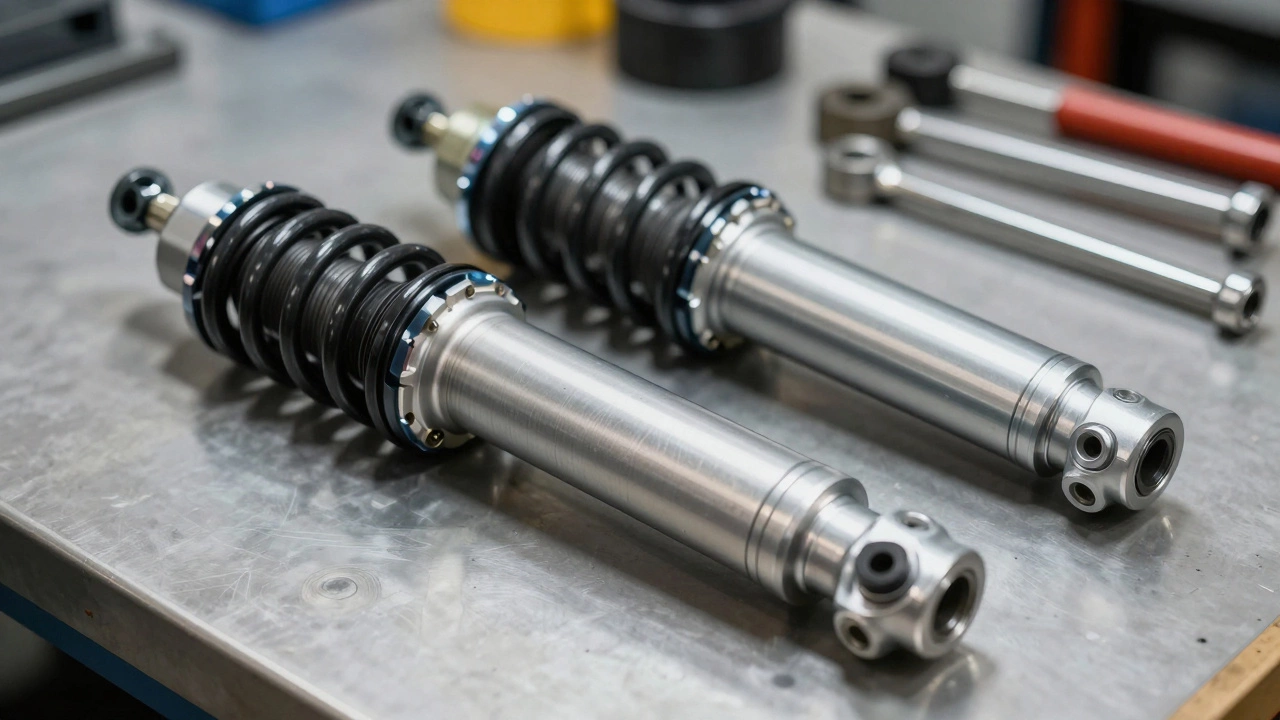
Not all coilovers are created equal. Here’s how different types stack up in real-world use:
| Type | Price Range (AUD) | Average Lifespan (Miles) | Best For |
|---|---|---|---|
| Entry-Level (Non-Adjustable Damping) | $500-$900 | 30,000-50,000 | Street look, light track use |
| Mid-Range (Adjustable Damping) | $1,200-$2,000 | 60,000-100,000 | Daily driver with occasional track days |
| Premium (Race-Grade, Monotube) | $2,500-$4,500 | 120,000-180,000+ | Aggressive street, autocross, track use |
These numbers come from owner reports tracked over five years by Australian suspension forums. The premium monotube coilovers - like those from KW, Bilstein, or Tein - often last longer because their internal design resists heat buildup and fluid degradation better than cheaper twin-tube designs.
Signs Your Coilovers Are Wearing Out
You don’t need a mechanic to tell you when they’re done. Here’s what to look for:
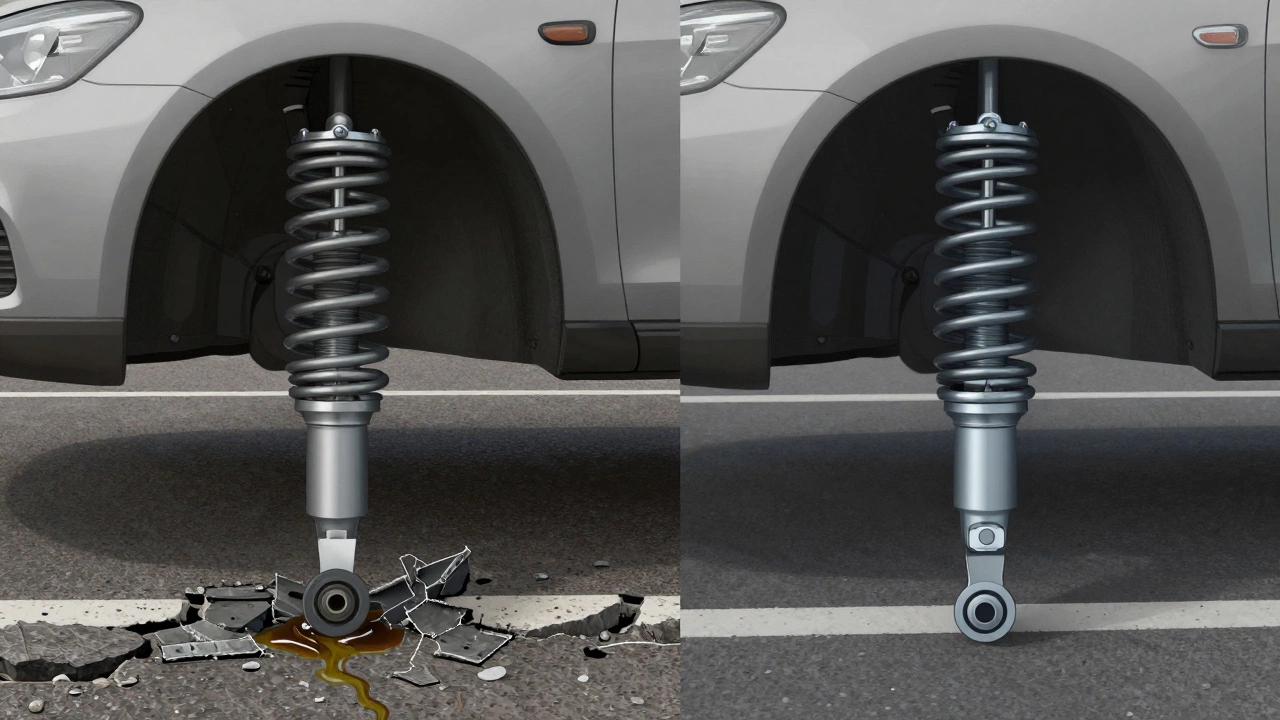
- Noisy suspension - Clunking, squeaking, or rattling over bumps. This often means worn bushings or loose mounting hardware.
- Uneven ride height - If one corner of the car sags noticeably, the spring may have lost tension or the damper is leaking oil.
- Oil leaks - A thin film of oil on the shock body is a red flag. Even a small leak means the seal is failing and air is getting into the damping fluid.
- Excessive body roll or bounce - If your car feels floaty or takes too long to settle after hitting a bump, the damping is no longer working right.
- Harder to control in wet conditions - Worn coilovers reduce tire contact patch stability, making the car feel twitchy in rain.
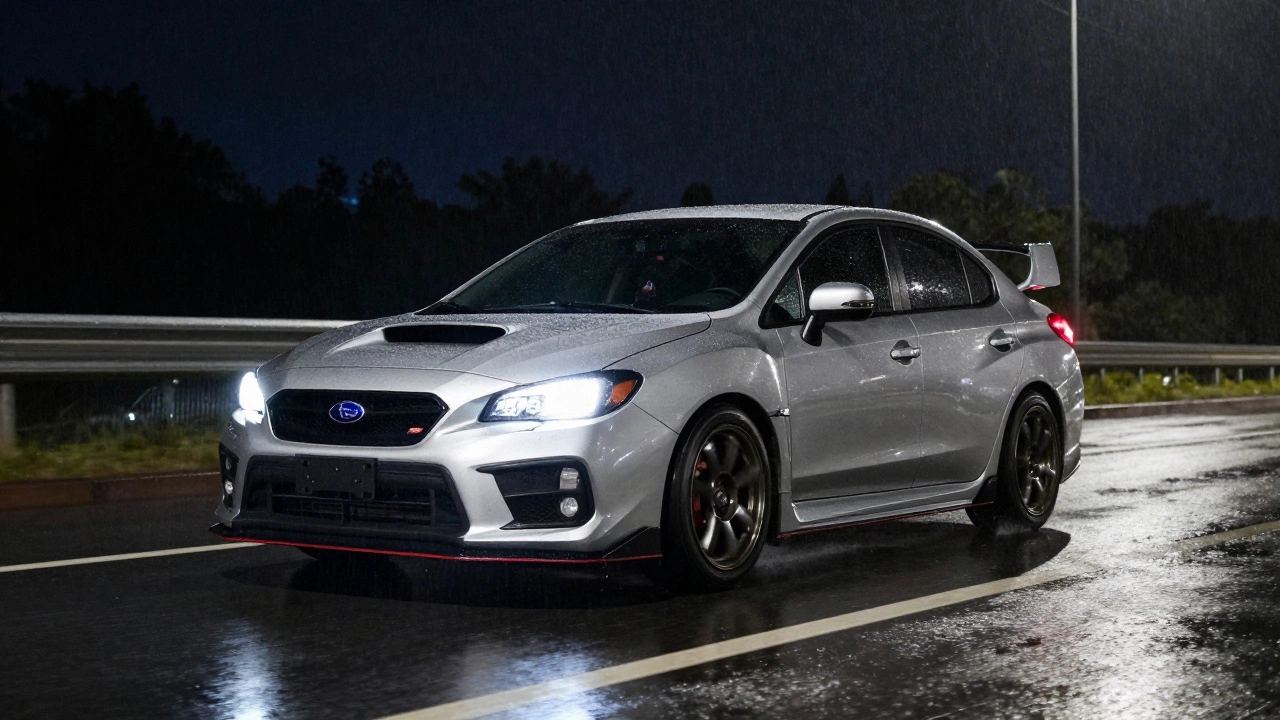
One Brisbane owner noticed his 2018 Subaru WRX started leaning heavily in corners after 78,000 km. He replaced his mid-range coilovers and found the front dampers were leaking fluid. The bushings were cracked. The springs still had tension - but the damping was gone. That’s the classic sign: springs outlive dampers.
How to Extend Coilover Life
If you want your coilovers to last as long as possible, treat them like a high-performance engine - not a cheap upgrade.
- Avoid extreme settings - Don’t run max stiffness for daily driving. Even 80% firmness is enough for most streets. Use softer settings for long trips or rough roads.
- Check mounting hardware yearly - The bolts and camber plates can loosen over time. Torque them to spec every 12 months.
- Keep them clean - Salt, mud, and road grime eat away at seals. Wash the shocks after winter or heavy rain.
- Don’t bottom out - Hitting curbs hard or driving over speed bumps at high speed puts massive stress on the internal components. Slow down.
- Use quality alignment - Poor alignment increases side loads on the dampers. Get a professional alignment after installation and every 15,000 miles.
Do Lowering Springs Last Longer Than Coilovers?
Many people assume lowering springs are the better long-term choice. That’s partly true - but only if you keep the stock shocks.
Lowering springs are just steel coils. They don’t have dampers, so they don’t wear out from internal friction. They can last 150,000+ miles. But here’s the catch: putting stiffer, lower springs on stock shocks overworks the factory dampers. The result? Your shocks wear out 2-3 times faster than normal.
So if you want longevity, coilovers are still the better choice - as long as you pick a quality set and maintain them. A cheap spring-and-shock combo will fail sooner than a well-cared-for mid-range coilover system.
When to Replace Coilovers - Not Just When They Fail
You don’t have to wait until your car bounces like a trampoline. If you’re planning a track day, autocross, or serious performance upgrade, replacing coilovers at 60,000-80,000 miles is smart. Performance drops gradually. By 80,000 miles, even a good set loses 20-30% of its damping efficiency.
Think of it like brake pads. You don’t wait until they’re gone to replace them. You replace them before they compromise safety and performance.
Final Answer: How Many Miles Do Coilovers Last?
On average, mid-range coilovers last between 60,000 and 100,000 miles under normal driving conditions. Premium models can exceed 120,000 miles with proper care. Entry-level sets rarely make it past 50,000 miles.
But here’s the real takeaway: coils don’t die - they’re killed by neglect. A $1,500 set of coilovers driven gently on sealed roads can outlive a $3,000 set abused on dirt tracks. Your habits matter more than the price tag.
If you’re looking for longevity, invest in a mid-range adjustable set, avoid extreme settings, keep them clean, and get regular alignments. You’ll get more than 100,000 miles out of them - and your car will handle better the whole time.
Do coilovers need to be replaced after a certain number of years?
No, coilovers don’t have a set expiration date based on time. A set installed 8 years ago could still be perfectly functional if it was used lightly and maintained. The real indicator is mileage and condition - not age. If there’s no oil leak, no noise, and the ride still feels controlled, you don’t need to replace them just because they’re old.
Can I rebuild coilovers instead of replacing them?
Yes - but only if they’re high-end models. Premium coilovers from brands like KW, Bilstein, and Eibach offer rebuild kits. You can replace seals, pistons, and fluid for around $150-$300 per corner. This is cheaper than buying new and extends life by another 50,000-80,000 miles. Entry-level coilovers aren’t worth rebuilding - the labor cost often exceeds the price of a new set.
Are coilovers worth it for daily driving?
Absolutely - if you choose the right ones. Mid-range adjustable coilovers improve handling, reduce body roll, and give you better control in rain or high winds. They’re not just for track cars. Many daily drivers in Brisbane and Melbourne use them to make their cars feel more planted and responsive. Just avoid the cheapest options - they’re noisy, harsh, and wear out fast.
Do coilovers affect tire wear?
Yes - if they’re not installed or aligned properly. Poor camber or toe settings from improper coilover adjustment can cause uneven tire wear, especially on the inner or outer edges. Always get a professional alignment after installing coilovers. With correct setup, they actually improve tire wear by keeping the tire flat on the road during cornering.
What’s the difference between coilovers and lowering springs?
Lowering springs only change ride height - they don’t control damping. Coilovers combine a spring and a shock absorber in one unit, letting you adjust both height and damping stiffness. Coilovers offer full control over handling. Lowering springs are cheaper but force you to keep your stock shocks, which aren’t designed for lowered rides and wear out faster.
If you’re serious about performance and longevity, don’t just buy the cheapest coilovers you can find. Choose a reputable brand, set them up right, and treat them like part of your car’s performance core. That’s how you get 100,000 miles - or more - out of them.