
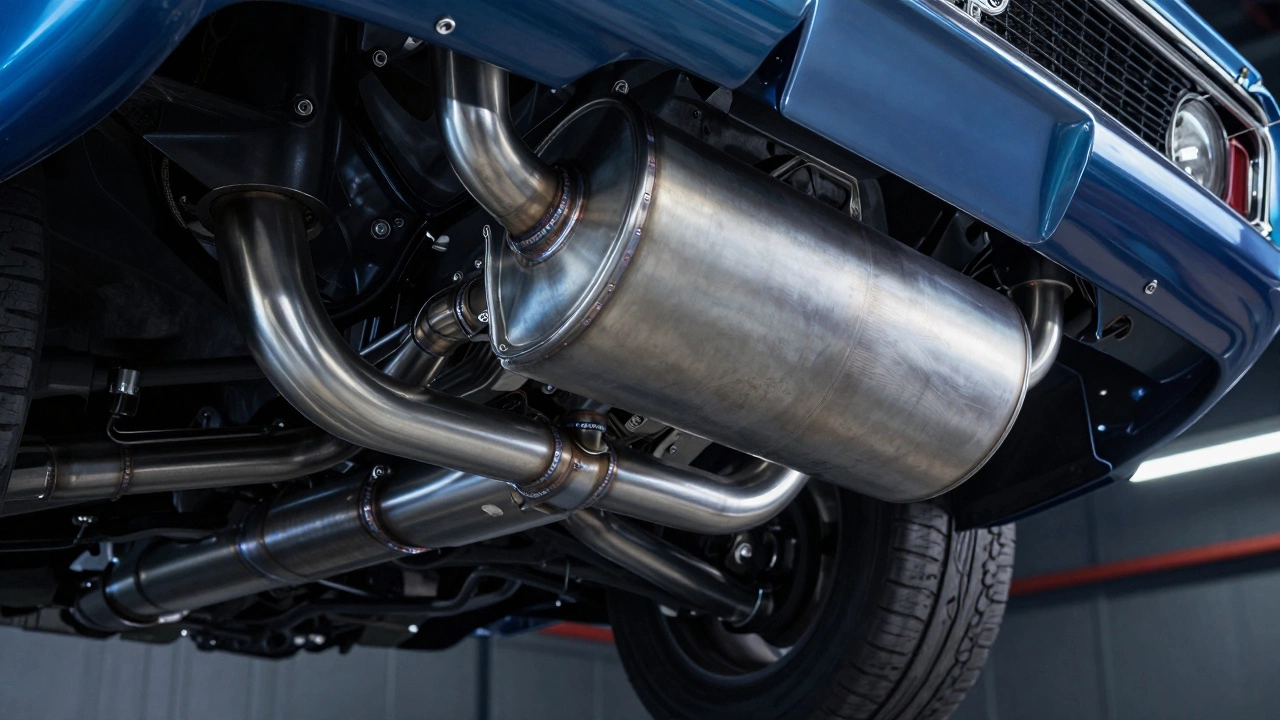
Exhaust Tone & Configuration Estimator
Estimated Sound Profile
Recommendations
Why Your Current Exhaust Sounds Thin
You want that deep, throaty rumble. You know the one. It’s not just noise; it’s a feeling in your chest when you roll out of a stoplight. But right now, your car probably sounds like a lawnmower with a cold or a high-pitched whistle that gives you a headache. If you are reading this, you are tired of the factory drone. You want custom exhausts that add character without turning your cabin into a concert hall.
The problem isn’t usually your engine. Modern cars are built for efficiency and emissions compliance, not auditory pleasure. Manufacturers pack them with resonators, baffles, and restrictive piping to kill sound waves before they reach the tailpipe. To get a deeper sound, you don’t need more volume. You need to change the physics of how those gas pulses exit your vehicle. It is about frequency, resonance, and flow, not just decibels.
The Physics of Tone: Frequency vs. Volume
Before you buy anything, you need to understand what makes a sound "deep." In acoustics, depth comes from low-frequency vibrations. High frequencies are sharp and piercing (like a trumpet), while low frequencies are round and bass-heavy (like a tuba). Most aftermarket mistakes focus on volume. They remove restrictions to make the car louder, but often result in a tinny, rattling mess. That is because unrestricted high-frequency noise overwhelms the low-end tones.
To deepen the tone, you need to encourage low-frequency resonance while dampening the harsh highs. This is where pipe diameter and length matter more than the brand logo on the tip. A larger diameter allows gas to expand and slow down slightly, lowering the pitch. However, if the pipe is too big relative to your engine’s displacement, you lose backpressure entirely. This creates a flat, empty sound rather than a deep growl. It is a balancing act between flow and restriction.
Changing Pipe Diameter: The First Step
If you have a stock exhaust, your pipes are likely undersized. For most naturally aspirated engines, stepping up by half an inch is the sweet spot. For example, if your factory setup uses 1.75-inch tubing, moving to 2.25 inches can immediately drop the pitch. The wider tube allows the exhaust gases to occupy more space, reducing the velocity and lowering the frequency of the sound waves exiting the system.
- Naturally Aspirated Engines: These benefit from moderate increases in diameter (0.5-0.75 inches over stock) to maintain some backpressure for torque while deepening the tone.
- Turbocharged Engines: Turbos hate backpressure. They thrive on free-flowing systems. Here, you can go larger (1.0-1.5 inches over stock) because the turbo manages airflow. The sound will be deeper but potentially louder due to increased RPM range.
- Diesel Engines: Diesels run at lower RPMs with higher torque. They need large diameters (3 inches or more) to prevent excessive backpressure, which kills performance. The natural low-RPM operation already provides a deep base note.
Don’t jump from 1.5 inches to 4 inches overnight. You will end up with a hollow, whooshing sound that lacks punch. Incremental changes yield better acoustic results.
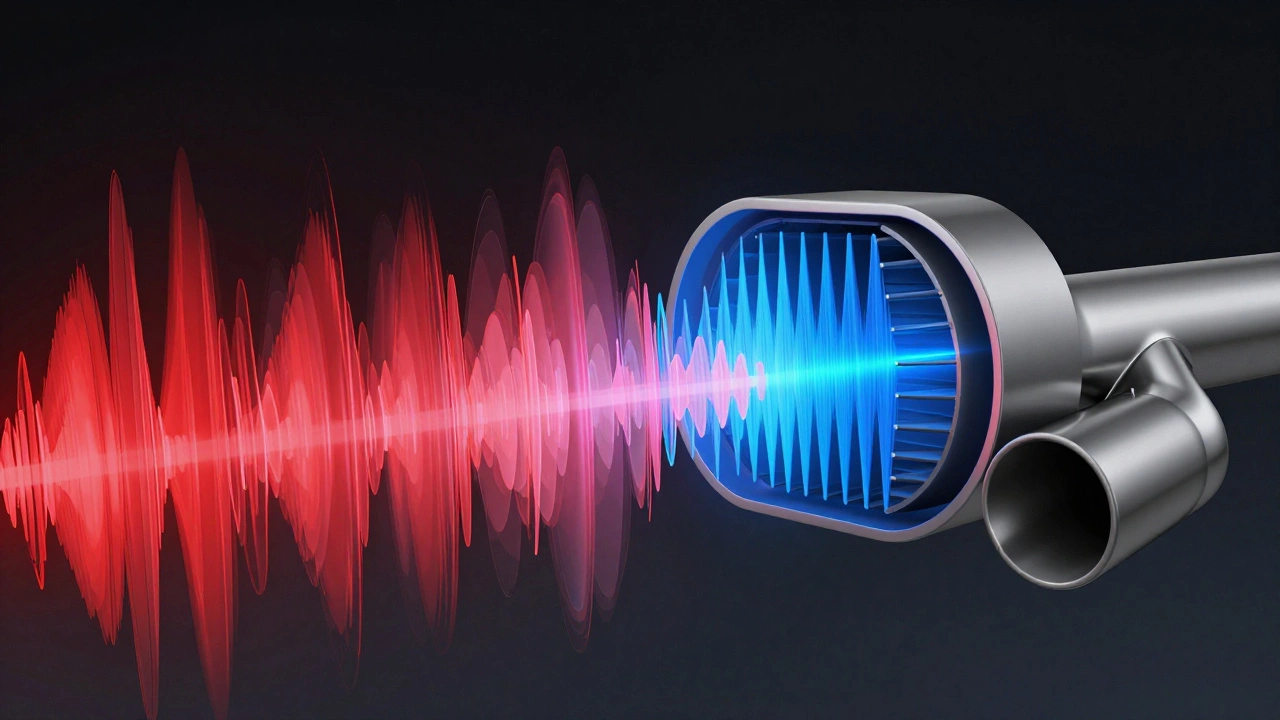
Muffler Technology: Baffles vs. Straight Pipes
This is where most people go wrong. They hear "straight pipe" and think it equals "deep sound." In reality, a straight pipe often sounds thin and raspy because it removes all sound-dampening elements, allowing high-frequency turbulence to dominate. To get a deep tone, you need controlled reflection.
Chambered Mufflers are devices that use internal chambers and perforated tubes to reflect sound waves back into the system, canceling out specific frequencies. By designing the chambers to target high-frequency cancellation, these mufflers leave the low-end intact. This is why many classic American muscle cars have such deep, lazy tones despite being loud. The chamber acts as a filter, letting the bass through while blocking the treble.
Alternatively, Bomb-style Mufflers are large, cylindrical mufflers that use a single large baffle to create a long path for sound waves, resulting in a deep, rolling thunder effect. These are popular in diesel trucks and heavy-duty applications. They require significant space under the vehicle but deliver that coveted deep rumble. If space permits, a bomb muffler is one of the most effective ways to deepen tone without resorting to dangerous straight piping.
The Role of Resonators
A resonator is different from a muffler. While a muffler reduces overall volume, a resonator targets specific unwanted frequencies. Factory cars often include H-pipes or X-pipes with resonators to cancel out the annoying "drone" heard at highway speeds. When people delete their resonators, they expect a deeper sound. Often, they get a louder, but still high-pitched, sound.
To deepen the sound, you should replace the factory resonator with a performance-oriented one designed for your engine type. Some aftermarket resonators are tuned to enhance the low-end frequencies while still cutting the mid-range drone. Look for resonators labeled as "tone-enhancing" rather than just "high-flow." A properly tuned resonator can transform a harsh burble into a smooth, deep idle note.
Exhaust Tips: More Than Just Looks
Can an exhaust tip really change the sound? Yes, but subtly. The tip is the final point where sound waves escape into the atmosphere. Its shape and angle dictate how those waves disperse. A straight-cut tip projects sound directly backward. An angled tip directs sound upward and outward, which can make the car sound louder to the driver but doesn’t necessarily deepen the tone.
For a deeper sound, look for tips with a Reverse Cone design. This shape expands slightly at the exit, slowing down the exhaust gases as they leave the pipe. This slight deceleration lowers the pitch of the exiting sound wave. Additionally, longer tips (6-8 inches) provide more surface area for sound expansion, contributing to a fuller, deeper note compared to short, stubby tips.
| Component | Impact on Depth | Impact on Volume | Best For |
|---|---|---|---|
| Larger Diameter Pipe | High | Medium | All Engine Types |
| Chambered Muffler | Very High | Low/Medium | Naturally Aspirated |
| Bomb Muffler | Extreme | High | Diesels/Large V8s |
| Straight Pipe | Low | Very High | Track Cars/Racing |
| Resonator Delete | Medium | High | Removing Drone |

Intake Tuning: The Hidden Variable
You cannot talk about exhaust sound in isolation. The intake system plays a massive role in the overall auditory experience. A restrictive air filter or a closed throttle body can choke off the induction noise that complements the exhaust note. When you open up the intake with a cold air intake or a panel filter, you allow more air to rush into the cylinders. This creates a vacuum-induced roar that blends with the exhaust rumble.
The combination of a deep exhaust and a roaring intake creates a balanced, aggressive sound profile. Without intake upgrades, a deep exhaust might sound muffled or disconnected. Think of it like a musical instrument: the exhaust is the body, but the intake is the breath. Both need to work together to produce a rich tone.
Legal and Practical Considerations in Australia
Living in Brisbane, I see plenty of cars with straight pipes getting fined. In Queensland, strict noise regulations apply. While a deeper tone is desirable, excessive noise is illegal. The Australian Design Rules (ADRs) set limits on vehicle noise levels. Modifying your exhaust to exceed these limits can result in fines and failed inspections.
Furthermore, removing catalytic converters to achieve a certain sound is illegal and harmful to the environment. Catalytic converters do reduce some sound, but modern designs are efficient enough that you can achieve a deep tone without deleting them. Focus on muffler design and pipe diameter instead. A well-tuned cat-back system can give you that deep, muscular sound while remaining street-legal and environmentally responsible.
Installation Tips for Best Results
Even the best components won’t sound good if installed poorly. Ensure all joints are sealed tightly. Leaks in the manifold or flanges create hissing noises that ruin the tone. Use new gaskets and torque bolts to specification. Additionally, check for clearance issues. If your exhaust touches the chassis or suspension components, it will create rattling noises that mask the deep tone you worked hard to achieve.
Finally, test drive your vehicle after installation. Listen at idle, at cruising speed, and under acceleration. If the sound is too harsh, consider adding a resonator or switching to a quieter muffler. If it’s too quiet, step up the pipe diameter or try a less restrictive muffler core. Tuning an exhaust system is iterative. Don’t settle for the first setup.
Does a straight pipe make the exhaust sound deeper?
Not necessarily. A straight pipe removes all sound-dampening elements, which often results in a loud, high-pitched, and raspy sound rather than a deep tone. To deepen the sound, you need controlled resonance, which is achieved through chambered mufflers or bomb-style mufflers, not just open piping.
What pipe size is best for a deep exhaust sound?
For naturally aspirated engines, increasing the pipe diameter by 0.5 to 0.75 inches over stock is ideal. For turbocharged engines, you can increase by 1.0 to 1.5 inches. Larger diameters allow exhaust gases to expand, lowering the frequency of the sound waves and creating a deeper tone.
Can exhaust tips change the sound of my car?
Yes, but subtly. Reverse cone tips can help lower the pitch by slowing down exhaust gases as they exit. Longer tips also provide more surface area for sound expansion, contributing to a fuller note. However, tips alone cannot fix a poorly tuned exhaust system.
Is it legal to modify my exhaust for a deeper sound in Australia?
It depends on the noise level. Australian Design Rules (ADRs) set strict limits on vehicle noise. Modifying your exhaust to exceed these limits is illegal. Focus on tone-enhancing mufflers and proper pipe sizing rather than straight piping or catalytic converter deletion to stay compliant.
Why does my exhaust sound tinny after upgrading?
A tinny sound usually indicates that high-frequency noise is overwhelming the low-end tones. This happens when you remove too much restriction (like using a straight pipe) or use a pipe diameter that is too large for your engine’s displacement. Adding a chambered muffler or reducing pipe size can help restore depth.