Car Detailing Earnings Calculator
Select Your Services
Basic Wash & Wax
$60-$90 • 1-1.5 hours
Interior Detail
$80-$120 • 2 hours
Full Detail
$150-$250 • 3-4 hours
Premium Service
$300-$600 • 6-8 hours
Business Schedule
Pro Tip: Most detailers earn $800-$1,000 per week by doing 4-5 full details at $200 each. Focus on premium services for better profit margins!
Starting a car detailing business from home isn’t just about washing cars-it’s about turning your garage into a profit center. You don’t need a fancy storefront, a big team, or a huge budget. All you need is the right tools, a solid plan, and the willingness to show up every day. In Brisbane, where the sun beats down and salt air clings to cars, there’s a real demand for professionals who know how to bring a vehicle back to life. And the best part? You can start this with under $2,000 and scale it as you go.
Understand What Car Detailing Really Means
Most people think car detailing is just a car wash. It’s not. Detailing is a full restoration process-inside and out. It includes clay barring, paint correction, interior deep cleaning, leather conditioning, and applying ceramic coatings. A basic wash might cost $30. A full detail? That’s $150 to $300. And customers will pay for it if you deliver real results.
Think of it like this: people don’t buy a new car every year. But they do want their current car to look and feel like one. That’s where you come in. You’re not selling a service-you’re selling a transformation.
Get the Right Car Detailing Kits
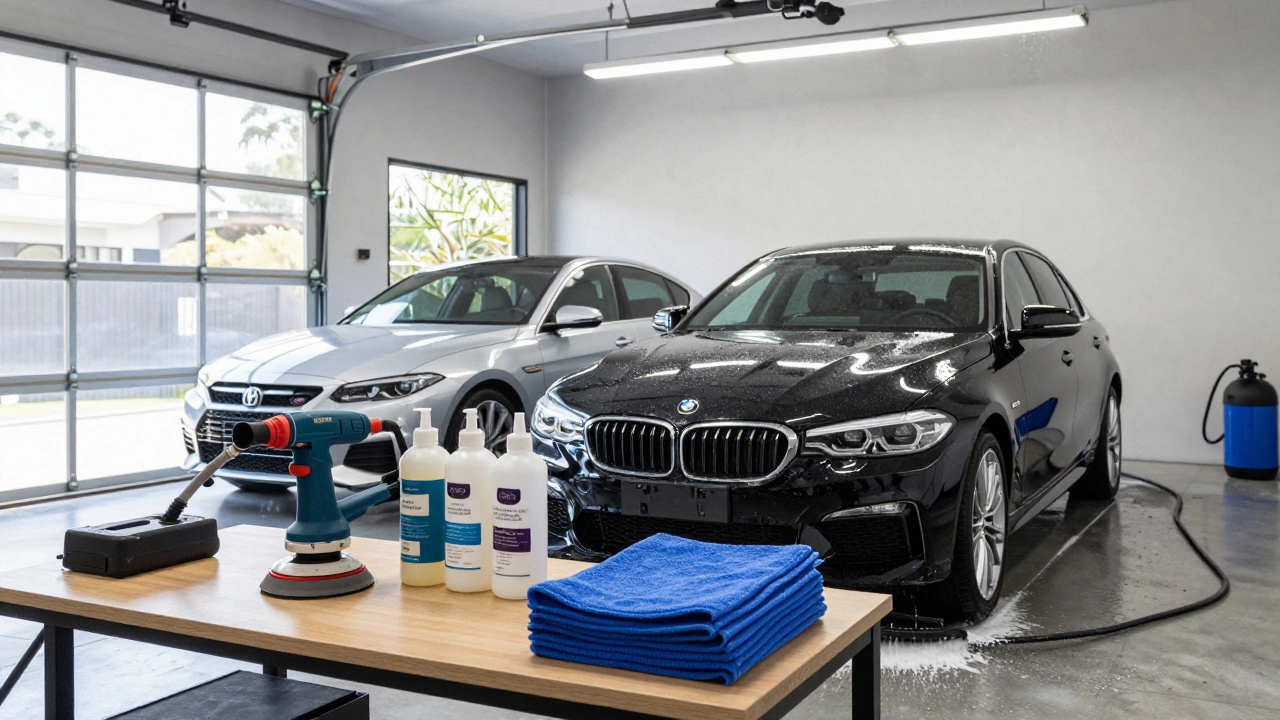
You can’t detail a car with a sponge and dish soap. That’s a myth that ruins paint. You need professional-grade tools. Here’s what a beginner kit should include:
- Two bucket system with grit guards
- Microfiber towels (at least 10, in different pile densities)
- Clay bar and lubricant
- Dual-action polisher (like the Porter-Cable 7424XP or similar)
- Paint correction compounds (cutting, polishing, finishing)
- Wheel cleaner and brush set
- Interior vacuum with crevice tool
- Leather and vinyl cleaner + protectant
- Glass cleaner with ammonia-free formula
- Ceramic coating (like Gtechniq C2 or CarPro Reload)
Don’t buy the cheapest gear. Cheap towels leave lint. Cheap polishers overheat. Bad products scratch paint. Spend $800-$1,200 upfront on quality. It pays back in fewer mistakes and happier clients.
Set Up Your Home Workspace
You don’t need a warehouse. A two-car garage is enough. Here’s how to make it work:
- Install a concrete floor with drainage
- Get a pressure washer with a 2,000 PSI rating
- Use a water softener or reverse osmosis system to avoid water spots
- Add LED work lights-bright, even lighting is critical for spotting swirls
- Keep a dedicated area for drying and polishing
- Store products in labeled, sealed containers
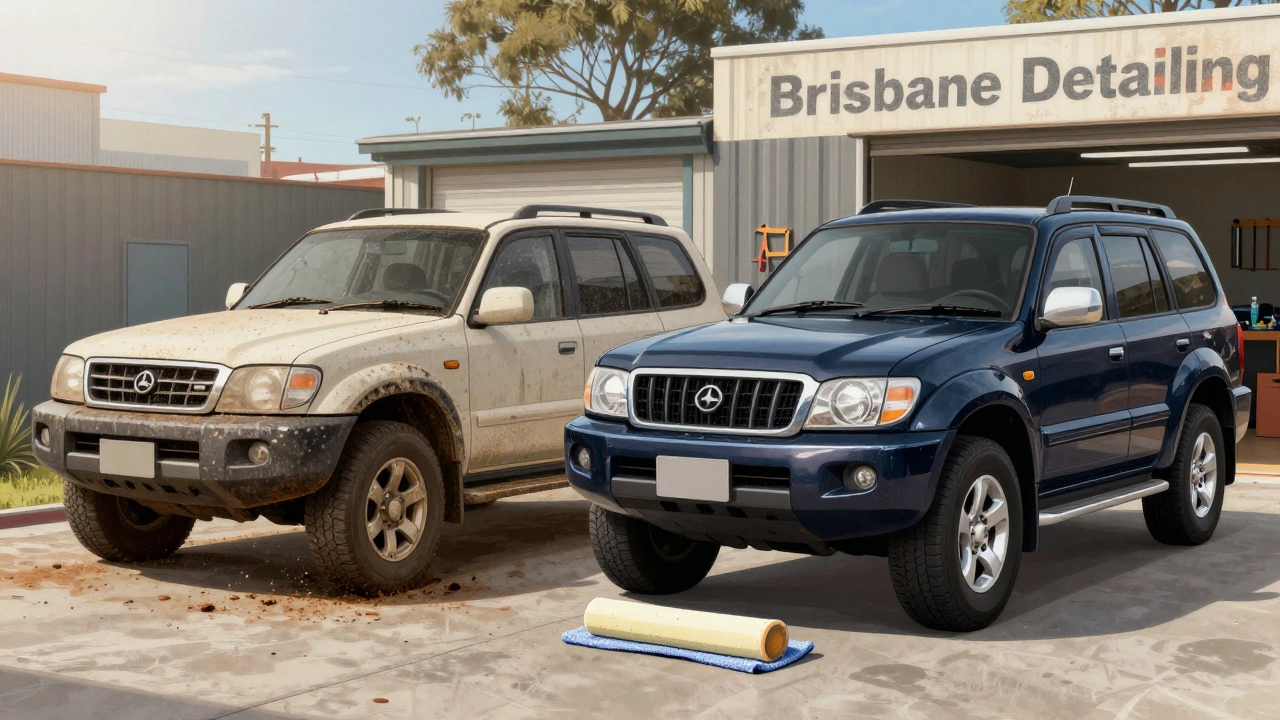
One Brisbane detailer I spoke to uses a 3m x 6m shed behind his house. He has a tarp under the car to catch runoff. He uses a 100-foot extension cord and a 15-amp outlet. No fancy permits needed. Just clean, organized, and consistent.
Learn the Process-Don’t Guess
Detailing isn’t intuitive. You can’t just spray, scrub, and hope. There’s a science to it. Start with these steps:
- Pre-wash: Use a snow foam to lift dirt before touching the paint
- Two-bucket wash: One for soapy water, one for rinsing your mitt
- Clay bar: Removes bonded contaminants like tree sap, rail dust, and industrial fallout
- Polish: Use a cutting pad for heavy swirls, then a finishing pad for gloss
- Seal: Apply wax or ceramic coating to protect
- Interior: Vacuum, steam clean upholstery, condition leather, clean windows
Watch YouTube tutorials from channels like Adam’s Polishes and Detailing King. Take notes. Practice on your own car first. Don’t take a client’s vehicle until you’ve done 10-15 practice jobs.
Build Your Brand and Get Clients
You’re not competing with big chains. You’re offering something they don’t: personal attention. Here’s how to find your first clients:
- Create a simple Instagram page: Post before-and-after photos daily
- Use hashtags like #BrisbaneCarDetailing, #HomeBasedDetailing, #CarDetailingAustralia
- Offer a discounted first detail to friends, neighbors, or local car clubs
- Print simple business cards with your phone number and service list
- Join Facebook groups like Brisbane Car Enthusiasts or Queensland Car Owners
- Ask for reviews-every one helps
One guy in Loganlea started with just 3 clients. He gave each a 50% discount. Two of them referred two more. Within six months, he was booking out two weeks in advance. He now charges $220 for a full detail and doesn’t advertise anymore.
Price Your Services Right
Undercharging kills your business. Overcharging scares people away. Here’s a realistic pricing guide for Brisbane:
| Service | Price Range | Time Required |
|---|---|---|
| Basic Wash & Wax | $60-$90 | 1-1.5 hours |
| Interior Detail | $80-$120 | 2 hours |
| Full Detail (Exterior + Interior) | $150-$250 | 3-4 hours |
| Paint Correction + Ceramic Coating | $300-$600 | 6-8 hours |
| Mobile Detail (come to you) | +20% markup | Same as above |
Charge more for premium services. Ceramic coating isn’t just a finish-it’s a 2-year warranty on shine. That’s worth $400+. Don’t be afraid to upsell.
Scale Without Quitting Your Job
You don’t have to go full-time right away. Start part-time. Weekends only. Afternoons after work. One car a day. That’s 4-5 cars a week. At $200 each? That’s $800-$1,000 a week. $3,200-$4,000 a month. That’s more than most part-time jobs pay.
As you get more bookings, hire a helper. Pay them $30-$40/hour to do the prep work-vacuuming, rinsing, drying. You focus on the polish and coating. Split the profit. Keep the business lean. No employees. No rent. Just you, your tools, and your hustle.
Avoid These Common Mistakes
- Using tap water without a water softener-leads to water spots
- Skipping the clay bar-contaminants stay on paint and get ground in during polish
- Using one towel for everything-lint and grit transfer
- Not drying cars in shade-sun dries water too fast, leaving marks
- Not having a contract or waiver-what if you scratch a car? You need protection
Buy a simple liability waiver template online. It’s $15. Protect yourself. Always take photos before and after. Clients love seeing the difference. It also protects you if they claim damage.
What Comes Next?
Once you’ve got 20 regular clients, you can add services:
- Mobile detailing (drive to them)
- Subscription plans (monthly detail for $120)
- Commercial fleets (delivery vans, taxis)
- Car show prep
- Detailing for luxury or exotic cars
Some detailers in Brisbane now run fleets of 5-10 vans. They have 3-4 detailers on contract. They make $15,000-$25,000 a month. It’s not fantasy. It’s what happens when you start small, stay consistent, and never stop learning.
Do I need a business license to start a home-based car detailing business in Brisbane?
You don’t need a special license just to detail cars from home in Brisbane. But you do need an Australian Business Number (ABN) to invoice clients and pay taxes. If you’re using a vehicle for business (like a van), you may need to register it as a commercial vehicle with the Queensland government. Always check with your local council-some areas restrict high-pressure washing on driveways. But for most home-based operations, an ABN and good record-keeping are all you need.
How long does it take to learn car detailing?
You can learn the basics in 2-4 weeks with daily practice. But mastering paint correction and ceramic coating takes 6-12 months. Most people start seeing professional results after 10-15 cars. The key is consistency. Don’t rush. Practice on old cars first. Watch videos. Take notes. Detailing is a skill, not a quick trick.
Can I detail cars in the rain or on a cloudy day?
Yes, but it’s not ideal. Rain makes it hard to dry properly and can cause water spots. Cloudy days are fine-just avoid working in direct sunlight, which can cause products to dry too fast. The best time to detail is early morning or late afternoon, when it’s cool and shaded. Brisbane’s weather is mostly forgiving, but always check the forecast.
What’s the biggest mistake beginners make?
Using the wrong products and tools. Many start with cheap microfiber towels, a single bucket, and a $50 polisher from Amazon. These tools break, leave scratches, or don’t work at all. The real cost isn’t the tools-it’s the time and reputation you lose when you ruin a customer’s paint. Invest in quality from day one. It’s cheaper in the long run.
How do I handle customer complaints?
Stay calm. Apologize-even if it’s not your fault. Offer to fix it. Most complaints come from miscommunication. If you didn’t explain the limitations (like deep scratches that can’t be removed), that’s on you. If the car had pre-existing damage, show them the before photos. Most clients will respect honesty. And if you fix it quickly, they’ll become your best referral.
Starting a car detailing business from home is one of the few trades where your skill is your only asset-and your biggest advantage. No franchise fees. No middlemen. Just you, your tools, and a car that looks brand new because of what you did. The market is hungry. The tools are accessible. The path is clear. All you need to do is start.