Car Detailing Profit Calculator
Service Types
Cost Factors
Profit Summary
Total Revenue
$0.00
Total Costs
$0.00
Net Profit
$0.00
Average Hourly Rate
$0.00
Total Hours Worked
0 hours
Starting a car detailing business from scratch doesn’t require a big loan, a fancy office, or years of experience. All you need is a good set of detailing kits, a willingness to learn, and the discipline to show up every day. In Brisbane, where the sun beats down hard and salt air clings to cars near the coast, there’s no shortage of people willing to pay to keep their vehicles looking new. The real question isn’t whether you can start - it’s whether you’re ready to do the work.
Understand What Car Detailing Really Means
Most people think detailing is just washing a car. It’s not. Detailing is restoration. It’s removing swirl marks from paint, reviving faded plastics, cleaning brake dust out of alloy wheels, and making leather feel like it just left the factory. A full detail can take 6 to 12 hours per vehicle, depending on condition. That’s not a quick side hustle - it’s a craft.
There are three main levels of detailing:
- Exterior detail: Wash, clay bar, polish, sealant or wax, tire and wheel cleaning
- Interior detail: Vacuuming, steam cleaning, leather conditioning, dashboard restoration, window cleaning
- Full detail: Both exterior and interior, plus engine bay cleaning and paint correction if needed
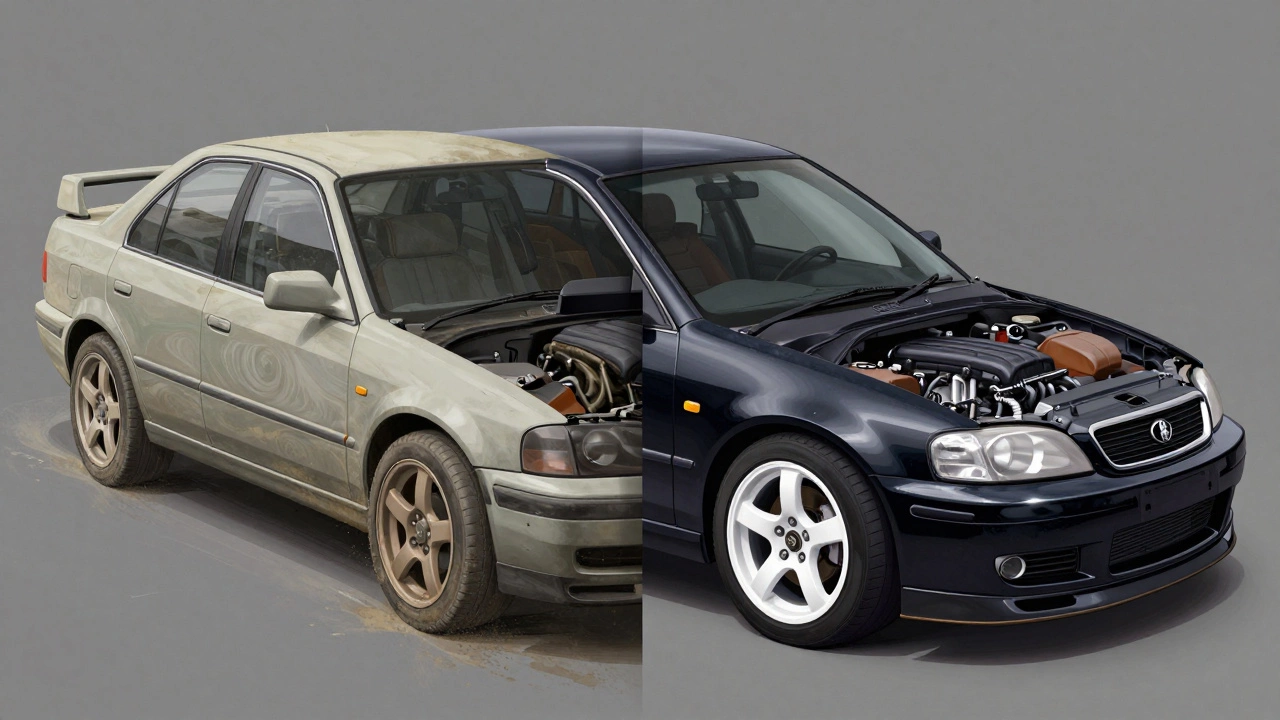
Beginners often skip paint correction, but that’s where the real money is. A car with swirl marks can look brand new after a single polish - and clients will pay $300-$600 for that alone.
Get the Right Detailing Kits
You don’t need every product on the market. Start with a solid core kit that covers the basics. Here’s what works in real-world conditions like Brisbane’s heat and humidity:
- Two-bucket wash method - prevents swirls from dirt transfer
- Microfiber towels - at least 10 high-quality ones (different piles for different tasks)
- Clay bar and lubricant - removes embedded contaminants
- Dual-action polisher - a 5-inch model like the Rupes LHR21ES is ideal for beginners
- Paint correction compounds - one cutting compound, one finishing polish
- Quartz sealant - lasts longer than wax and resists UV damage
- Interior cleaner and protectant - non-greasy formulas that don’t attract dust
- Wheel and tire cleaner - iron remover for brake dust, plus a tire dressing that doesn’t sling
- Steam cleaner - essential for deep-cleaning carpets and upholstery
Spending $800-$1,200 on your starter kit is normal. Don’t buy cheap tools. A $50 polisher will burn out in two weeks. A $300 one will last five years. This isn’t a cost - it’s an investment.
Set Up Your Mobile or Home-Based Operation
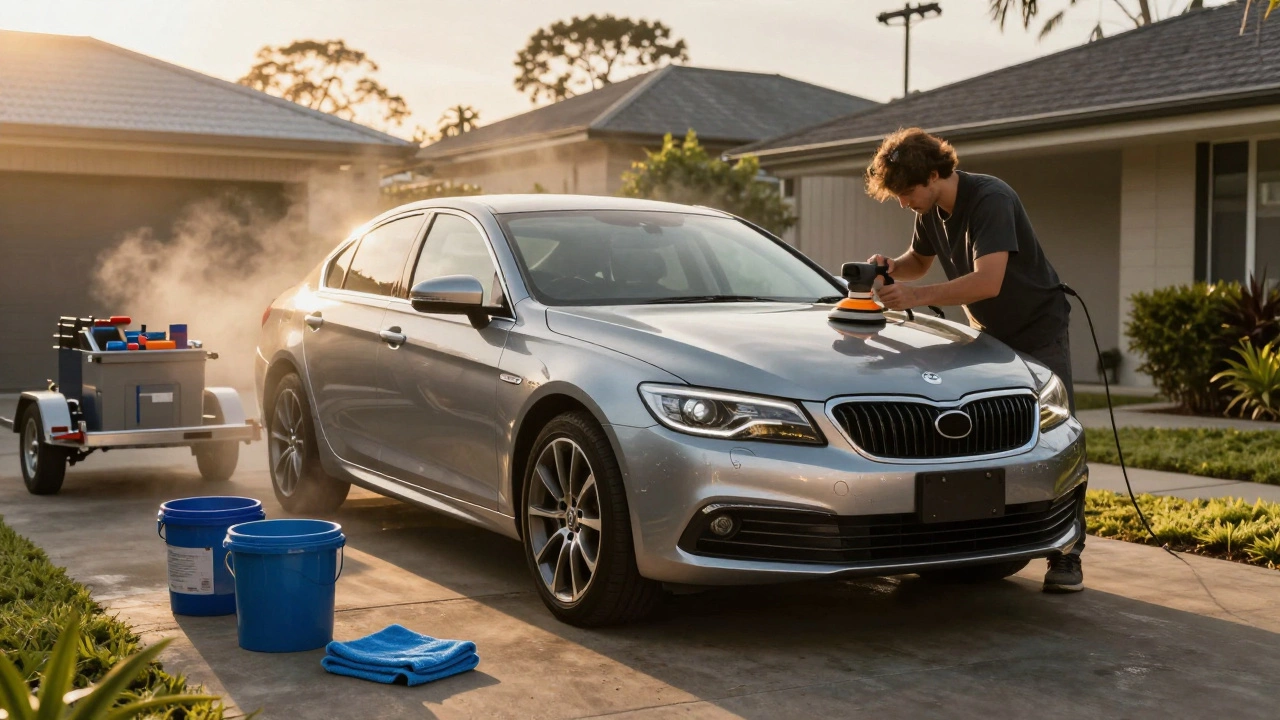
You can start detailing from your driveway, garage, or even a rented bay at a local car wash. Many top detailers in Brisbane operate mobile - they bring everything to the client’s home or office.
If you’re going mobile:
- Invest in a trailer or van with power outlets and water storage
- Carry a portable water softener - hard water leaves spots
- Use a 12V vacuum and a 110V inverter for tools
- Always have a backup power source
If you’re working from home:
- Check local council rules - some areas ban commercial vehicle washing
- Use a runoff system to avoid stormwater pollution
- Install a drainage grate and gravel base to contain water
Most clients don’t care where you work - they care about results. A clean driveway with a sign saying "Professional Mobile Detailing" is enough to get started.
Price Your Services Right
Underpricing kills businesses. Overpricing scares people away. Here’s what’s working in Brisbane right now:
| Service | Price Range | Time Required |
|---|---|---|
| Basic Exterior Wash & Wax | $80-$120 | 1.5-2 hours |
| Interior Detail | $120-$180 | 2-3 hours |
| Full Detail (No Paint Correction) | $250-$350 | 4-6 hours |
| Full Detail + Paint Correction | $400-$700 | 8-12 hours |
| Engine Bay Cleaning | $50-$80 | 1-2 hours |
Offer packages. A "Bronze" package (basic wash and wax), a "Silver" (full detail), and a "Gold" (full detail + paint correction). Clients like options. And always charge extra for SUVs, trucks, and vans - they take longer.
Find Your First Clients
You won’t get clients by posting on Facebook Marketplace and waiting. You need to go where they are.
- Start with friends, family, and coworkers - offer them a free or discounted detail in exchange for a video testimonial
- Visit local car clubs, BMW or Audi owner groups, and offer to detail their cars at their next meetup
- Partner with used car dealerships - they need cars looking perfect before listing
- Leave flyers at coffee shops near luxury car dealerships (like Mercedes or Lexus)
- Use Instagram - post before-and-after photos with hashtags like #BrisbaneCarDetailing, #CarDetailingAustralia
One detailer in Loganlea started by detailing 10 cars for free. He got 8 reviews, 3 referrals, and his first paying client within two weeks. He’s now doing 25 jobs a week.
Build Systems, Not Just Skills
Detailing is easy. Scaling is hard. The difference between someone who makes $500 a week and someone who makes $5,000 is systems.
- Use a simple booking app like Calendly or Google Calendar - no phone calls needed
- Send a confirmation text with location, time, and what to expect
- Take before-and-after photos every job - this becomes your portfolio
- Ask for reviews after every job - a 5-star Google review is your best sales tool
- Track your time - if a job takes 6 hours and you charge $400, that’s $67/hour. If it takes 8 hours, you’re at $50/hour. Optimize.
Don’t try to do everything yourself at first. Hire a helper once you’re doing 15+ jobs a week. Pay them $30/hour. You’ll make more by focusing on the high-value work: paint correction and client relations.
Avoid These 5 Common Mistakes
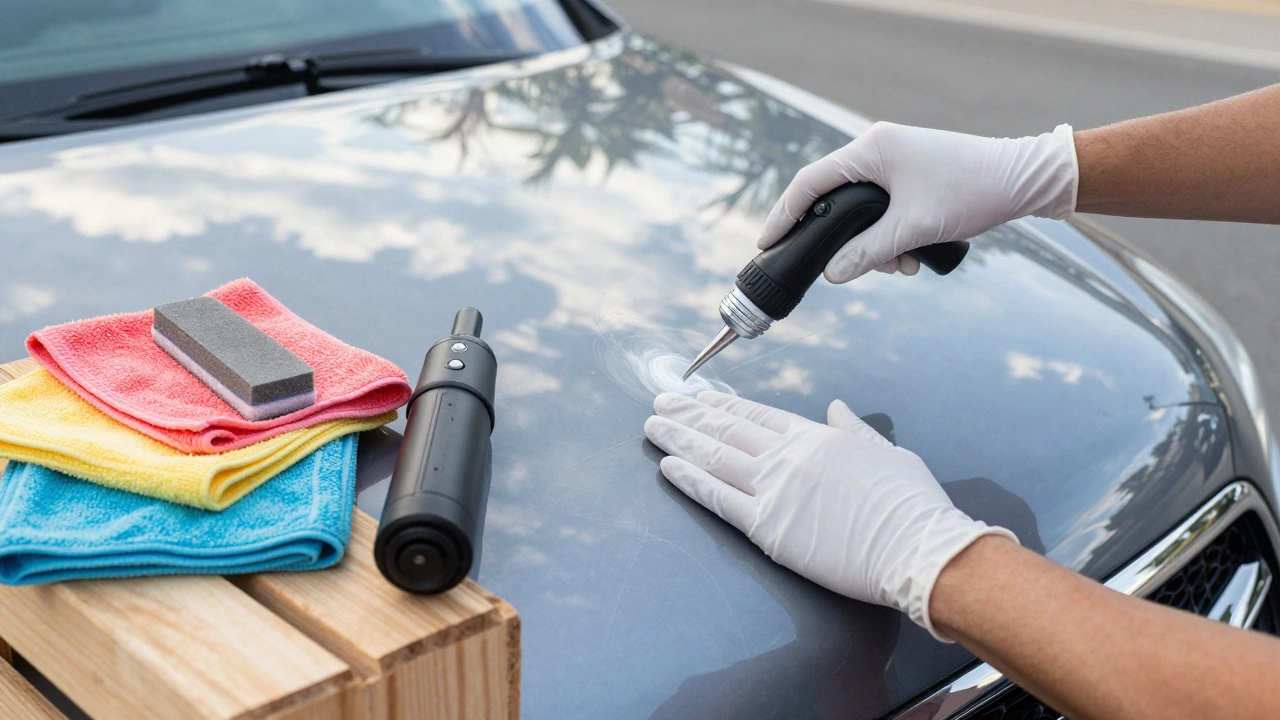
- Skipping paint correction - clients notice it. They remember it. And they come back.
- Using the same towel for everything - that’s how you scratch paint. Use color-coded microfibers.
- Working in direct sunlight - products dry too fast, streaks appear. Early morning or shade only.
- Not charging enough - if you’re under $200 for a full detail, you’re undervaluing your work.
- Ignoring customer service - a friendly text after the job, asking how they like it, turns one-time clients into loyal ones.
Scale When You’re Ready
Once you’re consistently doing 20+ jobs a month, consider:
- Adding a second detailer - train them on your process
- Offering subscription plans - "Monthly Detail" for $120/month
- Partnering with car washes - you provide the detail, they provide the location
- Creating a website with booking and reviews - even a simple Squarespace site works
Some detailers in Brisbane now run teams of 4-6 people. They service corporate fleets, luxury car rentals, and even private jets parked at Archerfield Airport. It’s not fantasy - it’s just more of what you’re already doing.
It’s Not About the Kits. It’s About the Standard.
The best detailing kits in the world won’t make you successful. What will is showing up on time, doing the work right, and treating every car like it’s your own. People don’t pay for polish. They pay for peace of mind. They pay for pride in their car. And they pay for someone who actually cares.
You don’t need to be the best detailer in Brisbane to start. You just need to be better than the guy who washes cars with a hose and a sponge. Be the one who finishes the job. Be the one who calls back. Be the one they recommend.
That’s how you build a business - one clean car at a time.
Do I need a license to start a car detailing business in Australia?
You don’t need a special license to detail cars in Australia, but you do need an ABN (Australian Business Number) to invoice clients and claim expenses. If you’re working from home, check with your local council - some areas restrict commercial vehicle washing. Also, if you’re using water from a hose, you may need to comply with local stormwater runoff rules to avoid fines.
How much profit can I make from a car detailing business?
Most full-time detailers in Brisbane make between $3,000 and $8,000 per month after expenses. A single full detail with paint correction can cost $500 and take 8-10 hours. If you do 10 jobs a week, that’s $5,000 in revenue. After deducting $800 for products, fuel, and equipment maintenance, you’re left with $4,200. Profit margins are high because most tools last years and consumables are low-cost.
What’s the difference between wax and sealant?
Wax is made from natural or synthetic carnauba and lasts 2-4 months. Sealants are synthetic polymers that bond to paint and last 6-12 months. Sealants are more durable, resist UV and chemicals better, and are preferred by professionals. Wax gives a warmer glow, but sealants give longer protection. Most detailers use sealant as the final step now.
Can I detail electric cars the same way?
Yes - but avoid high-pressure water near charging ports, sensors, or underbody components. Electric cars often have more sensitive paint coatings and exposed sensors. Use lower pressure, hand wash the front grille area, and avoid steam cleaning near the charging port. The same detailing products work fine. Many Tesla and Hyundai Ioniq owners in Brisbane now specifically seek detailers who know how to handle EVs.
How long does it take to become good at detailing?
You can learn the basics in 2-3 weeks with practice. But becoming truly skilled - especially with paint correction - takes 6-12 months of consistent work. Most detailers spend their first 50 jobs learning how to avoid swirls, how much pressure to use, and how to read paint condition. Watch YouTube tutorials, but practice on old cars first. Don’t risk a client’s new vehicle until you’re confident.
If you’re serious about starting, begin today. Buy one quality microfiber towel, a clay bar, and a sealant. Wash a friend’s car. Take photos. Ask for feedback. Do it again. The first step isn’t buying equipment - it’s taking action.