Car Body Repair Cost Estimator
Estimate Your Repair Cost
Estimated Cost Range
Cost based on standard repairs in your area
When your car takes a hit - whether it’s a fender bender, a door ding, or a full-frontal collision - the first question that pops up isn’t about insurance claims or rental cars. It’s: how much do panel beaters usually charge? The answer isn’t simple. Unlike a tire change or an oil filter swap, panel beating isn’t a fixed-price service. It’s a mix of labor, materials, damage complexity, and location. And if you’re thinking about adding a body kit or fixing damage around one, you need to know what you’re paying for.
What Exactly Does a Panel Beater Do?
A panel beater doesn’t just fix dents. They restore the structure, shape, and finish of your car’s metal body panels. That means straightening bent frames, replacing rusted fenders, reshaping crumpled doors, and matching paint so the repair blends in. If you’ve installed a body kit and got into a minor scrape, they’ll repair the kit’s mounting points, realign the panels, and refinish the surface so it looks factory-new.
They work with steel, aluminum, and sometimes carbon fiber. Each material needs different tools and techniques. Aluminum, for example, requires specialized welding gear and can cost 30-50% more to repair than steel. That’s something most people don’t realize until they get a quote.
Typical Repair Costs by Damage Type
Not all damage is created equal. Here’s what you’re likely to pay in early 2026 for common repairs in the U.S. and Canada:
- Small dent (coin-sized, no paint damage): $50-$150
- Door ding (3-6 inch dent, paint intact): $100-$300
- Bumper repair (crack or small break): $150-$400
- Full door replacement + paint: $800-$1,800
- Front fender replacement + alignment: $700-$1,600
- Minor body kit damage (side skirt or splitter): $200-$600
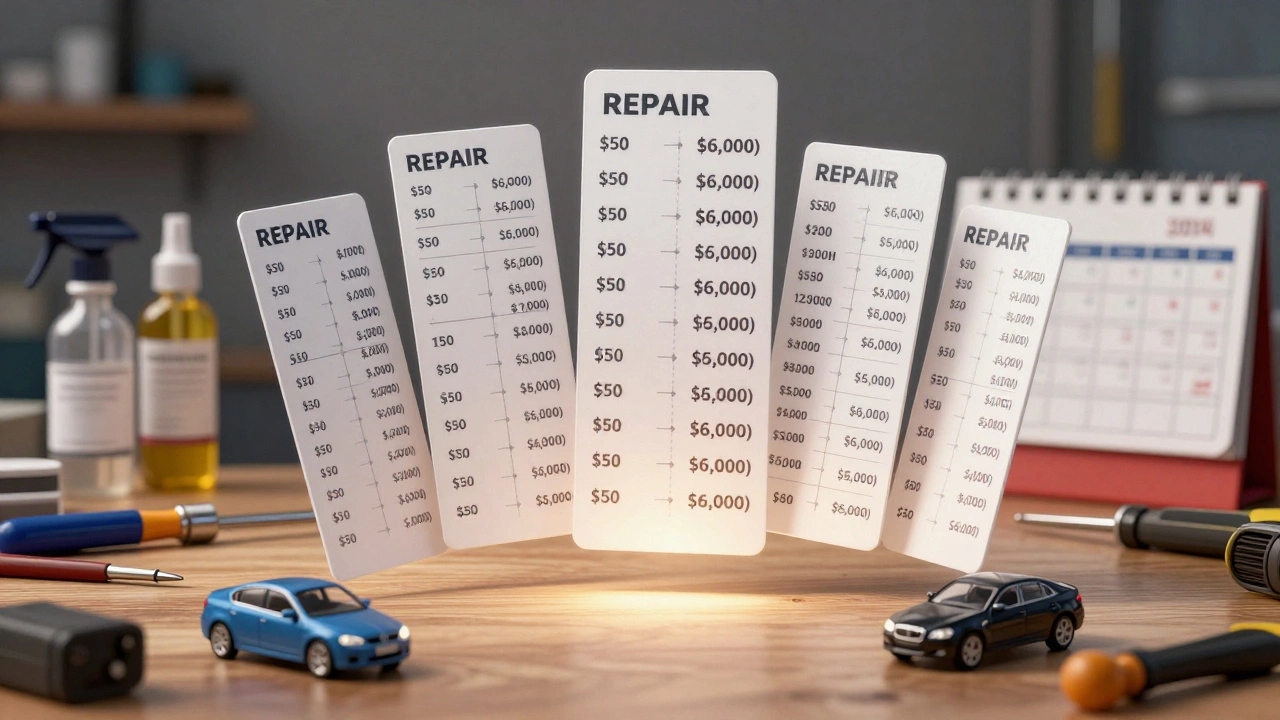
- Major structural damage (frame, quarter panel): $2,000-$6,000+
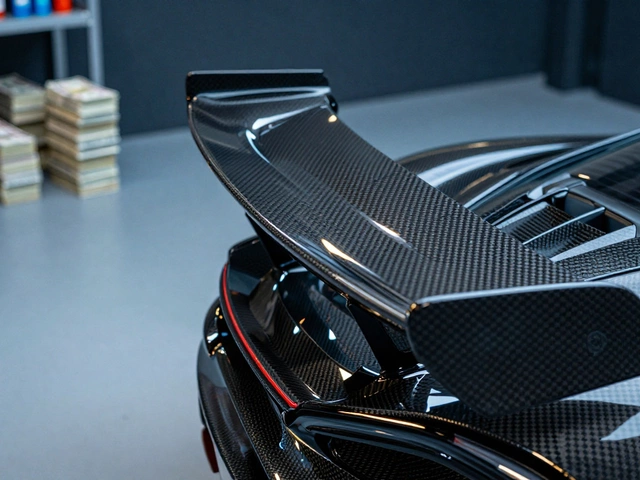
These prices assume standard vehicles - think Honda Civics, Toyota Camrys, Ford F-150s. Luxury or imported models like BMWs, Audis, or Teslas? Add 40-70% to those numbers. Carbon fiber body kits? Expect to pay $300-$800 just to repair a single cracked piece, because they often need custom molds and epoxy resins.
Why Do Prices Vary So Much?
Two big reasons: labor rates and shop quality.
In rural areas or small towns, you might pay $60-$80 per hour. In big cities like Los Angeles, Toronto, or New York, labor runs $100-$140 an hour. A simple door ding repair might take 2 hours in a basic shop. In a premium facility with laser measuring tools and computer-matched paint systems, it could take 5-6 hours - and cost twice as much.
Paint matching is another hidden cost. If your car is a 2023 Midnight Blue Metallic, the shop needs the exact pigment code, a spray booth, and a technician trained in multi-stage blending. Skipping this step leads to a visible mismatch. You’ll notice it under sunlight. Insurance companies know this - and that’s why they often push you toward their preferred shops. Those shops get bulk paint deals and lower labor rates, but you might end up with a repair that doesn’t last.
Body Kits Add Complexity
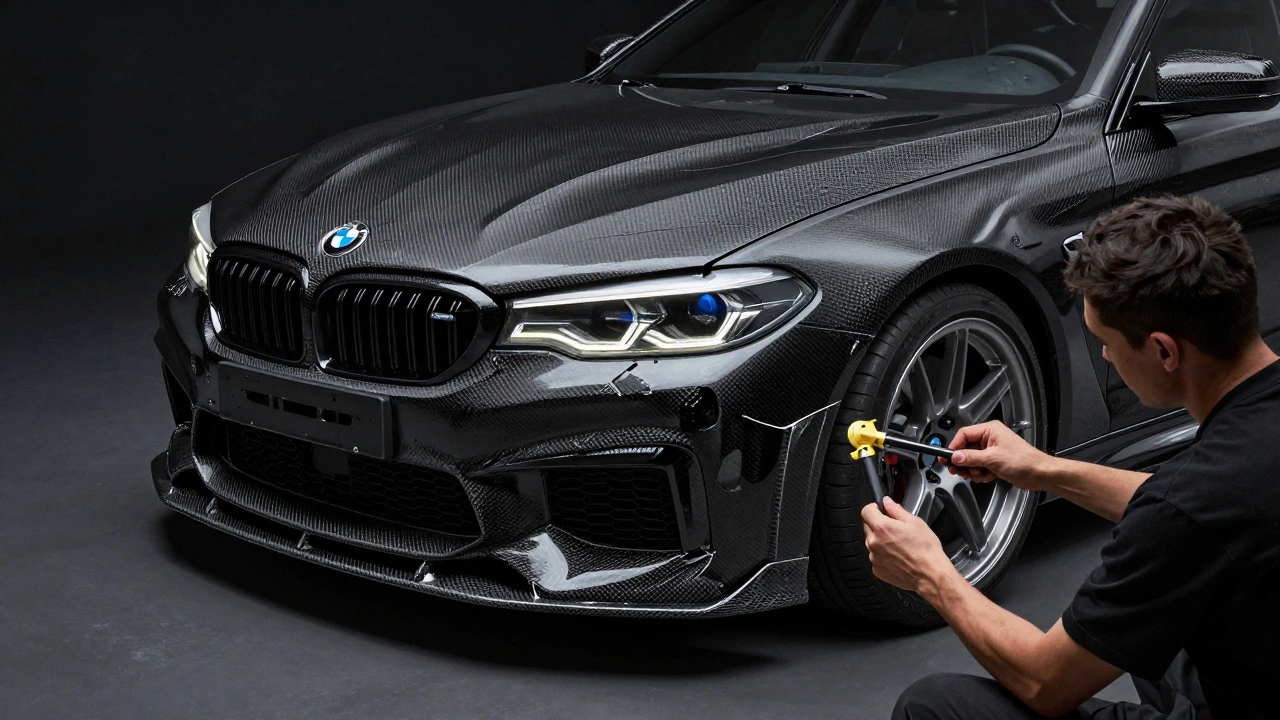
If your car has an aftermarket body kit - especially one with aggressive lines, wide fenders, or integrated spoilers - repairs get trickier. These kits often don’t line up perfectly with factory panels. A panel beater might need to:
- Remove and reinstall the entire kit to access damaged areas
- Custom-fit replacement parts if the original kit is discontinued
- Re-drill mounting holes or use adhesives instead of bolts
- Match the color of the kit’s material (fiberglass, urethane, or carbon)
One real case from a shop in Atlanta: a customer crashed into a pole and damaged the front splitter and left fender on a modified Subaru WRX with a full carbon fiber body kit. The splitter alone cost $1,200 to replace. Labor to remove, align, and reinstall the entire front kit? Another $900. Paint blending across three different materials? $450. Total: $2,550. That’s more than the original kit cost when it was installed.
How to Avoid Getting Ripped Off
Here’s how to get a fair price:
- Get at least three written estimates. Don’t trust verbal quotes.
- Ask if the quote includes paint, labor, materials, and disposal fees. Some shops leave out the paint.
- Check if they use OEM (original equipment manufacturer) parts or aftermarket. OEM is pricier but fits better.
- Ask if they offer a warranty. Reputable shops guarantee their work for at least 1 year.
- Look at their previous work. Ask for before-and-after photos of similar repairs.
Watch out for shops that say, “We can fix it for $300,” without seeing the car. That’s a red flag. Real panel beaters need to inspect the damage under the paint, check for hidden frame damage, and assess material type. A quick glance isn’t enough.
Insurance vs. Out-of-Pocket
If you’re using insurance, your deductible applies. But here’s the catch: some shops will inflate the estimate to cover your deductible. That’s fraud. Others will under-quote to get the job, then nickel-and-dime you later. The smart move? Let your insurer handle the negotiation. They have preferred networks with fixed pricing.
If you’re paying out of pocket, you have more control. You can choose a local shop with a good reputation, even if it’s not on the insurer’s list. Just make sure they provide a detailed breakdown. No vague line items like “miscellaneous” or “handling fee.”
When It’s Not Worth Repairing
There’s a point where repair costs hit 70-80% of your car’s market value. That’s when insurance companies declare it a total loss. For example, if your 2018 Honda Accord is worth $12,000 and the repair quote is $9,500, they’ll likely write it off.
But if you’re attached to the car - or it has a rare body kit you spent $4,000 on - you can still get it repaired. You’ll just need to pay the difference. Some shops will even help you source used or refurbished body kit parts to cut costs.
What to Expect Timeline-wise
Most minor repairs (dents, bumper fixes) take 2-4 days. Medium repairs (door, fender) take 5-7 days. Major structural work? 10-14 days, sometimes longer if parts are backordered. High-end paint jobs with multiple layers can add 3-5 extra days for curing.
Don’t let a shop rush you. A good paint job needs time. Rushed paint chips. It fades faster. It cracks. Paying more for patience saves you money in the long run.
Final Thoughts
There’s no single answer to “how much do panel beaters usually charge?” because every car, every damage, and every shop is different. But you’re not powerless. Know the average prices. Ask the right questions. Demand transparency. And if you’ve invested in a body kit, make sure your repair shop understands how to handle aftermarket parts - not just stock panels.
Fixing your car right the first time means you won’t be paying twice. And in the world of car customization, that’s worth more than the money you save.
Do panel beaters charge more for luxury cars?
Yes. Luxury cars like BMWs, Audis, and Teslas use more expensive materials like high-strength aluminum, carbon fiber, and complex paint systems. Labor rates are higher too, because technicians need special training. Repairs on these vehicles can cost 40-70% more than on standard models.
Can I save money by using used body parts?
Absolutely. Used OEM panels from salvage yards can cut costs by 30-60%. For body kits, finding a used but undamaged piece from a similar model year is often cheaper than buying new. Just make sure the part matches your car’s color and fit. A good panel beater can help source and install these parts properly.
How long does a paint job take after panel repair?
A basic paint job takes 1-2 days. But if your car has a metallic, pearlescent, or tri-coat finish, it can take 3-5 days. Each layer needs to dry before the next is applied, and the car must sit in a dust-free booth. Rushing this step leads to poor adhesion and premature fading.
Is it cheaper to fix a dent or replace the whole panel?
It depends. For small dents, paintless dent repair (PDR) can cost under $200. But if the metal is stretched, cracked, or the panel is rusted, replacement is the better long-term fix. Replacing a fender might cost $700-$1,600, but it gives you a factory-perfect shape. PDR can’t fix structural damage.
Do body kits make repairs more expensive?
Yes. Body kits often require extra labor to remove and reinstall. They may not line up with factory panels, so alignment takes longer. Materials like fiberglass or carbon fiber need special adhesives and finishing techniques. Repairs on modified cars typically cost 20-50% more than on stock vehicles.