
When you’re choosing between 20% tint, a window film that allows only 20% of visible light to pass through, making it very dark and highly private and 35% tint, a medium-dark film that balances privacy with daytime visibility, you’re not just picking a shade—you’re deciding how much you can see at night, how much heat you block, and whether you’ll get pulled over. Most people think darker is better, but that’s not always true. In fact, 20% tint can be illegal on front side windows in many places, while 35% tint is legal almost everywhere in the UK and most of Australia. It’s the sweet spot for drivers who want privacy without sacrificing safety.
The difference between these two isn’t just about how dark they look. Visible Light Transmission (VLT), the percentage of light that passes through the tint film is the real number that matters. At 20% VLT, you’re cutting out 80% of the light. That’s great for blocking glare and keeping your interior cool, but it also makes it harder to see pedestrians, road signs, or cyclists at dusk. At 35% VLT, you’re still blocking a solid 65% of heat and UV rays, but you’ve got enough light left to drive safely after sunset. Many drivers don’t realize that factory tint on new cars is usually around 20-30%, so 35% aftermarket tint often looks lighter than you expect—especially compared to the factory look.
Then there’s the legal side. Police in the UK don’t have a national VLT limit for front windows, but they can still stop you if they believe your tint impairs your vision. In practice, 35% tint rarely causes issues. 20% tint? That’s a red flag. If you get pulled over and an officer can’t see your face through the window, you’re likely getting a ticket or a removal notice. And it’s not just about fines—some insurance companies may even deny claims if your tint is deemed unsafe. You also need to think about resale. Buyers often prefer 35% tint because it looks more professional and doesn’t raise eyebrows. A 20% tint might make your car look cool to you, but it can turn off potential buyers who worry about legality or visibility.
And don’t forget the climate factor. If you live somewhere hot—like southern England or the Mediterranean—20% tint will keep your cabin much cooler than 35%. But if you drive mostly at night or in rainy conditions, 35% gives you a better balance. It’s also easier to clean and less prone to bubbling or peeling over time because it’s not as thick. Many people who start with 20% tint end up replacing it with 35% because they realize how much they miss seeing clearly at night.
What you’ll find below are real experiences from people who’ve tried both. We’ve got posts that break down how these tints affect your visibility, what the law actually says in different regions, how they impact your car’s interior temperature, and even how they interact with LED headlights and camera systems. You’ll see what works for daily drivers, what doesn’t hold up over time, and which tint gives you the most bang for your buck without putting you at risk. No fluff. Just what you need to pick the right shade for your car—and your peace of mind.
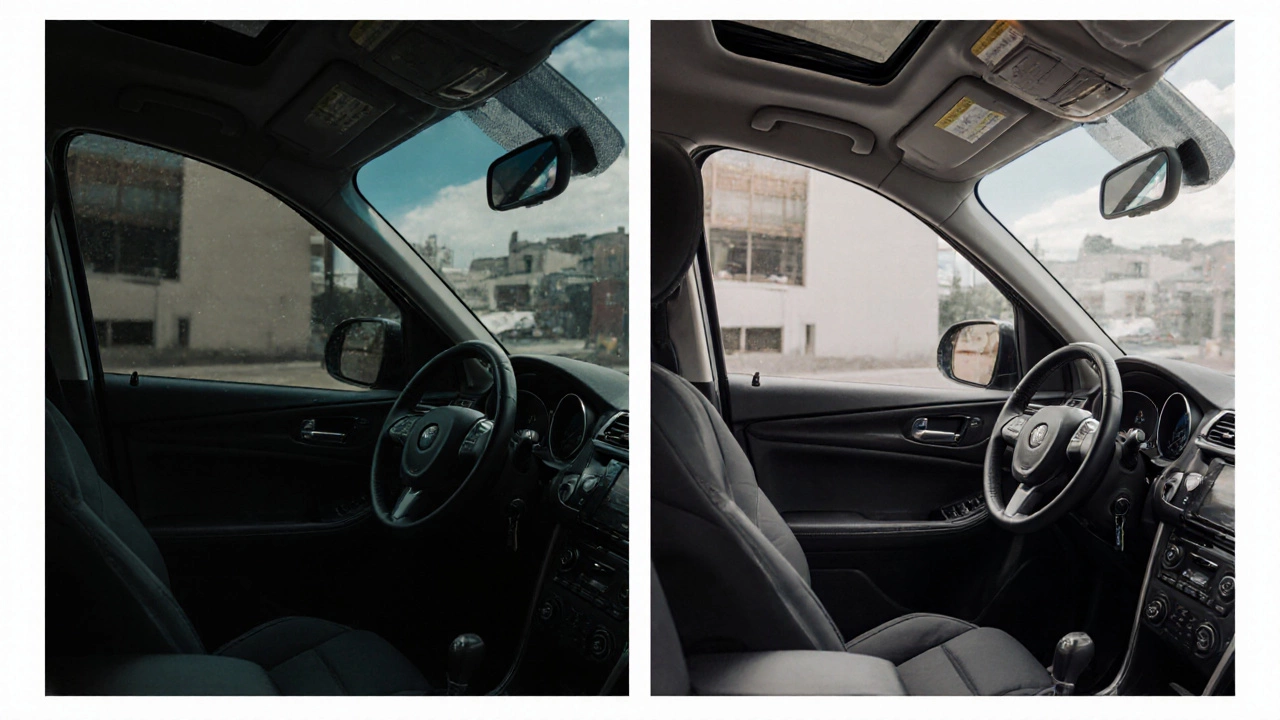
20% window tint is darker than 35%, blocking more light and heat-but it's not always legal or safe. Learn which percentage works best for your car, climate, and local laws.