Window Tint Calculator
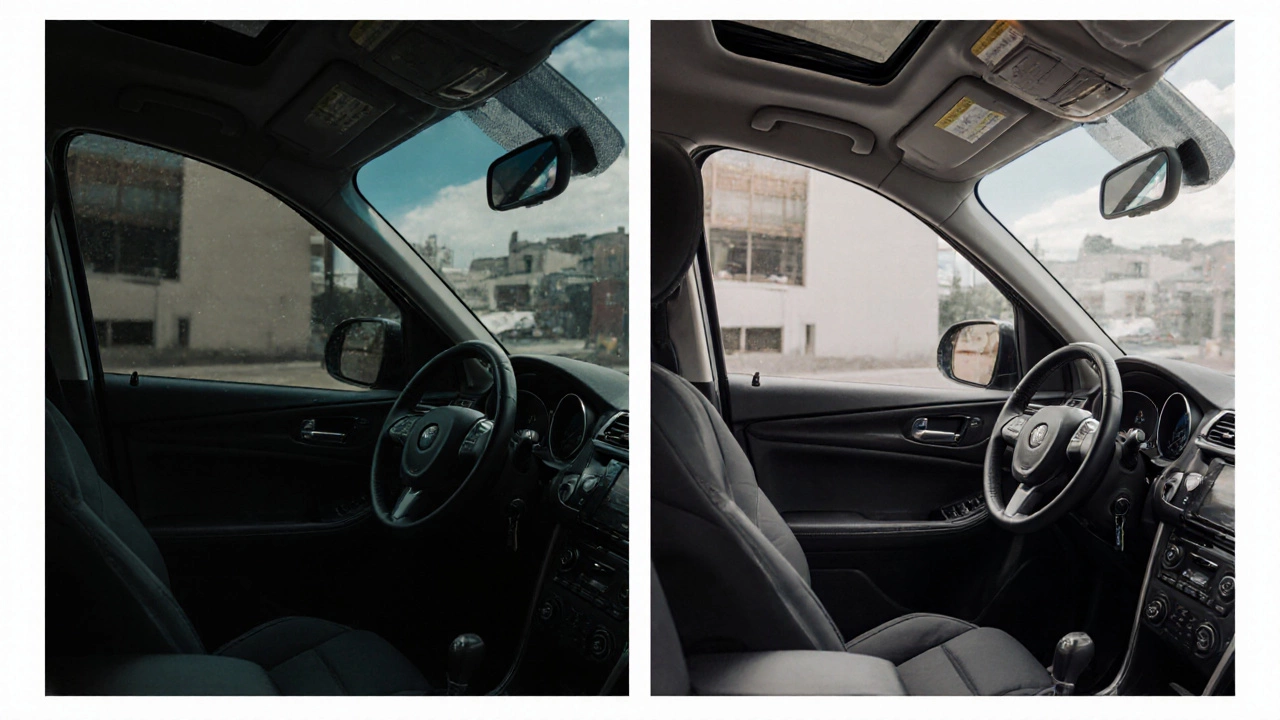
When you're picking out window tint for your car, the numbers-like 20 or 35-don’t mean anything at first glance. But they’re the key to how dark your windows look and how much light actually gets through. So which is darker: 20% or 35%? The answer is simple: 20% is darker. A 20% tint lets in only 20% of visible light, while 35% lets in 35%. That means 20% blocks more light, more heat, and more glare. It’s the darker option, no debate.
What Do the Numbers Actually Mean?
The percentage on window tint isn’t about how much you can see out-it’s about how much light passes through the film. Think of it like a filter. A 5% tint is almost black from the outside; you can barely see inside. A 70% tint is barely noticeable; it’s like a light sunshade. So 20% is significantly darker than 35%. If you want privacy, reduce glare, or block UV rays, 20% gives you more of that.
But here’s the catch: darker doesn’t always mean better. It depends on where you live, what you use your car for, and when you drive. Some states have strict laws about how dark your front side windows can be. In California, for example, front side windows must let in at least 70% of light-so 20% tint on the front is illegal. But in Texas, the front windows can go as low as 25%. Back windows? Often no restrictions at all. Always check your local laws before you install anything.
Visibility at Night: Why 35% Might Be Smarter
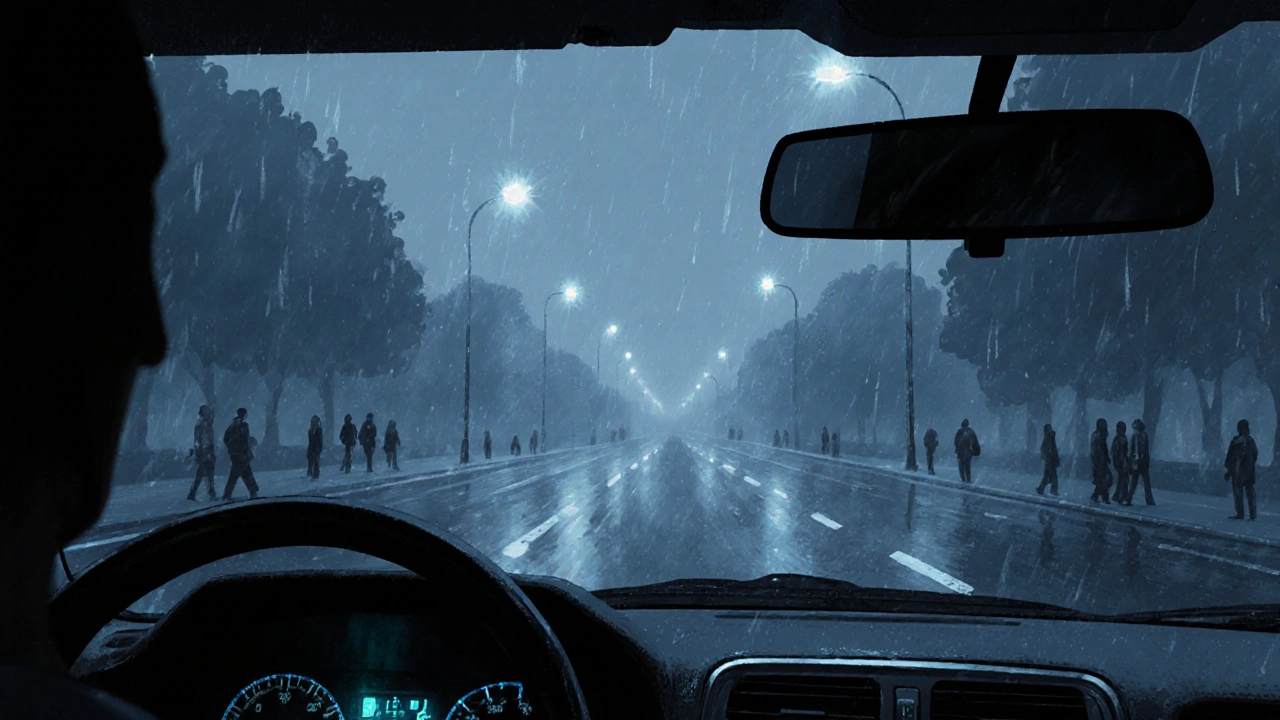
Just because 20% is darker doesn’t mean it’s better for driving. At night, 20% tint makes it harder to see the road, especially in poorly lit areas. Rain, fog, or streetlights reflected on wet pavement become harder to make out. Many drivers who go with 20% on their front windows regret it after the first night drive. They say it feels like looking through smoked glass-everything’s muted, edges are blurry.
35% tint strikes a balance. It still cuts glare during the day, reduces UV exposure by over 99%, and keeps the interior cooler. But at night, you can still see clearly. For most people, 35% is the sweet spot: enough darkness for comfort and privacy, without compromising safety.
Privacy and Heat: When You Should Go Darker
If you park in the sun all day, carry valuables, or just hate the glare bouncing off your dashboard, 20% tint delivers real benefits. It cuts infrared heat by up to 60%, which means your car stays cooler even in 95°F weather. That also means less strain on your AC-and better fuel efficiency over time.
Privacy is another big reason people choose 20%. From the outside, your car looks like a blacked-out shell. No one can see your groceries, your laptop, or your kid’s toys in the back seat. It’s a deterrent for break-ins. In cities where car theft is common, that matters.
But here’s something most people don’t think about: 20% tint on the rear windows is fine in almost every state. So a smart approach is to use 20% on the back and 35% on the front. That way, you get the privacy and heat reduction you want without risking visibility or breaking the law.
What About Ceramic vs. Dyed Tint?
Not all 20% tints are created equal. A cheap dyed film might look dark, but it fades over time, turns purple, and doesn’t block heat well. A ceramic tint at 20% will stay dark for years, block more heat, and won’t interfere with your phone or GPS signal. Ceramic films are pricier, but they’re worth it if you want performance that lasts.
Same goes for 35%. A high-quality ceramic 35% tint can outperform a cheap 20% dyed film. So don’t just look at the percentage-look at the material. Ask your installer what kind of film they’re using. Reputable brands like Llumar, 3M, XPEL, and SunTek all offer clear specs on heat rejection and UV protection.
Real-World Examples: What Do Drivers Actually Use?
Most luxury SUVs and sedans come factory-tinted around 15-20% on the back windows. That’s why you see so many blacked-out rear windows on new cars. But the front windows? Almost always 50% or higher. That’s because manufacturers know safety comes first.
On the street, you’ll see three common setups:
- 20% front, 20% rear: Popular with people who want maximum privacy and don’t drive much at night. Risky in states with strict tint laws.
- 35% front, 20% rear: The most common and smartest combo. Legal almost everywhere. Good balance of safety and privacy.
- 50% front, 20% rear: For people who want to look subtle but still get heat reduction in the back. Often chosen by families with kids.
One driver in Florida told me he went with 35% front and 20% rear after his 20% front tint got him pulled over twice. He said the 35% still kept his car cool and hid his groceries, but he never got stopped again.
How to Test Tint Darkness Before Buying
Don’t just trust the installer’s word. Ask to see a sample. Hold it up to a bright light. Look through it. Can you read a newspaper through it? If you can’t, it’s probably too dark for the front. A good 35% tint lets you read text clearly. A 20% tint? You’ll see shapes, but not details.
Also, check the Visible Light Transmission (VLT) rating on the film’s packaging. It should match what the installer says. If it doesn’t, walk away. Some shady shops use cheap film and label it wrong to save money.
What Happens If You Get Pulled Over?
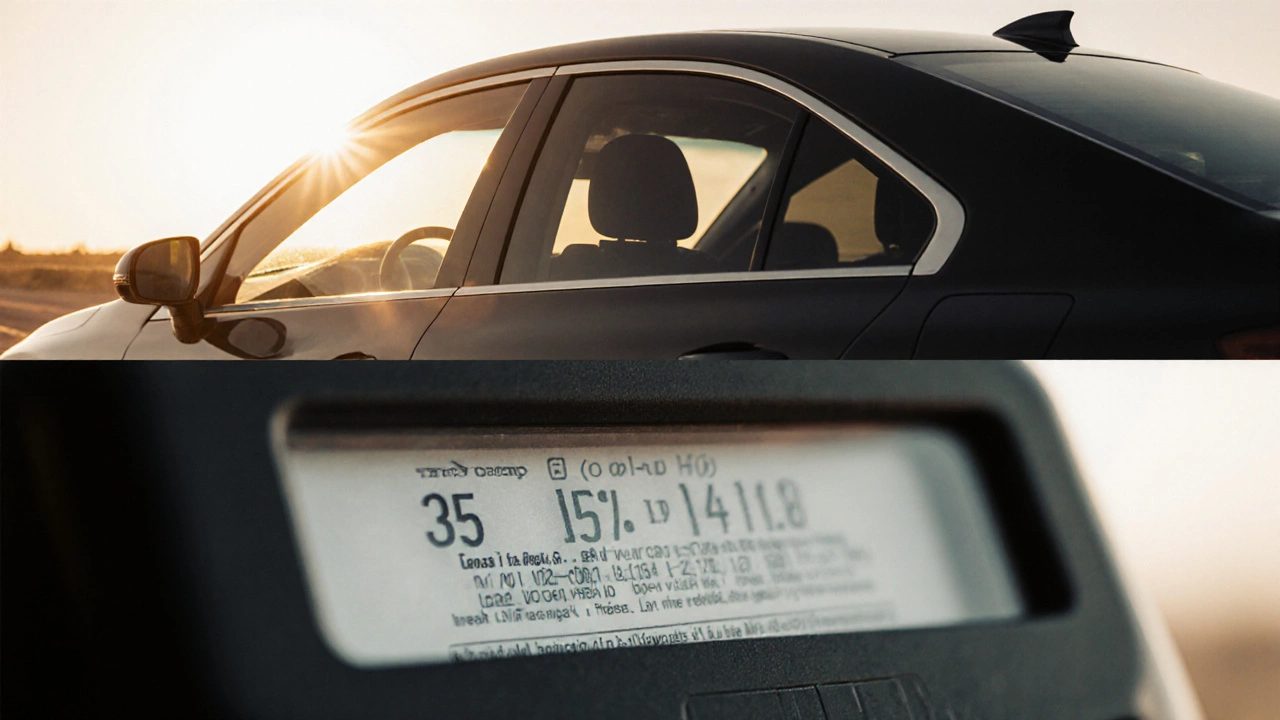
Police officers can’t just guess your tint percentage. They use a device called a tint meter to measure how much light passes through. If your front windows are below the legal limit, you’ll get a citation. In most cases, it’s not a fine-it’s a fix-it ticket. You have 30 to 60 days to remove or replace the tint and get it signed off by an officer or certified installer.
Some states, like Massachusetts and Michigan, don’t allow any tint on the front side windows at all. Others, like Arizona and Nevada, let you go as low as 5% on the rear. Know your state’s rules before you spend money.
Final Answer: 20% Is Darker. But Is It Right for You?
Yes, 20% is darker than 35%. It blocks more light, more heat, and gives you more privacy. But it’s not always the best choice. If you drive at night often, live in a state with strict tint laws, or just want to avoid hassle, 35% is the smarter, safer bet. The best move? Use 35% on the front windows and 20% on the back. You get the benefits of darkness where it matters most-without risking your safety or your wallet.
Don’t choose based on what looks cool in a YouTube video. Choose based on what works for your life, your car, and your state’s laws. A little research saves you time, money, and a ticket.
Is 20% tint legal on front windows?
It depends on your state. In most U.S. states, 20% tint on front side windows is illegal. Common legal limits are 35% or 50%. Always check your local laws before installing. Some states allow 20% only on rear windows.
Does 35% tint reduce heat?
Yes, even 35% tint reduces heat significantly. High-quality ceramic 35% tint can block up to 60% of infrared heat and 99% of UV rays. It keeps your car cooler without sacrificing visibility.
Can you see out of 20% tint at night?
You can see out, but it’s harder. 20% tint reduces visibility in low-light conditions like dusk, rain, or poorly lit roads. Many drivers find it tiring or unsafe for night driving. 35% tint offers a much better balance.
Which tint lasts longer: 20% or 35%?
The percentage doesn’t affect longevity-it’s the material that matters. Ceramic films last longer than dyed films, regardless of whether they’re 20% or 35%. A quality ceramic tint can last 10+ years without fading or bubbling.
Is 20% tint worth the risk?
Only if you’re okay with potential legal trouble and reduced night visibility. For most drivers, the benefits of 20% tint don’t outweigh the risks. Using 35% on the front and 20% on the back is a safer, legal, and more practical compromise.