
When people talk about the darkest window tint, a window film with very low visible light transmission, often 5% or less. Also known as blackout tint, it blocks nearly all outside light, turning windows into mirrors from the outside. But here’s the thing—just because you can buy it doesn’t mean you can legally use it. In the UK, front side windows must let in at least 70% light, and the windscreen at least 75%. That means darkest window tint on the front is illegal. Even in states with looser rules, like some parts of the US, driving with 5% tint on the front can get you pulled over, fined, or forced to remove it.
Most people want the darkest tint for privacy, heat reduction, or that aggressive look. But what they don’t realize is how much it affects safety. At night, 5% tint makes it hard to see pedestrians, road signs, or other cars. A 2021 study by the AAA Foundation found drivers with tint darker than 20% took 17% longer to react to hazards after dark. And if you get in an accident, police can use your tint as evidence of negligence. Even if you’re not at fault, the tint can complicate insurance claims.
Then there’s the installation. Cheap window tint film, a thin polyester layer with dye or metal particles that reduces light and heat. Also known as automotive tint, it’s the material applied to car windows peels, bubbles, or fades fast if it’s not properly cured. You need to avoid washing your car for at least 72 hours after application, and even then, harsh cleaners can ruin it. Some shops use low-grade film that blocks UV rays poorly, meaning your dashboard still cracks and your seats still fade. And if you’re thinking of going darker than legal limits, remember—some states require certification stickers. Skip that, and you’re just asking for trouble.
What most drivers don’t know is that there’s a sweet spot between style and safety. A 20% tint gives you serious privacy without killing night vision. It still blocks 80% of heat and 99% of UV rays. For rear windows, you can go darker—many SUVs and trucks come factory-tinted at 15-20% on the back. And if you really want that stealth look, consider ceramic tint. It’s darker than dye-based films at the same VLT, because it blocks infrared heat without needing extra darkness. It’s pricier, but it lasts longer and doesn’t turn purple over time.
So if you’re chasing the blackest tint possible, ask yourself: Is it worth the risk? The fines? The safety trade-offs? The hassle of removing it later? The posts below cover real-world experiences—people who went too dark, got caught, and had to fix it. Others found smarter ways to get privacy without breaking the law. You’ll read about what happens when you wash your car too soon after tinting, how factory tint compares to aftermarket, and why some tints are illegal even if they’re labeled "legal." This isn’t about pushing limits. It’s about making smart choices that keep you safe, legal, and your car looking sharp.
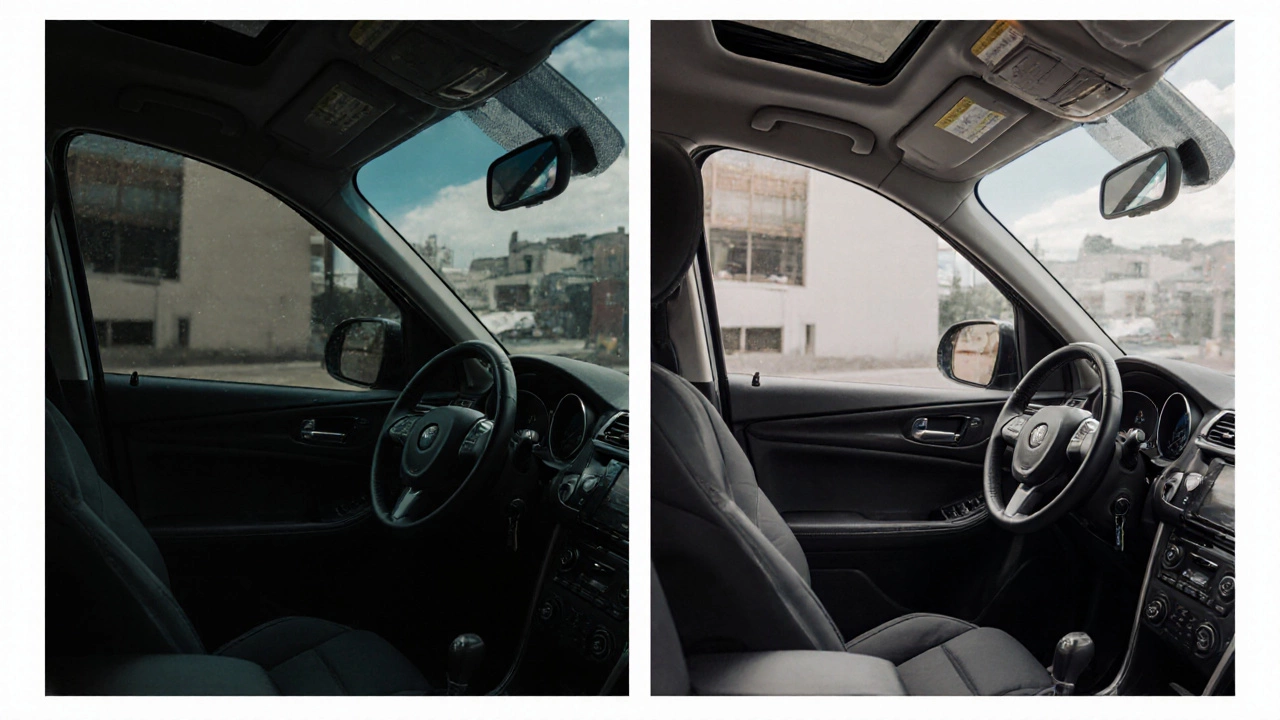
20% window tint is darker than 35%, blocking more light and heat-but it's not always legal or safe. Learn which percentage works best for your car, climate, and local laws.