
When you hear a car roar down the street, that sound isn’t just power—it’s measured in exhaust decibel level, a scientific unit that quantifies how loud a vehicle’s exhaust system is, typically measured in dBA (A-weighted decibels). Also known as exhaust sound level, it’s the number that police, neighbors, and inspectors use to decide if your ride is legal—or just annoying. Most stock cars sit between 70 and 80 dBA at idle or low speed. Aftermarket exhausts? They can push past 90 dBA, sometimes even hitting 100 dBA under full throttle. That’s louder than a lawnmower or a chainsaw at close range.
The exhaust decibel level, a scientific unit that quantifies how loud a vehicle’s exhaust system is, typically measured in dBA (A-weighted decibels). Also known as exhaust sound level, it’s the number that police, neighbors, and inspectors use to decide if your ride is legal—or just annoying. isn’t just about bragging rights. In the UK, vehicles must pass an MOT noise test, which caps exhaust sound at 82 dBA for most cars under acceleration. Go louder than that, and you’re automatically failed—even if your exhaust looks cool. And it’s not just the MOT. Local councils can issue fines for excessive noise, especially in residential areas. Some drivers think a loud exhaust means better performance, but that’s a myth. A louder pipe doesn’t equal more power—it just means less muffling. The real gains come from proper tuning, not just removing baffles.
What actually changes the exhaust decibel level? It’s not just the exhaust itself. The muffler type (straight-through, chambered, or glasspack), pipe diameter, catalytic converter status, and even engine tuning all play a role. A resonator delete might add 5–10 dBA. A full cat-back system with no muffler? That can jump 15–20 dBA. And don’t forget the engine: a turbocharged four-cylinder with a loud exhaust still won’t sound like a V8—because the source matters too. Some people buy ‘race’ exhausts thinking they’ll get a deep rumble, only to end up with a high-pitched whine that’s worse than the stock system. It’s all about design, not just volume.
Then there’s the human factor. Constant exposure to noise above 85 dBA can cause hearing damage over time—even inside the car. That’s why many professional racers wear ear protection. And if you’re driving daily, a too-loud exhaust isn’t just a legal risk—it’s a comfort killer. You’ll hear road noise, engine drone, and tire hum more than ever. Your passengers will hate it. Your neighbors will complain. And you’ll end up regretting that $800 ‘performance’ upgrade that just made your life noisier.
So what’s the smart middle ground? Look for exhausts labeled ‘street legal’ or ‘MOT compliant’. Check real-world user reviews—not just marketing claims. Some brands offer adjustable valves so you can dial down the noise for town driving and open it up on the open road. And if you’re already running a loud system, consider adding a resonator or a quieter muffler. It’s not about being quiet—it’s about being smart.
Below, you’ll find real-world guides on exhaust noise, legal limits, what mods actually work, and how to avoid the traps that turn a cool upgrade into a costly mistake. No fluff. No hype. Just what matters when you’re trying to sound good without getting fined, hated, or deaf.
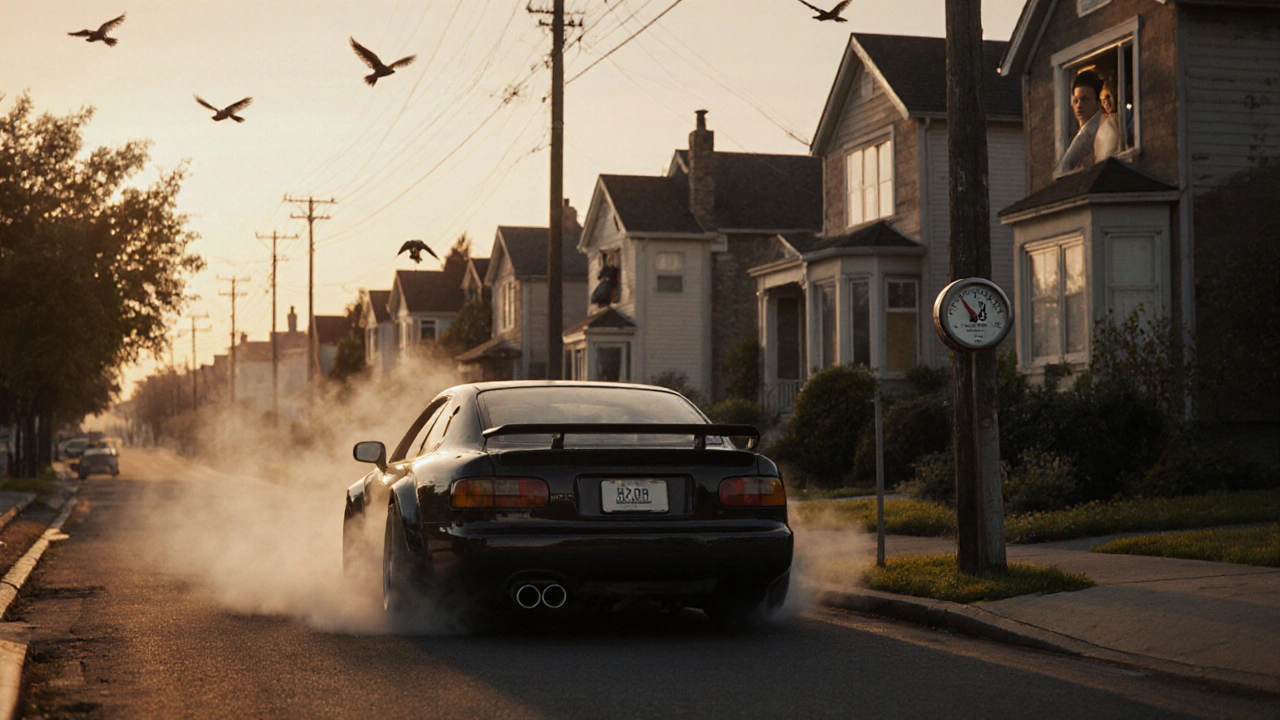
82 dB is the noise level where a custom exhaust shifts from sporty to disruptive. Learn what it really sounds like, why it matters legally, and how to choose a system that’s loud enough - without being illegal.