
When your headlight aim, the angle at which your vehicle’s headlights are pointed toward the road. Also known as headlight alignment, it’s not just about brightness — it’s about precision. A misaligned headlight can blind oncoming traffic, reduce your own night vision by up to 40%, and even get you fined in the UK. This isn’t a minor tweak — it’s a safety issue. Many drivers think if the lights are on and seem bright, they’re fine. But if your headlights are pointing too high, you’re essentially turning your car into a mobile floodlight for other drivers. If they’re too low, you’re driving blind in the dark — missing road signs, pedestrians, or animals just beyond your reach.
LED headlights, a modern lighting technology that’s brighter and more efficient than halogen bulbs have made this even more critical. Their intense, focused beam doesn’t scatter like old bulbs — so even a small misalignment causes bigger problems. A headlight aimed just 1 degree too high can create glare for drivers 200 meters ahead. And while some aftermarket LED kits promise better visibility, they often come with no adjustment options, making proper headlight alignment, the process of adjusting the vertical and horizontal angle of headlights to meet safety standards even more essential.
It’s not just about your car. Poor headlight aim affects everyone on the road. In the UK, the MOT test checks headlight aim as part of its safety inspection. If your lights are out of spec, you’ll fail — no exceptions. And even if you pass, driving with misaligned lights is still dangerous. Many drivers don’t realize that changing tire size, adding a lift kit, or even carrying heavy loads can throw off your headlight aim. It’s not something you set once and forget. It needs checking after any suspension change, after hitting a big pothole, or if you notice other drivers flashing their lights at you more than usual.
What you’ll find in this collection isn’t theory — it’s real-world fixes. From how LED headlights can cause unexpected glare and legal trouble, to why a simple adjustment can save you from an MOT failure or worse, these posts cut through the noise. You’ll learn what actually happens when your lights are off, how to spot misalignment without tools, and why some upgrades make things worse instead of better. No fluff. No marketing hype. Just what you need to see the road — and not blind the person coming the other way.
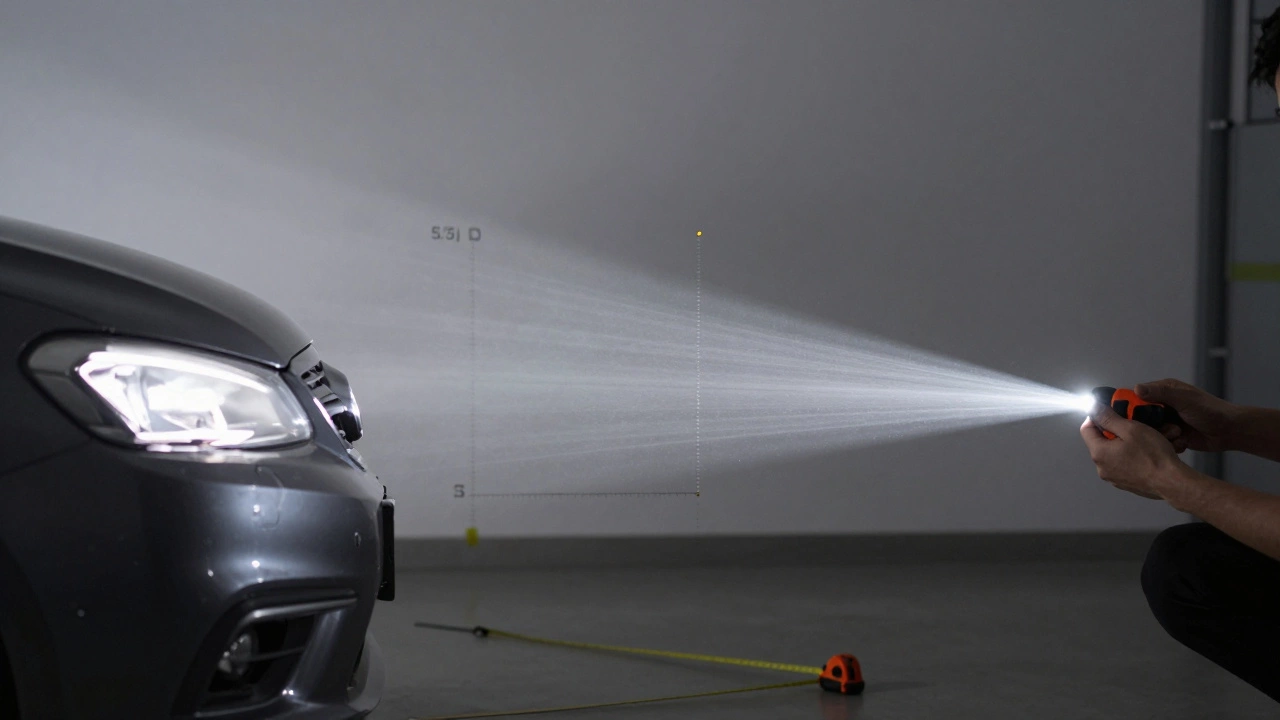
LED headlights often need adjustment because they don't match the original halogen bulb position. Unadjusted LEDs can blind other drivers and reduce your own visibility. Learn how to align them safely and legally.