Headlight Alignment Calculator
Proper Headlight Alignment Guide
Based on the article "Do LED Headlights Need Adjustment? Here's What Really Matters"
Your LED headlights need proper adjustment to avoid blinding other drivers and ensure your visibility. This tool calculates the correct beam height based on your vehicle's headlight center height.
Target height:
Switching to LED headlights seems like a simple upgrade-brighter light, longer life, modern look. But if your LEDs are glaring into oncoming traffic or leaving dark spots on the road, you’re not just annoying other drivers. You’re risking your own safety. The truth? Most LED headlights need adjustment-and not because they’re defective. It’s because they’re not designed to work in your car’s original housing.
Why Factory Headlight Housing Doesn’t Work With LEDs
Factory halogen headlights are built around a specific bulb shape, filament position, and reflector design. Halogen bulbs have a single, predictable light source: the filament. The reflector and lens are shaped to focus that exact point of light in a controlled beam pattern. LED bulbs? They’re completely different. They use multiple tiny diodes arranged in a cluster, often mounted on a circuit board that doesn’t match the halogen’s physical footprint. Even if the base fits, the light doesn’t come from the same spot.That tiny difference in position-sometimes just 5 millimeters-changes everything. The reflector now catches light at the wrong angle. Instead of a sharp cutoff line that keeps the road lit without blinding others, you get scattered glare, hot spots, and dark zones. It’s like putting a flashlight in a parabolic dish meant for a candle. The dish isn’t broken. The light source just doesn’t belong there.
What Happens When LED Headlights Aren’t Adjusted
Unadjusted LED headlights don’t just annoy drivers. They create real hazards.- Blinding oncoming traffic: Drivers report being temporarily blinded by LED upgrades-even on low beam.
- Reduced visibility for you: Glare scatters light upward and sideways, washing out the road ahead.
- Uneven illumination: One side lights up the curb, the other leaves the center of the road in shadow.
- Legal trouble: In many places, unadjusted LED retrofits violate lighting regulations. You can fail inspection or get pulled over.
A 2023 study by the Transportation Research Board found that improperly installed LED retrofits increased glare intensity by up to 300% compared to factory halogens. That’s not a minor issue-it’s a safety crisis waiting to happen.
How to Adjust LED Headlights: A Simple Step-by-Step
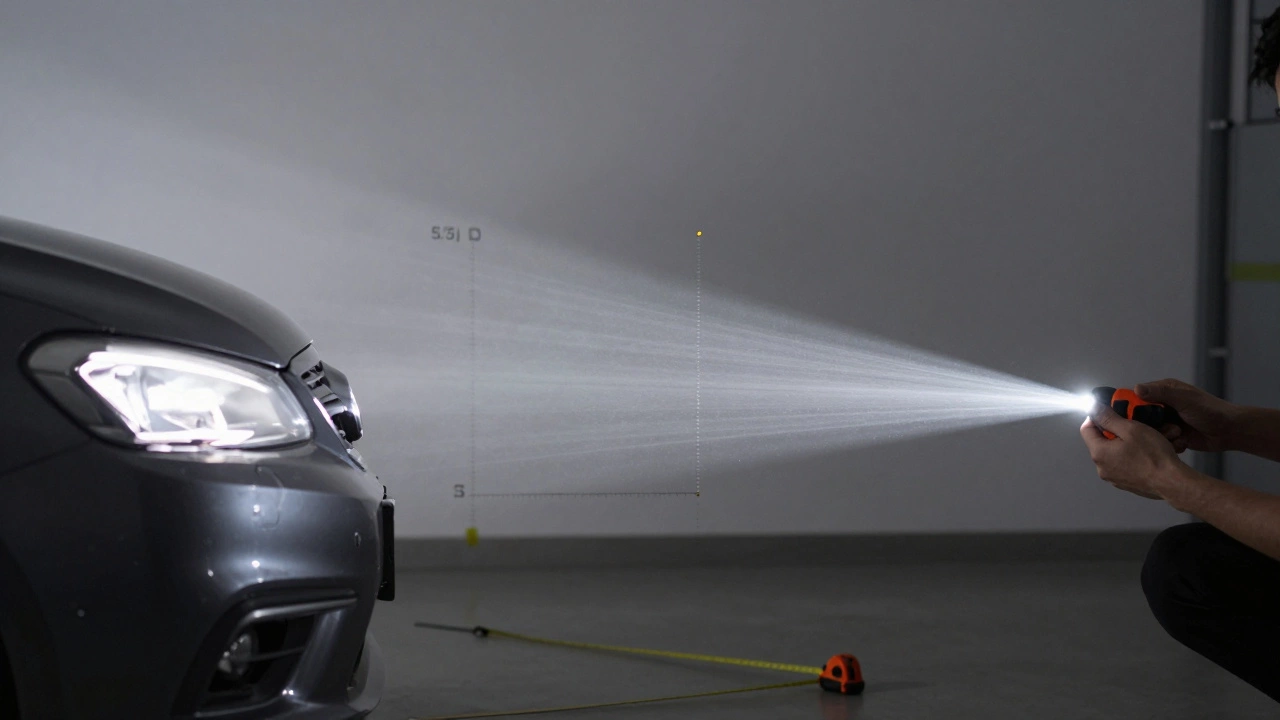
Adjusting LED headlights isn’t rocket science. You don’t need special tools-just a flat wall, a tape measure, and about 20 minutes.- Park your car on level ground, 25 feet away from a plain, white wall.
- Turn on your headlights and mark the center of each beam on the wall with tape.
- Measure the height from the ground to the center of the headlight lens. Mark that height on the wall.
- Turn off the lights. Put your car in neutral and roll it backward 10 feet.
- Turn the lights back on. The top edge of the bright part of the beam should line up with the height mark you made.
- Use the adjustment screws (usually on the back or top of the headlight housing) to lower the beam until it hits the mark.
- Check both headlights. They should be level with each other.
If your LED kit came with a beam pattern template, use it. Some kits include a cardboard cutout showing the ideal cutoff line. Align your beam to match it. If you’re unsure, many auto shops offer headlight alignment services for under $50. It’s cheaper than a ticket or a lawsuit.
Not All LED Kits Are Created Equal
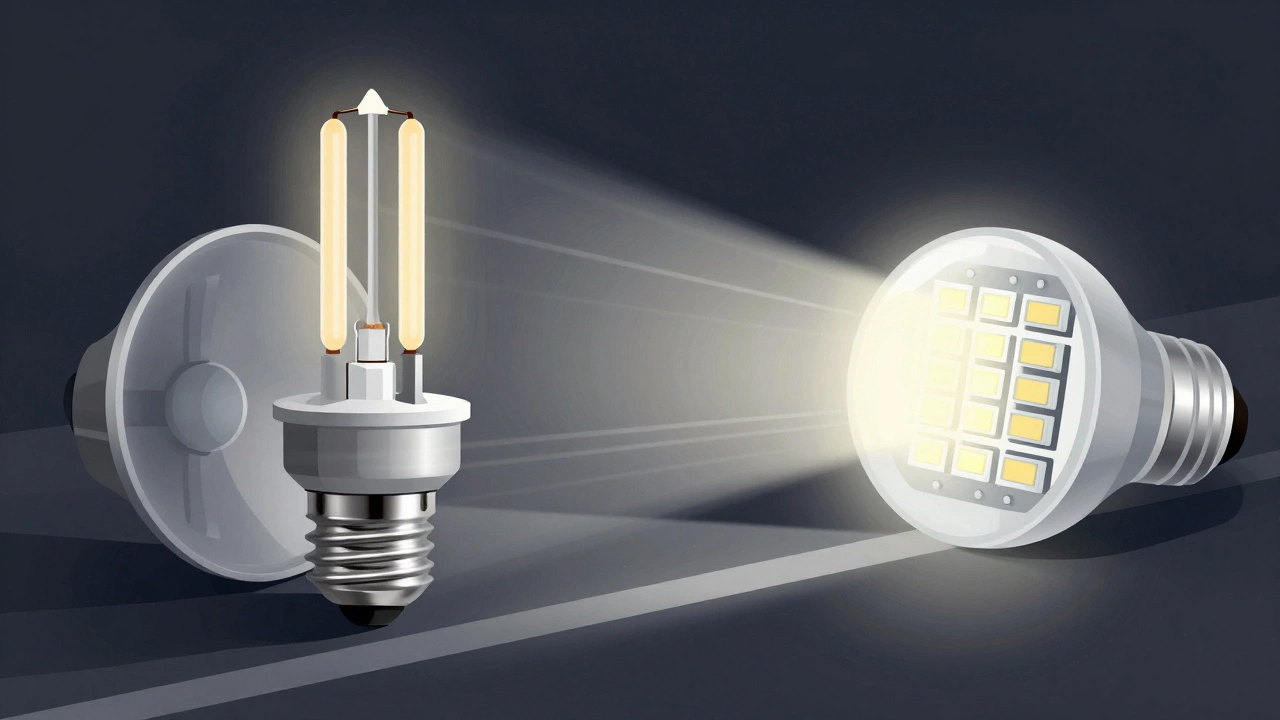
Some LED bulbs claim to be “plug-and-play” and “road legal.” That’s often marketing speak. A bulb that fits the socket doesn’t mean it projects light correctly. Look for kits labeled “projector-compatible” or “for projector housings only.” These are designed with a more focused diode layout that mimics halogen filament position.Universal LED bulbs meant for reflector housings are the worst offenders. They flood light everywhere because they weren’t engineered for the reflector’s shape. If you’re upgrading, invest in a kit designed for your exact headlight model. Brands like Philips, Osram, and SEALIGHT offer retrofit kits with built-in beam patterns that reduce glare.
When You Don’t Need to Adjust
There’s one exception: factory-installed LED headlights. If your car came with LEDs from the factory, they’re already aligned. No adjustment needed. These systems use custom housings, lenses, and sometimes even laser-guided projectors designed specifically for the LED source. Aftermarket kits? They’re not the same.Also, if you replaced your halogens with LED bulbs in a projector housing (not a reflector), you might get away with minimal adjustment. Projector housings have a lens that focuses light more tightly, so they’re more forgiving. But even then, a quick check is worth your time.
What to Do If You’re Still Getting Glare
If you’ve adjusted your LEDs and they’re still blinding people, you’ve hit a hard limit. The housing itself is incompatible. No amount of tweaking will fix a reflector bowl designed for a halogen filament. Your options:- Switch back to halogens or high-quality halogen replacements like Xenon HID bulbs (if legal in your area).
- Upgrade to full LED headlight assemblies-complete housings designed for LEDs. These cost more, but they’re safe and legal.
- Install LED bulbs only in fog lights or auxiliary lights, where glare isn’t a concern.
Don’t keep trying to make a bad fit work. It’s not worth the risk.
Legal Risks and Insurance Issues
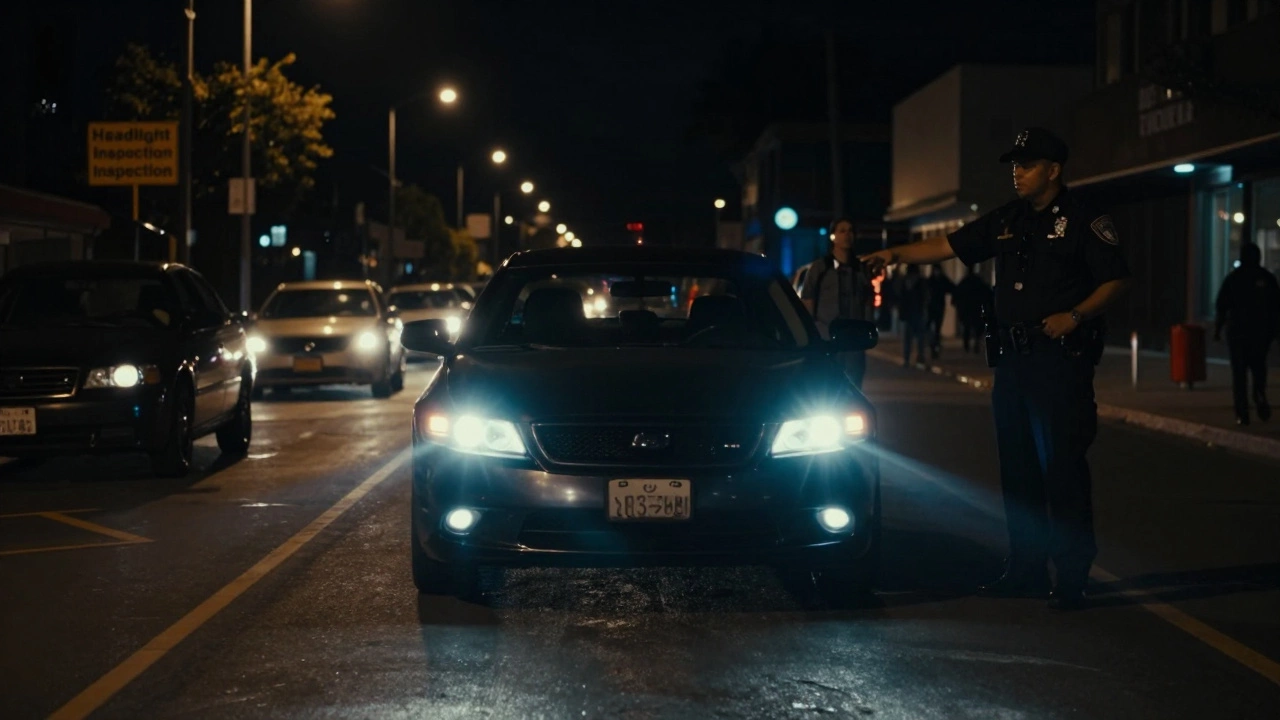
In the U.S., the National Highway Traffic Safety Administration (NHTSA) requires all headlights to meet Federal Motor Vehicle Safety Standard (FMVSS) 108. Factory LED systems meet this. Aftermarket LED retrofits almost never do. While enforcement varies by state, police can cite you for “improper lighting” or “excessive glare.”Some states, like California and New York, have strict rules and conduct random headlight inspections. In the UK, MOT testers will fail a vehicle with non-compliant LED retrofits. Insurance companies may deny claims if they determine unapproved lighting contributed to an accident.
It’s not just about getting a ticket. It’s about liability. If your headlights blind another driver and they crash, you could be held responsible-even if you didn’t cause the collision directly.
Bottom Line: Adjust Them or Don’t Install Them
LED headlights can be a great upgrade-but only if they’re installed right. If you’re not willing to adjust them, don’t install them. A poorly aimed LED is worse than a dim halogen. It doesn’t just fail to help you-it endangers others.Take the 20 minutes to align them. Check the beam pattern at night. Ask a friend to stand across the street and tell you if it’s glaring. If you’re unsure, get a professional to do it. Your eyes, their eyes, and your wallet will thank you.