
When your headlight alignment, the precise angle at which your vehicle’s headlights point toward the road. Also known as headlight aim, it’s not just about looking good—it’s a safety requirement that affects how well you see at night and whether you’re blinding other drivers. Most people don’t think about it until they get flashed by oncoming traffic or notice they’re missing signs in the dark. But misaligned headlights aren’t just annoying—they’re dangerous. A headlight that’s too high can blind drivers ahead, while one that’s too low leaves you driving into a tunnel of darkness. In the UK, police can fail your MOT over improper alignment, and insurers might deny claims if faulty lights contributed to an accident.
LED headlights, a modern lighting technology that’s brighter and more efficient than halogen bulbs. Also known as light-emitting diode headlights, they’re popular for their sharp beam pattern—but that same precision makes alignment even more critical. Unlike older halogen bulbs that scattered light in all directions, LEDs focus their output tightly. If they’re off by just a few degrees, you’re either lighting up the sky or leaving gaps in the road ahead. Many aftermarket LED kits don’t come with proper housings, which means even if they’re installed right, the beam pattern can still be messed up. And if you’ve lowered your car, lifted it, or swapped suspension parts, your headlight aim has probably shifted without you even noticing.
Headlight alignment isn’t a luxury—it’s a routine check that should happen every time you get new tires, replace suspension components, or after any front-end impact. You don’t need a dealership to do it. Most garages can adjust them in under 15 minutes using a simple wall and tape measure. Some DIYers even use a garage door or flat wall at night with a level surface to get close enough for safety. But if you’ve swapped bulbs or upgraded to LEDs, it’s worth getting it done right. The difference between a properly aimed beam and a wild one isn’t just about visibility—it’s about avoiding accidents, staying legal, and not being the reason someone else swerves into a ditch.
Below, you’ll find real-world breakdowns of common headlight problems, what causes them, and how to fix them without spending a fortune. From glare issues with LED upgrades to why your headlights point at trees after a bump, we’ve covered the mistakes most drivers don’t even know they’re making.
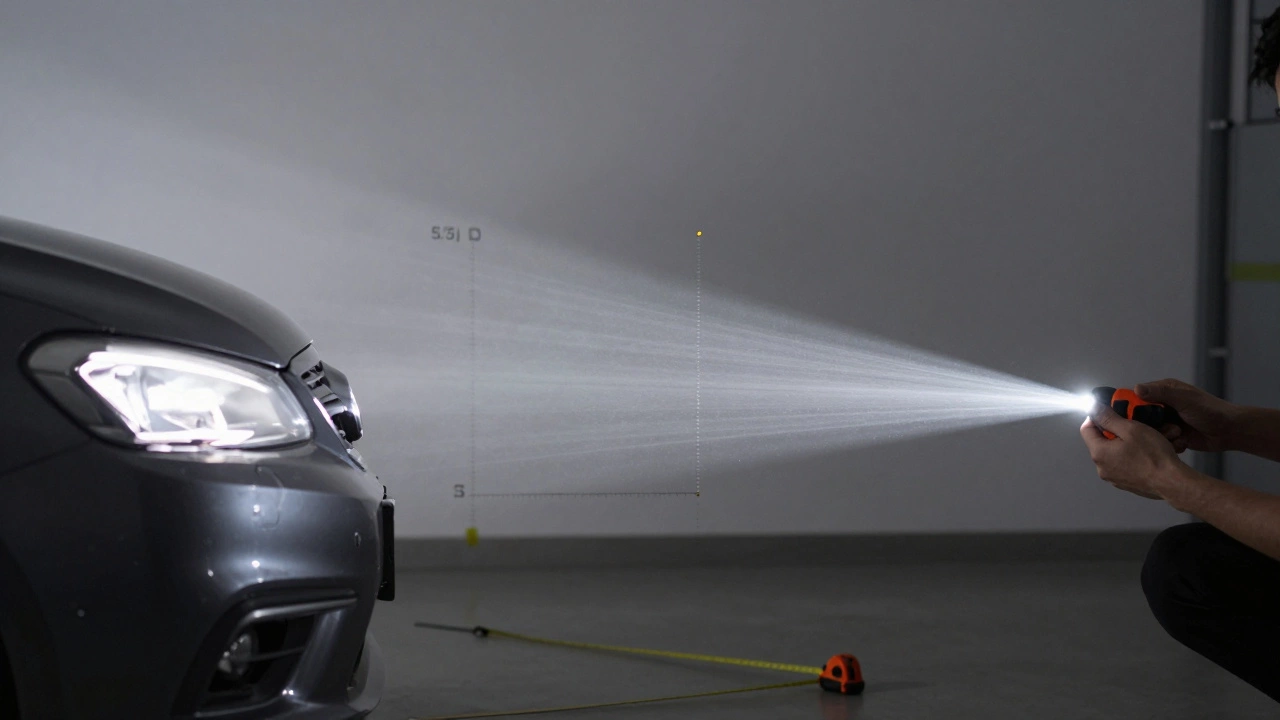
LED headlights often need adjustment because they don't match the original halogen bulb position. Unadjusted LEDs can blind other drivers and reduce your own visibility. Learn how to align them safely and legally.