Exhaust Noise Calculator
Calculate Your Exhaust Noise Level
Estimate dB levels for different engine types and exhaust modifications. Note: Legal limit in Australia is 92 dB.
Estimated Noise Level
If you’ve ever heard a car roll by with a sound like a jet engine waking up, you know what a loud exhaust sounds like. But not all loud exhausts are created equal. Some are designed to be brutal. Others are loud by accident. And some? They’re built for one thing only: to make everyone else turn their head.
The Straight Pipe: Pure, Unfiltered Noise
The loudest exhaust you can legally install on a street car is the straight pipe. No mufflers. No resonators. Just metal from the header to the tailpipe. It’s the bare minimum of sound control-and the maximum of volume.
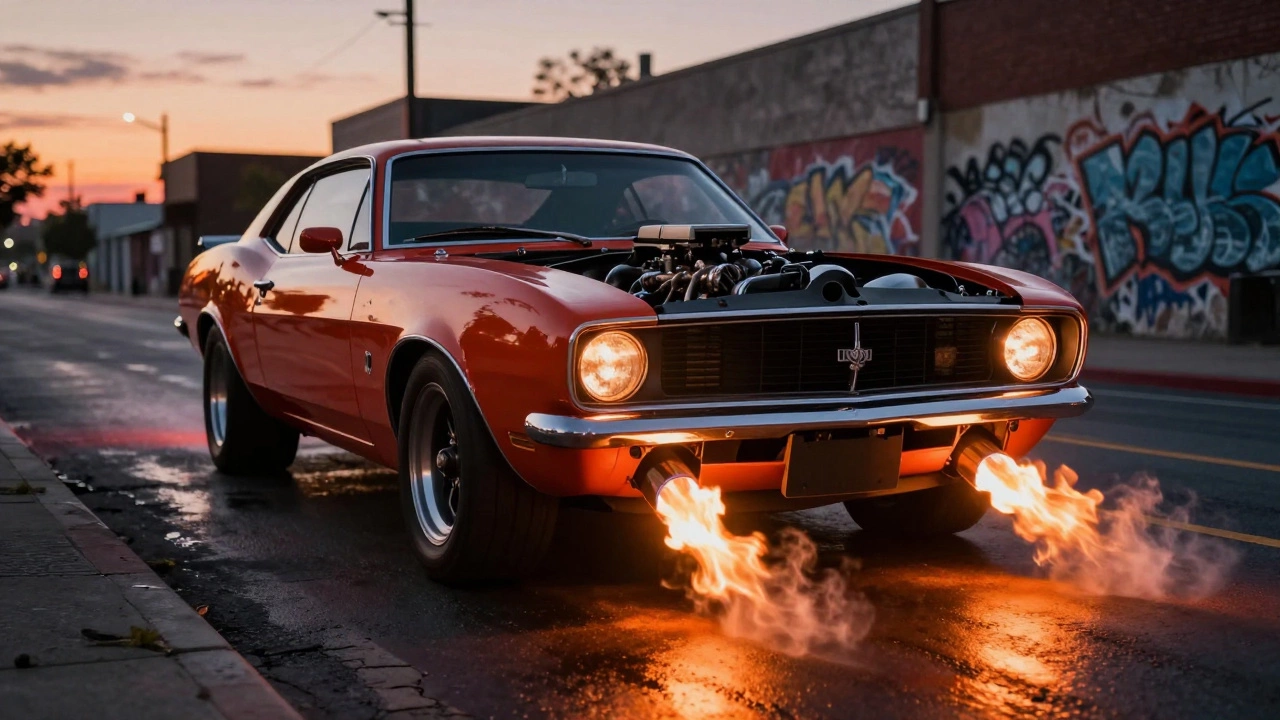
On a V8 muscle car, a straight pipe can hit 105-110 decibels at wide-open throttle. That’s louder than a chainsaw. At idle, it’s still around 90 dB-roughly the noise level of a lawnmower right next to your ear. This setup removes every barrier to sound, letting raw exhaust pulses slam into the air without damping.
It’s not just loud. It’s shrill. Without baffles or packing material to break up the sound waves, you get high-frequency whines and crackles that cut through traffic. People in neighboring apartments hear it. Dogs bark. Kids cry. Police notice.
Race Exhausts: Built for the Track, Not the Street
Race exhausts are designed for performance, not legality. They’re made for closed circuits where noise regulations don’t apply. These systems often use minimal internal baffling, lightweight materials like titanium, and straight-through designs that prioritize flow over sound control.
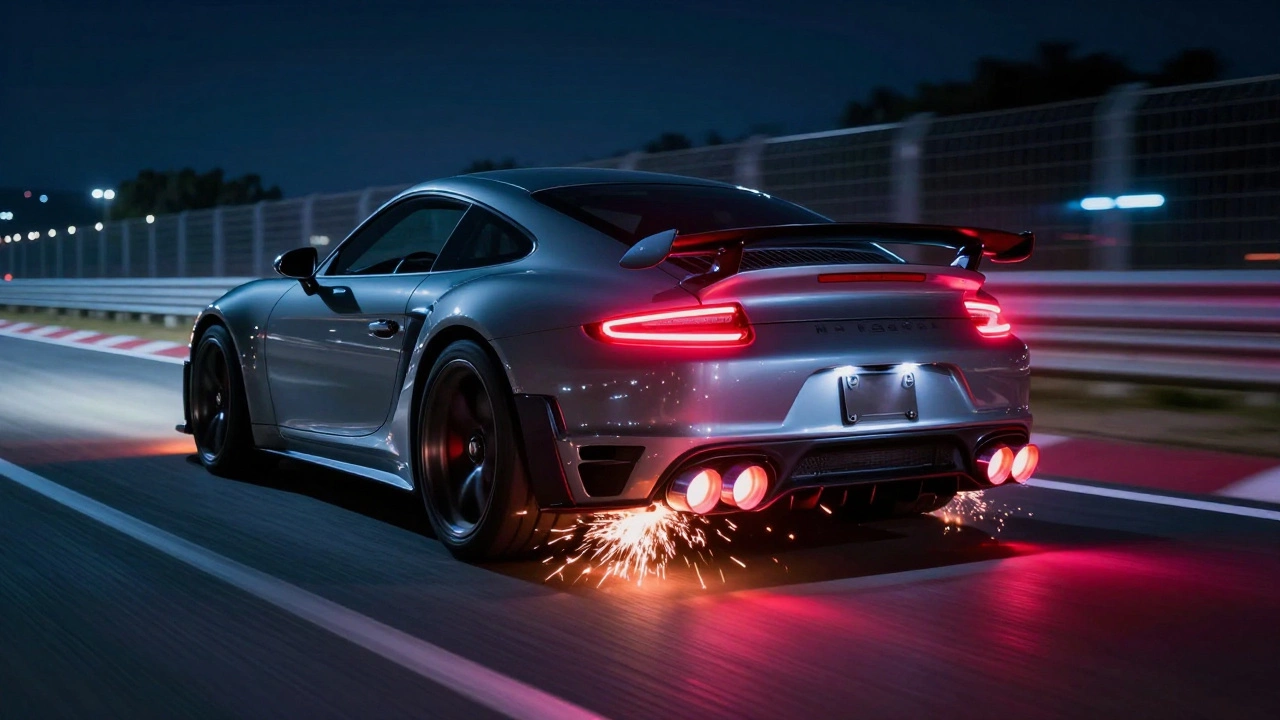
On a turbocharged sports car, a race exhaust can push past 115 dB under load. That’s close to a jet engine at 100 feet. Some track-only systems from brands like Akrapovič or Fabspeed use titanium with ceramic coatings and no internal chambers at all. The result? A scream that carries for blocks.
But here’s the catch: these systems are almost always illegal on public roads. In Australia, the maximum legal limit for passenger vehicles is 92 dB under load (AASHTO standards). A race exhaust? It’s 20-30 dB over. That’s not just loud-it’s a ticket waiting to happen.
Muffler Delete: The Cheap Way to Go Loud
Many people think removing the muffler is the secret to loudness. And they’re right-sort of. A muffler delete replaces the muffler with a straight pipe section. It’s cheaper than a full custom exhaust, and it’s easy to install. But it’s not the loudest option.
Why? Because most factory exhausts still have a resonator, which is designed to cancel out certain frequencies. Even with the muffler gone, the resonator can soften the sound. A true straight pipe removes both the muffler AND the resonator. A muffler delete? It’s loud, but it’s often more of a rumble than a roar.
On a Ford Mustang GT with just a muffler delete, you’ll hit about 98-102 dB. Still loud. Still attention-grabbing. But not the same as a full straight pipe. It’s the difference between a growl and a scream.
Resonator Delete vs. Muffler Delete: What’s the Real Difference?
People mix these up all the time. Here’s the breakdown:
- Muffler delete: Removes the muffler. Sound becomes louder and deeper. Still some sound dampening from the resonator.
- Resonator delete: Removes the resonator. Sound becomes higher-pitched, more raspy. Often adds a drone at cruising speeds.
- Both deleted: You get the full, unfiltered noise. This is what people mean when they say "straight pipe."
On a Honda Civic Type R, deleting just the resonator adds a buzzing, almost insect-like tone at 2,500 RPM. It’s annoying on long drives. Delete both? Now it’s a banshee with a turbo spool. That’s the sound people pay for.
Why Some Loud Exhausts Are Actually Quieter Than You Think
Not every big-looking exhaust is loud. Some aftermarket systems use advanced sound-canceling tech inside the pipes. Brands like Borla and MagnaFlow make "loud but legal" exhausts that use perforated tubes and acoustic insulation to reduce drone while keeping the aggressive tone.
These systems might look like race hardware, but they’re engineered to pass noise tests. They’re designed to sound sporty without being obnoxious. You’ll hear the burble on acceleration, but at 70 km/h on the highway? It’s barely louder than stock.
On the flip side, cheap knockoff exhausts from Amazon or Alibaba often sound terrible-not because they’re loud, but because they’re poorly tuned. They rattle, buzz, and drone. They don’t roar. They whine. And they’re often heavier, worse for performance, and prone to rusting within a year.

What Makes an Exhaust Actually Loud? It’s Not Just the Pipes
The exhaust system is only half the story. The engine matters just as much.
- A naturally aspirated V8 (like the 5.0L Ford Coyote) produces a broad, low-frequency rumble that travels far. It’s the kind of sound that vibrates your chest.
- A turbocharged 4-cylinder (like the 2.3L EcoBoost) sounds tinny and high-pitched when loud. It doesn’t carry as far.
- A twin-turbo V6 (like the Nissan GT-R’s VR38) can be deafening-especially with a full straight pipe. The exhaust pulses from two turbos create a rapid-fire crackle that’s almost mechanical.
Even the headers matter. Long-tube headers increase exhaust scavenging, which pulls more sound out of the system. Shorty headers? They keep more pressure in, which can actually muffle the noise slightly.
And don’t forget the catalytic converter. Removing it (which many do for maximum volume) adds another 5-10 dB. But in Australia, removing the cat is illegal for street use-even if your exhaust is legal. Emissions testing still applies.
The Reality: Loud Doesn’t Mean Better
Loud exhausts attract attention. But they also attract fines. In Queensland, you can be pulled over for excessive noise under the Road Transport Act. Fines start at $300 and go up if you’re caught repeatedly. In some cases, your car can be impounded.
And let’s be honest-most people don’t actually like the sound of a straight pipe all day. The drone on the highway? It’s exhausting. After an hour, your ears are tired. Your neck hurts from the vibration. You can’t hear your music. You can’t hear your GPS.
There’s a reason race teams use sound-deadening materials in cockpits. Even they don’t want to be deaf by lap 10.
Some drivers prefer a deep, throaty tone over raw volume. Systems like the Borla ATAK or the Corsa Sport offer aggressive sound without the headache. They’re loud enough to make people look, but quiet enough to drive every day.
Final Answer: What’s the Loudest Type of Exhaust?
The straight pipe is the loudest. No mufflers. No resonators. No catalytic converter. Just open headers and tailpipes. It’s the most direct path for sound to escape-and the most extreme in volume.
On a V8 muscle car or a tuned turbo, a full straight pipe can hit 110-115 dB under load. That’s the ceiling of what’s physically possible without a jet turbine.
But here’s the truth most people ignore: you don’t need to be the loudest to be noticed. A well-tuned, high-quality aftermarket exhaust with a deep tone can turn heads without breaking the law-or your sanity.
If you want to go loud, go smart. Know your limits. Know your car. And know that the loudest exhaust isn’t always the best one to live with.
Is a straight pipe exhaust legal in Australia?
No. A straight pipe exhaust is illegal for street use in Australia. All vehicles must have a functioning muffler and catalytic converter to meet road safety and emissions standards. Police can issue fines up to $300 or more for excessive noise, and your vehicle may be impounded if it fails a noise test.
What’s the difference between a muffler delete and a resonator delete?
A muffler delete removes the component that reduces overall volume, making the exhaust louder and deeper. A resonator delete removes the part that cancels out specific frequencies, making the sound more raspy and adding drone at cruising speeds. Removing both gives you the full straight-pipe effect.
Can a turbocharged car be louder than a V8?
Yes, under the right conditions. A twin-turbo V6 or turbocharged inline-6 with a full straight pipe can be louder than a naturally aspirated V8 because the turbo spool creates rapid, high-frequency exhaust pulses. The sound is more of a sharp crackle than a rumble, but it can reach higher decibel levels in short bursts.
Why does my exhaust drone at highway speeds?
Drone happens when the frequency of exhaust pulses matches the natural resonance of your car’s cabin. It’s most common with resonator deletes or poorly designed aftermarket systems. The sound vibrates through the chassis and becomes a constant, tiring buzz. The only fix is to add a resonator or switch to a system designed to cancel that frequency.
Are expensive exhausts worth it?
Not for pure loudness. But if you want a deep, aggressive tone without drone, rattles, or rust, yes. Brands like Borla, Akrapovič, and MagnaFlow use better materials and tuning. They last longer, sound better, and often meet noise regulations. Cheap systems sound harsh, wear out fast, and can hurt performance.