Cobra Exhaust "Neighbor Hatred" Estimator
Select your setup to see if you're risking a visit from Mrs. Higgins.
Predicted Impact
Awaiting Input
Adjust the settings above and click calculate to see how likely it is that your neighbors will complain.
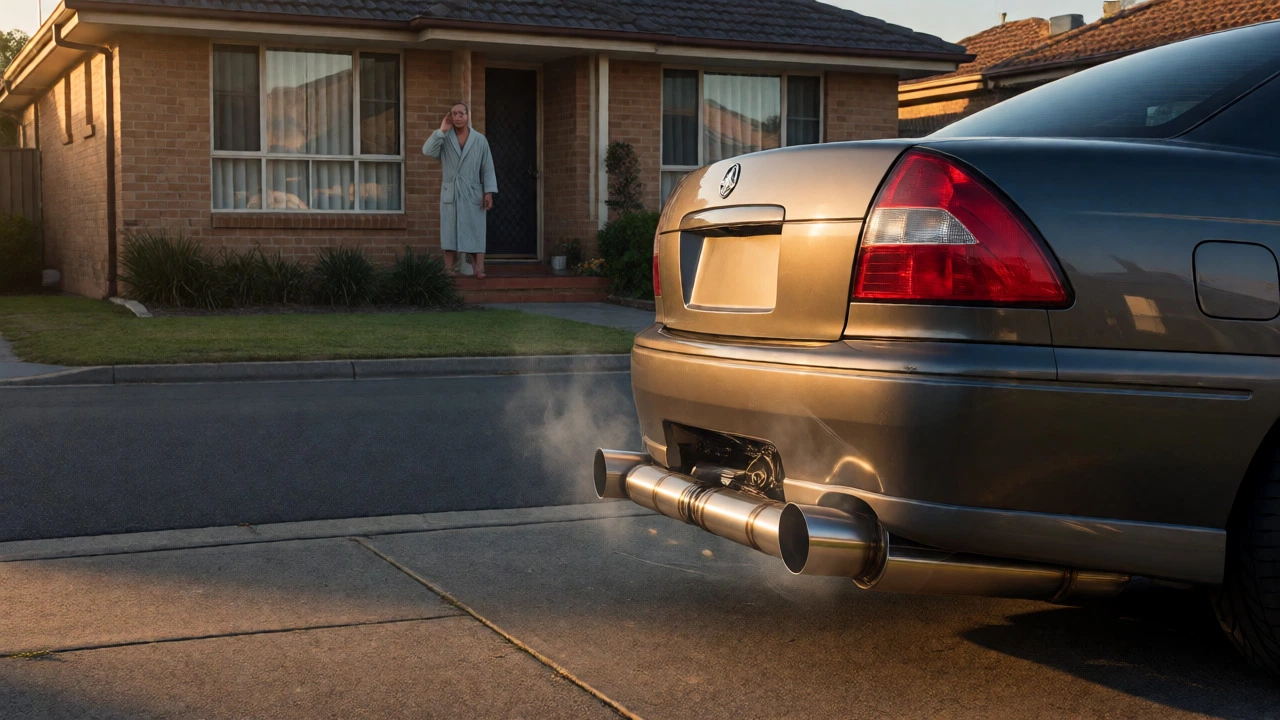
You just bought that shiny new Cobra performance exhaust system, or maybe you're eyeing one for your Holden Commodore or Ford Falcon. You've seen the videos on YouTube where they rev it up in a parking lot, and it sounds like thunder rolling through a canyon. It’s glorious. But then reality hits: you live in a quiet suburb in Brisbane, the walls are thin, and Mrs. Higgins next door has already filed two noise complaints this year. The question isn't just "does it sound cool?" It's "will my neighbors actually hate me?" And more specifically, is the Cobra brand particularly notorious for waking up the entire street at 6 AM?
The short answer? It depends entirely on which Cobra product you buy and how you drive it. But let’s be real-most people asking this aren’t worried about legal limits; they’re worried about social survival. Here is what you need to know before you swap out that factory muffler.
The Cobra Brand Reputation: Loud vs. Aggressive
Cobra is an Australian aftermarket exhaust manufacturer known for producing stainless steel systems with distinct acoustic profiles. Unlike some brands that aim for a deep, bass-heavy rumble that stays under the radar, Cobra often leans into a sharper, more aggressive tone. This is great if you want to announce your arrival. It is less great if you have sensitive ears-or sensitive neighbors.
When people say "neighbor haters," they usually mean two things: volume and pitch. Volume is easy to measure in decibels (dB). Pitch is harder to quantify but much more annoying. A low-frequency rumble might pass by unnoticed if the windows are closed. A high-pitched drone or a sharp crack on overrun? That cuts through double-glazed glass like a knife. Cobra systems, particularly their cat-back setups without resonators, tend to have a higher frequency component than, say, a Borla or a Flowmaster. This makes them perceptually louder even if the dB reading is similar.
Decibel Levels: What Does "Loud" Actually Mean?
Let’s look at the numbers. Factory exhausts on modern cars typically idle around 70-75 dB and peak at 85-90 dB under hard acceleration. Most local councils in Australia, including Brisbane City Council, enforce noise limits around 95-100 dB for modified vehicles, though enforcement varies wildly.
A standard Cobra Cat-Back System typically increases noise output by 5-10 dB over stock. That doesn’t sound like much, but decibels are logarithmic. A 10 dB increase is perceived as twice as loud. So, if your stock car was a polite murmur, a Cobra system turns it into a conversation-starter. If you go for the full straight-through or "sport" variant, you might see peaks hitting 105+ dB. At that level, you aren’t just being heard; you’re being felt. Your neighbor’s coffee cup rattles. Their dog starts barking. You get the picture.
| Exhaust Type | Idle Noise (dB) | Peak Acceleration (dB) | Neighbor Impact Level |
|---|---|---|---|
| Factory/OEM | 70-75 | 85-90 | Inaudible indoors |
| Cobra Touring/Sport | 75-80 | 92-98 | Audible, mild annoyance |
| Cobra Race/Full Straight | 80-85 | 100-108+ | Loud, likely complaints |
Drone: The Silent Killer of Neighborhood Peace
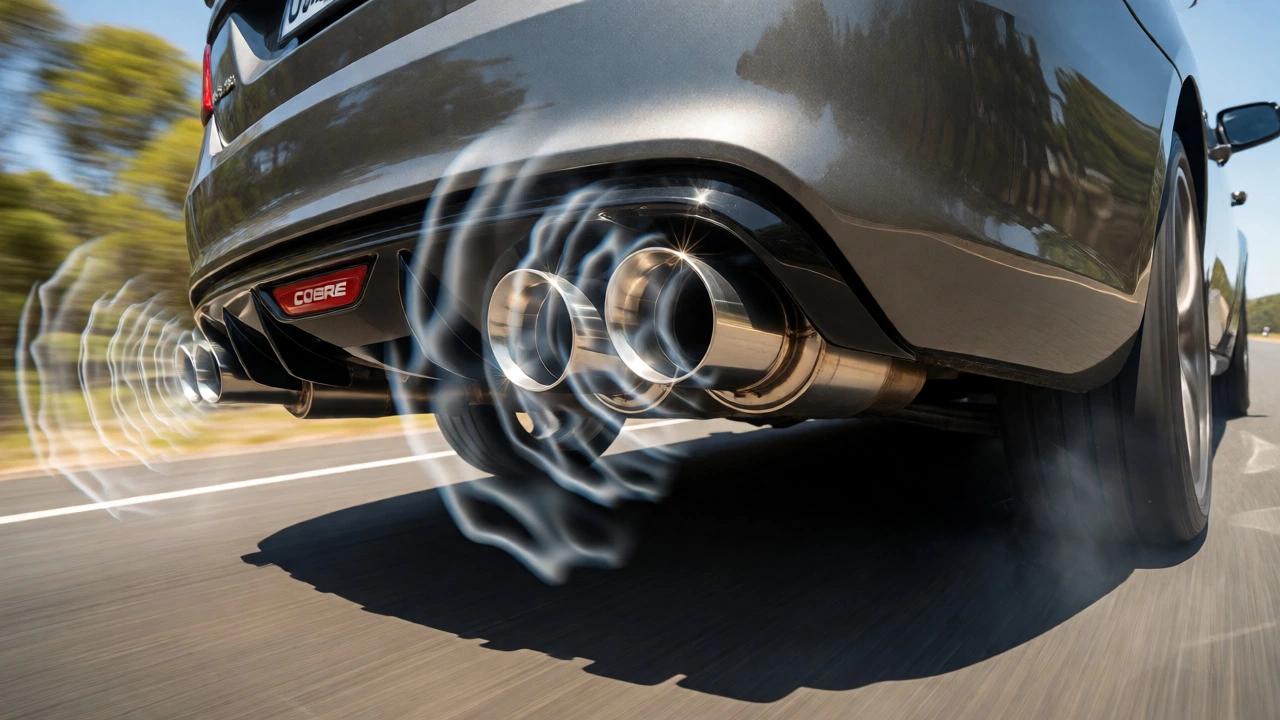
Here is the part most reviews gloss over. It’s not just about how loud it is when you floor the gas. It’s about what happens when you’re cruising down the highway at 100 km/h. This is called exhaust drone a resonant humming noise caused by pressure waves reflecting within the exhaust piping at specific RPM ranges.
Some Cobra models, especially older designs or those lacking sufficient baffling, suffer from drone between 2,000 and 3,000 RPM. Inside the car, this is exhausting for you. Outside the car? It’s a constant, irritating hum that drives neighbors crazy because it never stops. Unlike a quick rev-and-go, drone persists. If you live on a busy road, this background noise adds up. If you live in a cul-de-sac, your car becomes the soundtrack of the neighborhood every time you leave for work.
To avoid becoming the guy everyone avoids talking to at the BBQ, check user forums for your specific car model paired with the specific Cobra kit. Search for terms like "drone issue" or "resonator delete." Often, adding a second resonator can tame the drone while keeping the aggressive tone intact.
Local Laws and Enforcement in Australia
You might think, "I’ll just deal with the noise." But in Australia, the law is getting stricter. In Queensland, for example, the Department of Transport and Main Roads enforces vehicle standards including noise emissions under the Vehicle Standards Act. While they don’t always pull you over for a slightly louder exhaust, a police officer *can* fine you if the noise is deemed "unreasonable" or if the exhaust emits visible smoke or excessive fumes.
More importantly, your council can issue noise abatement notices based on resident complaints. If three neighbors complain, you might get a visit. If you ignore it, fines follow. And here’s the kicker: if you sell the car later, a non-compliant exhaust can fail inspection. Buying a Cobra system that is too loud isn’t just a social risk; it’s a financial liability.
How to Keep Your Neighbors Happy (and Your Ears Intact)
So, does this mean you should stick with stock? Not necessarily. You can enjoy a better sound without starting a neighborhood war. Here is how to strike the balance:
- Choose the Right Variant: Cobra offers different lines. Look for their "Touring" or "Sport" series rather than "Race" or "Straight-Through." These retain internal baffling that reduces volume by 15-20% compared to open pipes.
- Add Resonators: If you already have a loud system, ask your installer to add a second resonator or a larger muffler core. It’s cheaper than replacing the whole system and significantly reduces high-frequency rasp.
- Mind Your Revs: This is behavioral. You can have a loud car and still be a good neighbor. Don’t rev the engine cold. Avoid accelerating hard right after leaving your driveway. Ease off the throttle when passing houses. Respect goes both ways.
- Check the Tip Design: Sometimes the sound is amplified by the tip. A polished tip looks great, but a rolled tip or a carbon fiber wrap can slightly dampen the edge of the note.

Real-World Scenarios: When Is It Too Much?
Imagine you live in a unit complex with shared parking. Concrete reflects sound. A Cobra exhaust that sounds fine in a detached house will echo violently against garage doors and brick walls. In these environments, even a mild upgrade can feel oppressive to others. Conversely, if you live on a rural property five kilometers from the nearest neighbor, you could install a full straight-pipe Cobra setup and nobody would care.
I’ve seen guys in Brisbane’s inner-city suburbs regret going full race exhaust. They spend half their time driving with the windows up just to keep the noise inside, which defeats the purpose of buying an exhaust for the sound. If you find yourself turning the radio up to drown out your own car, you’ve gone too far.
Verdict: Are They "Hater" Magnets?
Are Cobra neighbor haters loud? Yes, they can be. But they aren’t inherently obnoxious. They are designed to be noticed. If you value subtlety, Cobra might not be your first choice. Brands like Magnaflow often prioritize a deeper, quieter tone might suit you better. But if you want that classic American muscle car growl adapted for Australian roads, Cobra delivers. Just be honest with yourself about your living situation.
If you live close to others, start with a mid-range Cobra system. Listen to audio samples online-not just the promotional videos, but actual user uploads recorded from outside the car. Trust those raw clips over the studio-quality ads. Your neighbors will thank you, and you’ll still get to enjoy the improved flow and performance gains.
Is a Cobra exhaust legal in Australia?
Generally, yes, provided it meets local noise emission standards. Most Cobra systems are designed to comply with Australian Design Rules (ADR), but "compliant" doesn't always mean "quiet enough for all councils." Always check with your local authority or a certified mechanic to ensure your specific installation passes inspection.
Will a Cobra exhaust damage my engine?
No, a properly installed Cobra exhaust will not damage your engine. In fact, by reducing backpressure, it can improve engine efficiency and power delivery. However, removing catalytic converters (if applicable) can affect emissions tests and long-term sensor health, so keep those components unless you are track-only.
How much louder is Cobra compared to stock?
On average, a Cobra cat-back system adds 5-10 dB of volume. While this seems small, human perception interprets a 10 dB increase as twice as loud. The tone also shifts from a muted hum to a more aggressive, metallic note, making it seem even louder than the decibel count suggests.
Can I reduce the noise of my Cobra exhaust later?
Yes. You can install additional resonators or replace the final muffler with a quieter core. Some owners also use sound deadening material inside the cabin to reduce interior noise, though this won't help your neighbors. For external noise reduction, modifying the exhaust path itself is necessary.
Do Cobra exhausts rust easily?
Most Cobra systems are made from T304 stainless steel, which is highly resistant to corrosion. However, in coastal areas like parts of Brisbane, salt air can accelerate wear on welds or lower-grade components. Regular washing helps maintain appearance and longevity, but rust is rarely a major failure point for these systems.