
Performance Air Filter Value Calculator
Your Vehicle Profile
Why Use This Tool?
Performance filters are often marketed as essential upgrades, but they aren't always the best choice. This calculator helps you decide based on:
- Realistic horsepower gains
- Long-term maintenance costs
- Engine protection needs
- Your specific driving conditions
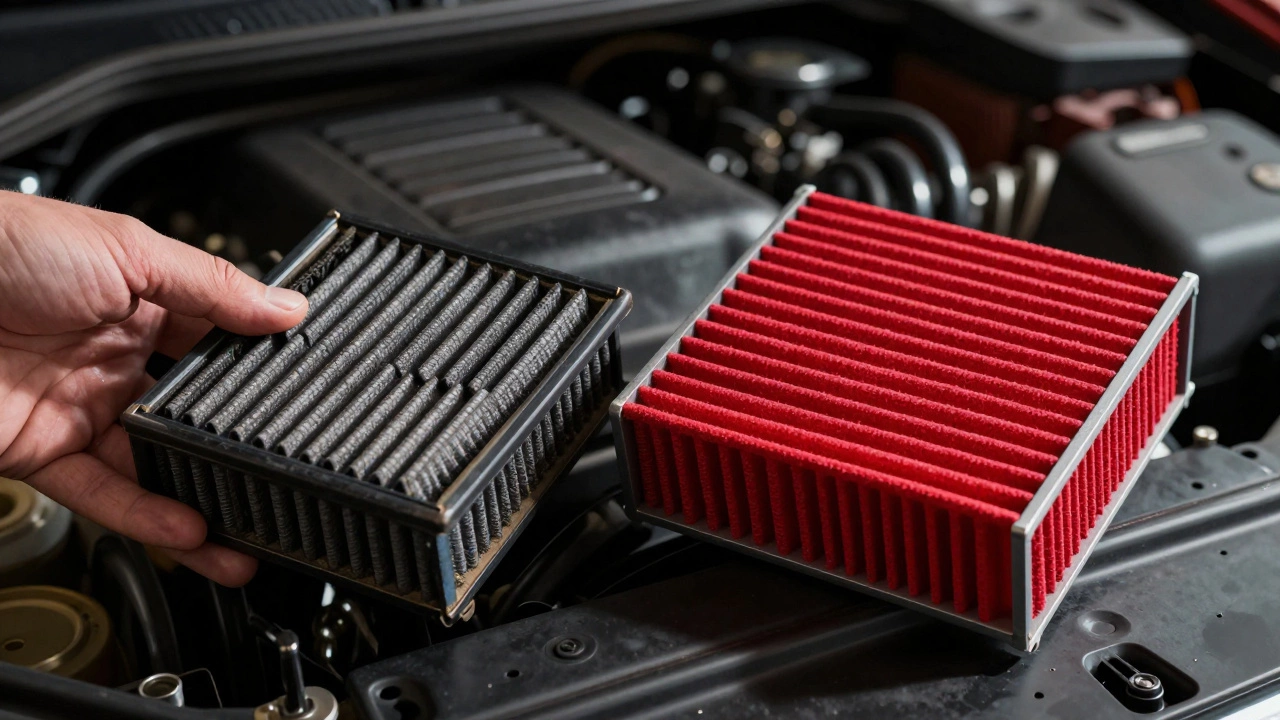
You’ve seen the ads. You’ve heard the guys at the car meet talk about it. A simple swap of your stock paper filter for a reusable, oiled performance air filter is a high-flow filtration device designed to increase engine airflow and potentially improve horsepower. promises instant horsepower, better throttle response, and that sweet, aggressive induction noise. But here’s the hard truth: on a completely stock vehicle, those gains are often microscopic-sometimes non-existent. So, are they worth your money?
The short answer depends entirely on what you’re trying to achieve. If you want 10 extra horsepower just by changing a filter, you’re going to be disappointed. If you want easier maintenance, slightly better breathing for an already-modified engine, or peace of mind in dusty conditions, then yes, they can be a solid investment. Let’s break down the science, the marketing hype, and the real-world results so you don’t waste cash on parts that sit in a drawer.
The Science of Airflow and Horsepower
To understand why performance filters exist, we have to look at how an internal combustion engine works. Your engine needs three things to make power: fuel, spark, and air. Most modern cars use electronic fuel injection, which means the computer automatically adjusts the fuel based on how much air is coming in. The limiting factor is usually how easily that air can get into the cylinders.
Restriction is the enemy of horsepower. Stock air filters are made of dense paper. They are excellent at catching tiny particles but create significant resistance to airflow. Think of it like trying to breathe through a thick winter scarf. You can do it, but it takes effort. Performance filters, typically made from layered cotton gauze soaked in oil (like those from K&N) or advanced synthetic materials (like OEM+ replacements), are designed to reduce this restriction.
However, physics dictates that there is a trade-off between flow and filtration. The more open the filter, the more air flows, but also the more dirt gets through. Manufacturers spend millions optimizing this balance. In a lab setting, using a mass airflow meter, you will see that a high-performance filter allows significantly more cubic feet per minute (CFM) of air to pass through than a stock paper filter. But does that lab number translate to the street?
Real-World Horsepower Gains: What Dyno Tests Show
If you search online, you’ll find conflicting claims. Some brands advertise up to 15% horsepower increases. Independent dyno tests tell a different story. On a stock engine with a stock exhaust and stock ECU tune, the gain from swapping only the air filter is typically between 0 and 3 horsepower. That’s barely enough to move the needle on a dynamometer, let alone feel it when you’re merging onto the highway.
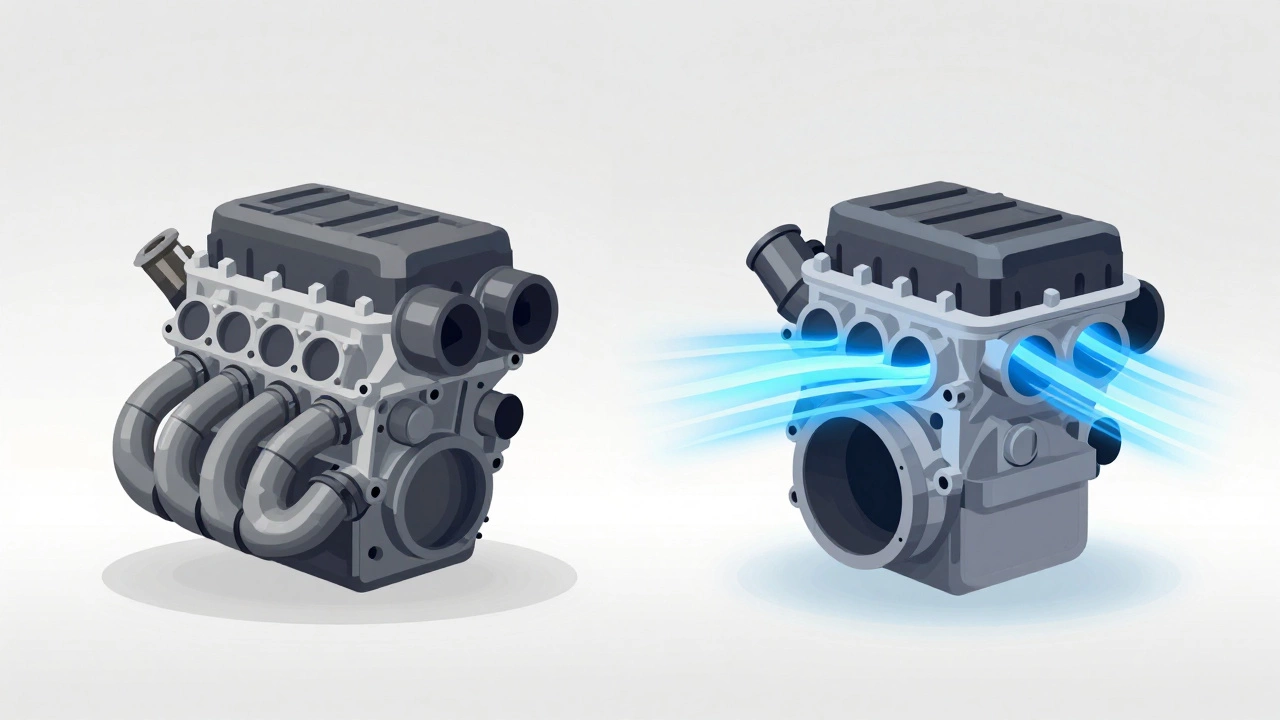
Why such a small difference? Because the rest of the engine is choking the system. The stock intake manifold has narrow runners. The stock exhaust is restrictive. The ECU is tuned for emissions and efficiency, not maximum power. Adding a freer-breathing filter to a restricted system is like widening one lane on a six-lane highway that ends at a single-lane toll booth. The bottleneck remains elsewhere.
However, if you pair a performance air filter with other modifications-such as a cold air intake, a high-flow catalytic converter, or an aftermarket ECU tune-the numbers change. In these scenarios, the filter becomes part of a system that actually moves more air. Here, you might see gains of 5 to 10 wheel horsepower, depending on the engine size and configuration. For larger V8s or turbocharged engines, the gains can be more pronounced because they move larger volumes of air.
Cold Air Intakes vs. Drop-In Filters
It’s crucial to distinguish between two types of upgrades: drop-in performance filters and full cold air intake systems. This is where many buyers get confused.
- Drop-In Filters: These replace only the filter element inside your existing plastic airbox. They keep the factory heat shield and routing. They are easy to install, often plug-and-play, and maintain OEM fitment. The gains are minimal, mostly limited to reduced restriction.
- Cold Air Intakes (CAI): These replace the entire intake path, including the tube, the airbox, and the filter. They route the intake point to a cooler area of the engine bay or fender well. Cooler air is denser, containing more oxygen molecules, which leads to more complete combustion. CAIs can offer more noticeable throttle response and sound changes, along with modest horsepower gains.
If you’re looking for a quick, cheap upgrade, a drop-in filter is the way to go. If you want a more comprehensive change, a CAI is better, but it comes with higher costs and potential installation challenges. Always check local regulations, as some regions have strict laws regarding intake modifications that affect emissions equipment.
Filtration Efficiency and Engine Protection
This is the most critical aspect that marketers often gloss over. An engine is a precision instrument. Sand, dust, and debris act like sandpaper inside your cylinders. Even microscopic particles can score piston rings and cylinder walls, leading to premature wear and costly repairs.
Stock paper filters are incredibly efficient, capturing particles as small as 5 microns. Early generations of oiled performance filters struggled here, sometimes letting through particles as large as 10-15 microns. However, technology has improved. Modern multi-layer cotton gauze filters and high-end synthetic options now match or exceed OEM filtration standards while maintaining higher flow rates.
The risk comes from improper maintenance. Oiled filters require regular cleaning and re-oiling. If you skip this step, the oil dries out, and the filter loses its ability to trap dirt. Worse, if you over-oil the filter during maintenance, excess oil can be sucked into the Mass Air Flow (MAF) sensor. This coats the sensitive wires, causing inaccurate readings, rough idling, poor fuel economy, and a check engine light. Cleaning a MAF sensor is a nuisance; replacing one is expensive.
Maintenance Costs and Long-Term Value
One of the main selling points of performance filters is reusability. A stock paper filter costs $20-$40 and lasts 15,000-30,000 miles. A quality performance filter costs $50-$150 upfront but can last the life of the vehicle if maintained properly.
Over five years, if you drive 15,000 miles annually, you’ll replace a stock filter twice or three times. Total cost: $60-$120. A performance filter requires cleaning every 10,000-15,000 miles, depending on driving conditions. Cleaning kits cost around $20-$30. So, over five years, the total cost for a performance filter might be $70-$80 (initial purchase + 2-3 cleanings).
Financially, it’s a wash. You aren’t saving much money. The value proposition shifts to convenience and environmental impact. You’re not throwing away used filters every few years. However, you must factor in the time and effort required to clean and re-oil the filter. For many drivers, pulling out the old filter and dropping in a new one takes two minutes. Cleaning an oiled filter involves soaking, blowing out with compressed air, and carefully applying new oil-a process that can take 20-30 minutes.
When Are Performance Air Filters Actually Worth It?
So, who should buy one? Here are the specific scenarios where a performance air filter makes sense:
- Dusty or Off-Road Environments: If you drive in areas with lots of dust, dirt, or pollen, a high-quality reusable filter can be easier to clean and reuse than constantly buying new paper filters. Just ensure you follow the manufacturer’s cleaning instructions strictly.
- Supporting Other Mods: As mentioned earlier, if you’re installing a cold air intake, upgrading your exhaust, or tuning your ECU, a high-flow filter is a necessary component to realize the full potential of those upgrades.
- Track Use: If you take your car to the track, you’ll likely need to clean the filter after every session due to brake dust and debris kicked up by other cars. A reusable filter saves money and hassle in this context.
- Peace of Mind: Some drivers prefer the idea of a washable, long-lasting filter. If the psychological benefit of knowing your filter is “high-flow” appeals to you, and you’re willing to pay the premium, it’s a harmless upgrade.
Conversely, if you have a brand-new daily driver, commute in city traffic, and want zero maintenance headaches, stick with the OEM paper filter. It’s cheaper, easier to replace, and protects your engine just as well.

Top Brands and Recommendations
The market is dominated by a few key players. Each has its strengths and weaknesses.
| Brand | Type | Avg. Cost | Best For | Pros | Cons |
|---|---|---|---|---|---|
| K&N | Oiled Cotton Gauze | $50 - $150 | General Performance | Widely available, proven longevity, good flow | Requires careful cleaning/oiling, risk of MAF contamination |
| Feal Performance | Synthetic Mesh | $60 - $160 | No-Oil Maintenance | No oil needed, easy cleaning, excellent filtration | Slightly less flow than oiled filters, higher price |
| Brembo / OEM+ | Paper/Synthetic Hybrid | $30 - $80 | Conservative Upgrades | Plug-and-play, no maintenance, safe for warranties | Minimal performance gains, disposable |
K&N is the household name. Their filters are everywhere, and their lifetime warranty is attractive. However, the oiled nature requires diligence. Feal Performance has gained popularity for its no-oil synthetic design, which eliminates the risk of MAF sensor fouling and simplifies maintenance. For those who want a middle ground, OEM+ filters from companies like Bosch or Fram offer slightly better flow than standard paper filters without the hassle of oiling.
Common Myths Debunked
Myth 1: It will make my car sound like a race car. Reality: On a drop-in filter, you might hear a slight increase in induction noise under heavy acceleration. It’s subtle. Full cold air intakes produce more noticeable sound, but even then, it’s rarely the roaring monster advertised in videos.
Myth 2: It improves fuel economy significantly. Reality: While better airflow can theoretically improve combustion efficiency, modern ECUs are so precise that any fuel savings are negligible. You won’t see a dramatic drop in your gallons-per-mile. Don’t buy a filter expecting to save $50 a month on gas.
Myth 3: It voids my warranty. Reality: Under the Magnuson-Moss Warranty Act in the US (and similar consumer protection laws in Australia and Europe), manufacturers cannot void your warranty simply because you installed an aftermarket part. They must prove that the part directly caused the damage. If your engine fails due to dirt ingestion from a poorly maintained filter, they may deny coverage. But if your transmission fails, the filter is irrelevant. Keep records of your maintenance to protect yourself.
Final Verdict: Buy or Skip?
Are performance air filters worth it? For the average commuter with a stock car, probably not. The gains are too small to justify the cost and maintenance effort. Stick with high-quality OEM replacement filters and change them on schedule.
For enthusiasts, off-roaders, or those building a modified engine, they are a valuable tool. They provide the airflow necessary to support other upgrades and offer durability in harsh conditions. Just choose the right type for your needs-oiled for maximum flow, synthetic for ease of use-and maintain them properly. Your engine will thank you.
How often should I clean a performance air filter?
Most manufacturers recommend cleaning every 10,000 to 15,000 miles. However, this depends heavily on your driving environment. If you drive on dusty roads, in construction zones, or off-road, you should inspect and clean it more frequently, perhaps every 5,000 miles. Never wait until the filter looks visibly clogged; check it regularly.
Can I use a leaf blower to clean my air filter?
No, never use a leaf blower or high-pressure air hose. The pressure can damage the delicate mesh structure of the filter, creating holes that allow dirt to enter your engine. Always use low-pressure compressed air (below 30 PSI) from the inside out, following the manufacturer’s specific instructions.
Do performance air filters help with towing?
They can provide a minor benefit. When towing, your engine works harder and demands more air. A high-flow filter reduces restriction, allowing the engine to breathe more easily under load. This can lead to slightly better throttle response and reduced strain, though the gains are still modest compared to other towing-specific upgrades like transmission coolers.
What happens if I put too much oil on my filter?
Excess oil can be drawn into the Mass Air Flow (MAF) sensor, coating its sensitive wires. This causes inaccurate air reading, leading to poor fuel mixture, rough idling, stalling, and a check engine light. If this happens, you’ll need to clean the MAF sensor with specialized cleaner. Always apply oil sparingly and evenly.
Are dry performance filters better than oiled ones?
Dry filters (synthetic or pleated paper) are generally safer for the average user because they eliminate the risk of MAF sensor contamination and require less maintenance. They offer slightly less airflow than oiled cotton gauze filters but provide excellent filtration and ease of use. For most street drivers, a high-quality dry filter is the smarter choice.