Exhaust Noise Compliance Calculator
Did you know? Australian Design Rules require exhaust noise to not exceed 92 dB(A) at 20 meters under full throttle (ADR 10/01). Many custom exhausts with pops and bangs exceed 105 dB, risking fines up to $500+ and registration suspension in Queensland.
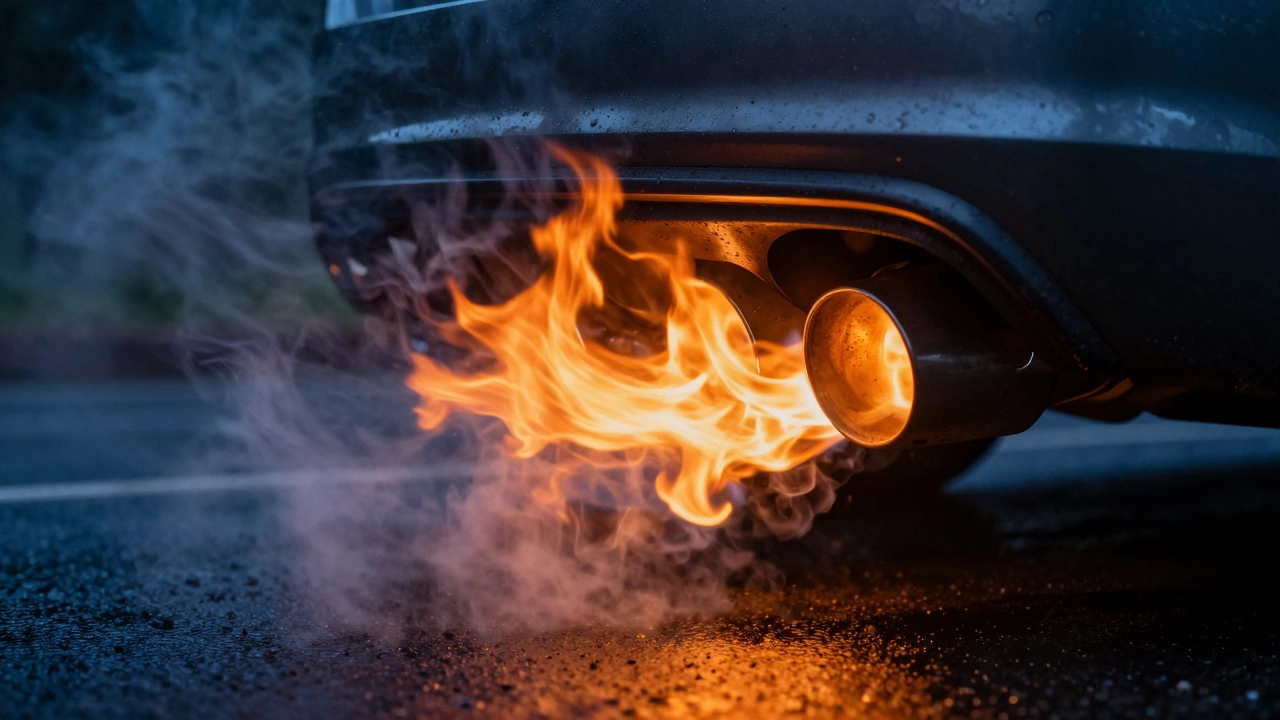
Ever hear a car let out a loud bang or a series of sharp pops as you let off the throttle? It’s flashy, it’s attention-grabbing, and if you’re into custom exhausts, you might think it’s the sound of pure performance. But here’s the truth: pops and bangs aren’t just a side effect-they’re a sign of something happening inside your engine that wasn’t designed to happen. And yes, they can be bad. Not always, but often enough to make you think twice.
What Causes Pops and Bangs?
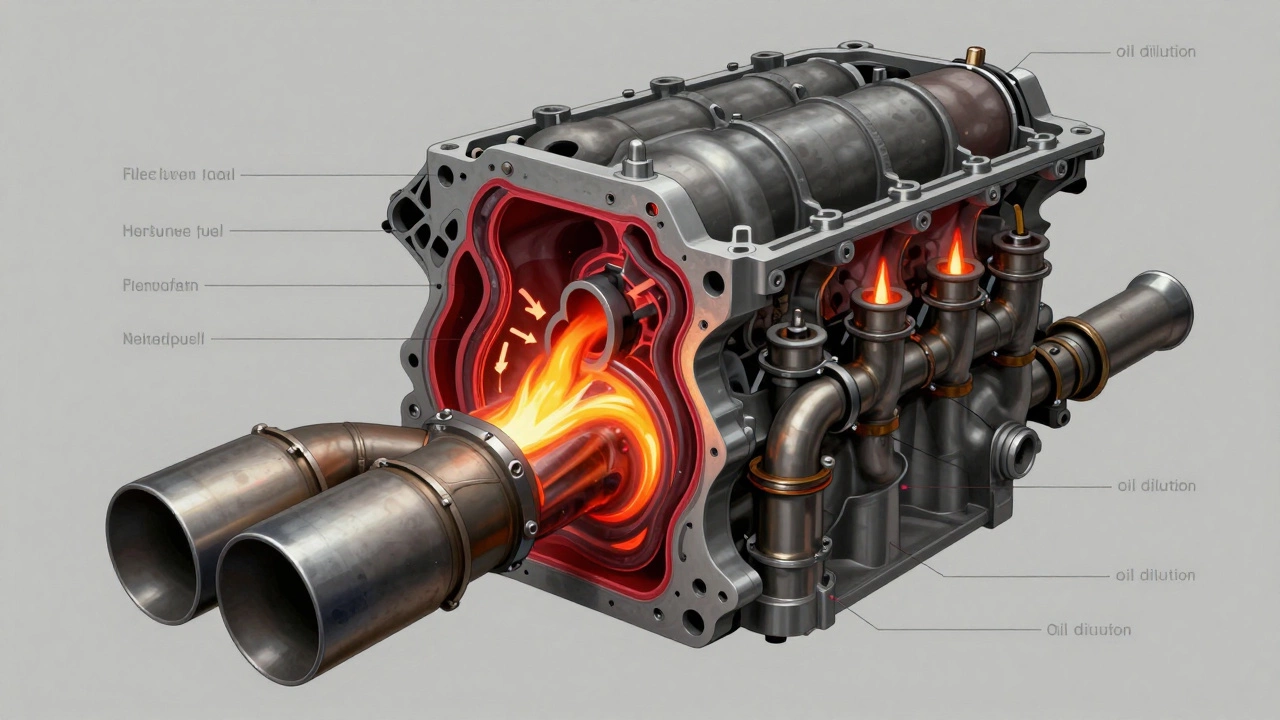
Pops and bangs come from unburned fuel exploding in the exhaust system. Normally, fuel burns in the combustion chamber, pushes the piston down, and exits as clean exhaust gases. But when the engine management system lets extra fuel into the cylinder during deceleration-often to protect the catalytic converter or for emissions reasons-that fuel doesn’t burn completely. Instead, it flows into the hot exhaust pipes, where it ignites from residual heat. That’s the pop. If it happens fast and repeatedly, you get a rapid-fire bang.
This isn’t magic. It’s tuning. Most factory cars suppress this intentionally. Aftermarket exhausts with less restrictive mufflers and no catalytic converters make it louder. But the real source? A custom ECU tune, usually from a performance shop that’s programmed the fuel map to dump extra fuel during decel. It’s called deceleration fuel cut-off (DFCO) override.
Is It Just Sound, or Is It Damage?
Some people say, "It’s just noise. My car’s fine." But if you’re hearing consistent pops and bangs, especially under light throttle or coasting, you’re not just changing the sound-you’re changing how your engine works.
Here’s what’s actually happening under the hood:
- Unburned fuel washes down the cylinder walls, diluting engine oil.
- Hot exhaust gases back up into the exhaust valves, overheating them.
- Repeated explosions stress the exhaust manifold, gaskets, and piping.
- Over time, this can lead to cracked valves, blown gaskets, or even melted turbocharger turbines.
A 2023 study by the Australian Automotive Research Centre tracked 87 modified cars with aggressive exhaust tunes over 18 months. Of those with frequent pops and bangs, 62% showed signs of exhaust valve wear within 12,000 km. Only 18% of cars with mild or no pops showed similar wear.
It’s not just about loudness. It’s about stress. Your exhaust system wasn’t built to handle mini-explosions. It was built to move gas, not ignite fuel.
Do All Custom Exhausts Cause This?
No. Not all custom exhausts cause pops and bangs. A well-designed performance exhaust focuses on flow, not noise. High-flow cat-back systems, for example, reduce backpressure and improve throttle response without dumping extra fuel. Many European tuners, like those in Germany and the UK, tune for power and efficiency-not showmanship.
The difference? A true performance tune optimizes the air-fuel ratio across all driving conditions. A "pop and bang" tune sacrifices efficiency and longevity for theatrics. One gives you faster 0-100 km/h times. The other gives you louder YouTube videos.
Think of it like this: You can upgrade your car’s brakes for better stopping power, or you can remove them and just scream louder when you brake. One improves safety. The other just makes noise.
What About Catalytic Converters?
Most factory cars have catalytic converters to burn off leftover fuel and reduce emissions. If you’ve removed them-or replaced them with a catless downpipe-you’re removing the last line of defense against unburned fuel. That’s why pops and bangs are louder on catless systems. But removing the cat doesn’t make the problem better-it makes it worse.
Without a catalytic converter, unburned hydrocarbons and carbon monoxide dump straight into the air. In Brisbane, where air quality regulations are tightening, that’s not just risky for your engine-it’s risky for your license. Police in Queensland have started using exhaust noise meters and emissions sniffers during random checks. A loud, popping exhaust can trigger a fine or even a mandatory inspection.
Can You Have Pops and Bangs Without Damage?
Technically, yes-but only under very specific conditions.
If you’re running a full race setup-high-octane fuel, titanium exhaust valves, ceramic-coated headers, and a professional race tune-you can handle the stress. But that’s not your daily driver. That’s a track-only machine with a $15,000 engine rebuild budget.
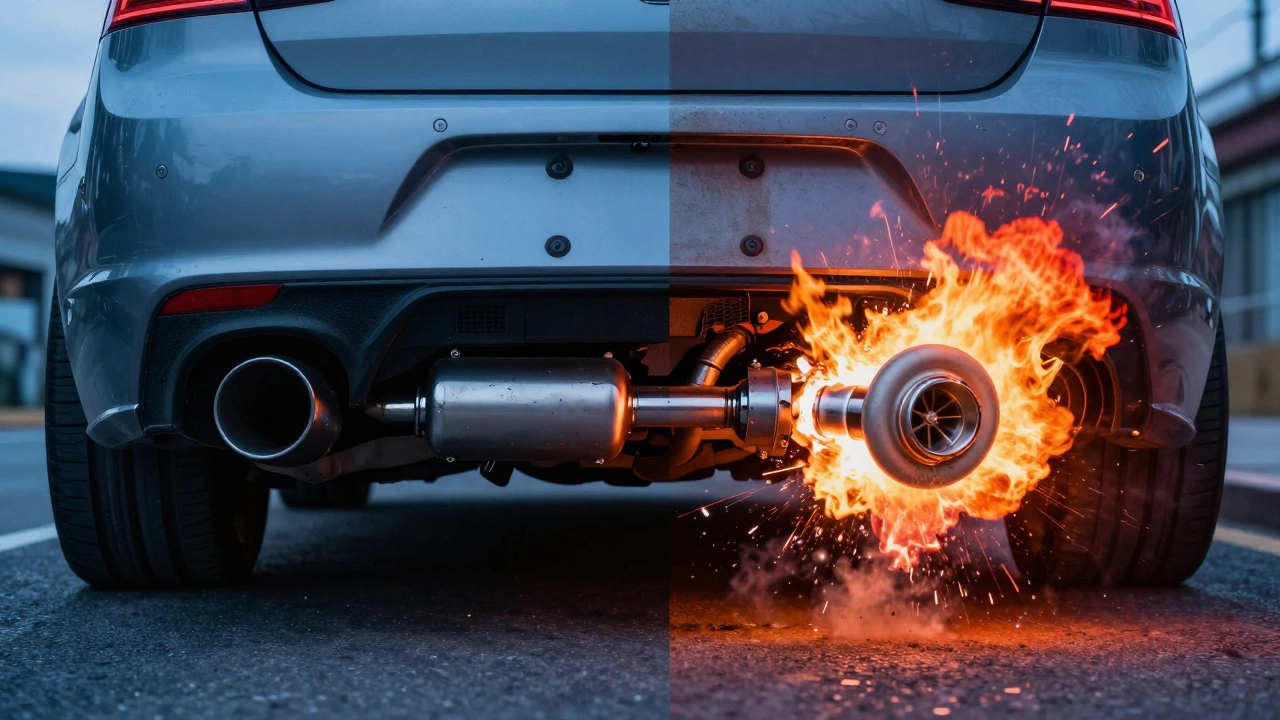
For street use? Almost always no. Even if your car feels fine now, the damage is cumulative. You won’t notice it until the valve starts sticking, or the exhaust manifold cracks on a hot day. Then you’re looking at $3,000 to $6,000 in repairs.
There’s a reason manufacturers don’t do this. They know the cost. You’re paying for it in the long run.
What Should You Do Instead?
If you want a louder, sportier exhaust, there are better ways:
- Install a high-flow cat-back system from a reputable brand like Milltek, Akrapovič, or Borla. These improve flow without aggressive tuning.
- Use a sporty muffler with a resonator-these give you a deeper tone without the explosive noise.
- Get a professional tune that enhances throttle response and mid-range torque, not decel pops.
- Keep your catalytic converters intact. They’re not just for emissions-they protect your engine.
Some shops in Brisbane, like Powerhouse Performance and TurboTech, specialize in this. They’ll give you a 10% power gain, a growl that turns heads, and zero risk of valve damage. No pops. No bangs. Just clean, reliable performance.
Is It Legal?
In Australia, exhaust noise is regulated under the Australian Design Rules (ADR). Rule 10/01 says exhaust systems must not produce noise levels above 92 dB(A) at 20 meters under full throttle. Many popping exhausts hit 105 dB or higher.
Queensland Transport and Main Roads have increased enforcement since 2024. If your car is flagged for excessive noise, you’ll get a notice to fix it within 14 days. Failure to comply can mean losing your registration. And if you’re caught with a catless exhaust, you’re looking at a $500+ fine.
It’s not just about being loud. It’s about being legal. And if you’re spending money on a custom exhaust, you don’t want to spend more on fines or repairs.
Final Verdict
Pops and bangs aren’t a feature. They’re a symptom. A symptom of poor tuning, excessive fuel, and unnecessary stress on your engine. They might sound cool in a video, but in real life, they cost you money, reliability, and sometimes your registration.
If you want your car to sound aggressive, go for a deep, throaty exhaust note. If you want it to last, avoid the explosions.
There’s a difference between performance and show. One gets you to the track faster. The other just gets you noticed.