Dashboard Cleaner Advisor
Find the perfect product based on your dashboard's condition
Pro Tips for Application:
Quick Tips for a Clean Dash
- Avoid silicone-based "high-gloss" products to prevent glare.
- Always use a microfiber cloth to avoid scratching soft plastics.
- Use a dedicated UV protectant to prevent cracking and fading.
- Vacuum the dashboard before applying any liquid cleaners.
The Gold Standard: What Actually Works?
When you're hunting for the best car dashboard cleaner, you have to match the product to the material. Modern cars aren't just "plastic." They use a mix of molded polymers, synthetic leather, and sometimes real wood or aluminum. Using a harsh chemical on a soft-touch surface can actually melt the finish or leave permanent streaks.
For most vehicles, Interior Detailer is a versatile, pH-balanced cleaning solution designed to remove light dust and oils without leaving a greasy residue. Unlike old-school armor-all style products, modern detailers focus on a "matte" or "satin" finish. This is crucial because a greasy, reflective dashboard can blind you when the sun hits it at a certain angle during a highway drive.
If your dashboard is truly filthy-think spilled soda, sticky residue from kids, or years of accumulated skin oils-you'll need something stronger. An All-Purpose Cleaner (APC) is a stronger chemical agent that breaks down heavier organic soils and grease. However, you should always dilute an APC. Using it full-strength on a dashboard can strip the factory dyes or leave white streaks on black plastic.
DIY Options: The Soap and Water Route
You don't always need a fancy bottle from a detailing shop. If you're just dealing with light dust, a mixture of warm water and a drop of Mild Dish Soap (like Dawn) can work. But be careful: too much soap leaves a film that actually attracts more dust. If you see streaks after it dries, you've used too much soap.
Some people swear by white vinegar for cleaning. While it's great for cutting through grease, the acidity can be too harsh for some vinyl dashboards over time. If you go the vinegar route, mix it 1:1 with water and test it on a small, hidden area first. You don't want to find out the hard way that your dash doesn't like acid.
The Danger of High-Gloss Protectants
There is a common misconception that "shiny" equals "clean." In the world of professional detailing, a high-gloss finish is often avoided. When your dashboard looks like a mirror, it reflects the sky and trees directly onto the glass, which is a legitimate safety hazard. Moreover, many high-gloss products are based on silicone, which can actually attract dust like a magnet, meaning you'll have to clean it again in three days.
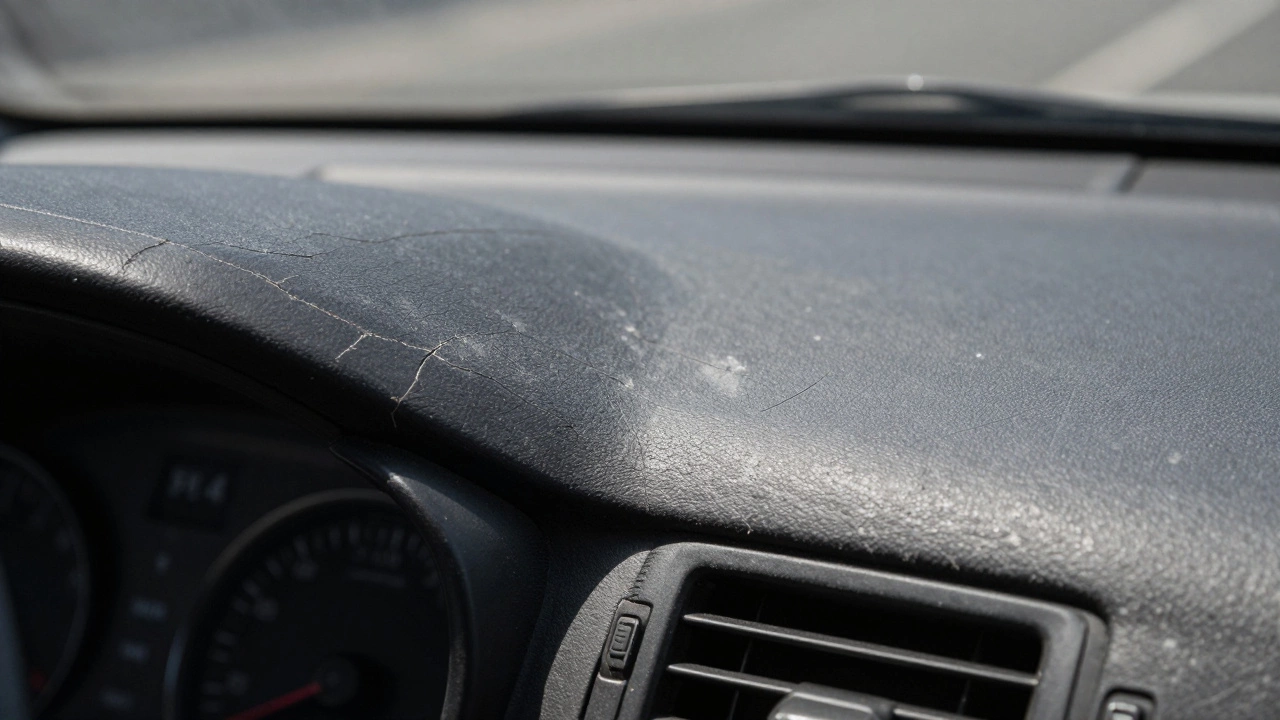
Instead, look for a UV Protectant, which is a chemical barrier that absorbs ultraviolet radiation to prevent the plastic from becoming brittle. These products typically leave a factory-fresh matte finish. Think of it like sunscreen for your car. Without it, the heat from the sun literally bakes the plastic, causing it to shrink and crack over a decade of use.
| Method | Best For | Finish | UV Protection |
|---|---|---|---|
| Interior Detailer | Weekly maintenance | Satin/Matte | Moderate |
| APC (Diluted) | Heavy grime/stains | Clean/Raw | None |
| UV Protectant | Long-term preservation | Factory Matte | High |
| Soap & Water | Basic dust removal | Variable | None |
Step-by-Step Cleaning Process
To get a professional result without spending hours in the garage, follow this specific order. If you spray cleaner directly onto the dash, you're just pushing wet dirt around.
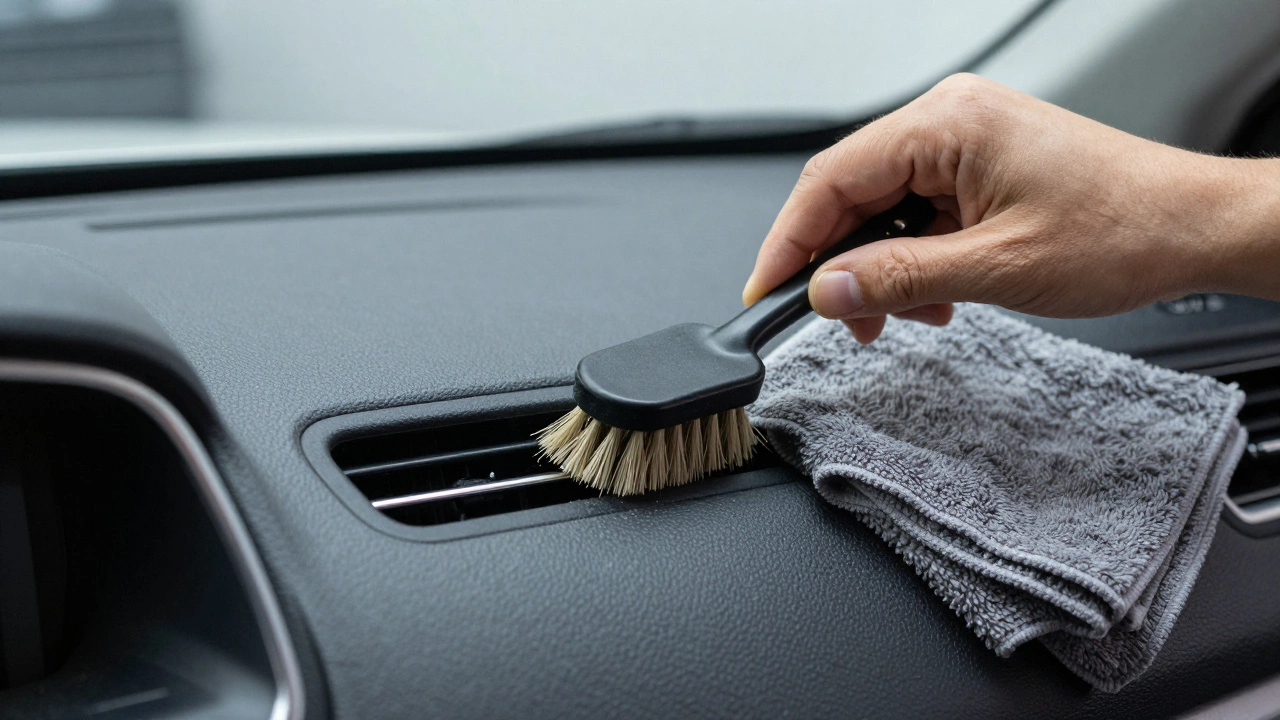
- Dry Vacuuming: Use a brush attachment to suck out the dust from the vents and the deep crevices where the dash meets the windshield. If you skip this, you'll create a "muddy" slurry when you apply the liquid cleaner.
- The "Cloth-First" Method: Spray your cleaner onto a Microfiber Cloth, not the dashboard. This prevents the liquid from seeping into your electronic buttons or air vents, which can cause short circuits or sticky switches.
- Agitation: Gently wipe the surface. For textured plastics or leather-look materials, a Detailing Brush (a soft-bristled brush) is a lifesaver. It lets you scrub the grain of the plastic without scratching it.
- Wipe Down: Use a second, dry microfiber cloth to buff away any remaining residue. This ensures no streaks are left behind.
- Protect: Apply a dedicated UV protectant. Let it sit for a few minutes, then buff it gently. This seals the surface and locks in the clean look.
Avoiding Common Pitfalls
One of the biggest mistakes people make is using household glass cleaner on the dashboard. Most glass cleaners contain ammonia, which is a powerful solvent. While it cuts grease, it also strips the protective oils from your vinyl and leather. Over time, this makes the material dry out and crack much faster. If you see "ammonia" on the label, keep it on the windows and away from the dash.
Another error is ignoring the vents. If you spray a heavy dressing into the vents, the residue can coat the internal sensors or even create a sticky film on the AC evaporator, which might lead to a musty smell. Always use a dry brush or compressed air for the vent slats before applying any wet products.
Maintaining the Look
You don't need to do a deep clean every week. Once you've stripped the grime and applied a UV protectant, a simple dusting with a damp microfiber cloth every few days is enough. The protectant creates a slick surface that actually repels dust, so the particles won't stick as easily as they did before.
If you live in a desert climate or park your car in an open lot, you might want to apply the UV protectant every three months. In cooler climates, once or twice a year is usually plenty. Also, consider a high-quality sunshade. No matter how good your cleaner is, a physical barrier against the sun is the most effective way to keep your interior from aging.
Can I use rubbing alcohol to clean my dashboard?
No, you should avoid rubbing alcohol. Isopropyl alcohol is a strong solvent that can dissolve the clear coat or the dyes used in your dashboard's plastic. This often results in "white spots" or a faded look that is impossible to fix without replacing the part.
What is the difference between a cleaner and a protectant?
A cleaner is designed to remove dirt, oils, and stains from the surface. A protectant is a conditioner that stays on the surface to block UV rays and prevent the material from drying out. Ideally, you use a cleaner first, then a protectant second.
Why is my dashboard still dusty after cleaning?
This usually happens if you used a silicone-heavy "gloss" product. Silicone creates a sticky surface that attracts airborne dust. Switching to a matte-finish UV protectant will help repel dust instead of attracting it.
How do I clean the sticky residue from a phone mount?
For sticky adhesive residue, a small amount of diluted APC or a dedicated adhesive remover works best. Use a microfiber cloth and rub gently in circles. Avoid using metal scrapers, as they will gouge the plastic.
Are microfiber cloths better than paper towels?
Yes, significantly. Paper towels are abrasive and can leave microscopic scratches on glossy plastic surfaces. Microfiber cloths are designed to lift dirt away from the surface rather than scrubbing it across, which prevents swirling and scratching.
Next Steps for Your Interior
Once your dashboard is pristine, don't forget the rest of the cabin. The same logic applies to your door panels and center console-clean first, protect second. If you have leather seats, you'll want to move from an interior detailer to a specific leather conditioner to prevent the hide from cracking. For the carpets, a dedicated fabric cleaner and a stiff brush will tackle the salt and mud that the vacuum leaves behind.