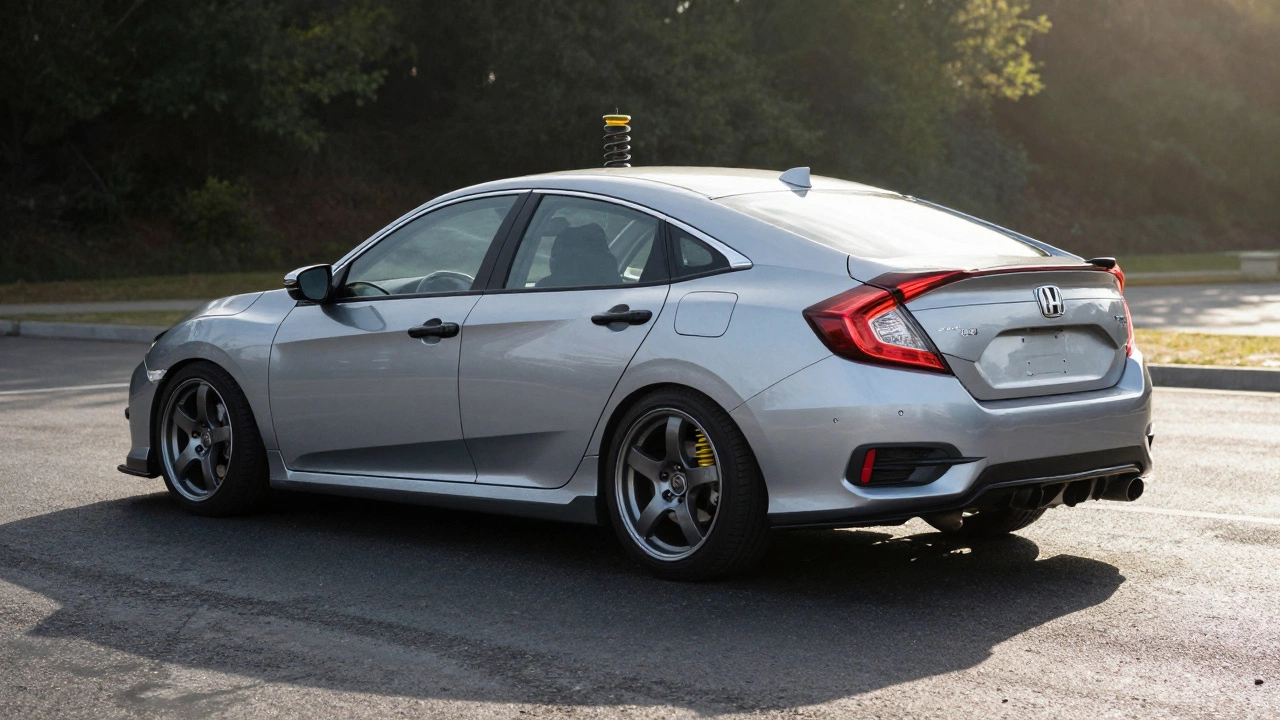
When you see a car sitting low and tight to the ground, it’s easy to assume the owner just slapped on some lowering springs and called it a day. But here’s the truth: lowering springs don’t let you adjust ride height after installation. They’re not a dial you turn. They’re a fixed setup - once they’re on, your ride height is locked in.
What Lowering Springs Actually Do
Lowering springs are stiffer, shorter versions of your car’s factory springs. They’re designed to reduce the distance between the axle and the chassis - usually by 1 to 2 inches, depending on the model. That’s it. They don’t have adjustable coils, no air valves, no hydraulic controls. You install them, bolt everything back together, and that’s your new ride height.
Think of them like replacing your couch cushions with thinner ones. You can’t make them taller again without swapping them out. Same with lowering springs. If you want to raise the car later, you need new springs - or a completely different system.
Why People Think You Can Adjust Them
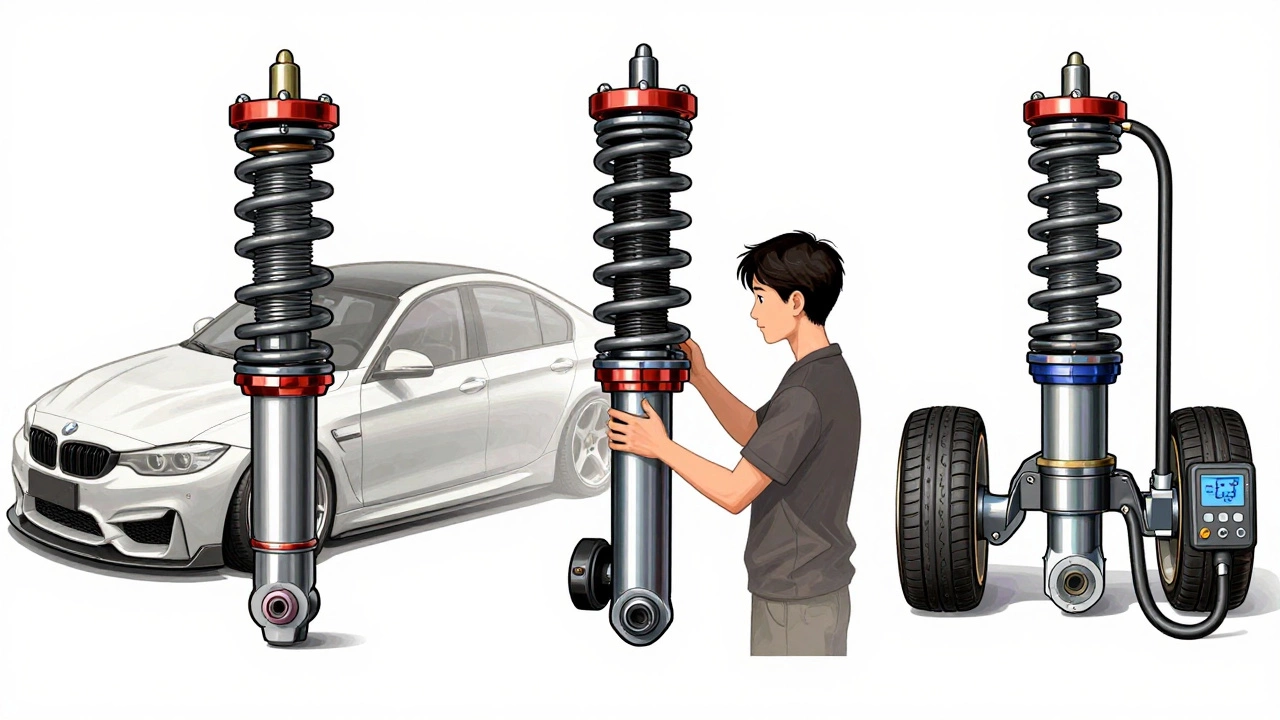
Confusion comes from mixing up lowering springs with other suspension upgrades. Air suspensions? Those let you tweak height on the fly. Coilovers? Those have threaded collars you can spin to raise or lower the car. But lowering springs? No moving parts. No adjustments. Just steel coils that compress under weight and stay that way.
Some sellers show before-and-after photos with the same car at different heights. That’s misleading. Those photos are usually taken with different setups - maybe the car had coilovers first, then someone swapped to springs. The photo doesn’t show adjustment. It shows replacement.
What Happens If You Try to ‘Adjust’ Them
People sometimes try to ‘fix’ ride height after installing lowering springs by adding spacers, flipping the spring seats, or tightening the suspension bolts harder. None of these work the way you think.
- Spacers between the spring and the shock? They might lift the car slightly, but they put extra stress on the shock mount and can cause premature wear.
- Turning the spring perch? Lowering springs aren’t designed for that. You’ll likely damage the threads or misalign the suspension geometry.
- Tightening bolts? That won’t change the spring’s length. It just makes your suspension stiffer and harsher.
Real-world example: A friend in Brisbane bought a set of Eibach Pro-Kit springs for his Civic. After installation, he thought the car was too low. He tried adding 5mm spacers. Two weeks later, the rear shock mounts started creaking. He ended up replacing the shocks and buying stock springs to go back to normal.
How to Pick the Right Lowering Springs
Since you can’t adjust them later, getting the right drop the first time is critical. Here’s how to do it:
- Check the manufacturer’s specs. Reputable brands like Eibach, H&R, and KW list exact drop amounts for your exact car model and year.
- Look at real owner photos - not just ads. Search for “[Your Car Model] + lowering springs + real owner” on Reddit or forums.
- Consider your daily use. A 1.5-inch drop looks great, but if you live where speed bumps are common or you drive on rough roads, you’ll bottom out constantly.
- Don’t go too low for the sake of looks. Cars that scrape driveways or get stuck on garage ramps aren’t cool - they’re expensive headaches.
For example, a 2020 Honda Civic Type R with H&R Sport Springs drops about 1.3 inches front and rear. That’s enough to look aggressive without killing ride quality on Australian roads. A 2-inch drop on the same car? You’d be scraping every time you pulled into a parking lot.
What to Do If You Hate the Ride Height
You installed lowering springs and now you regret it? You have three real options:
- Swap back to stock springs. The cheapest fix. You’ll lose the lowered look but regain comfort and clearance.
- Upgrade to coilovers. More expensive, but you get full height adjustability, better damping control, and often improved handling. Brands like Tein, KW, and BC Racing offer coilovers that fit most popular models.
- Live with it. If you’re not scraping daily, you might just need to adjust your driving habits - take speed bumps slower, avoid curbs, and watch your driveway angles.
Most people who regret lowering springs didn’t plan ahead. They bought based on a YouTube video or a friend’s car. They didn’t check their own driveway, garage ramp, or local road conditions.
Lowering Springs vs. Other Options
Here’s what you’re really choosing between:
| Option | Adjustable Height? | Cost | Ride Quality | Best For |
|---|---|---|---|---|
| Lowering Springs | No | $200-$500 | Stiffer than stock, but decent if paired with good shocks | Budget-conscious drivers who want a subtle drop |
| Coilovers | Yes | $800-$2,500+ | Can be firm or smooth - depends on tuning | Enthusiasts who want control and performance |
| Air Suspension | Yes | $2,000-$6,000+ | Smooth when set right, but complex and high-maintenance | Drivers who need height flexibility (towing, off-road, show cars) |
Lowering springs win on price and simplicity. But if you want flexibility, you’re paying for it elsewhere.
Common Mistakes with Lowering Springs
Even experienced car owners mess this up. Here are the top three:
- Ignoring shock absorbers. Factory shocks aren’t built for stiffer springs. You’ll get a bouncy, noisy ride. Always pair lowering springs with performance shocks - or at least check if your current ones are worn.
- Buying cheap no-name springs. Some eBay or Amazon brands claim “1.8-inch drop” but use thin steel that collapses over time. Stick to brands with proven track records.
- Not checking alignment. Lowering changes camber and toe angles. You’ll get uneven tire wear if you skip a professional alignment after installation.
I’ve seen too many people replace springs, skip alignment, and then blame the tires for wearing out in 6,000 kilometers. It’s not the tires - it’s the geometry.
Final Verdict
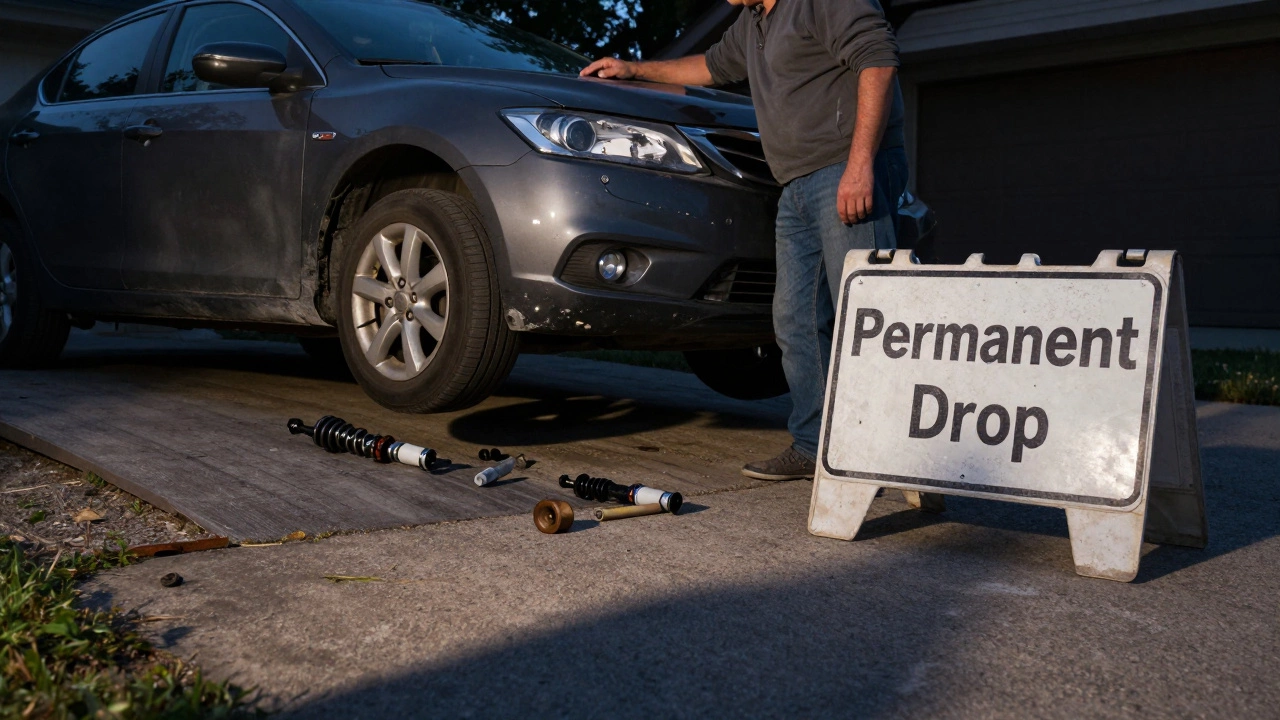
Can you adjust ride height with lowering springs? No. Not without replacing them. They’re a one-time, permanent change. That’s why they’re popular - they’re simple, affordable, and effective. But they’re not for everyone.
If you want a subtle, fixed drop and you’re okay with losing a little ground clearance, lowering springs are a solid choice. Just make sure you pick the right drop, pair them with decent shocks, and get an alignment.
If you want to tweak your ride height on a whim - to clear a speed bump, to load a bike rack, or to show off at a car meet - then lowering springs aren’t for you. Go for coilovers or air suspension instead.
The key isn’t finding the lowest possible ride. It’s finding the right one for how you actually drive.
Can I use lowering springs with my stock shocks?
You can, but you shouldn’t. Stock shocks are designed for the original spring rate and travel. Lowering springs are stiffer and shorter, which forces the shocks to work outside their ideal range. This leads to a bouncy, harsh ride and faster wear. For best results, pair lowering springs with performance shocks designed for lowered cars.
Do lowering springs affect my car’s warranty?
It depends. Most manufacturers won’t void your entire warranty just because you installed lowering springs. But if a suspension component fails and they can prove the springs caused it - like a broken control arm from bottoming out - they can deny that specific claim. Always check your warranty terms and keep receipts for any parts you install.
How long do lowering springs last?
Quality lowering springs from brands like Eibach or H&R can last 100,000 kilometers or more. They don’t wear out like shocks - they’re just steel coils. But cheap, poorly made springs can sag or crack after 30,000-50,000 kilometers. Always buy from reputable suppliers.
Will lowering springs make my car handle better?
Sometimes. Lowering the center of gravity reduces body roll in corners, which improves stability. But if the springs are too stiff or paired with worn shocks, ride quality suffers and grip can actually decrease. The goal isn’t just to be lower - it’s to be balanced. Good lowering springs improve handling only when matched with the right shocks and alignment.
Can I install lowering springs myself?
Yes, if you have basic tools and experience with suspension work. You’ll need a spring compressor, jack stands, and torque wrench. The process takes 3-6 hours depending on your car. But if you’re unsure, get a professional to do it. Incorrect installation can lead to dangerous alignment issues or shock failure.
What to Do Next
If you’re thinking about lowering springs, start by measuring your current ride height. Use a tape measure from the center of the wheel to the bottom of the fender. Write it down. Then check what drop your chosen springs claim. Subtract that from your current measurement.
Now drive around your neighborhood. Find the steepest driveway, the highest speed bump, the roughest parking lot. Imagine your car hitting those with 1.5 inches less clearance. If you’re worried, go with less drop.
And remember - lowering springs aren’t a shortcut to looking fast. They’re a tool. Use them wisely, and your car will thank you with better looks and fewer scrapes.