
Airflow & Filtration Matchmaker
⚙️ Engine Specifications
📊 Analysis Results
Enter your vehicle details to calculate required CFM and receive a filter recommendation.
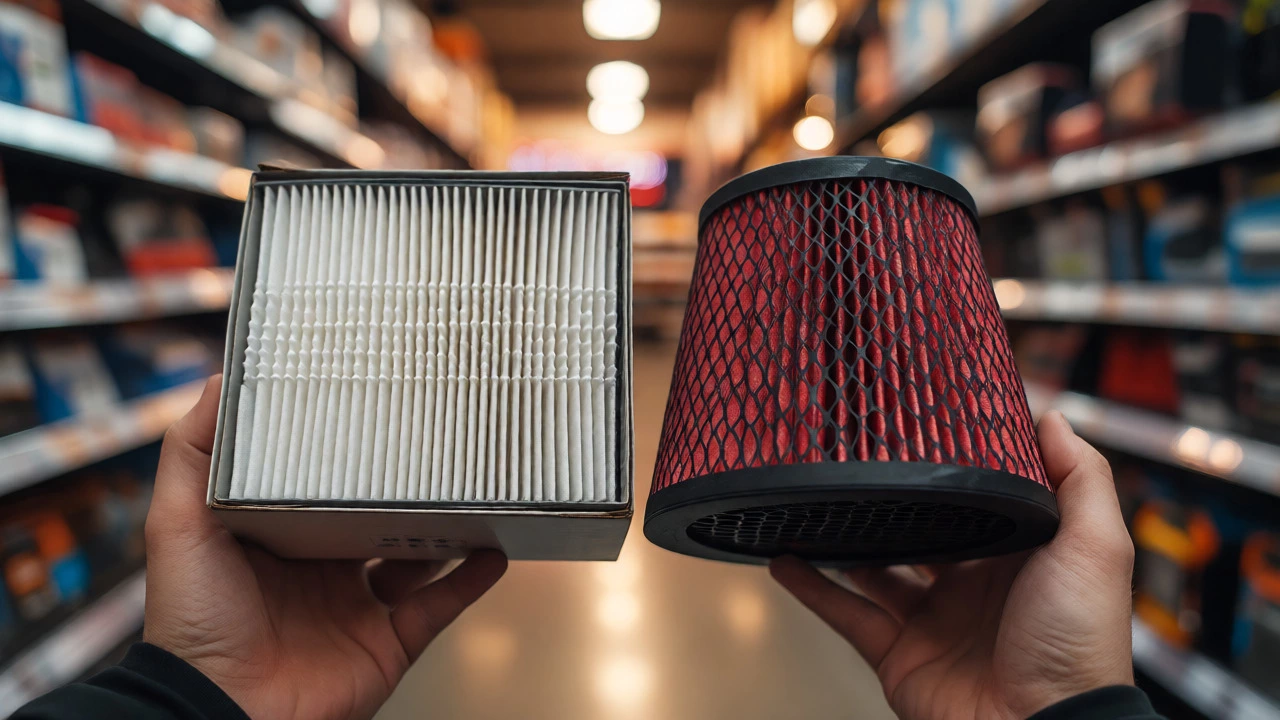
You’re standing in the auto parts aisle, holding two boxes of performance air filters. One claims 400 CFM (Cubic Feet per Minute), the other boasts a massive 800 CFM. The sales rep winks and says, "More is always better." But if you slap that high-flow monster on your daily driver, will you actually feel more power? Or will your engine choke on dust within three months?
The truth about CFM isn't black and white. It’s a balancing act between airflow volume, filtration efficiency, and-crucially-air velocity. In Brisbane, where humidity can be thick enough to chew on, getting this wrong doesn’t just hurt power; it can wreck your MAF sensor or clog your intake manifold with sludge. Let’s break down why chasing the highest number often leads to disappointing results.
What Actually Counts as CFM?
Before we decide who wins the title of "best," we need to define what we're measuring. CFM stands for Cubic Feet per Minute. It measures the volume of air passing through a filter element at a specific pressure drop. Think of it like water flowing through a pipe. A wider pipe allows more water to flow with less resistance. Similarly, a filter with higher CFM allows more air to pass through with less vacuum pressure pulling from the engine.
However, there is a catch. Manufacturers test these numbers under ideal laboratory conditions. They use clean, dry air at standard temperature and pressure. Your engine bay is none of those things. It’s hot, oily, and vibrating. When a manufacturer claims "unlimited flow," they mean "low restriction at low RPMs." At high RPMs, physics kicks in, and the story changes completely.
The Myth of Infinite Airflow
Here is the core problem: an internal combustion engine acts like a giant vacuum cleaner. It pulls air in based on its displacement and RPM. If you put a filter on your car that flows 1,000 CFM, but your 2.0-liter turbo engine only needs 350 CFM to hit redline, you have created a mismatch.
Why is this bad? Because of air velocity. For an engine to burn fuel efficiently, the air entering the cylinders needs speed. Fast-moving air helps atomize the fuel, mixing it thoroughly with the oxygen. This creates a complete, powerful explosion. If your filter is too big or has too little restriction, the air slows down. You get plenty of volume, but poor mixing. The result? You might see a slight bump in top-end power, but you’ll lose torque in the mid-range where most driving happens.
Filtration Efficiency: The Hidden Cost of High CFM
This is where the trade-off gets dangerous. To get high CFM, manufacturers usually do one of two things: make the filter media coarser, or increase the surface area significantly. Coarser media means larger holes. Larger holes let more air through, yes, but they also let more contaminants through.
A standard paper filter might capture 99% of particles down to 5 microns. A cheap high-flow cotton gauze filter might only capture 85% of particles down to 20 microns. That sounds small until you consider what’s in the air. Road debris, brake dust, and industrial fallout are tiny. Over time, these particles bypass the filter and coat your Mass Air Flow (MAF) sensor and throttle body. In humid climates like ours here in Australia, moisture combines with this oil residue to form a gunk that confuses your ECU, leading to rough idling and poor fuel economy.
| Filter Type | Typical CFM Rating | Filtration Efficiency | Best Use Case | Risk Factor |
|---|---|---|---|---|
| OEM Paper | Low (150-300) | High (99%+) | Daily drivers, warranty preservation | Minimal restriction loss |
| Cotton Gauze | Medium (300-600) | Medium (85-90%) | Street cars, mild tuning | Oil contamination risk |
| Synthetic Mesh | High (600+) | Low-Medium (70-85%) | Race cars, short-term events | Engine wear over long term |
When Less CFM is Actually Better
Surprisingly, sometimes a filter with lower CFM makes your car faster. How? By maintaining air velocity. If you drive a naturally aspirated engine, especially one with smaller displacement like a Honda Civic or Mazda MX-5, you don’t need massive volumes of air. You need precise control.
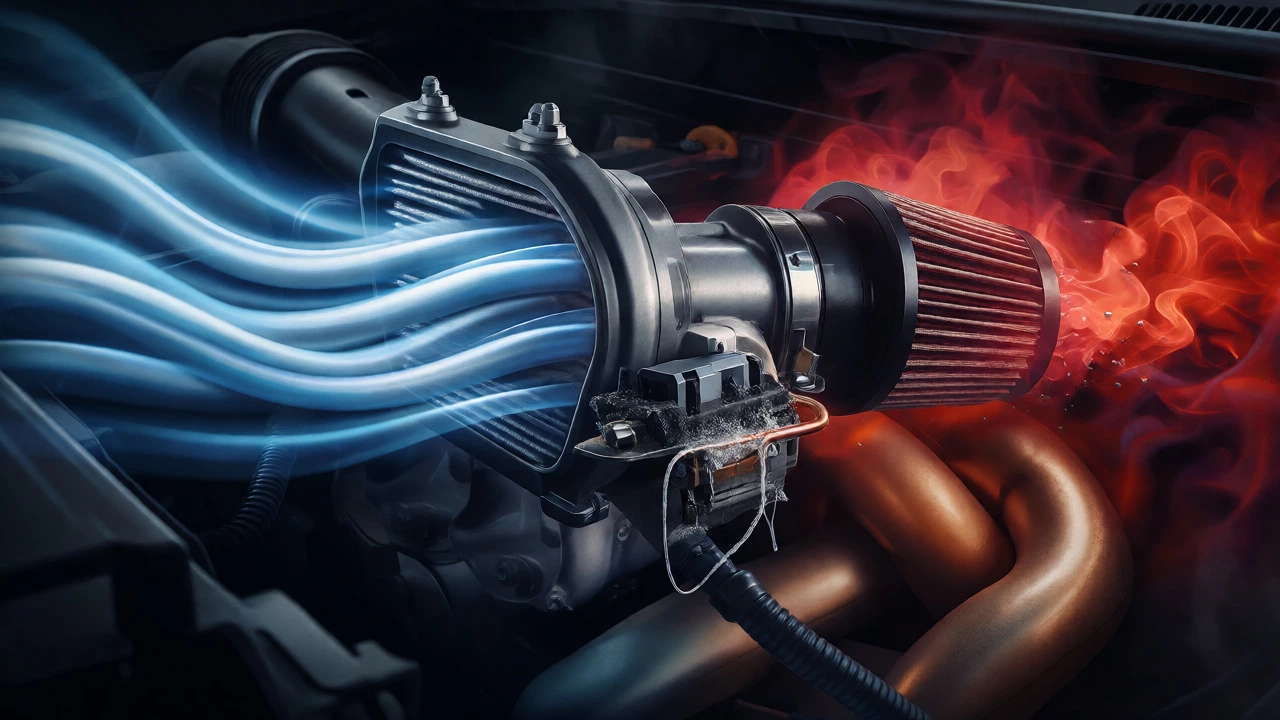
Consider the cold air intake system. Its goal is to bring cooler, denser air into the engine. Cool air contains more oxygen molecules per cubic foot. If you pair a cold air intake with a filter that has almost zero restriction, you might disrupt the laminar flow-the smooth, streamlined movement of air. Turbulent air enters the intake tube slower than laminar air. So, a slightly restrictive filter can actually help organize the airflow, ensuring it hits the throttle plate with optimal speed.
I’ve seen countless builds where swapping a super-high-flow open pod filter back to a quality enclosed panel filter resulted in a dyno run showing +5 hp. Why? Because the enclosed housing kept the air cool and the filter media provided just enough resistance to maintain velocity. The "free flow" was actually costing them power by letting hot under-hood air swirl around the intake.
When You Absolutely Need More CFM
Of course, there are scenarios where low restriction is king. If you have a heavily modified engine-say, a 2JZ swap making 500 wheel horsepower or a twin-turbo setup pushing boost hard-your engine becomes thirsty. At 7,000 RPM with 20 psi of boost, that engine is inhaling air aggressively. Any restriction here creates a vacuum lock. The turbo works harder to pull air through the filter, generating heat instead of pressure.
In these cases, going for higher CFM is non-negotiable. You want the path of least resistance. But even then, "more" doesn't mean infinite. You still need filtration. This is why professional race teams use expensive multi-layer mesh filters or foam pre-filters. They prioritize flow because the engine life expectancy is measured in hours, not hundreds of thousands of kilometers.
The Brisbane Humidity Factor
Living in Queensland adds a layer of complexity. Our air is laden with moisture. Standard cotton gauze filters rely on oil to trap dirt. When that oil mixes with heavy humidity and road grime, it turns into a sticky mess. If your filter flows too freely, it’s likely shedding oil droplets into the intake. These droplets hit the MAF sensor wire. The sensor reads the oil as air density, telling the computer to add more fuel. Suddenly, you’re running rich, smelling unburnt gas, and losing power.
If you live in a coastal area, I’d argue that a medium-CFM synthetic filter is superior to a high-CFM cotton one. Synthetics handle moisture better and don’t require oiling, eliminating the contamination risk while still offering decent flow improvements over stock paper.

How to Choose the Right Filter for Your Build
Don’t guess. Match the filter to your engine’s breathing capacity. Here is a quick heuristic:
- Naturally Aspirated Daily Driver: Stick to OEM-style panel filters or high-quality replacements like K&N or BMC. Don’t chase CFM numbers. Focus on fitment and sealing. Ensure the box seals tightly against the intake tube to prevent hot air leaks.
- Turbocharged Street Car: Look for filters that offer a balance. Brands like AEM or Eventuri specialize in carbon fiber intakes that manage airflow dynamics rather than just removing the filter entirely. Aim for a filter that reduces restriction by 20-30% compared to stock, not 200%.
- Track Day/Race Engine: Go for maximum flow. Use high-CFM elements, but inspect them religiously. Check for tears, check for oil saturation, and replace them frequently. Filtration takes a backseat to performance here.
Also, consider the location of the filter. An open pod filter sticking out of the bonnet looks aggressive, but it sucks in hot air radiating off the exhaust manifold. A closed-box system with a ducted scoop draws cooler air from outside the engine bay. Cooler air is denser, meaning you get more oxygen without needing extra CFM.
Common Pitfalls to Avoid
One major mistake people make is assuming all high-CFM filters are reusable. Many cheap aftermarket options are disposable. Once the media clogs, flow drops drastically. Unlike premium brands that can be cleaned and re-oiled, these become restrictive bricks after a few thousand kilometers. Always check the maintenance schedule.
Another pitfall is ignoring the pre-filter. If you drive on dusty roads or gravel tracks common in regional Australia, a high-CFM main filter will die quickly. Adding a foam pre-filter protects the expensive element. Yes, it adds a tiny bit of restriction, but it keeps the main filter clean, preserving its actual flow rate over time.
Final Verdict: Quality Over Quantity
So, is it better to have more CFM or less? The answer depends entirely on your application. For 90% of street-driven cars, "less" (or rather, optimized) CFM is better. You want enough flow to satisfy the engine’s demand at peak RPM, but enough restriction to maintain air velocity and filtration efficiency.
Chasing the highest CFM number on the box is marketing, not engineering. A well-designed intake system with a moderately restrictive filter will almost always outperform a poorly designed system with a wide-open filter. Save the extreme high-flow setups for dedicated track cars where every ounce of restriction matters more than longevity.
Does a higher CFM filter always increase horsepower?
No. Higher CFM only increases horsepower if the engine was previously restricted by the stock filter. If the engine wasn't starving for air, increasing flow can reduce air velocity, leading to poorer fuel atomization and potentially lower torque, especially in the mid-RPM range.
Can a high-flow filter damage my engine?
Yes, if it lacks proper filtration. High-flow filters often sacrifice micron rating for airflow. This allows abrasive particles to enter the engine, causing premature wear on cylinder walls and pistons. Additionally, oiled filters can contaminate the Mass Air Flow (MAF) sensor, causing drivability issues.
Is a cone filter better than a panel filter?
Not necessarily. Cone filters are popular for aesthetics and ease of installation, but they often suck in hot under-hood air unless properly shielded. Panel filters, when used in a sealed box with a cold air feed, often provide cooler, denser air, which yields better performance despite having lower raw CFM ratings.
How much CFM does my car need?
A rough rule of thumb is that a naturally aspirated engine needs approximately 1 CFM per cubic inch of displacement at peak RPM. Turbocharged engines need significantly more due to forced induction. However, modern engine management systems adapt to flow rates, so exact matching is less critical than ensuring adequate filtration and preventing hot air ingestion.
Do I need to re-oil my high-flow filter?
Only if it uses cotton gauze media. Synthetic filters generally do not require oiling. If you use a cotton filter, you must apply filter oil sparingly. Too much oil causes hydrolock risks and MAF sensor fouling; too little allows dust to pass through. Always follow the manufacturer's cleaning kit instructions precisely.