Car Interior Detailing Assistant
🚗Select Surface Type
Select the material you want to clean to get pro recommendations.
Select a surface to begin
Click a surface type on the left to see the recommended workflow, tools, and products.
Most people think cleaning a car means wiping down the dash and vacuuming the floor mats. If you want your vehicle to look like it just rolled off the showroom floor, that approach won't cut it. Professional detailing is about more than removing visible dirt; it's about deep extraction, chemical compatibility, and surface preservation. Whether you are preparing to sell your car or just love the smell of a fresh interior, mastering these techniques saves you hundreds in shop fees.
In this guide, we break down the professional workflow used by detailers in Brisbane and beyond. We will cover the essential tools, the correct order of operations, and specific products for different materials. You don't need an industrial steam cleaner to get pro results, but you do need the right mindset and a few key items from a quality car detailing kit.
Gathering Your Tools and Products
You cannot detail with household cleaners. Window cleaners often contain ammonia, which strips protective coatings off plastic and leather. Dish soap is too harsh for automotive surfaces and can dry out leather over time. Professionals use pH-balanced solutions designed specifically for automotive interiors.
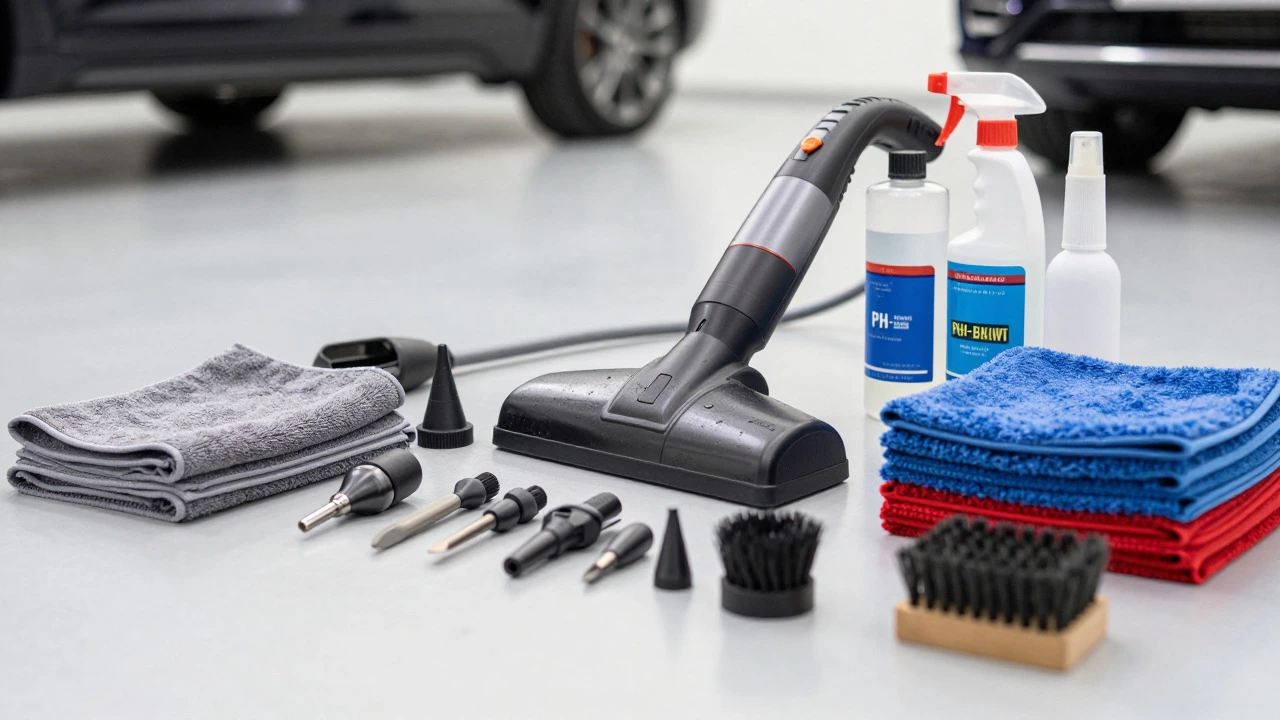
Here is the core equipment you need to start:
- Shop Vacuum A high-suction wet/dry vacuum with crevice tools and brush attachments is non-negotiable. Standard home vacuums lack the power to lift embedded grit from carpet fibers.
- Microfiber Towels Buy at least 10-15 towels. Use different colors for different tasks (e.g., grey for glass, blue for leather, red for floors) to avoid cross-contamination.
- Interior All-Purpose Cleaner (APC) A versatile cleaner diluted according to manufacturer instructions for plastics, vinyl, and fabric.
- Soft Bristle Brushes Detail brushes with soft bristles help agitate dirt out of vents, stitching, and textured surfaces without scratching.
- Leather Cleaner and Conditioner Specific pH-balanced products for genuine leather seats and steering wheels.
- Steam Cleaner (Optional) For deep sanitization of fabrics and hard-to-reach areas without excessive water usage.
Investing in a dedicated set of tools prevents damage. Using a stiff brush on a soft-touch dashboard will ruin the texture permanently. Soft bristles are your friend here.
The Foundation: Remove Everything and Vacuum Deeply
Pros never clean around clutter. The first step is total removal. Take out floor mats, trash, loose items, and even removable seat covers if applicable. For cloth seats, remove the headrests if they are easily accessible. This exposes hidden debris and allows you to reach every corner.
Vacuuming is not just about sucking up dust bunnies. It is about lifting abrasive particles that act like sandpaper when you sit down or wipe surfaces. Start from the back of the car and work forward. Use the crevice tool to get between seats and along the door jambs. Don't forget the trunk area, as dirt often tracks from there into the cabin.
For carpets and floor mats, agitation is key. Use a soft-bristle brush to scrub the fibers before vacuuming. This lifts dirt trapped deep in the pile. If you have stubborn stains on cloth, apply a small amount of APC, let it dwell for a minute, then blot (don't rub) with a microfiber towel. Rubbing pushes the stain deeper into the backing.
Cleaning Hard Surfaces: Dash, Console, and Door Panels
Hard surfaces collect grease, fingerprints, and UV damage. The goal here is cleanliness without leaving a greasy residue that attracts more dust later. Many beginners make the mistake of using heavy dressings immediately. Skip the dressing for now; focus on cleaning.
Spray your APC onto a microfiber towel, not directly onto the dashboard. Direct spraying can lead to overspray on electronics or windows, causing streaks. Wipe down the dashboard, center console, and door panels. Pay special attention to textured areas. Use a soft detail brush to gently agitate the grooves in the air vents and buttons. This removes years of accumulated grime that cloths miss.
For the steering wheel and gear shift, use a separate towel. These areas accumulate the most oils from your hands. If you have leather-wrapped components, switch to your leather cleaner at this stage. Clean in circular motions to ensure even coverage.
Treating Upholstery: Leather vs. Fabric
The treatment for your seats depends entirely on the material. Misidentifying synthetic leather (vinyl) as genuine leather can lead to product buildup and cracking.
Genuine Leather: Genuine leather breathes and needs conditioning. First, clean with a dedicated leather cleaner to remove body oils and sweat. Let it dry completely. Then, apply a leather conditioner. This restores flexibility and prevents cracking, especially important in hot climates like Brisbane where sun exposure is intense. Apply sparingly; excess conditioner attracts dust and feels sticky.
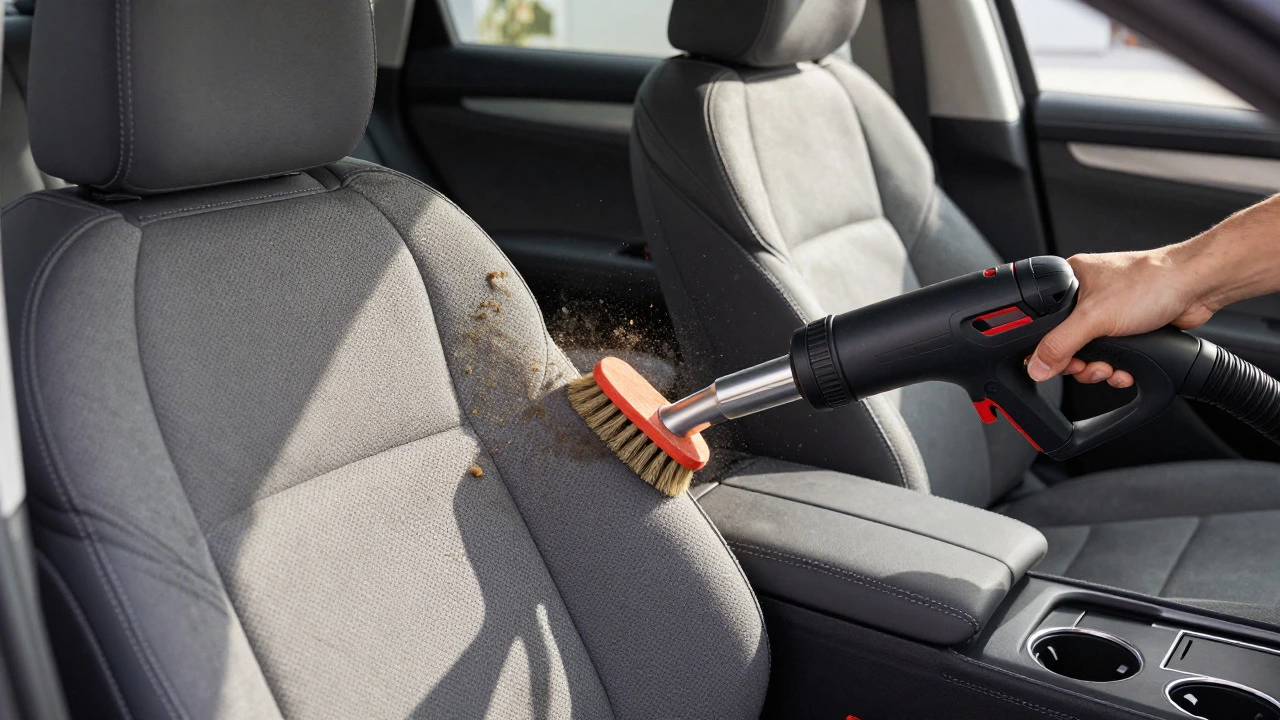
Fabric/Cloth: Fabric requires more mechanical action. After vacuuming, spray an upholstery cleaner or diluted APC. Agitate vigorously with a medium-bristle brush. Extract the dirt using a wet/dry vacuum or by blotting with clean, dry microfiber towels. For persistent odors, a steam cleaner can sanitize the fibers effectively. Always allow fabric seats to air dry completely before putting seat covers back on to prevent mold.
Alcantara/Suede: If your car has Alcantara, be very careful. Avoid excessive moisture. Use a specialized Alcantara cleaner and a suede brush to restore the nap. Never use leather conditioners on Alcantara, as they will clog the pores and change the texture.
Windows and Mirrors: Streak-Free Clarity
Interior windows are often neglected, leading to hazy visibility at night. Do not use standard household glass cleaners on tinted windows, as the ammonia can degrade the tint film over time. Instead, use a dedicated automotive glass cleaner or a mixture of distilled water and a drop of dish soap.
Apply the cleaner to a microfiber towel and wipe the glass in an S-pattern. Use a second, dry microfiber towel to buff away any streaks. For rear-view mirrors, take extra care to avoid getting cleaner on the electronic sensors or cameras if equipped. Clean side mirrors last to avoid recontaminating the interior glass.
Protection and Finishing Touches
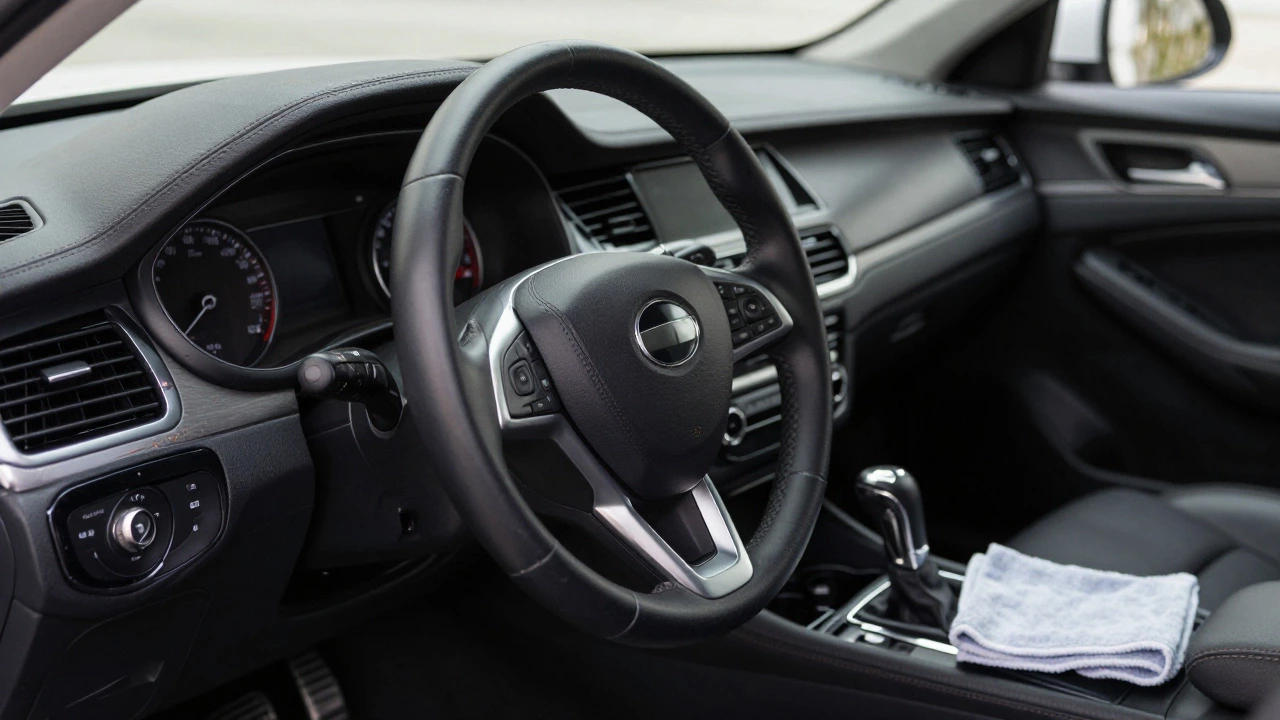
Now that everything is clean, it's time to protect. This step extends the life of your interior and makes future cleaning easier. Apply a UV protectant to all plastic and vinyl surfaces. Look for products with a matte or satin finish; glossy finishes look artificial and attract dust. Spray the protectant onto a towel and wipe it on evenly.
For leather, the conditioner applied earlier serves as protection. For fabric, consider applying a fabric guard spray to repel future spills. This creates an invisible barrier that causes liquids to bead up rather than soak in.
Finally, address odors. If the car smells musty, place an odor eliminator gel or activated charcoal bags in the footwells overnight. Avoid masking scents with strong air fresheners unless the source of the odor has been removed. A pro detail smells neutral, not like artificial pine.
| Surface Type | Recommended Cleaner | Tool Required | Protection Product |
|---|---|---|---|
| Plastic/Vinyl Dash | All-Purpose Cleaner (APC) | Microfiber Towel, Soft Brush | UV Protectant (Matte) |
| Genuine Leather | Leather Cleaner | Microfiber Towel | Leather Conditioner |
| Cloth/Fabric Seats | Upholstery Cleaner | Medium Brush, Wet/Dry Vac | Fabric Guard Spray |
| Windows/Mirrors | Ammonia-Free Glass Cleaner | Two Microfiber Towels | None Required |
| Carpet/Floor Mats | APC or Carpet Shampoo | Stiff Brush, Shop Vac | Carpet Protector |
Maintaining Your Interior Between Details
A full interior detail takes time, so maintenance is crucial to keep things looking good. Keep a trash bag in the car to prevent crumbs from accumulating. Wipe down the steering wheel and gear shift weekly with a quick-detail spray and microfiber towel. This removes hand oils before they build up.
Use floor mats that trap dirt effectively. Rubberized all-weather mats are best for keeping the original carpets clean. Shake them out regularly. In sunny regions, park in the shade or use a windshield sunshade to reduce UV damage to the dashboard and seats. Heat accelerates the degradation of adhesives and materials.
Address spills immediately. Blot liquids rather than wiping to prevent spreading. For solid food, vacuum or pick up debris before it gets crushed into the carpet fibers. Consistent small efforts save hours of deep cleaning later.
How often should I detail my car interior?
For most drivers, a full interior detail every 6 to 12 months is sufficient. However, if you have pets, children, or commute daily in dusty conditions, aim for every 3 to 4 months. Regular vacuuming and wiping down high-touch areas weekly can extend the time between full details.
Can I use household cleaners on my car interior?
It is generally not recommended. Household cleaners often contain ammonia, bleach, or waxes that can damage automotive plastics, strip protective coatings, or leave residues that attract more dirt. Automotive-specific products are pH-balanced and formulated to preserve materials like leather and vinyl.
What is the best way to remove stains from cloth seats?
Act quickly. Blot the stain with a clean microfiber towel to absorb as much liquid as possible. Apply an upholstery cleaner or diluted APC, agitate with a soft brush, and extract with a wet/dry vacuum or by blotting with dry towels. For old stains, a steam cleaner can help lift the residue from deep within the fibers.
Do I need to condition leather seats?
Yes, if you have genuine leather. Leather loses natural oils over time due to heat, sunlight, and cleaning. Conditioning replenishes these oils, preventing cracking and fading. Synthetic leather (vinyl) does not need conditioning and can actually become slippery or gummy if treated with leather conditioners.
Why does my dashboard look orange after cleaning?
This is usually caused by silicone-based dressings. Over time, silicone builds up and turns orange under UV light. To fix this, strip the dashboard with an APC or dedicated degreaser, rinse with water-dampened towels, and then apply a water-based, silicone-free UV protectant for a natural matte finish.
Is it safe to use a steam cleaner on car interiors?
Yes, steam cleaners are highly effective for sanitizing fabrics and loosening grime without chemicals. However, be cautious with electronics. Keep the steam nozzle moving and avoid direct contact with screens, speakers, or exposed wiring. Allow surfaces to dry completely to prevent moisture damage.