Spoiler MPG Impact Estimator
Configure Your Setup
Adjust settings and click calculate to see how aerodynamics affect your fuel economy.
There is a persistent myth in the car community that adding any body modification automatically kills your fuel economy. You see a sleek carbon fiber spoiler on a track-focused sedan and assume it’s just for show, or worse, that it creates extra drag that forces your engine to work harder. The reality is much more nuanced. In fact, when designed correctly, a spoiler can actually improve your miles per gallon (MPG) by optimizing how air flows over your vehicle.
To understand why, we have to look at basic physics. Cars are essentially boxes moving through a fluid (air). As you drive, you push air out of the way. This creates two main forces: frontal drag and lift. Frontal drag is the resistance you feel pushing against the front of the car. Lift is the upward force generated by high pressure under the car and low pressure over it. Both enemies of efficiency and stability.
The Physics of Airflow and Drag
Most people confuse "drag" with "downforce." A flat plate sticking up into the wind definitely creates drag. However, a properly engineered aerodynamic wing or rear spoiler is designed to manage airflow, not just block it. When air hits the rear of a typical sedan or hatchback, it separates abruptly. This creates a turbulent wake-a pocket of low-pressure chaos behind the car. Your engine has to burn fuel just to keep pulling the car out of this vacuum.
A spoiler acts as an air dam. It guides the air smoothly over the trunk lid and down towards the bumper. By smoothing out this transition, you reduce the size of that turbulent wake. Smaller wake means less low-pressure suction pulling back on the car. Less suction means less drag. And less drag directly translates to better fuel efficiency at highway speeds.
| Feature | Effect on Drag | Effect on Downforce | Net Impact on MPG |
|---|---|---|---|
| Stock Body Style | Baseline | Minimal/Negative | Baseline |
| Lip Spoiler | Slight Reduction | Low | Slight Improvement |
| Carbon Fiber Wing (Track) | Significant Increase | High | Decrease |
| Poorly Fitted Aftermarket Part | Increase (Turbulence) | Unpredictable | Decrease |
Why Carbon Fiber Matters
If you are looking to upgrade your ride, the material of the spoiler plays a surprisingly large role in its effectiveness. Many budget spoilers are made from ABS plastic or polyurethane. While durable, these materials are often heavier and may lack the precise structural rigidity needed to maintain their shape under high-speed airflow. Flexing in the wind changes the angle of attack, ruining the aerodynamic benefits.
Carbon fiber is a composite material known for its high strength-to-weight ratio. A carbon fiber spoiler is significantly lighter than steel or aluminum alternatives. Weight reduction is a key factor in overall vehicle efficiency. Every pound you remove from your car makes it easier for the engine to accelerate. Furthermore, carbon fiber parts are manufactured using molds that allow for incredibly sharp, precise edges. These clean lines are essential for managing airflow separation points effectively. If the edge is rounded or flexes, the air doesn't behave as predicted by the engineers, and you lose those potential MPG gains.
When Do Spoilers Actually Hurt MPG?
So, if spoilers can help, why does everyone say they hurt fuel economy? The answer lies in intent and design. There are two specific scenarios where a spoiler will tank your gas mileage:
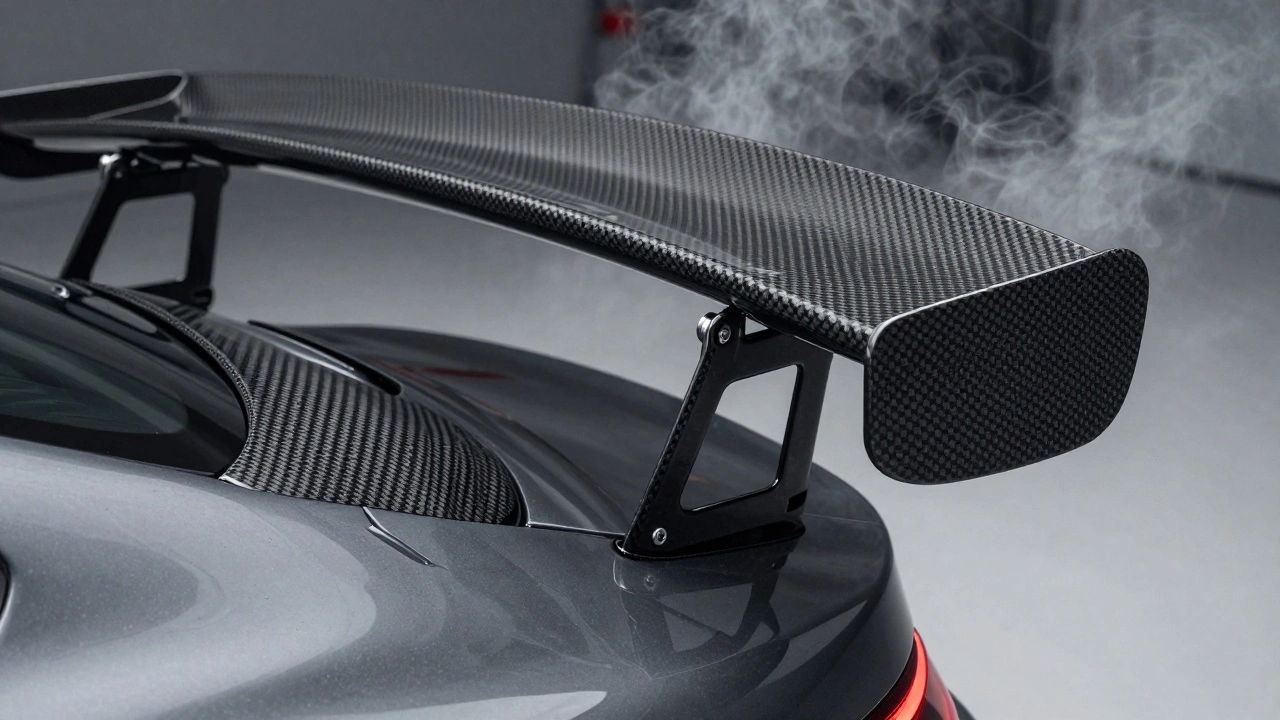
- Excessive Angle of Attack: Race wings are designed to generate massive downforce to keep tires glued to the asphalt during cornering. They act like inverted airplane wings. To create this downward push, they must disrupt airflow significantly, creating substantial drag. If you mount a GT3-style race wing on a daily driver and cruise at 70 mph, you are essentially flying with your flaps down. The engine works overtime to overcome that drag, burning more fuel.
- Poor Installation or Fitment: An aftermarket spoiler that isn't aligned perfectly with the car's existing body lines creates turbulence. Gaps between the spoiler and the trunk lid allow air to bleed through unpredictably. This chaotic airflow increases drag rather than reducing it. Precision installation is non-negotiable for performance gains.
City Driving vs. Highway Cruising
Your driving habits dictate whether a spoiler helps or hurts. At low speeds-say, under 45 mph-air resistance is negligible. Rolling resistance (tires on pavement) and internal engine friction dominate fuel consumption. In city traffic, a spoiler does almost nothing for your MPG. It might even add a tiny bit of weight if it's a heavy metal unit, slightly hurting efficiency.
However, once you hit the highway, aerodynamics take over. Above 60 mph, drag becomes the primary force resisting your motion. This is where a well-designed lip spoiler or subtle decklid wing shines. By streamlining the rear end, you reduce the energy required to maintain speed. For long-distance commuters or road-trippers, this small reduction in drag can result in a measurable improvement in fuel economy, potentially saving gallons over thousands of miles.

Choosing the Right Spoiler for Efficiency
If your goal is a balance of style and efficiency, avoid aggressive race wings. Instead, look for:
- Lip Spoilers: These attach to the edge of the trunk or hatch. They are low-profile, lightweight, and excellent at cutting off turbulent airflow without adding significant frontal area.
- OEM-Style Wings: Many modern cars come with factory options that are tested in wind tunnels. These are optimized for that specific vehicle's drag coefficient.
- Adjustable Wings: Some high-end carbon fiber wings allow you to change the angle. You can lower them for highway cruising (less drag) and raise them for track days (more downforce).
Always check reviews regarding fitment. A cheap spoiler that rattles or gaps is a sign of poor engineering. Look for brands that emphasize aerodynamic testing and use genuine carbon fiber weave for stiffness and lightness.
Other Factors Affecting Fuel Economy
While a spoiler can tweak your MPG, it is rarely the biggest factor. Before obsessing over aerodynamics, ensure your fundamentals are solid. Tire pressure is critical; under-inflated tires increase rolling resistance dramatically. Regular oil changes keep the engine lubricated and efficient. Aggressive acceleration and braking waste far more fuel than any body kit ever could. A spoiler is a fine-tuning tool, not a magic bullet. It works best when combined with smooth driving habits and proper vehicle maintenance.
Ultimately, do spoilers hurt MPG? Only if you choose the wrong type or install it poorly. A quality carbon fiber lip spoiler can streamline your car, reduce drag, and give you a slight boost in fuel efficiency while looking fantastic. Just don't expect it to replace good driving habits.
Does a carbon fiber spoiler improve gas mileage?
Yes, a well-designed carbon fiber lip spoiler can improve gas mileage by reducing aerodynamic drag at highway speeds. It smooths airflow over the rear of the car, minimizing the turbulent wake that pulls against the vehicle. However, aggressive race wings will decrease mileage due to increased drag.
What is the difference between a lip spoiler and a wing?
A lip spoiler is a small extension attached to the edge of the trunk or hatch, primarily used to reduce drag and minor lift. A wing is a larger, standalone structure mounted on struts, designed to generate significant downforce for high-speed cornering but at the cost of increased drag.
Will a spoiler help my fuel economy in the city?
No. In city driving, speeds are too low for aerodynamic drag to be a major factor. Fuel economy in urban environments is determined more by tire pressure, traffic conditions, and driving style. Spoilers only offer noticeable benefits at sustained highway speeds above 60 mph.
Is carbon fiber better than ABS plastic for spoilers?
For performance and efficiency, yes. Carbon fiber is lighter and stiffer than ABS plastic. The reduced weight helps acceleration, and the stiffness ensures the spoiler maintains its aerodynamic shape under wind pressure, preventing flex-induced turbulence.
How much MPG can I realistically gain from a spoiler?
The gain is usually marginal, typically ranging from 1% to 3% improvement in highway fuel economy. It depends heavily on your car's original aerodynamics. A boxy SUV might see more relative improvement than a already streamlined sports car, but absolute gains remain small compared to factors like tire pressure.