Window Tint Legality Calculator
Check Your Tint Legality
Enter your location and tint details to see if your window tint meets legal requirements.
Results
Ever looked at a car with a 20% tint and wondered if it’s too dark? You’re not alone. A lot of people pick 20% because it looks sleek, hides glare, and keeps the cabin cool-but they don’t always know what they’re getting into. Let’s cut through the myths and talk about what a 20% tint actually means, how it feels behind the wheel, and whether it’s even legal where you live.
What Does 20% Tint Even Mean?
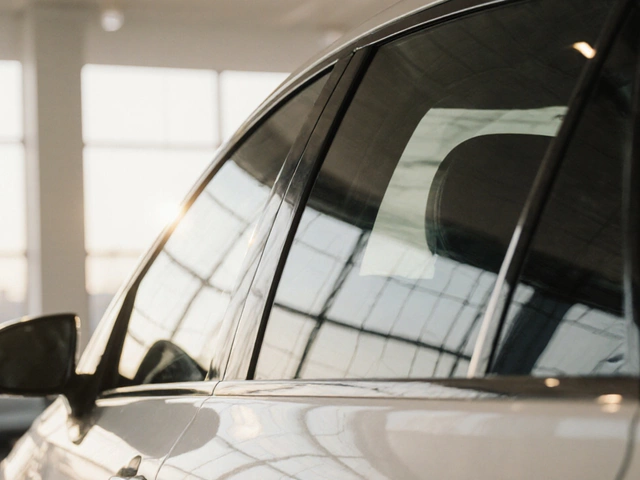
Window tint darkness is measured by Visible Light Transmission (VLT). That’s the percentage of visible light that passes through the film. So a 20% tint lets in just 20% of outside light. The other 80%? Blocked. That’s why it looks so dark-even on a sunny day.
Think of it like sunglasses. A 20% tint is like wearing very dark shades while driving. You can still see, but it’s not the same as clear glass. At night, it’s noticeably dimmer. During the day, it cuts down glare and heat like nothing else. But here’s the catch: if you’re not used to it, the first few days behind the wheel can feel like you’re driving with a pair of smoke-colored goggles on.
Can You See Out at Night With 20% Tint?
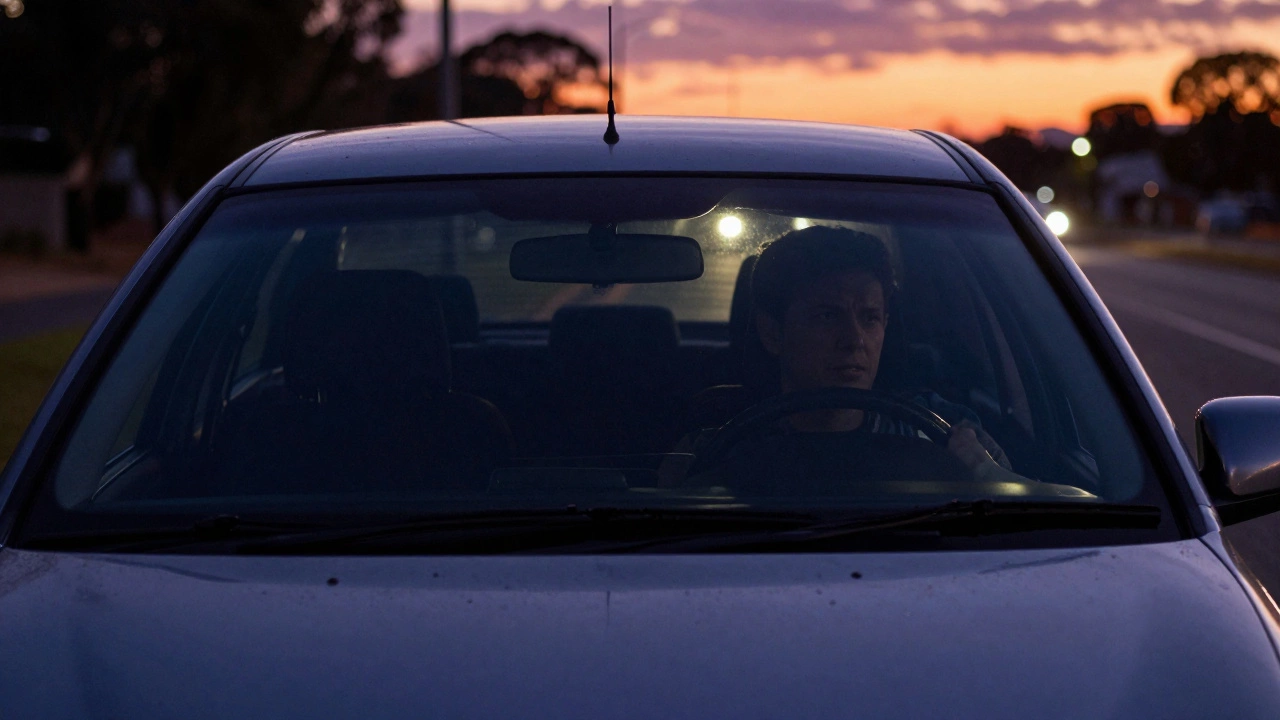
Yes-but it’s harder. A lot of people assume 20% tint is fine because they tested it in daylight. But night driving is a whole different game. Streetlights, brake lights, and headlights don’t penetrate the film the same way. You’ll notice:
- Headlights from oncoming cars look more blurred
- Street signs and road markings take a second longer to register
- Pedestrians on the edge of the road are harder to spot
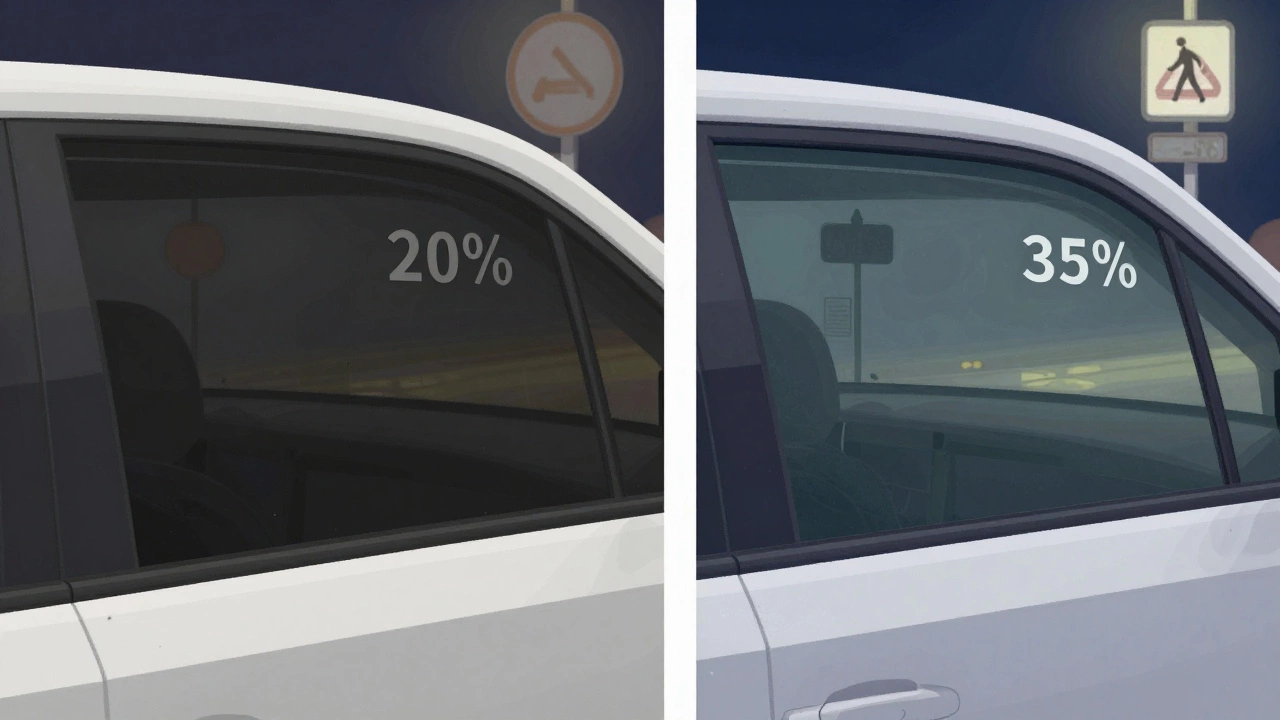
It’s not impossible to drive, but it’s not ideal either. In Brisbane, where evening storms roll in fast and rural roads lack proper lighting, that extra 10% of visibility can make a real difference. A 35% tint gives you most of the heat and glare reduction without the night-time struggle. A 20% tint? That’s for people who prioritize style over safety.
Is 20% Tint Legal?
This is where things get messy. Window tint laws vary by state, country, and even by which window you’re tinting. In Australia, front side windows (driver and front passenger) must allow at least 35% VLT. Rear windows and the rear windshield? Often no restrictions. So if you tint your front windows to 20%, you’re breaking the law.
Here’s how it breaks down across major Australian states as of 2025:
| Window | Queensland | New South Wales | Victoria | Western Australia |
|---|---|---|---|---|
| Front Side Windows | 35% VLT | 35% VLT | 35% VLT | 35% VLT |
| Rear Side Windows | 20% VLT | 20% VLT | 20% VLT | 20% VLT |
| Rear Windshield | 20% VLT | 20% VLT | 20% VLT | 20% VLT |
So if you’re thinking of 20% tint on your front windows, you’re asking for trouble. Police can pull you over, issue a fine (up to $500 in some states), and order you to remove it. Even if you’re not stopped, your car won’t pass a safety inspection. And if you’re in an accident, your insurance company might deny your claim if your tint is illegal.
What’s the Real Difference Between 20% and 35%?
It’s not just about darkness. It’s about balance. A 35% tint still looks dark. It still blocks 65% of the sun’s heat. It still reduces glare and keeps your interior from fading. But here’s the thing: you can read a street sign at night without squinting. You can see a cyclist in the dark. You can drive through a tunnel without feeling like you’re in a cave.
People who switch from 20% to 35% often say the same thing: “I didn’t realize how much I was missing.” One Brisbane car owner, a nurse who drives home late after night shifts, told me: “I went from 20% to 35% after almost missing a pedestrian on a wet road. I didn’t even know I was that blind.”
Heat rejection? Nearly identical. UV protection? Same. Privacy? Still strong. The only thing you lose with 35% is the “blacked-out” look. But is that worth risking your safety-or your license?
What About Ceramic vs. Dyed Film?
Not all 20% tints are created equal. A cheap dyed film will fade, bubble, and turn purple within a year. A good ceramic film, though? It lasts. It blocks infrared heat without darkening the glass. It doesn’t interfere with GPS or radio signals. And it’s the only kind that won’t mess with your phone’s wireless charging.
Here’s the kicker: you can get a 35% ceramic tint that blocks 99% of UV rays and 60% of infrared heat. That’s better than most 20% dyed films. So if you’re going for performance, don’t chase darkness-chase quality.
Who Should Actually Use 20% Tint?
There are only two real cases where 20% tint makes sense:
- You’re tinting the rear windows of a sedan or SUV. That’s legal everywhere in Australia, and it’s perfect for privacy and heat control.
- You drive a commercial vehicle with a rear passenger compartment (like a van or limo). Some commercial rules allow darker tints on rear windows.
For regular cars? No. If you want the look of a 20% tint without the risk, go with a high-quality 35% ceramic tint. It’s darker than most people think. And if you really want to stand out, add a slightly darker tint on the rear windows. That gives you the aggressive look-without breaking the law.
What Happens If You Get Caught?
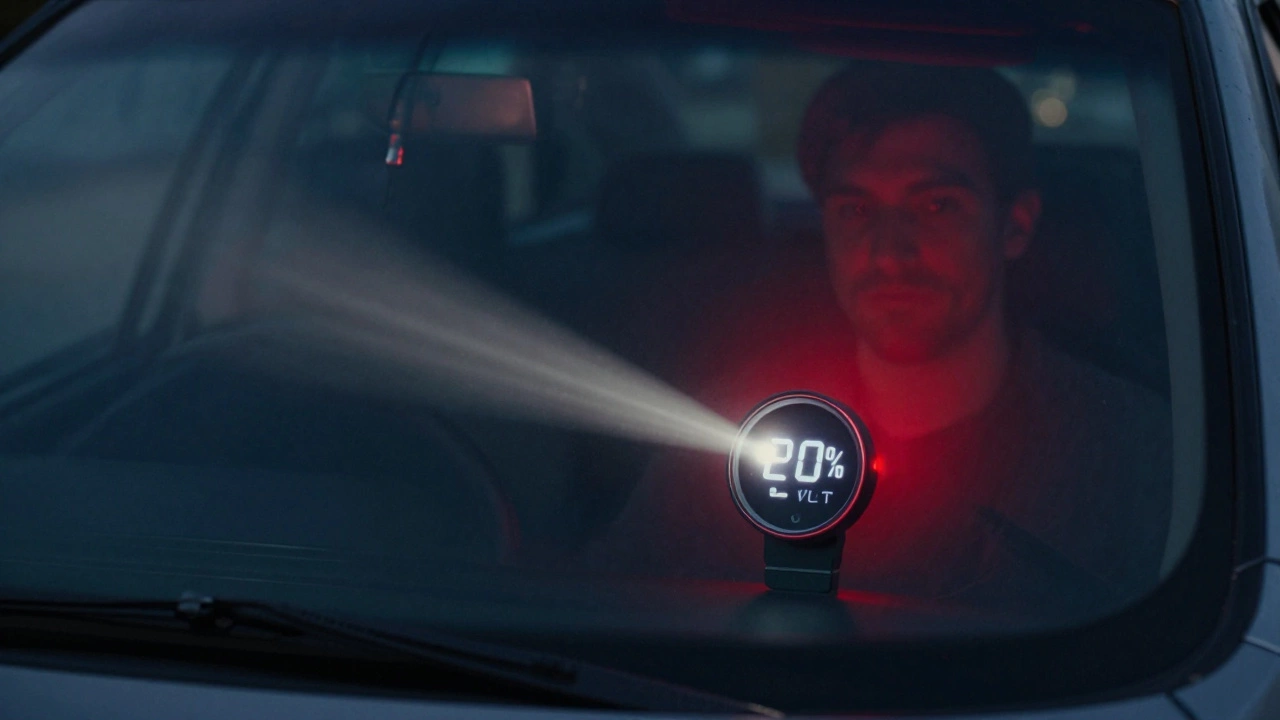
Police don’t always check tint. But they do when they’re already pulling you over for something else. If they suspect your tint is too dark, they’ll use a tint meter-a small device that shines light through the glass and reads the VLT. It’s accurate to within 1%.
Penalties vary:
- First offense: Warning or fine ($150-$500)
- Repeat offense: Higher fine, possible vehicle impoundment
- Insurance claim denial: If tint contributed to an accident
- Registration failure: Car won’t pass safety inspection
Some people try to get away with removable tint or “clear” films that claim to be legal. Those are scams. If the film reduces light transmission below 35% on the front windows, it’s illegal-no matter what the label says.
How to Test Your Tint at Home
You don’t need a professional meter to get a rough idea. Here’s a simple trick:
- On a bright day, hold a white piece of paper against the outside of the window.
- Look through the tint from inside the car.
- Can you clearly read the paper? If yes, you’re probably above 35%. If it’s blurry or unreadable, you’re likely at or below 20%.
It’s not 100% accurate, but it’s good enough to tell if you’re dangerously close to the legal limit.
Final Verdict: Is 20% Tint Worth It?
No. Not for front windows.
The risks-legal trouble, safety hazards, insurance issues-far outweigh the look. A 35% ceramic tint gives you 90% of the benefits with none of the downsides. It’s darker than most people expect. It lasts longer. It’s safer. And in places like Brisbane, where the sun beats down for months, it’s the smarter choice.
If you want privacy and heat control? Go 35% on the front. Go 20% on the back. That’s the sweet spot. You get the aggressive style, the comfort, and the peace of mind.
Can you see out of a 20% tint at night?
Yes, but it’s harder. Headlights appear more blurred, street signs take longer to read, and pedestrians near the roadside are harder to spot. Many drivers report feeling fatigued or strained after prolonged night driving with 20% tint. It’s not illegal to drive with it, but it’s not safe either.
Is 20% tint legal in Australia?
No, not on front side windows. In all Australian states, front windows must allow at least 35% Visible Light Transmission (VLT). Rear windows and the rear windshield can be tinted to 20% VLT. Tinting your front windows to 20% will result in a fine and a requirement to remove the film.
Does 20% tint block more heat than 35%?
Not necessarily. Heat blocking comes from the film’s material, not just darkness. A high-quality 35% ceramic tint can block more infrared heat than a cheap 20% dyed film. The key is choosing ceramic over dyed film, not chasing the darkest percentage.
What’s the best tint percentage for a car in Brisbane?
35% ceramic tint on the front windows, 20% on the rear. Brisbane has intense sun year-round, so heat rejection is critical. A 35% ceramic film blocks 60%+ of infrared heat and 99% of UV rays, without compromising night visibility. It’s legal, safe, and effective.
Can you get away with 20% tint if you don’t get pulled over?
You might avoid a ticket, but you’re still breaking the law. If you’re in an accident, your insurance company can deny your claim because your tint is illegal. Police also use tint meters during routine safety inspections. You won’t get away with it forever-just until the next time you’re checked.
Does tint affect GPS or phone signals?
Cheap metallic or carbon tints can interfere with GPS, radio, and phone signals. High-quality ceramic tints don’t. If you use wireless charging or rely on navigation, always choose ceramic film. It’s worth the extra cost.
How long does window tint last?
Dyed film fades and bubbles in 2-5 years. Ceramic film lasts 10+ years with proper care. Look for a warranty of at least 5 years. Reputable installers in Brisbane typically offer 10-year warranties on ceramic films.