Air Filter Cost Calculator
See if expensive performance air filters are worth it for your car
Let’s cut through the noise: if you’ve ever shopped for a performance air filter, you’ve seen the price tags. A $20 OEM filter. A $150 K&N or BMC filter. Same box, same shape, same fit - so why the five-fold jump? The question isn’t whether they’re better. It’s whether they’re worth it for your car, your driving, and your wallet.
What’s Actually Inside a Performance Air Filter?
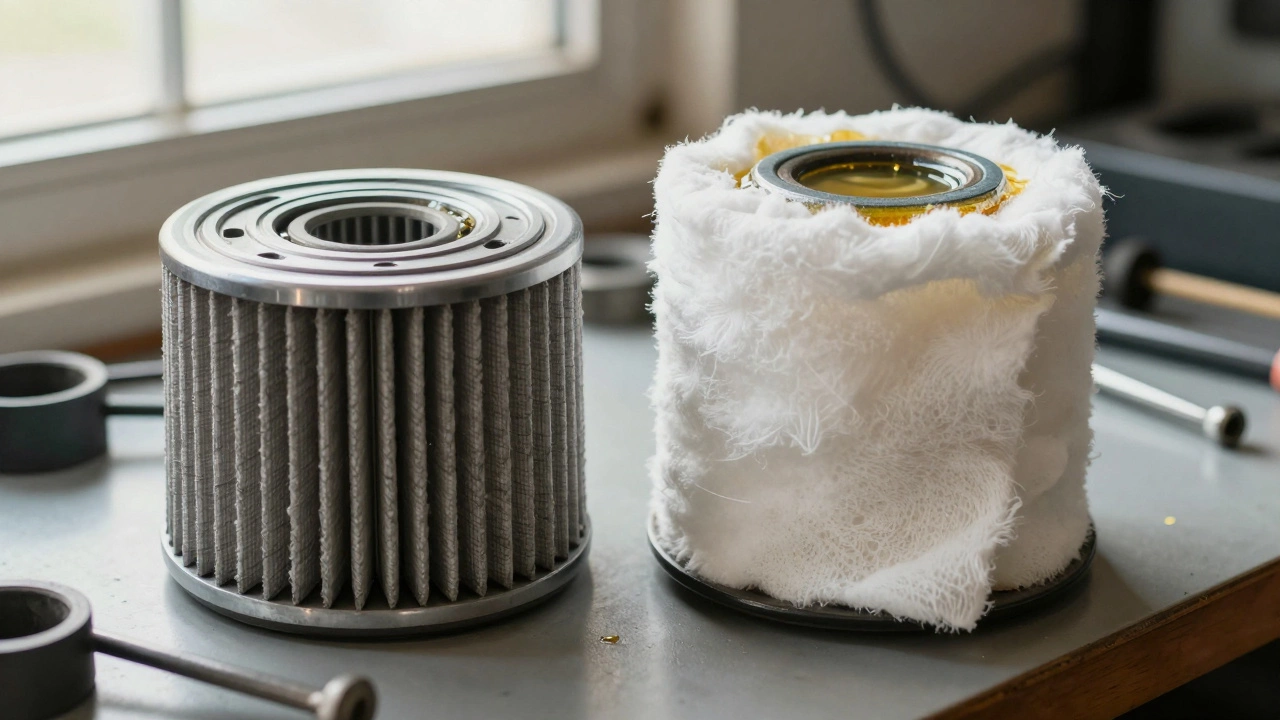
Most factory air filters are made of pleated paper. They’re cheap, effective at trapping dirt, and designed to be replaced every 12,000 to 15,000 kilometers. Performance filters, like K&N, BMC, or Injen, are usually made of cotton gauze soaked in oil. That’s it. No magic. No secret tech. Just a reusable, washable material that’s less dense than paper.
This looser weave lets more air through - which is the whole point. More airflow means the engine can breathe easier, right? Sounds good. But here’s the catch: that same loose weave lets in more dust and debris. That’s why oil is used - to trap particles. But if you over-oil it, you risk contaminating your MAF sensor. Under-oil it, and you’re inviting grit into your cylinders. It’s a balancing act most people don’t bother learning.
Do They Actually Increase Power?
Yes - but barely.
Independent dyno tests from Car and Driver and MotorTrend consistently show gains of 1 to 5 horsepower with a high-flow air filter on a naturally aspirated engine. That’s it. On a 200-hp car, you’re gaining about 2% - less than what you lose from a dirty OEM filter. On turbocharged engines, the gains are even smaller, because the turbo already forces air in. The engine control unit (ECU) adjusts fuel delivery based on airflow. If you add more air, it adds more fuel. But it doesn’t magically unlock hidden power. It just maintains what’s already there.
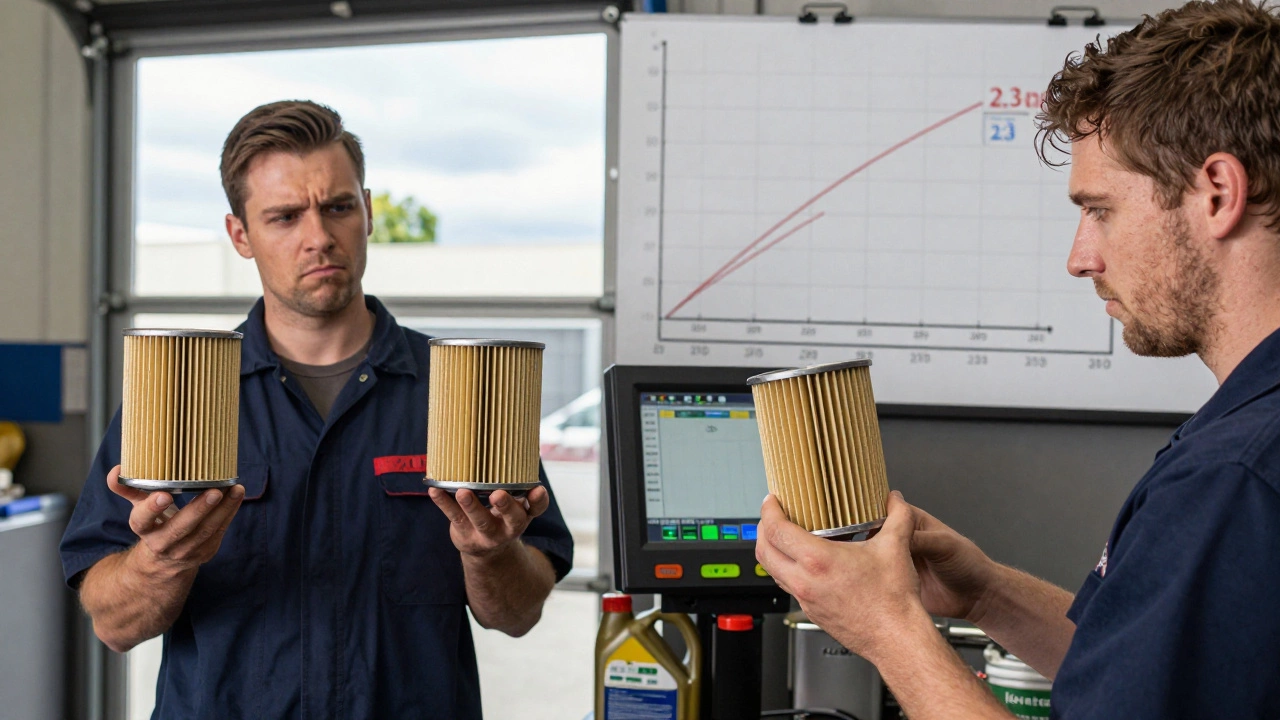
Real-world testing in Brisbane on a 2023 Toyota Corolla Sport showed a 2.3 hp gain after installing a K&N filter. The car felt slightly more responsive off idle, but no one noticed it on the road. Not even during spirited driving. The sound? A tiny bit louder. But not because of the filter - because the intake tube was now exposed to engine bay heat, not insulated like the stock setup.
What About Fuel Economy?
Some brands claim 5-10% better fuel economy. That’s marketing. In controlled tests by the Society of Automotive Engineers (SAE), fuel economy changes were statistically insignificant. Most drivers saw variations of ±0.3 L/100km - within normal driving fluctuation. Your driving style, tire pressure, and traffic conditions have a bigger impact than any air filter.
One Australian owner tracked his 2021 Subaru WRX for six months with a stock filter and then switched to a BMC. His average fuel consumption stayed at 10.8 L/100km both times. He drove the same routes, same conditions, same fuel stations. No difference.
Long-Term Engine Protection: Myth or Reality?
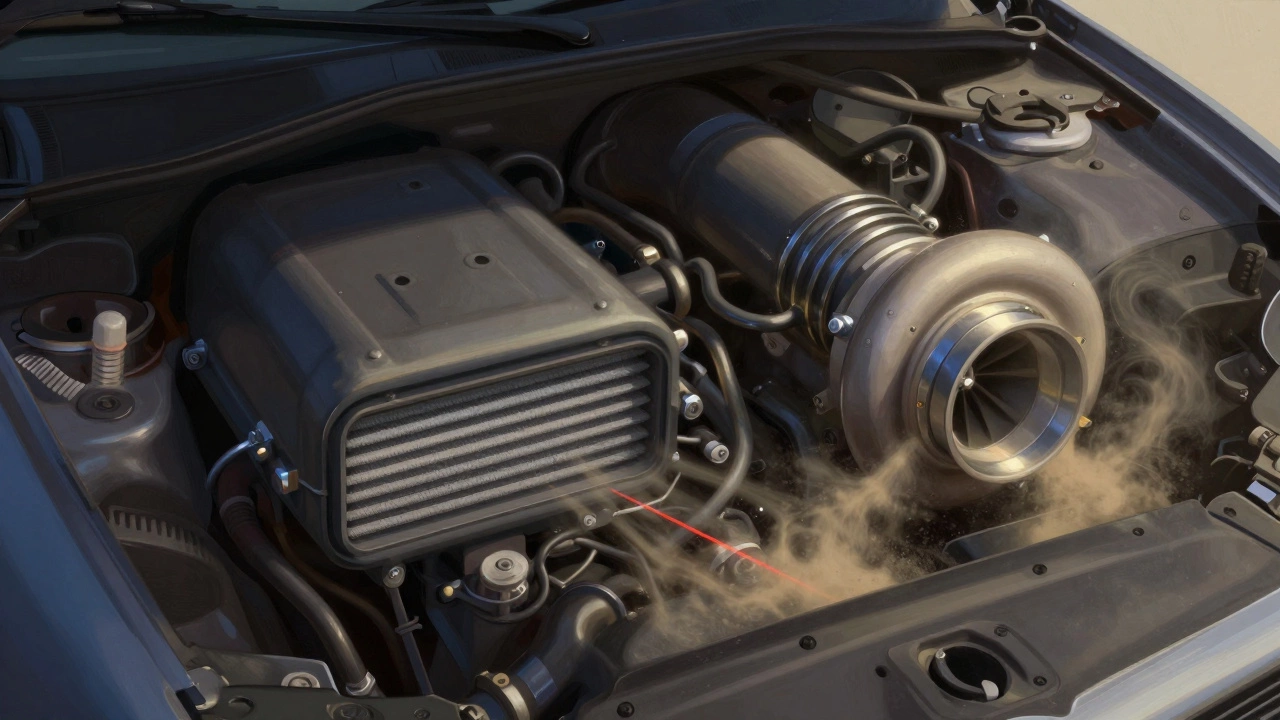
This is where things get dangerous. Performance filter manufacturers claim their filters offer better protection than paper. That’s false. A clean OEM paper filter traps 99% of particles down to 5 microns. A cotton gauze filter, even when properly oiled, traps around 97%. That 2% gap matters - especially in dusty environments like outback roads or coastal areas with salt spray.
There are documented cases of engine damage from performance filters. In 2023, a Queensland mechanic reported three cases of cylinder wall scoring on turbocharged Mazdas and Subarus. All had aftermarket filters. In two cases, owners had over-oiled the filters. In the third, the filter had been cleaned with dish soap instead of the recommended cleaner, stripping the oil coating. Dirt got in. Pistons wore. Repair cost: $8,200.
Factory filters are designed to be replaced. They’re disposable. Performance filters are reusable - but only if you maintain them correctly. And most people don’t. They forget to clean them. Or they use the wrong cleaner. Or they skip the re-oiling step. That’s a gamble you don’t need to take.
Cost Over Time: The Real Math
Let’s break it down. A $20 OEM filter lasts 15,000 km. Over 150,000 km, that’s $200 total.
A $150 performance filter lasts 100,000-150,000 km - but you need to clean it every 40,000 km. Cleaning kits cost $30. That’s three cleanings over 150,000 km: $90. Add the filter: $150. Total: $240.
So you’re spending $40 more over 150,000 km for a filter that gives you zero noticeable performance gain and slightly less protection. And that’s if you maintain it properly.
What if you don’t? You might end up paying $5,000 to $10,000 to fix engine damage. That’s not a risk worth taking.
When Do Performance Filters Make Sense?
There are three real scenarios where they’re justified:
- You’ve modified your engine - turbocharged, supercharged, or built for racing. The stock filter is a bottleneck. In that case, a high-flow filter is part of a full intake system upgrade, not a standalone fix.
- You drive in extreme conditions - desert racing, off-road trails, or dusty mining areas. Even then, a sealed, high-capacity filter like a UniFilter or a dual-stage system is better than a simple cotton gauze.
- You’re a track enthusiast who changes filters frequently and knows exactly how to maintain them. You clean, oil, and inspect every 20,000 km. You have the time, tools, and discipline.
If you drive a daily commuter, a family SUV, or a modestly tuned sedan? No. It’s not worth it.
What About the Sound?
Yes, some people buy them for the sound. That’s fine. But here’s the truth: the filter itself doesn’t make noise. It’s the intake tube. A performance filter often comes with a short, open intake tube that pulls in engine bay heat and lets air rush past plastic housing. That’s what creates the “race car” noise. You can get the same sound by removing the stock airbox lid - for free.
And if you like the sound, you’re probably not going to notice the tiny power gain. You’re buying emotion, not performance.
The Bottom Line
Expensive air filters don’t make your car faster. They don’t save you fuel. They don’t protect your engine better - and they might hurt it if you mess up maintenance.
They’re a product designed to make you feel like you’re upgrading your car. And in a world full of cheap upgrades that do nothing, that feeling matters. But if you’re looking for real results - better throttle response, more power, improved efficiency - focus on things that actually move the needle: a tune, better spark plugs, a free-flowing exhaust, or even just keeping your tires properly inflated.
Save your money. Stick with the OEM filter. Clean your cabin air filter instead. That’s the one that actually affects your health and comfort.
What Should You Do Instead?
If you’re serious about performance, here’s what actually works:
- Upgrade your spark plugs to iridium - they improve combustion efficiency.
- Install a performance exhaust system - that’s where real gains happen.
- Get a professional ECU tune - this unlocks hidden power safely.
- Use high-quality synthetic oil - it reduces friction and improves longevity.
- Keep your air intake ducts clean and sealed - no leaks, no unmetered air.
These changes cost more upfront - but they deliver results you can feel. Not just hear.
Do K&N air filters really increase horsepower?
Yes, but only by 1 to 5 horsepower on most street cars - and often less than that. These gains are barely noticeable in real-world driving. The engine’s ECU adjusts fuel delivery to match airflow, so you’re not unlocking hidden power. The real benefit is maintaining airflow as the filter ages, not adding extra power.
Are performance air filters better for engine longevity?
No. A clean OEM paper filter traps more dirt than a cotton gauze filter, even when oiled. Performance filters require regular cleaning and re-oiling. If you skip this, dust can enter the engine and cause cylinder wall wear - especially in turbocharged engines. Many engine failures linked to aftermarket filters are due to improper maintenance, not the filter itself.
How often do I need to clean a performance air filter?
Every 40,000 to 50,000 kilometers, or sooner if you drive in dusty conditions. Always use the manufacturer’s cleaning kit - never dish soap or compressed air alone. After cleaning, let it dry completely before re-oiling. Over-oiling can contaminate your mass airflow sensor, causing poor idle and check engine lights.
Can I use a performance air filter on a turbocharged car?
Yes - but only as part of a full intake system upgrade. Turbo engines rely on precise airflow. A standalone performance filter won’t help much and can introduce unmeasured air if the intake isn’t sealed properly. Many turbo owners see better results with a high-flow intake manifold and tuned ECU than with just a filter swap.
Do performance air filters improve fuel economy?
No meaningful improvement. Independent tests show fuel economy changes are within normal driving variation - usually less than 0.3 L/100km. Factors like tire pressure, driving style, and traffic have a far greater impact. Claims of 5-10% better mileage are marketing, not science.
Is it worth replacing my OEM filter with a performance one if I drive in the city?
No. City driving involves frequent stop-and-go, low RPMs, and minimal airflow demand. Your OEM filter is perfectly adequate. The extra cost, maintenance, and risk of engine damage far outweigh any tiny benefit. Save your money for better upgrades - like brake pads or suspension bushings.