Car Scratch Depth Calculator
This tool helps you determine if your car scratch is shallow enough for toothpaste treatment or if you need professional repair. Based on your inputs, it will tell you whether toothpaste might work or if you should seek professional help.
Assess Your Scratch
Answer these questions to determine if toothpaste is appropriate for your scratch.
Enter your scratch details above to see the analysis.
Ever stared at a deep scratch on your car’s paint and thought, ‘There’s no way to fix that’? Then you saw a video online showing someone rubbing toothpaste on it-and the scratch vanished. It sounds too good to be true. But here’s the reality: toothpaste doesn’t magically erase deep scratches. It can help with light surface scratches, but if the scratch has cut through the clear coat and reached the color layer, you’re looking at more than a tube of Crest.
Why People Think Toothpaste Works
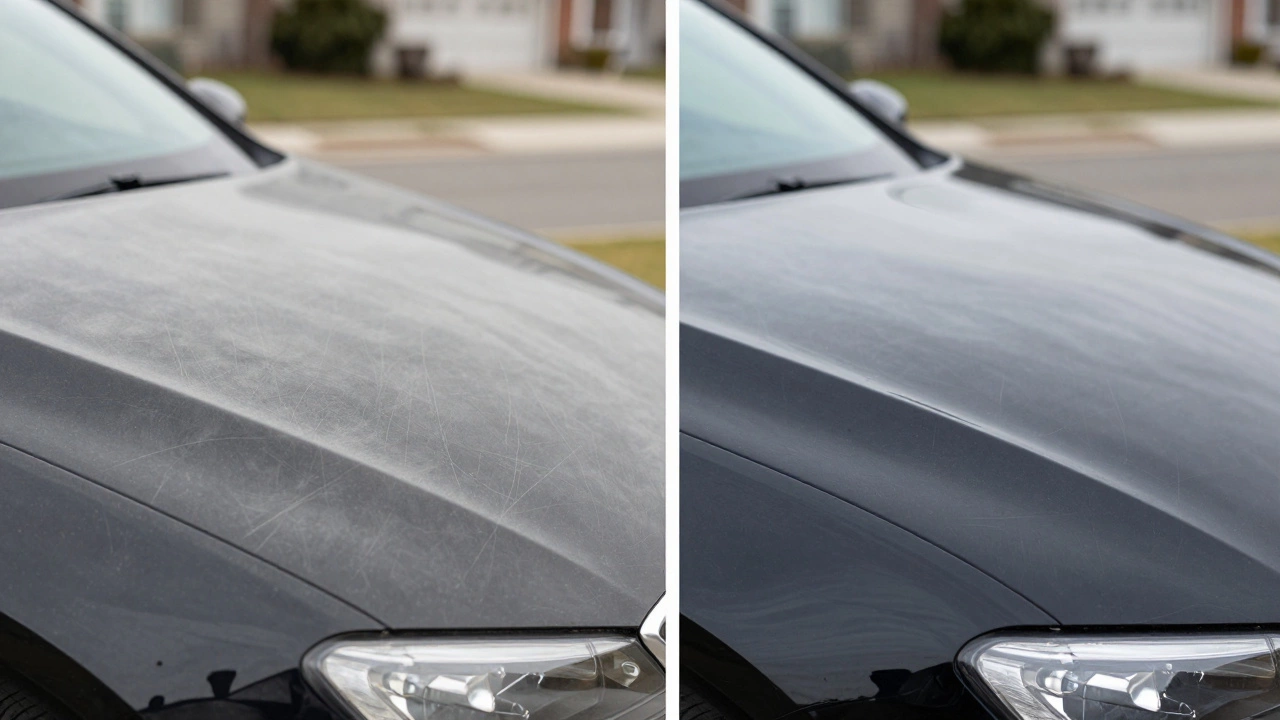
Toothpaste contains mild abrasives like silica or calcium carbonate. These are the same ingredients found in many commercial scratch removers. When you rub toothpaste onto a shallow scratch with a microfiber cloth, those tiny particles gently sand down the high points around the scratch. It’s not removing the scratch-it’s leveling the surface so light reflects evenly again. That’s why it seems to disappear.This trick works best on scratches that are only in the clear coat-the protective layer on top of your car’s paint. If you run your fingernail over the scratch and it catches, you’re likely dealing with something deeper. Toothpaste won’t fix that.
What Kind of Toothpaste Actually Works?
Not all toothpastes are created equal. Gel toothpaste? Skip it. It lacks the abrasives you need. Whitening toothpaste? That’s your best bet. It’s formulated with extra abrasives to remove surface stains from teeth-and that’s exactly what you need for light paint scratches.Brands like Crest 3D White, Colgate Optic White, or Sensodyne Pronamel are common choices. Avoid toothpastes with added whitening agents like hydrogen peroxide or charcoal. Those don’t help with paint and can leave streaks or residue that’s hard to clean off.
How to Use Toothpaste on a Car Scratch (Step-by-Step)
If you’ve got a light scratch and you’re willing to try this, here’s how to do it right:
- Wash the area with soap and water. Dirt or grime will make the scratch worse if you rub it in.
- Dry the spot completely with a clean microfiber towel.
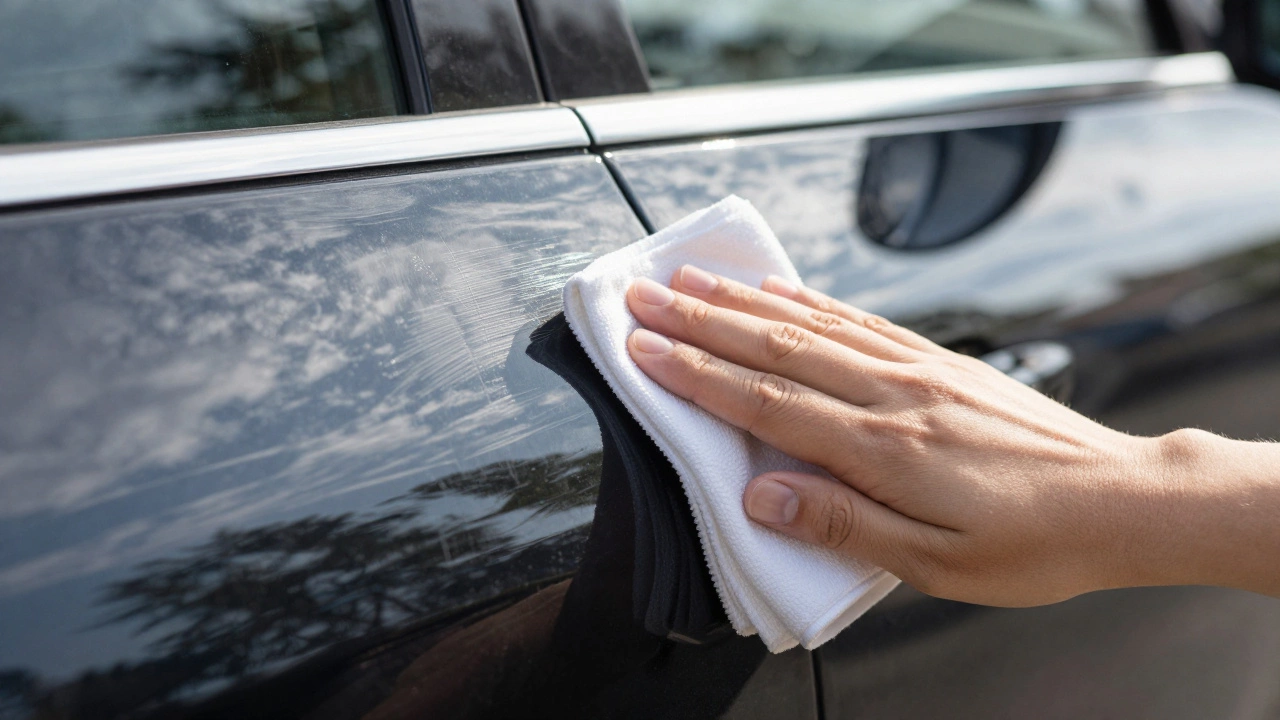
- Squeeze a dime-sized amount of whitening toothpaste onto a damp microfiber cloth.
- Use small circular motions for 30-60 seconds. Don’t press hard-let the abrasives do the work.
- Wipe off the toothpaste with a clean, dry microfiber cloth.
- Inspect the scratch. If it’s still visible, repeat once more. If not, apply a coat of wax to seal the area.
Pro tip: Work in shaded areas. Sunlight heats up the paint and causes the toothpaste to dry too fast, making it harder to spread evenly.
When Toothpaste Fails-And What to Do Instead
If the scratch catches your nail, you’ve got a mid-depth or deep scratch. That means the abrasives in toothpaste are too weak to reach the damage. At this point, you need real paint repair tools.
Here’s what actually works for deeper scratches:
- Scratch remover kits like Meguiar’s Ultimate Compound or Turtle Wax Scratch & Swirl Remover-they use stronger abrasives and are designed for automotive use.
- Touch-up paint for scratches that hit the base coat. You’ll need the exact color code from your car’s VIN plate.
- Polishing compounds paired with a dual-action polisher. These can remove up to 80% of medium scratches if used correctly.
- Professional paint correction for deep scratches. A detailer uses machine buffers and layered compounds to restore the surface.
Trying to force toothpaste on a deep scratch will only smear paint, leave hazing, and waste your time. It’s like trying to fix a broken phone screen with duct tape.
The Science Behind Paint Layers
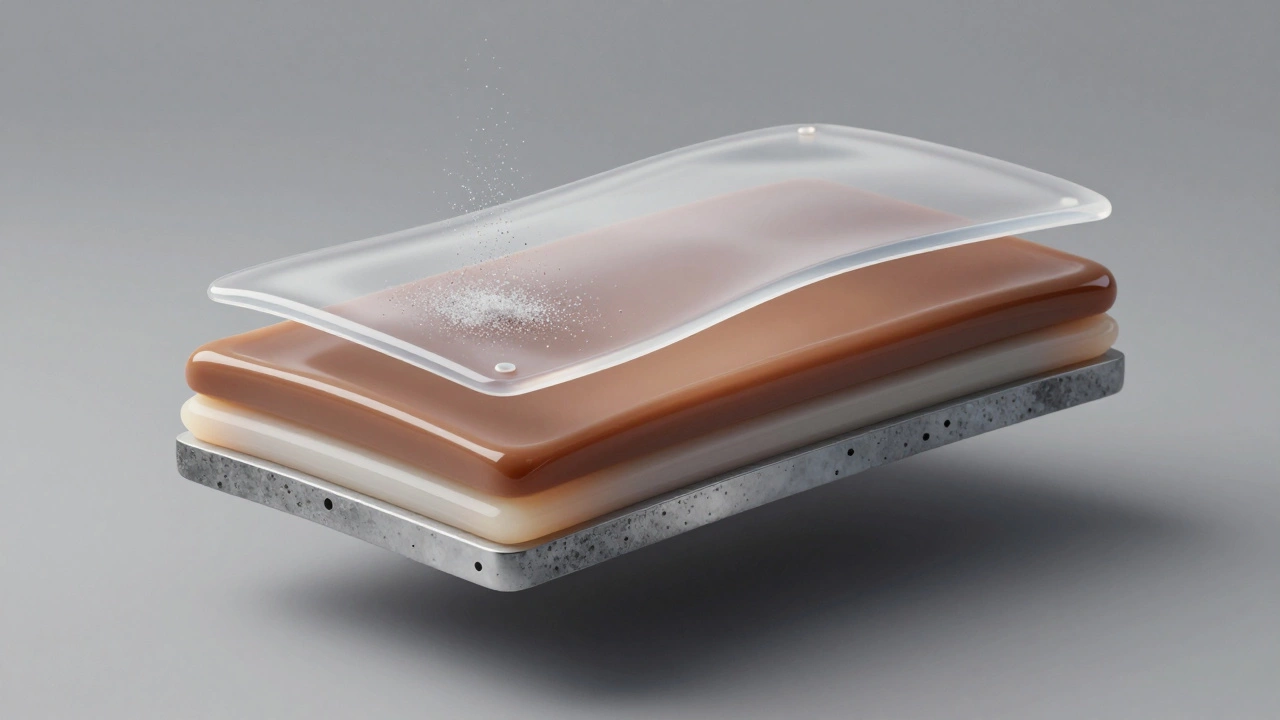
To understand why toothpaste only works on some scratches, you need to know how car paint is built:
- Clear coat: The top layer (usually 50-100 microns thick). Protects against UV, chemicals, and light scratches.
- Base coat: The color layer. This is what gives your car its look.
- Primer: Bonds the paint to the metal.
- Steel body: The actual structure.
Light scratches only scrape the clear coat. Toothpaste can polish that. But if you’ve scratched through to the base coat, you’ve exposed the color. That’s not a surface issue-it’s a structural one. No amount of toothpaste will refill that gap.
Real-World Test: What Happens After 6 Months?
In 2024, a Brisbane-based detailer tested toothpaste on 12 light scratches across different car models. After six months, 7 of the 12 spots showed visible haze or fading. The rest stayed clear but lost their shine. Why? Toothpaste doesn’t contain UV inhibitors or sealants. It cleans and polishes, but it doesn’t protect.
Compare that to a proper automotive scratch remover, which includes polymers and resins that fill micro-gaps and seal the surface. Those results lasted over a year without degradation.
Common Myths About Toothpaste and Car Scratches
- Myth: All toothpaste works the same. Truth: Only whitening toothpaste has the right abrasives. Gel and natural toothpastes won’t cut it.
- Myth: Toothpaste is cheaper than professional products. Truth: Yes, it’s cheaper upfront-but if you ruin your paint, a paint correction job costs $300-$800. A $20 scratch remover is a safer bet.
- Myth: Toothpaste won’t damage paint. Truth: If you use too much pressure or the wrong cloth, you can create swirl marks. It’s not harmless.
- Myth: It works on any color car. Truth: It works better on dark colors because scratches are more visible. But it doesn’t matter if the scratch is too deep.
When to Call a Professional
Here’s when you should stop DIYing:
- The scratch is longer than 10 cm.
- You can see metal or primer underneath.
- The scratch is on a curved panel (like a fender or door handle)-it’s hard to polish evenly without a machine.
- You’ve tried toothpaste twice and it didn’t help.
Professional detailers use paint thickness gauges to measure how much clear coat remains. If you’ve already removed too much with toothpaste or a buffer, adding more could eat through the paint entirely. That’s a $2,000+ repair job.
Best Alternatives to Toothpaste
If you want something better than toothpaste but still affordable, try these:
| Method | Best For | Cost | Effectiveness | Longevity |
|---|---|---|---|---|
| Toothpaste | Very light clear coat scratches | $1-$3 | Low to moderate | 1-3 months |
| Scratch remover kit (e.g., Meguiar’s) | Light to medium scratches | $15-$25 | High | 6-18 months |
| Touch-up paint pen | Scratches that hit base coat | $10-$20 | Medium | 1-2 years |
| Dual-action polisher + compound | Medium to deep scratches | $50-$150 | Very high | 2+ years |
| Professional paint correction | Deep scratches, swirls, oxidation | $300-$800 | Excellent | 3-5+ years |
Final Verdict: Is Toothpaste Worth It?
For a tiny, barely-there scratch on a dark car? Maybe. It’s a quick, cheap fix that might look better for a few weeks. But if you care about your car’s value or appearance, don’t rely on it. It’s a temporary bandage, not a solution.
Real car care means using the right tools for the job. A $20 scratch remover kit gives you better results, lasts longer, and won’t risk ruining your paint. And if you’ve got a deep scratch? Save yourself the headache. Take it to a detailer before the damage spreads or rust sets in.
Your car’s paint is its first line of defense. Treat it like armor-not a canvas for kitchen experiments.
Can toothpaste remove deep scratches from a car?
No, toothpaste cannot remove deep scratches. It only works on very light scratches that are confined to the clear coat. If the scratch reaches the base coat or primer, toothpaste lacks the cutting power and won’t fill the gap. Deep scratches require professional paint repair, touch-up paint, or a polishing compound with a machine.
What kind of toothpaste works best for car scratches?
Whitening toothpaste works best because it contains silica or calcium carbonate abrasives designed to remove surface stains. Avoid gel, natural, or charcoal toothpastes-they don’t have enough abrasives. Brands like Crest 3D White or Colgate Optic White are commonly used and effective for light scratches.
Does toothpaste damage car paint?
It can, if used incorrectly. Pressing too hard, using a dirty cloth, or applying it in direct sunlight can create swirl marks or haze. Toothpaste isn’t formulated for automotive use, so it lacks protective agents. Over time, it may leave a dull finish or attract dirt. Always follow up with wax after using it.
How long does toothpaste last on car scratches?
Results from toothpaste typically last 1-3 months. It polishes the surface but doesn’t seal or protect it. Rain, UV exposure, and car washes will quickly wear away the effect. For lasting results, use a proper automotive scratch remover or sealant after polishing.
Is toothpaste better than a scratch remover kit?
No. Scratch remover kits are designed specifically for car paint. They contain balanced abrasives, lubricants, and protective polymers that toothpaste lacks. While toothpaste might work on one tiny scratch, a scratch remover kit gives consistent, longer-lasting results across larger areas without risking paint damage.
Can I use toothpaste on a black car?
Yes, but with caution. Black cars show scratches more clearly, so people are more tempted to try toothpaste. It can help with very light scratches, but it’s easy to leave haze or swirls on dark paint. Always use a clean microfiber cloth and follow up with wax. For best results on black cars, use a dedicated black paint polish.
Why does toothpaste make scratches look less visible?
Toothpaste smooths the edges of shallow scratches by gently abrading the high points around them. This reduces light scattering, making the scratch blend into the surrounding paint. It doesn’t remove the scratch-it just makes it harder to see under normal lighting. The scratch is still there, just less noticeable.