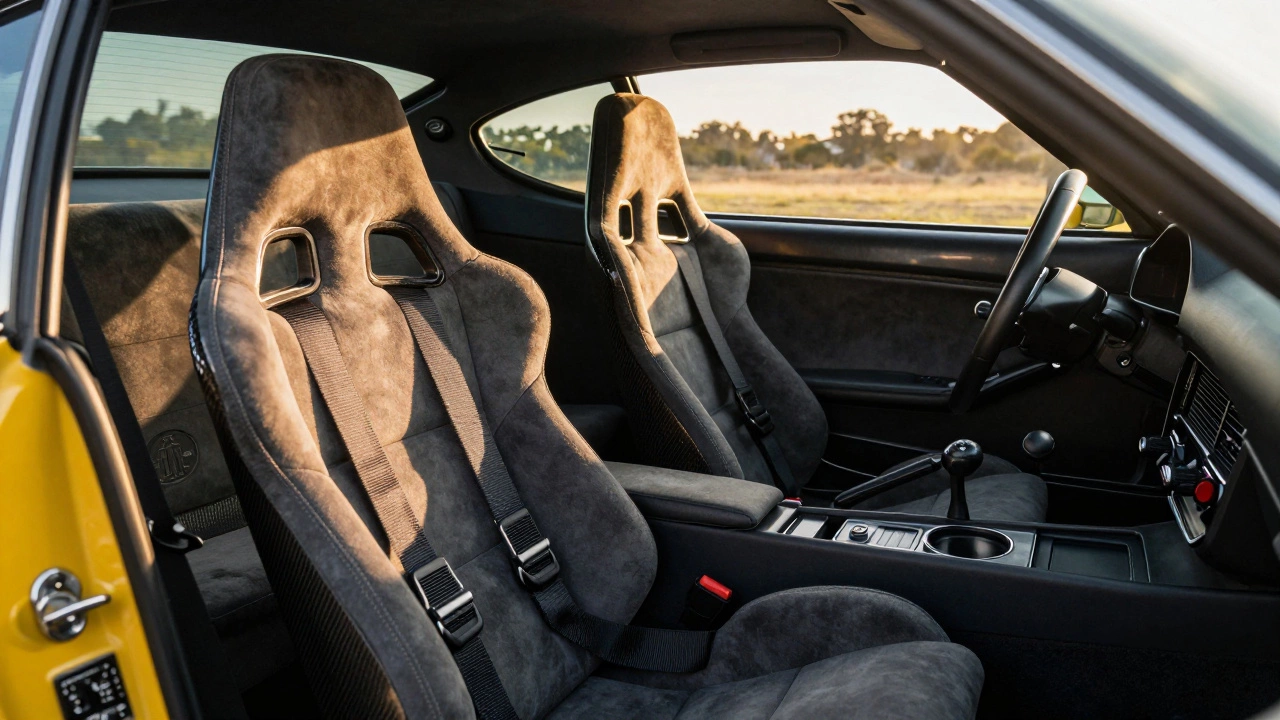
Custom Car Seat Cost Estimator
Custom Seat Cost Calculator
Custom car seats aren’t just about looking cool-they’re about comfort, safety, and turning your ride into something that feels truly yours. But if you’ve ever wondered how much these seats actually cost, you’re not alone. The price can swing from under $500 to over $5,000, and it’s not just about the material or brand. What you pay for depends on what you’re really getting.
What’s Included in a Custom Seat?
A custom seat isn’t just a new cover slapped over your factory cushion. It’s a full rebuild. You’re paying for the frame, the foam, the stitching, the materials, and the labor. Some shops start with your original seat frame and rebuild it. Others use aftermarket bases like those from Recaro, Sparco, or Bride. The difference matters.
Basic custom seats-think upgraded foam, new fabric, and clean stitching-start around $600 to $900 per seat. These are great if you want to refresh worn-out factory seats without changing the shape. But if you want something more aggressive, like a racing bucket with side bolsters, carbon fiber trim, and Alcantara upholstery, you’re looking at $1,800 to $3,200 per seat.
Material Choices Drive the Price
The fabric or leather you pick makes a huge difference in cost. Standard vinyl or polyester blends are the cheapest, often used in budget builds. They’re durable but don’t breathe well and can feel cheap over time.
Leather? That’s the middle ground. Full-grain leather from reputable tanneries adds $400-$800 per seat. It’s breathable, ages well, and looks premium. But it’s not the most grippy for track days.
Alcantara, the suede-like material used in high-end sports cars, adds $600-$1,200 per seat. It’s the go-to for performance builds because it holds you in place during hard cornering. Pair it with carbon fiber accents or titanium hardware, and you’re adding another $300-$700.
Then there’s the wildcard: custom embroidery or logos. A simple monogram might cost $100. A full team logo or intricate pattern? That can run $500 extra per seat.
Aftermarket Bases vs. Rebuilt Factory Seats
Here’s where people get surprised. You don’t have to buy a whole new seat from scratch. Many shops offer to rebuild your factory seats. That’s cheaper-often $800-$1,500 total for a pair-but you’re stuck with the original shape. If your car came with a flat, reclining seat, that’s what you’ll still have.
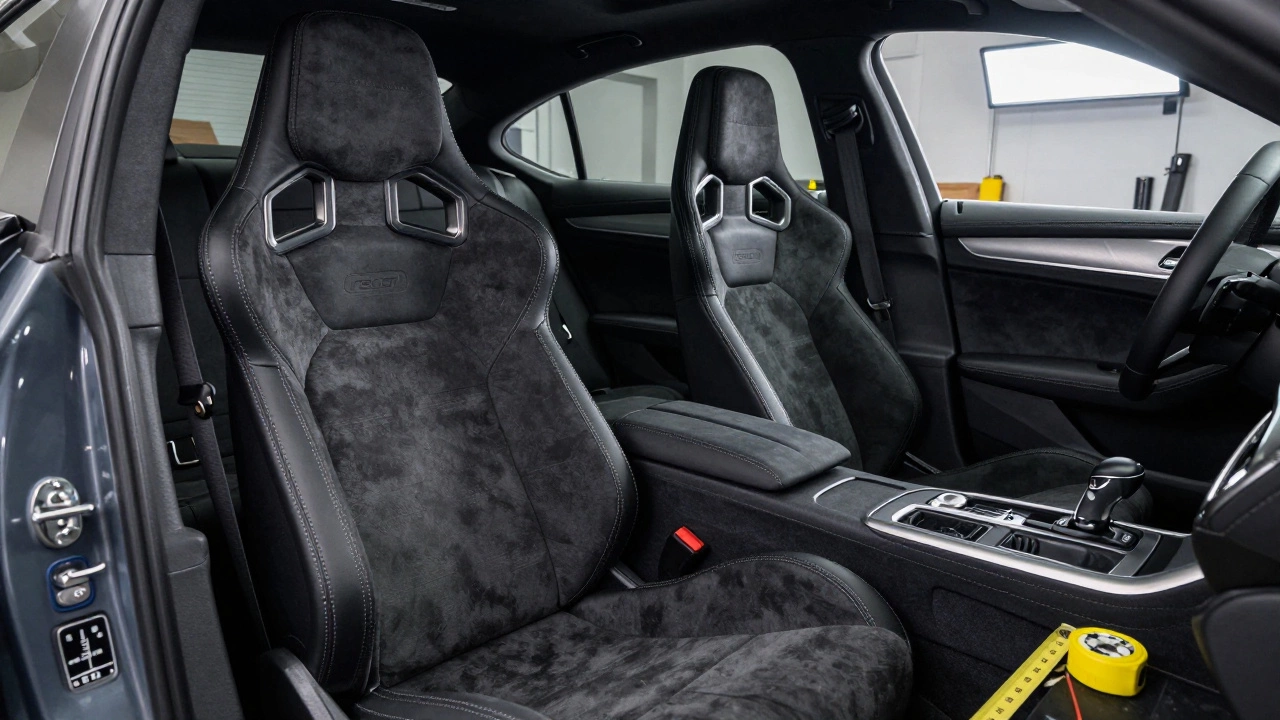
Aftermarket bases like Recaro Sportster CS or Bride Cuga are designed for performance. They’re lighter, have better side support, and often come with adjustable sliders and mounting brackets. These bases alone cost $1,000-$1,800 each. Add custom upholstery on top, and you’re looking at $2,500-$3,500 per seat.
For track-focused builds, some people skip the factory rails entirely and install bolt-in racing mounts. That adds another $200-$400 per seat and requires professional installation. It’s not just about comfort anymore-it’s about safety and rigidity.
Installation and Labor Costs
Many people forget to budget for installation. A simple swap of seats with factory rails? That’s $150-$300. But if you’re going full custom-removing the old seat, welding new mounts, rerouting seatbelt anchors, or integrating heating/ventilation systems-it’s $500-$1,200.
Some shops charge by the hour. A full custom build with new frames, foam, and stitching can take 20-40 hours of labor. At $80-$120/hour, that’s $1,600-$4,800 just for time. That’s why a $3,000 seat can end up costing $5,000 installed.
What You Get for the High End
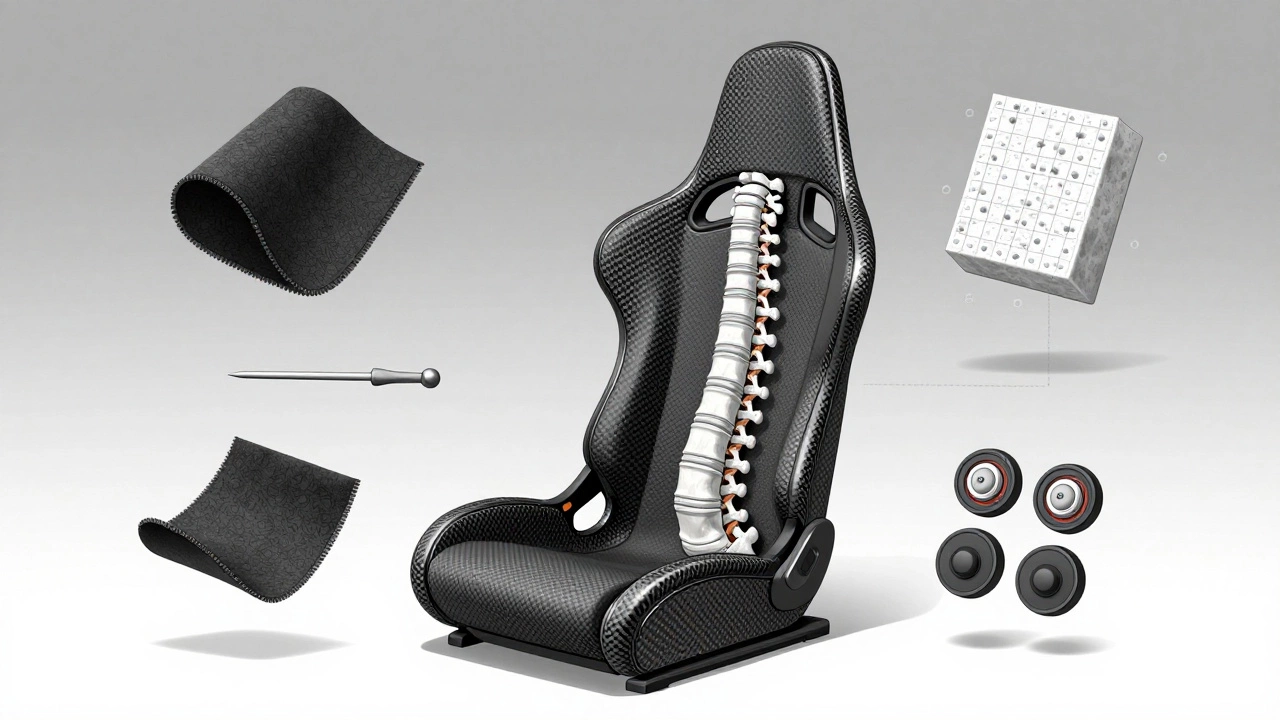
At the top end-$4,000 to $6,000 per seat-you’re getting bespoke craftsmanship. Think hand-stitched seams with contrast thread, custom-molded foam shaped to your body, carbon fiber shell frames, and integrated harness slots. Some builders even use 3D scanning to create a seat that fits your exact posture.
One shop in Melbourne recently built a pair of seats for a 1970 Datsun 240Z using a 3D scan of the owner’s spine. The result? A seat that felt like it was grown around him. The price? $5,200 per seat. It wasn’t just a seat-it was a medical-grade ergonomic solution wrapped in Alcantara and carbon fiber.
These aren’t for everyone. But if you’re driving daily and want zero fatigue on long trips, or you’re racing on weekends, the investment pays off in comfort and control.
Hidden Costs People Overlook
There’s always something you don’t see coming. If your car has built-in airbags in the seat, you can’t just swap in a non-airbag aftermarket seat. You’ll need to bypass the system or pay for a certified airbag-compatible seat. That adds $300-$800.
Heating and cooling? If you want those features in your new seats, it’s another $400-$900. Same with integrated seatbelt reminders or memory settings. These aren’t plug-and-play.
And then there’s the wait. Custom work isn’t fast. Most shops have a 6-12 week backlog. If you need it done by a certain date-say, for a car show or track day-you’ll pay a rush fee. That’s typically 20-30% extra.
Is It Worth It?
Let’s say your factory seats are cracked, sagging, and feel like you’re sitting on a beanbag. Replacing them with basic aftermarket buckets might cost $2,500 total. But you’ll feel more secure, look sharper, and enjoy the drive more. That’s a win.
On the other hand, if your car is a daily driver and you rarely drive more than 20 minutes at a time, spending $5,000 on custom seats might not make sense. You could spend half that on new tires or a suspension upgrade and get more real-world benefit.
Here’s the rule of thumb: If you spend more than 10 hours a week driving, or you care about how your car feels under your backside, custom seats are worth it. If you’re just chasing looks, maybe stick with seat covers.
Where to Get Them Done Right
Not all upholstery shops are created equal. Look for places that specialize in automotive interiors-not just furniture reupholstery. Ask to see their portfolio. Do they have before-and-after shots of seats similar to yours? Have they worked with your car’s make and model before?
In Brisbane, shops like AutoCraft Interiors and SeatCraft Australia have built hundreds of custom seats over the last five years. They don’t just stitch fabric-they engineer support. Don’t go to the cheapest quote. Go to the one that explains why their process is better.
Final Price Range Summary
Here’s what you can realistically expect to pay for a pair of custom car seats in 2026:
- Basic Refresh: $1,200-$1,800 (new fabric, foam, stitching on factory frames)
- Performance Upgrade: $3,000-$5,000 (aftermarket base + Alcantara + carbon accents)
- Full Custom Build: $6,000-$10,000 (3D-molded, airbag-compatible, integrated tech, hand-stitched)
Remember: the cheapest option often costs more in the long run. A poorly made seat will sag, crack, or lose support in 18 months. A good one lasts a decade.
Are custom car seats legal in Australia?
Yes, as long as they meet Australian Design Rules (ADR). Seats with integrated seatbelts or airbags must be certified. Most reputable custom shops use ADR-compliant bases and provide documentation. If you’re installing racing seats without factory airbags, you may need to disable the airbag warning system legally-this often requires a certificate from a licensed mechanic.
Can I install custom seats myself?
You can, but it’s risky. If your car has side airbags, improper installation could disable them or trigger error codes. Mounting brackets need to be torqued correctly to handle crash forces. For basic seat swaps with factory rails, DIY is fine. For anything involving new mounts, harnesses, or wiring, hire a pro. A mistake here isn’t just expensive-it’s dangerous.
How long do custom seats last?
With quality materials and proper care, custom seats last 10-15 years. Leather and Alcantara hold up better than vinyl. Avoid direct sunlight and clean regularly with pH-neutral products. The foam is the weak point-it can compress over time. High-density foam (50-60 kg/m³) lasts longer than cheap alternatives.
Do custom seats improve comfort on long drives?
Absolutely. Factory seats are designed for average body types and short trips. Custom seats are built for your posture. With proper lumbar support, thigh extension, and side bolsters, you’ll feel less fatigue after a 3-hour drive. Many clients report reduced back pain after switching to custom seats.
Can I get custom seats for a classic car?
Yes, and it’s one of the most common requests. Classic cars often have worn-out, uncomfortable seats. Custom builders can replicate the original look with modern materials-like period-correct vinyl with modern foam density. Some even recreate the exact stitching pattern from the 1960s while adding modern safety features.