Carbon Fiber Spoiler Cost & Benefit Calculator
Calculate Your Spoiler Costs
This calculator helps you understand the real financial impact of installing a carbon fiber spoiler versus a plastic alternative for your daily driver.
Carbon fiber spoilers look sleek. They scream performance. You see them on supercars in videos, on Instagram, and at car shows. But if you’re thinking about slapping one on your daily driver, you should know the real downsides-before you spend your money.
They’re not as strong as you think
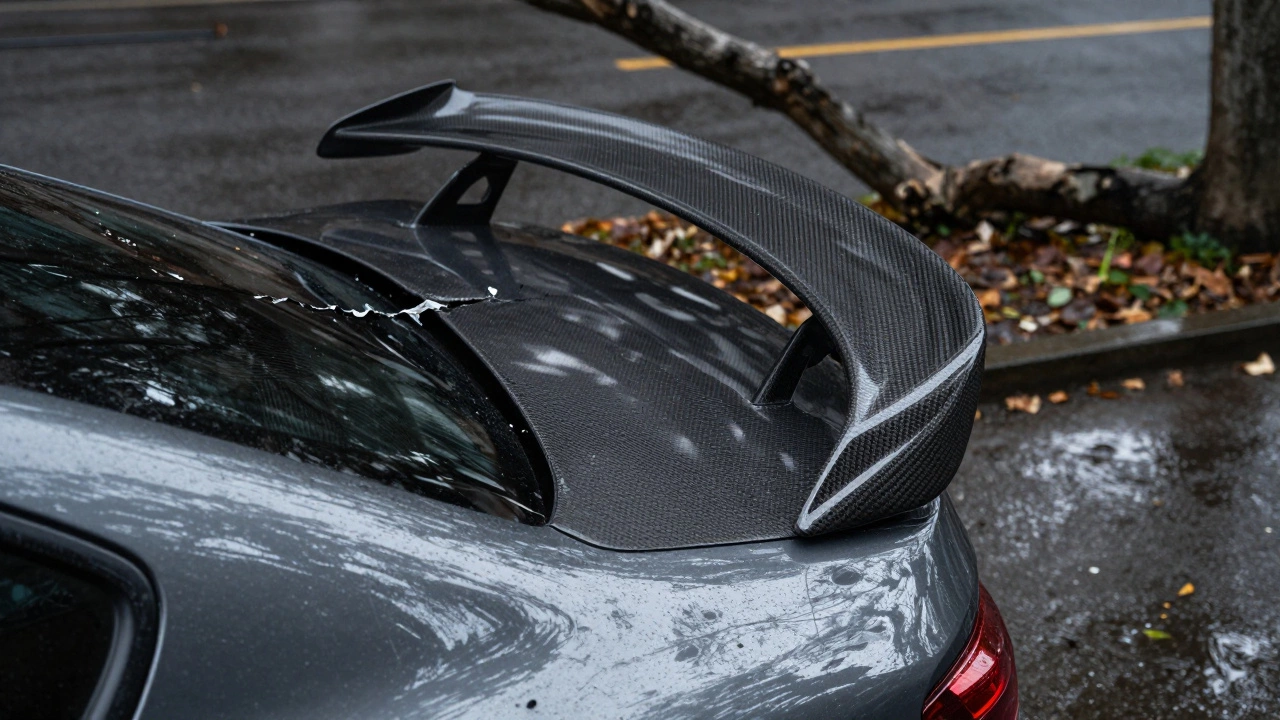
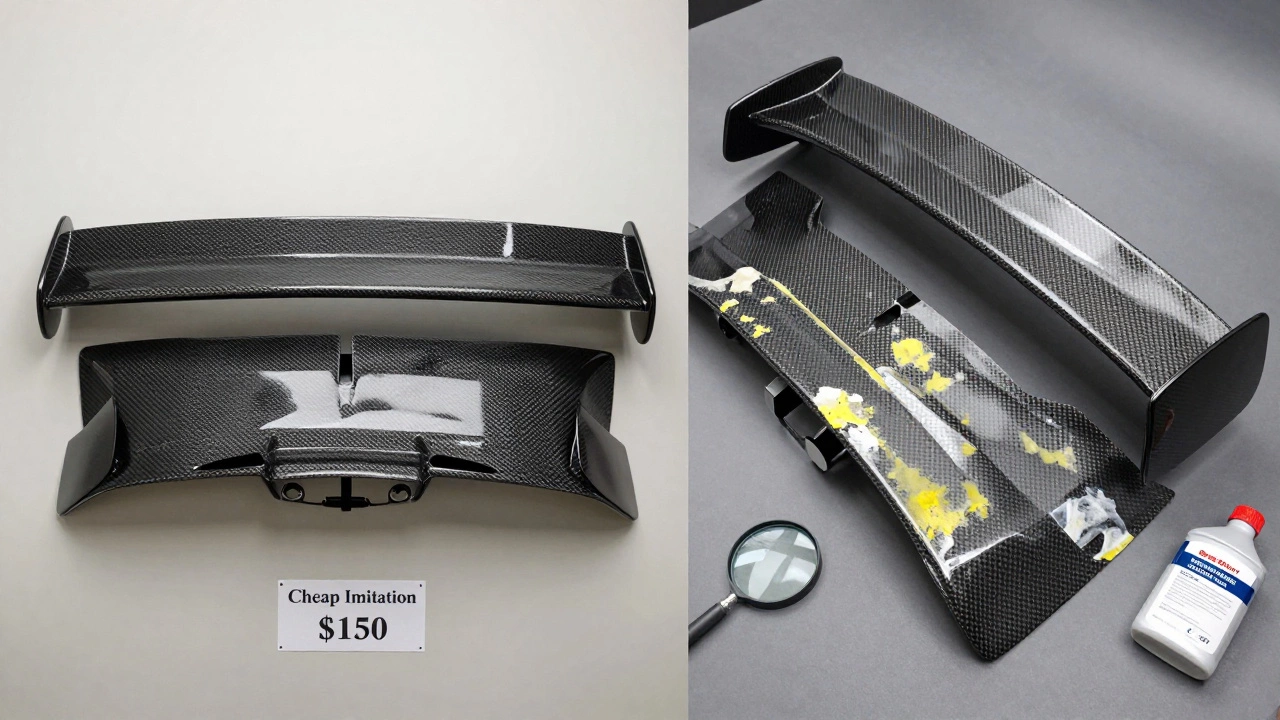
Carbon fiber gets called "stronger than steel" all the time. That’s misleading. It’s strong in tension, yes-but brittle under impact. A carbon fiber spoiler can crack from a single curb scrape, a parking lot bump, or even a hard car wash. Unlike plastic or fiberglass, it doesn’t bend. It snaps. And once it’s broken, it’s nearly impossible to repair without professional epoxy work and vacuum bagging. Most DIY fixes just look like a patch job. You’ll end up with a spoiler that’s more eyesore than upgrade.
They’re way more expensive than they’re worth
A decent ABS plastic spoiler costs $150-$300. A real carbon fiber one? $600-$1,500. And that’s before installation. The labor alone can add another $200-$400 because carbon fiber needs special adhesives, surface prep, and precise alignment. If you’re not racing, or if you’re not driving on closed tracks, that extra cost buys you zero performance benefit. The aerodynamic gains from a small rear spoiler on a sedan are negligible. Real downforce needs large, properly shaped wings with wind tunnel testing-not a decorative piece glued to the trunk lid.
Most "carbon fiber" spoilers aren’t even real carbon fiber
Here’s the dirty secret: over 80% of aftermarket "carbon fiber" spoilers are made from fiberglass with a printed carbon weave pattern. They’re painted to look like carbon fiber, then clear-coated. They’re cheaper to make, heavier, and less durable. You can tell the difference by tapping it-real carbon fiber sounds like a hollow drum. The fake ones sound dull, like plastic. If you paid $800 for a spoiler and it sounds like a toy, you got scammed.
They attract more damage, not less
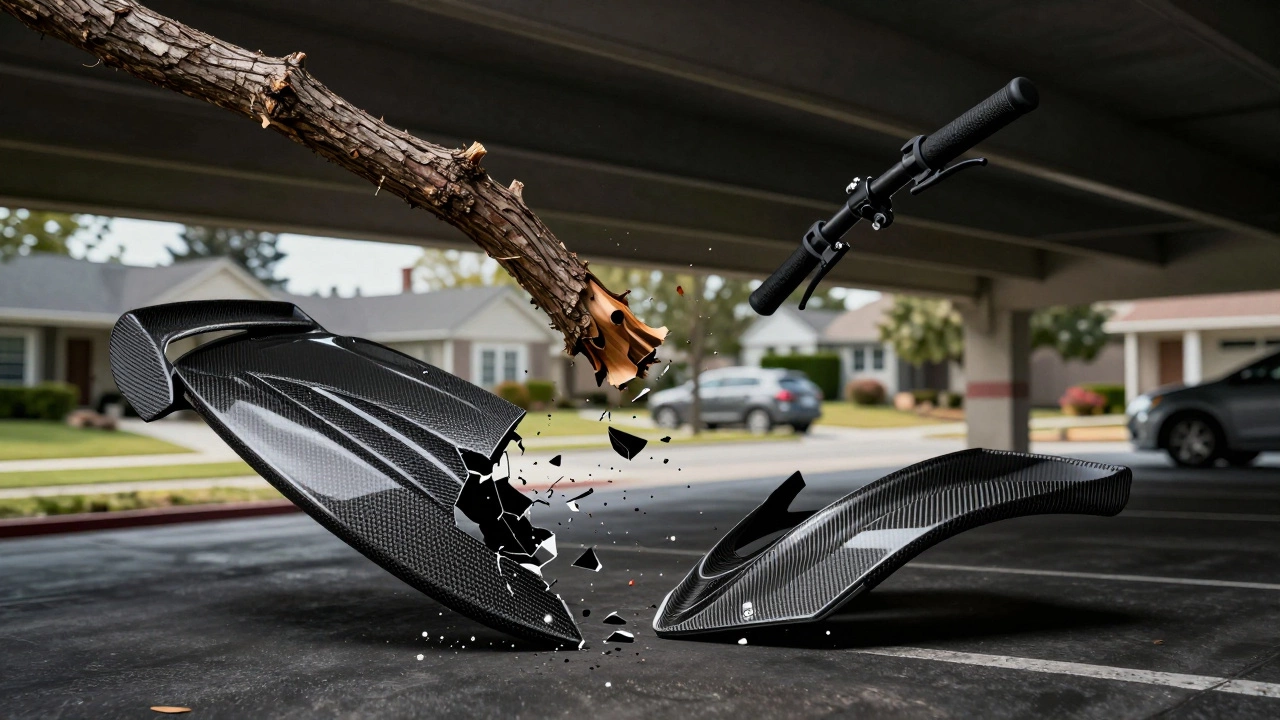
Carbon fiber spoilers stick out. They’re mounted high on the trunk, right where branches fall, where parking garage ceilings scrape, and where kids on bikes accidentally bump into them. A plastic spoiler might dent. A carbon fiber one shatters. And because they’re so expensive, you’ll end up paying more in insurance claims or out-of-pocket repairs. In Brisbane, where tree-lined streets and narrow driveways are common, a carbon fiber spoiler is just asking for trouble.
They’re heavy on maintenance
Real carbon fiber needs UV protection. Sunlight degrades the resin over time. Without regular waxing or ceramic coating, the surface turns dull, yellow, and chalky. You can’t just use any car wash soap. Harsh chemicals eat through the clear coat. You need specialized cleaners. And if the clear coat chips? That’s it. The weave underneath starts to degrade. Unlike paint, you can’t just touch it up. You need to strip and recoat the whole thing. That’s $300-$600 just to make it look good again.
The performance gain is almost zero
Let’s be honest: if your car isn’t doing 160 km/h on a track, a small spoiler won’t help you corner faster or brake better. Real aerodynamic performance comes from front splitters, diffusers, and large rear wings with adjustable angles-all designed as a system. A standalone spoiler? It’s mostly for looks. In fact, some cheap spoilers actually increase drag because they’re poorly shaped. Tests from the University of Queensland’s automotive lab showed that poorly designed aftermarket spoilers on sedans increased drag by up to 3% and had no measurable effect on downforce.
They reduce resale value
Buyers don’t want broken carbon fiber. They don’t want mismatched paint, chipped edges, or signs of poor installation. Even if the spoiler is in perfect condition, many buyers assume it was added to hide damage underneath. It’s seen as a cheap modification that doesn’t add value. You’ll struggle to sell your car for more than you paid for it-with the spoiler on. Take it off, and you’re left with holes in the trunk lid, mismatched paint, and the cost of fixing it.
There are better alternatives
If you want the look of carbon fiber without the headaches, go for a high-quality ABS plastic spoiler with a real carbon fiber finish. Brands like Roush, APR, and Cargraphic make ones that are durable, properly aerodynamic, and come with warranties. Or, if you’re set on carbon fiber, only get it for track cars you’re willing to treat like a race vehicle. For street use? Stick with OEM-style spoilers made from flexible, impact-resistant materials. They’ll last longer, cost less, and won’t make you regret your upgrade every time you park.
When carbon fiber spoilers actually make sense
There are exceptions. If you’re building a track-focused car with a full aero package-front splitter, side skirts, diffuser, and a large rear wing-then real carbon fiber components make sense. They’re lighter than fiberglass, and they can be engineered for specific airflow. But even then, you’re talking about custom-made parts from reputable manufacturers like Vossen or Vorsteiner, not off-the-shelf Amazon listings. And even then, you’ll need to budget for professional installation and maintenance.
For 95% of drivers, a carbon fiber spoiler is just a status symbol with high costs and low returns. It’s the automotive equivalent of buying a designer watch that breaks after a single fall.
Are carbon fiber spoilers worth it for daily driving?
No. For daily driving, the cost, fragility, maintenance, and lack of real performance benefit make them a poor choice. The aerodynamic gains are negligible, and the risk of damage from parking, weather, or minor accidents far outweighs the visual appeal.
How can I tell if a carbon fiber spoiler is real or fake?
Tap it lightly with your knuckle. Real carbon fiber has a hollow, ringing sound. Fake ones sound dull, like plastic. Look at the edges-real carbon fiber has a woven texture you can feel, not just a printed pattern. Also, real carbon fiber parts are usually lighter than fiberglass. If it feels heavy for its size, it’s likely fiberglass with a decal.
Can I repair a cracked carbon fiber spoiler myself?
You can try, but it won’t look factory-fresh. Epoxy and carbon fiber patches can hold it together, but they’re visible and don’t restore structural integrity. Professional repair requires vacuum bagging, oven curing, and color matching-which costs more than replacing a plastic spoiler. For most people, replacement is cheaper and more reliable.
Do carbon fiber spoilers improve fuel efficiency?
Not noticeably. Any minor aerodynamic benefit from a small spoiler is offset by its weight and potential to increase drag if poorly designed. Real fuel efficiency gains come from tire pressure, engine tuning, and reducing vehicle weight-not decorative body parts.
Why do so many people still buy them if they’re so bad?
Because they look cool in photos and videos. Marketing plays a big role. Car influencers show them on supercars, and buyers assume it’s a performance upgrade. But aesthetics don’t equal function. Most buyers don’t realize how fragile, expensive, and low-performing these parts are until after they install them.