Exhaust Noise Legality Checker
Legality Estimator
Enter your vehicle type and decibel reading to see the estimated legal status.
ℹ️ Quick Reference Guide
| Vehicle | Legal Range | Violation Point |
|---|---|---|
| Sedan | 70-80 dB | 85+ dB |
| Performance | 80-90 dB | 95+ dB |
| Motorcycle | 80-95 dB | 100+ dB |
| Heavy Truck | 85-100 dB | 110+ dB |
Disclaimer: This tool provides estimations based on common trends. Local laws vary significantly. Always consult your regional transport authority for official regulations.
Exhaust Noise Laws is a set of regional regulations designed to control noise pollution by limiting the sound emissions of motorized vehicles. These laws usually rely on the Decibel Level to determine if a car is too loud. If you're planning a build, you need to know that 'legal' doesn't just mean it's not a straight pipe; it means it meets specific acoustic standards set by your government.
The Basics of Measuring Noise
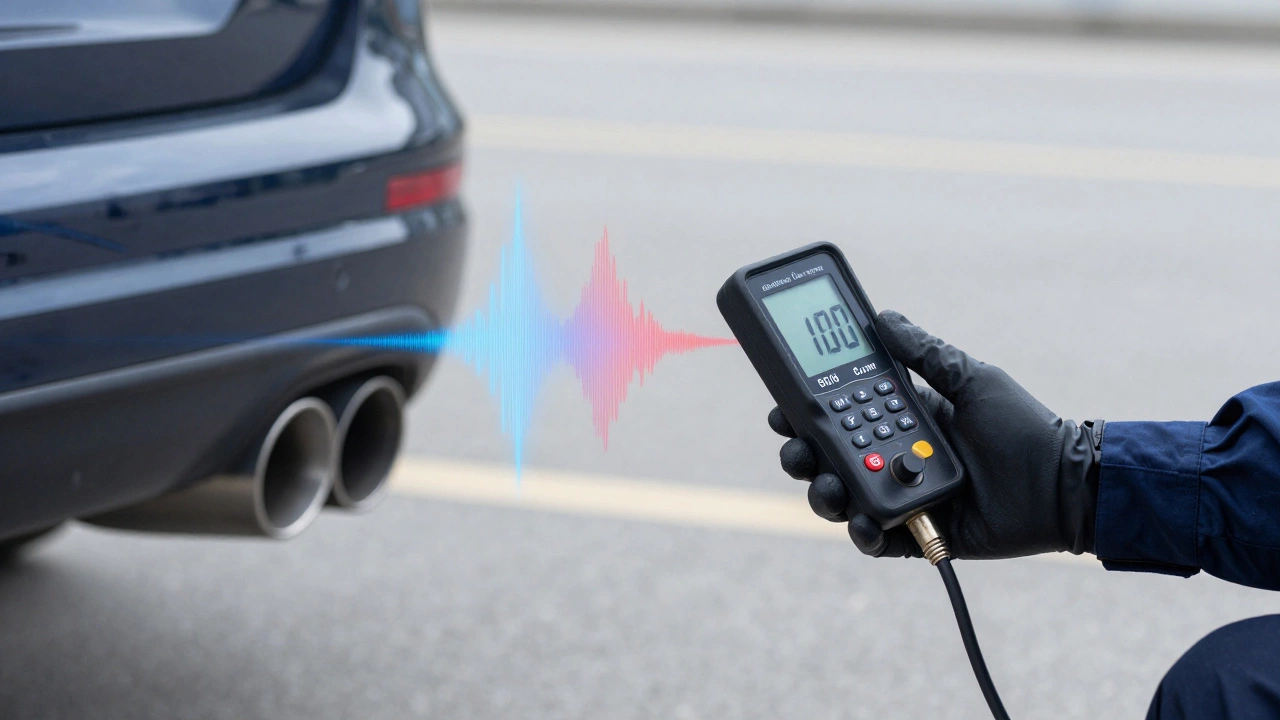
To understand if your car is legal, you first have to understand how noise is measured. Police and inspectors don't just 'listen'-they use a device called a Sound Level Meter is an electronic instrument used to measure sound pressure levels in decibels (dB).
Decibels aren't linear; they are logarithmic. This means that a jump from 80 dB to 90 dB isn't a small increase-it's actually ten times as much sound pressure. If your exhaust is just 3 dB over the limit, it might not sound that much louder to you, but on a meter, it's a clear violation. Most legal tests are conducted at a specific distance (often 50 centimeters or 1.5 meters) from the tailpipe at a set engine RPM.
Common Noise Limits and Standards
There is no single global number for exhaust loudness. Instead, laws usually fall into three categories: manufacturer limits, fixed decibel caps, and 'nuisance' laws. In many parts of the US and Europe, the law states that a modified exhaust cannot exceed the noise level of the original OEM Exhaust is the Original Equipment Manufacturer exhaust system that comes installed on a vehicle from the factory.
If your factory car was 75 dB and your new system is 85 dB, you're technically illegal in many jurisdictions, even if 85 dB is relatively quiet compared to a race car. In other areas, there's a hard ceiling. For example, some cities set a limit at 85 dB for passenger cars and 95 dB for motorcycles. If you cross that line, you're looking at a fine or a 'fix-it' ticket.
| Vehicle Category | Common Legal Range | Typical Violation Point | Common Result |
|---|---|---|---|
| Passenger Sedan | 70 - 80 dB | 85+ dB | Fine / Inspection |
| Performance Car | 80 - 90 dB | 95+ dB | Fix-it Ticket |
| Motorcycles | 80 - 95 dB | 100+ dB | Immediate Citation |
| Heavy Trucks | 85 - 100 dB | 110+ dB | Environmental Fine |
The Role of the Muffler and Catalytic Converter
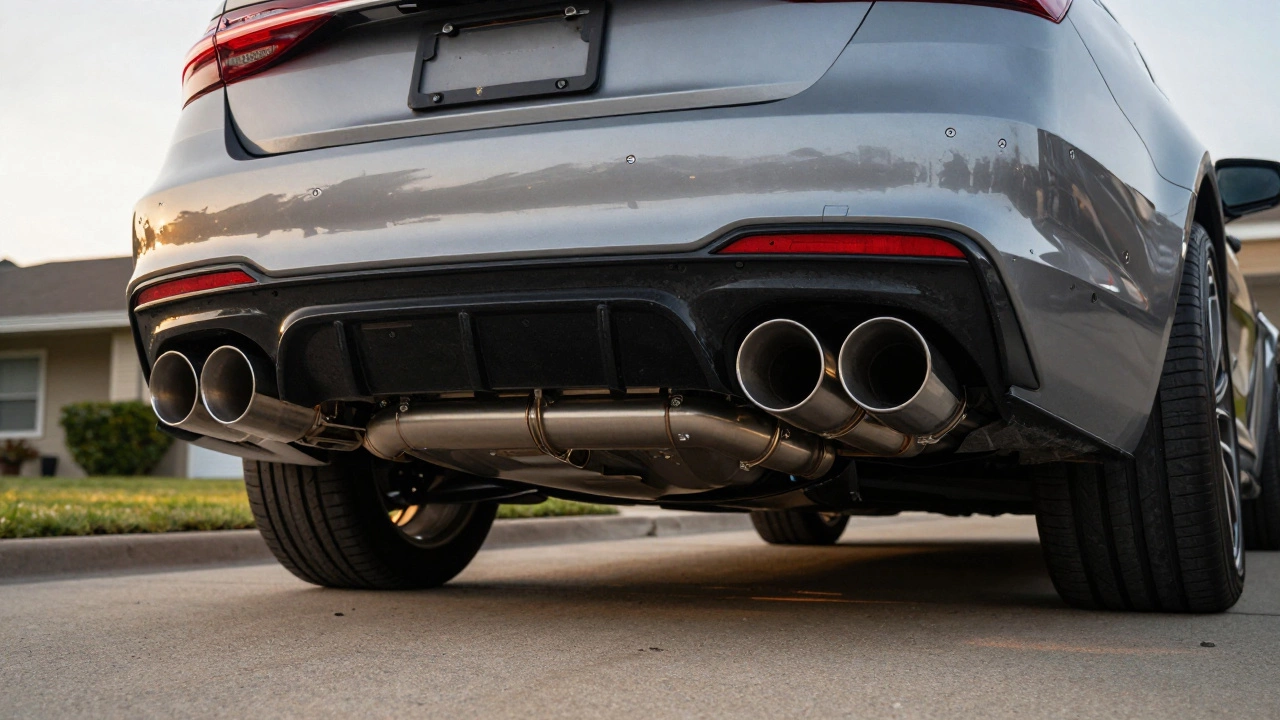
To keep things quiet, your car relies on a few key components. The Muffler is a device containing a series of chambers and perforated tubes designed to dampen the sound waves of exhaust gases. By forcing sound waves to bounce around and cancel each other out, the muffler drops the decibels significantly.
Then there is the Catalytic Converter is an emissions control device that converts toxic gases into less harmful pollutants using a chemical catalyst. While its main job is cleaning the air, it also acts as a slight baffle for sound. Removing this (often called a 'cat-delete') isn't just an environmental crime in most places; it's a fast way to make your car loud enough to attract every cop in a ten-mile radius.
Common Legal Pitfalls with Custom Exhausts
Many enthusiasts think that as long as they have a muffler, they are safe. That's a mistake. A 'glasspack' muffler or a high-flow performance muffler might technically be a muffler, but if it doesn't reduce the sound to the legal limit, it doesn't matter that it's there. You can still be cited for excessive noise.
Another issue is 'drone.' Drone is that humming sound you hear inside the cabin at highway speeds. While drone doesn't usually get you a ticket (because the cop isn't inside your car), it's a sign that your exhaust is resonating at a frequency that might be audible-and annoying-to others. Adding a Resonator is a section of exhaust piping designed to eliminate specific sound frequencies, reducing drone without sacrificing overall volume. is often the best way to keep the 'tone' of a custom build without hitting illegal volume levels.
How to Test Your Exhaust at Home
You don't have to wait for a police officer to tell you your car is too loud. You can do a rough check yourself, though keep in mind a smartphone app isn't as accurate as a professional meter.
- Download a reputable dB meter app on your phone.
- Find a flat, open area away from walls or fences (which reflect sound and give false readings).
- Hold the phone about 50cm from the exhaust tip.
- Have a friend hold the engine at a steady 2,500 RPM (or whatever your local law specifies).
- Note the peak reading. If you're over 90 dB, you're entering the 'danger zone' for most city ordinances.
Dealing with 'Nuisance' Laws
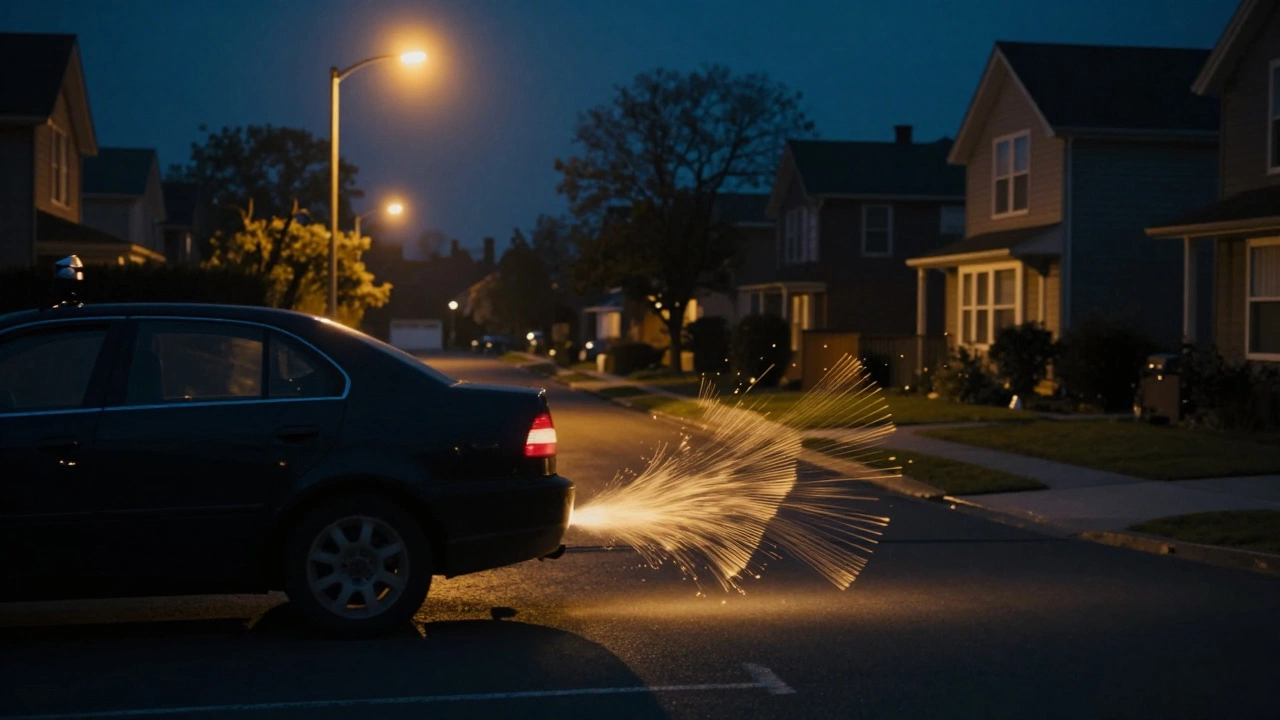
The scariest part of exhaust legality isn't the decibel limit-it's the 'disturbing the peace' or 'nuisance' laws. These are subjective. If an officer decides your car sounds 'unreasonably loud' for a residential area at 2 AM, they can ticket you regardless of whether you're at 85 dB or 105 dB. The context of exhaust noise laws often matters more than the actual number on a meter.
To avoid this, avoid 'anti-lag' pops, bangs, and flame maps in residential zones. Even if your exhaust system is technically within the dB limit, the sharp, impulsive noise of a backfire is often classified as a different type of violation entirely.
Can I be fined for a loud exhaust even if I have a muffler?
Yes. Having a muffler is not a 'get out of jail free' card. If the muffler is too small, high-flow, or poorly designed, the total noise output may still exceed the legal decibel limit for your vehicle or region. The law cares about the sound coming out, not the parts installed inside.
Does a 'Quiet' mode or valve system make an exhaust legal?
Exhaust valves that allow you to switch between loud and quiet modes are a great tool, but their legality varies. In some regions, if the car can be tested and pass in 'quiet' mode, it's fine. In others, any modification that allows the bypass of emission or noise controls is illegal, regardless of whether a switch exists.
What is the average legal decibel limit for cars?
While it varies by city and state, most passenger cars are expected to be between 75 and 85 decibels. Once you hit 90-100 dB, you are likely to attract police attention. Always check your local transport authority's website for the exact number in your area.
Will a louder exhaust improve my car's performance?
Not necessarily. While a high-flow exhaust can reduce backpressure and potentially increase horsepower, 'loudness' itself doesn't equal 'power.' Many loud exhausts are just designed to sound aggressive without providing any actual performance gain. For real gains, you need a system tuned to your engine's specific needs.
What happens if I get a 'fix-it' ticket for noise?
A fix-it ticket means you must bring the vehicle's noise level back into legal compliance and then have it inspected by a certified mechanic or police officer. Once you provide proof that the exhaust is now quiet enough, the ticket is usually dismissed or reduced to a small administrative fee.
Next Steps for Enthusiasts
If you're worried about your current setup, start by identifying where your sound is coming from. If it's a raspy, high-pitched sound, adding a resonator can clean up the tone without killing the volume. If it's simply too loud, consider a variable exhaust valve system that lets you stay quiet in the neighborhood and loud on the track.
For those starting a new build, always look for exhausts that come with a 'street legal' certification. This usually means the manufacturer has tested the system to ensure it stays within common dB limits. It might not be as aggressive as a straight pipe, but it's a lot better than spending your weekend at the courthouse fighting a noise violation.