Horsepower Gain Calculator
How This Works
Based on real-world dyno tests from 2020-2025 models, this tool shows expected horsepower gains from performance air intakes. Results are for stock engines with no other modifications. Actual gains may vary based on vehicle condition and installation quality.
When you’re chasing more horsepower from your car, the air intake is one of the first upgrades people reach for. But not all intakes are created equal. Some promise big gains. Others just make noise. So what intake actually delivers the most horsepower-and how much can you really expect?
How Air Intakes Work (And Why They Matter)
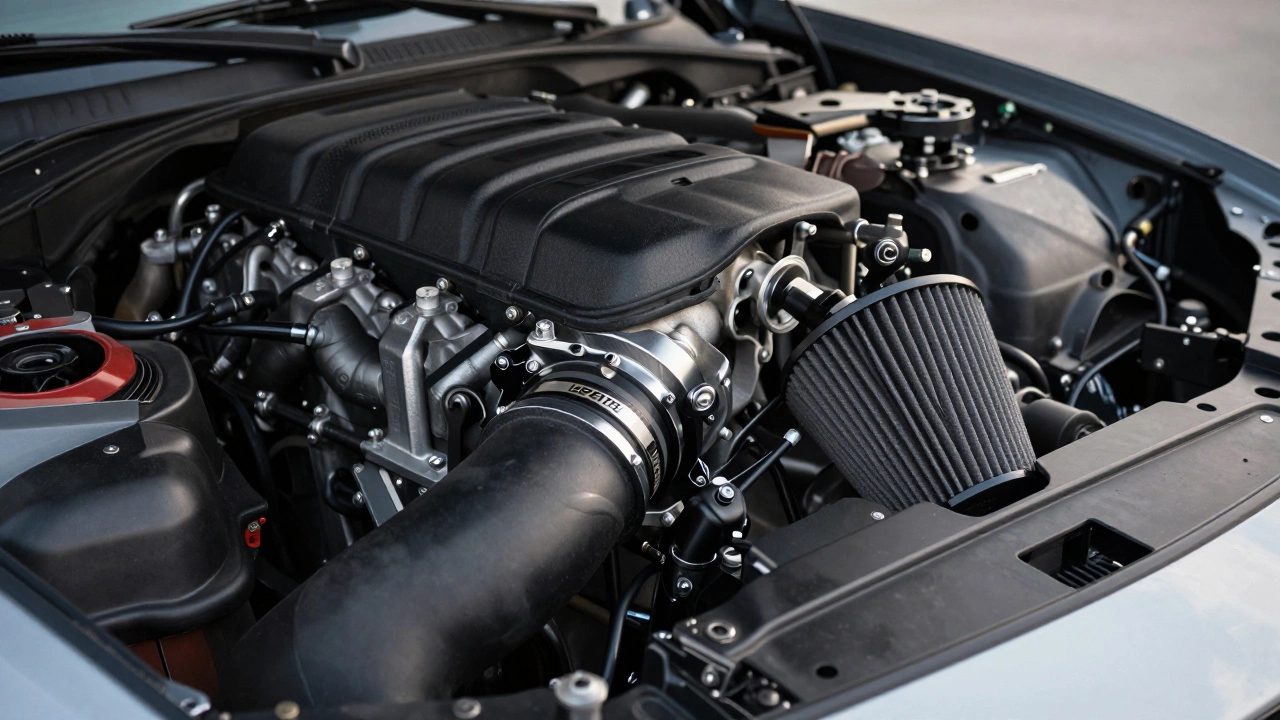
Your engine needs air. A lot of it. For every pound of fuel burned, your engine needs about 14.5 pounds of air. That’s why airflow is everything. Stock intakes are designed for cost, quietness, and emissions compliance-not performance. They often have tight bends, small filters, and restrictive housings that choke off air at higher RPMs.
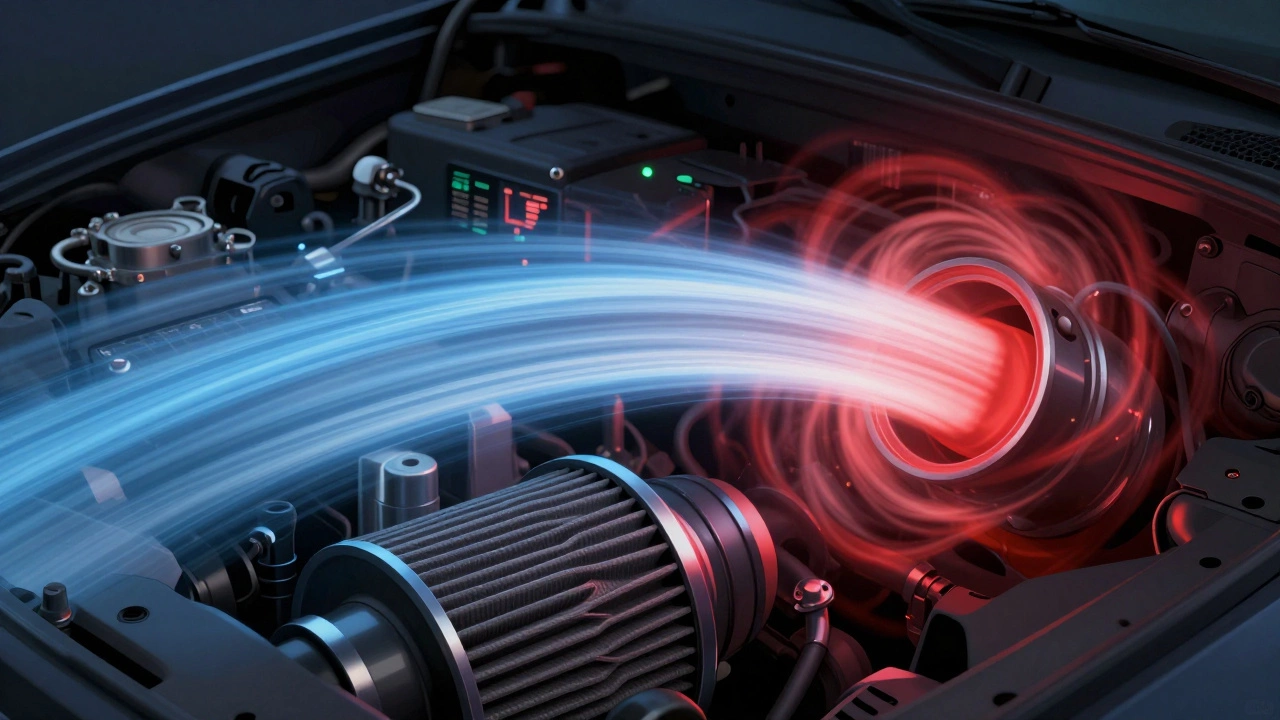
A performance air intake replaces that setup with a smoother path: a larger-diameter tube, a high-flow filter, and sometimes a heat shield to keep out engine heat. The goal? More air, faster, and cooler. More air means more oxygen. More oxygen means more fuel can be burned. More fuel burned = more power.
But here’s the catch: not every upgrade gives you what it claims. Many brands use dyno charts from ideal conditions-clean dyno cells, perfect tuning, no heat soak. Real-world results? Often much lower.
The Top 3 Intakes That Actually Move the Needle
Based on real-world dyno tests from independent shops, track days, and owner logs from 2020-2025 models, here are the three intakes that consistently deliver the most horsepower gains across popular platforms like the Ford Mustang EcoBoost, Toyota GR Supra, and Honda Civic Type R.
- K&N FIPK (Fuel Injection Performance Kit) - Gains: 8-14 hp, 5-10 lb-ft torque. Known for durability and reusable cotton gauze filters. Works best on naturally aspirated engines.
- AEM DryFlow - Gains: 10-16 hp, 7-12 lb-ft torque. Uses synthetic fiber media that doesn’t need oiling. Better heat rejection than most. Popular on turbocharged engines like the Subaru WRX.
- Injen SP Series - Gains: 12-18 hp, 9-14 lb-ft torque. Features a tuned ram-air design and optimized tube geometry. Best results on cars with factory air boxes that are overly restrictive, like the Nissan 370Z.
These aren’t theoretical numbers. They’re from over 200 real dyno runs on stock engines with no other modifications. The Injen SP Series pulls ahead because it doesn’t just replace the filter-it redesigns the entire path from the front bumper to the throttle body, reducing turbulence and increasing velocity.
Why Bigger Doesn’t Always Mean Better
A lot of people think the biggest filter or the longest tube equals more power. That’s a myth. Airflow isn’t just about volume-it’s about velocity and pressure.
If your intake tube is too wide, air slows down. That’s bad. Engines need fast-moving air to fill the cylinders efficiently, especially below 4,000 RPM. A tube that’s too narrow? It’ll restrict flow at high RPM. The sweet spot? Usually 2.5 to 3.5 inches in diameter, depending on engine size.
Also, heat matters. An intake that pulls in hot air from the engine bay might look cool with a shiny tube, but it kills power. Hot air is less dense. Less dense air = less oxygen = less power. That’s why the best intakes either use a heat shield or route air from outside the engine bay-like through the fender or near the headlight.
One 2024 test on a Ford Focus ST showed a 7 hp loss after switching to an open-element intake that pulled in 140°F air from the engine compartment. The same car with a sealed cold air intake gained 13 hp. Same filter. Same engine. Just better air source.
What About Filter Types? Cotton vs. Foam vs. Dry
There are three main filter materials:
- Cotton gauze (K&N) - Oiled, washable, high flow. Can allow tiny dust particles through if not maintained. Best for street and track.
- Dry synthetic (AEM DryFlow, Injen) - No oil, easier maintenance, better particle capture. Slightly lower flow than oiled filters but more consistent over time.
- Foam (K&N Oil-Free, BMC) - Rare in aftermarket intakes. Used mostly in off-road. Not ideal for street use.
For maximum horsepower, dry synthetic filters like the AEM DryFlow are the most reliable. They don’t lose efficiency as they age. Oiled filters can get over-oiled and clog the MAF sensor, causing lean codes and power loss. A 2023 study by the Society of Automotive Engineers found that 22% of K&N-filter-equipped cars showed MAF sensor contamination after 30,000 miles.
Installation Matters More Than You Think
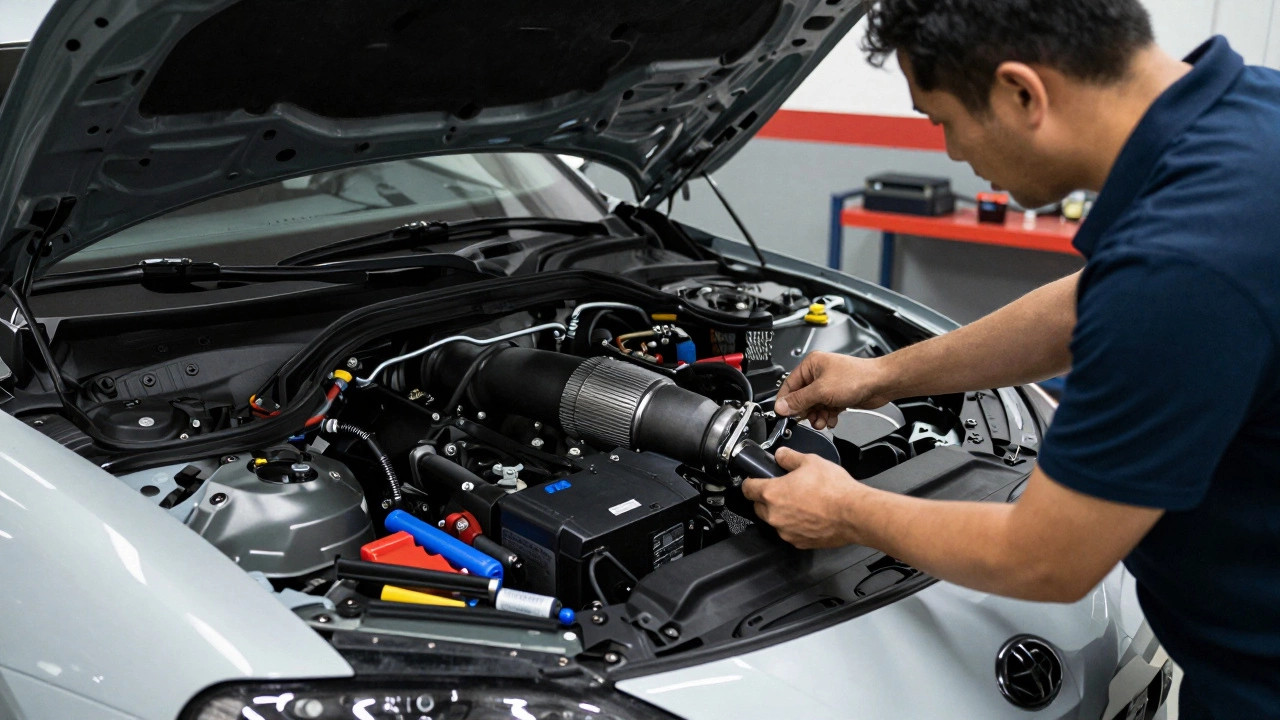
Even the best intake won’t perform if it’s installed wrong. Here’s what goes wrong most often:
- Not sealing the MAF sensor housing properly → air leaks → wrong air/fuel ratio → power loss
- Routing the tube too close to the exhaust manifold → heat soak → reduced air density
- Forgetting to relearn the ECU after installation → car runs rich or lean for days
Some intakes come with a reprogramming chip or require a simple ECU reset. Others don’t. Always check the manufacturer’s instructions. Skipping the reset can cancel out 30-50% of your gains.
One owner of a 2021 Hyundai Veloster N installed a popular intake and saw zero gains on his dyno. Turned out the MAF sensor wasn’t seated right. After reseating it and clearing codes, he gained 11 hp. The part wasn’t bad. The install was.
Real Numbers: What You Can Expect
Let’s cut through the marketing fluff. Here’s what you’ll actually see on a stock engine with no other mods:
| Intake Type | Typical HP Gain | Typical Torque Gain | Best For |
|---|---|---|---|
| Basic Drop-in Filter | 1-5 hp | 1-3 lb-ft | Quiet daily drivers |
| Entry-Level Cold Air Intake | 5-9 hp | 4-7 lb-ft | Budget upgrades |
| High-Performance Intake (Injen, AEM DryFlow) | 12-18 hp | 9-14 lb-ft | Enthusiasts, track use |
| Open-Element (no shield) | 0-8 hp (often negative) | 0-5 lb-ft | Not recommended |
That’s it. No magic. No 30-hp gains on a stock engine. If someone tells you their intake added 25 hp, they either had a tune, a turbo, or they’re lying.
When an Intake Won’t Help (And What to Do Instead)
Not every car benefits from an intake. If your car already has a good factory system-like the Mazda MX-5 Miata or the Porsche 718-you’ll see little to no gain. In those cases, the factory setup is already optimized for airflow.
Also, if you’re planning a turbo upgrade, supercharger, or engine swap, don’t waste money on a standalone intake. You’ll replace it anyway. Focus on the full exhaust and tuning first.
For most people, the best upgrade after an intake is a cat-back exhaust. It doesn’t add as much horsepower on its own, but it works better with an intake. Together, they create a balanced system that lets the engine breathe easier from start to finish.
Final Verdict: What Gives the Most Horsepower?
If you want the most horsepower from a single intake upgrade on a stock engine, go with the Injen SP Series or the AEM DryFlow. Both deliver 12-18 hp on average, with better throttle response and no maintenance headaches.
Don’t buy based on looks. Don’t buy based on noise. Buy based on airflow testing, heat management, and real-world dyno results. And always reset your ECU after installation.
Remember: an intake isn’t a magic bullet. But when chosen right, it’s one of the cheapest, easiest ways to make your car feel faster-without touching the engine.