LED Headlight Safety & Visibility Calculator
Calculate the potential visibility improvement and stopping distance reduction when upgrading from Halogen to LED headlights based on lumen output.
Results Analysis
At km/h, gaining meters of visibility allows approximately more seconds to react to hazards. This can reduce your braking distance by up to meters.
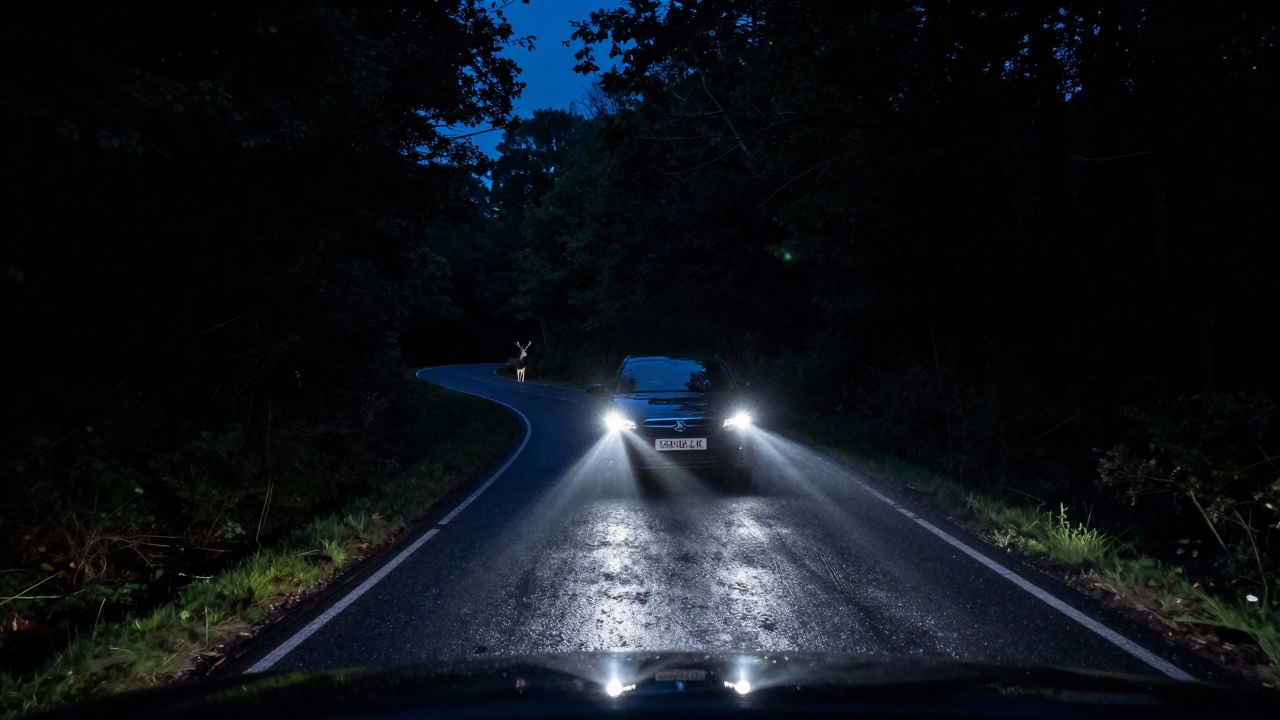
Imagine cruising down a dark country road. Your eyes are tired. Suddenly, a deer steps out from the bushes. In that split second, your headlights aren't just about seeing-they're about surviving. This is why so many drivers ask: are LED lights good for night driving? The short answer is yes, but with some serious caveats you need to know before swapping out your bulbs.
We’ve all been there. You’re stuck behind a truck, or maybe you’re trying to spot a pothole in the rain. Traditional halogen bulbs feel like they’re dimming the world around you. LEDs promise brightness, efficiency, and modern style. But do they actually make you safer at night, or do they just blind everyone else on the road?
How LED Headlights Actually Work
To understand if LEDs are right for you, you first need to know what’s happening inside that bulb. Unlike old-school halogens that heat up a filament until it glows, Light Emitting Diodes (LEDs) generate light through electroluminescence. Essentially, electrons move across a semiconductor material, releasing energy as photons. This process is incredibly efficient.
Think of it like this: A standard Halogen bulb wastes about 90% of its energy as heat. An LED throws almost all its energy into visible light. This means less strain on your car’s electrical system and more lumens per watt. For night driving, this efficiency translates to brighter beams without draining your battery or overheating your headlight housing.
However, efficiency isn’t the only factor. The way LEDs emit light is directional. Halogens scatter light in every direction, requiring reflectors to bounce it forward. LEDs shoot light straight ahead. This design allows for sharper cutoff lines-the distinct boundary between where your light hits the road and where it stops to avoid blinding oncoming traffic. When done correctly, this makes LEDs superior for visibility.
The Visibility Advantage: Seeing Further and Clearer
Let’s talk about the main job of headlights: helping you see. Here is where LEDs really shine. Most factory-installed halogen bulbs produce around 1,000 to 1,500 lumens. Quality aftermarket LEDs can push 3,000 to 6,000 lumens per pair. That’s not just a slight improvement; it’s a massive difference in how much of the road you can illuminate.
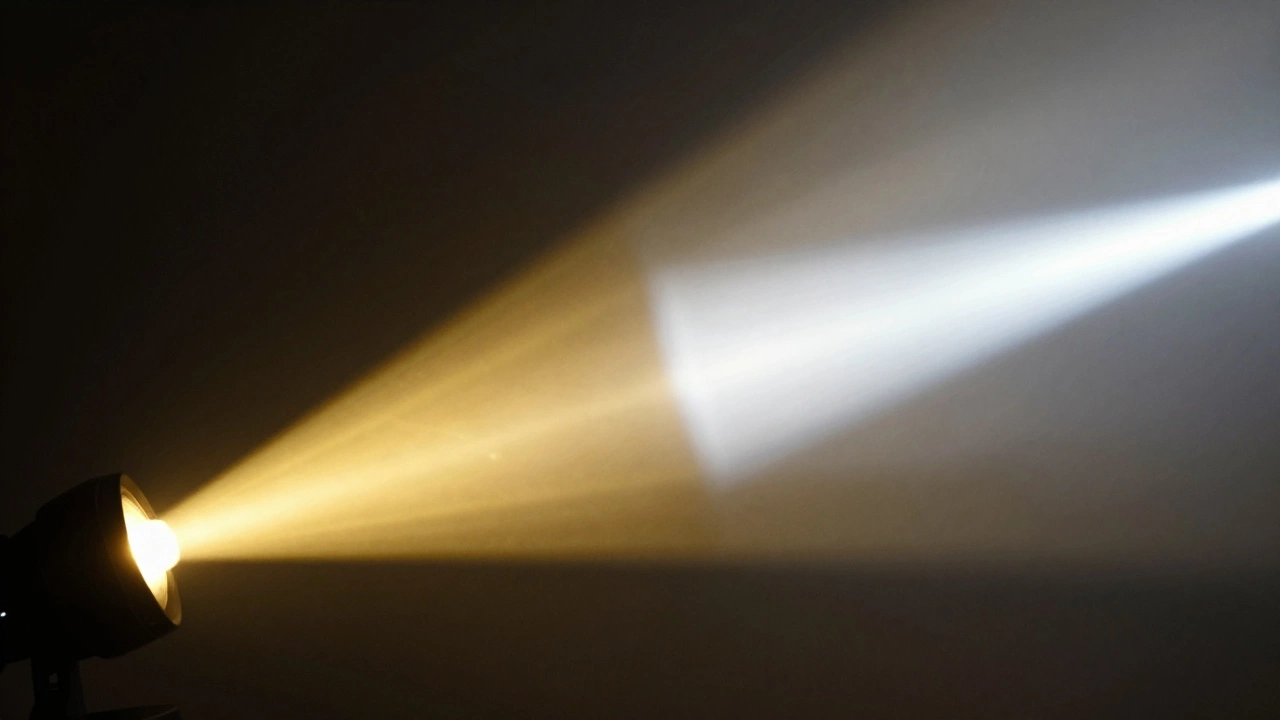
- Color Temperature: Halogens usually sit around 3,000 Kelvin (K), giving off a yellowish tint. LEDs typically range from 5,000K to 6,000K, producing a crisp white light. This closer-to-daylight spectrum reduces eye strain and helps your brain process visual information faster.
- Beam Pattern: Because LEDs are smaller, manufacturers can place them precisely within the headlight housing. This creates a tighter, more focused beam that reaches further down the road without scattering into the trees above.
- Instant On: Halogens take a moment to reach full brightness. LEDs are instant. If you flash your high beams to signal another driver, an LED does it immediately.
In real-world testing, drivers switching to quality LEDs report being able to spot obstacles 10-15 meters earlier than with halogens. At highway speeds, those extra meters can mean the difference between a safe stop and a collision.
The Glare Problem: Why Some LEDs Are Dangerous
Here is the catch. Not all LED upgrades are created equal. In fact, many cheap aftermarket LED kits sold online are nightmares for night driving. Why? Because they create excessive glare.
Glare happens when light scatters outside the intended beam pattern. If your LED bulb is too long for the housing, or if the diodes are positioned incorrectly, the light bounces off the reflector in random directions. This sends a harsh, blinding cone of light directly into the eyes of oncoming drivers.
This isn’t just annoying; it’s dangerous. Temporary blindness from glare can last several seconds. If an oncoming driver is blinded by your poorly aligned LEDs, they might swerve into your lane. We’ve seen this happen too often on suburban streets. The person installing the lights thinks they’re winning because their view is clearer, but they’re actually endangering everyone else.
Furthermore, some cheap LEDs use blue-tinted filters to look "cooler." These filters block actual light output while increasing the harshness of the remaining beam. Avoid anything labeled "Ice Blue" or higher than 6,000K. Stick to pure white (5,000K-5,500K) for the best balance of visibility and comfort.
LED vs. HID: Which Is Better for Night Driving?
You might also be wondering about HID (High-Intensity Discharge) lights. HIDs were the premium choice before LEDs took over. They use xenon gas and an electric arc to create light. They are bright, but they have flaws.
| Feature | Halogen | HID (Xenon) | LED |
|---|---|---|---|
| Brightness (Lumens) | 1,000 - 1,500 | 2,500 - 3,500 | 3,000 - 6,000+ |
| Lifespan | 1,000 hours | 3,000 hours | 20,000+ hours |
| Energy Use | High | Moderate | Low |
| Warm-up Time | Instant | 2-3 seconds | Instant |
| Glare Risk | Low | High (if misaligned) | Medium (depends on fit) |
HIDs are powerful, but they suffer from "arc tube positioning" issues. The tiny glass tube inside an HID bulb must be perfectly centered in the reflector. If it’s off by even a millimeter, the beam scatters. LEDs don’t have this problem because the diode itself is the light source, and it’s solid-state. No fragile glass tubes to break or misalign.
Additionally, HIDs require a ballast-a bulky box that converts voltage. This takes up space and adds complexity. LEDs plug directly into your existing wiring harness (usually). For most drivers upgrading from halogens, LEDs offer a better balance of ease of installation, longevity, and performance.
Legal and Safety Considerations in Australia
Living in Brisbane, I’ve noticed how strict our local regulations are regarding vehicle modifications. In Australia, under the Australian Design Rules (ADRs), headlight modifications are heavily regulated. Simply buying a box of LEDs and plugging them in isn’t always legal.
If your car originally came with halogen bulbs, replacing them with LEDs may void your registration unless the new bulbs are certified for that specific socket and housing. The key phrase here is "fit-for-purpose." If the LED kit doesn’t replicate the exact light distribution of the original halogen bulb, it fails inspection.
Always check two things: 1. Does the LED kit come with an E-mark or SAI Global certification? 2. Does it fit perfectly in your housing without modification? If you have to cut wires, drill holes, or force the bulb in, it’s likely not street-legal. Police in Queensland are increasingly using laser photometers to measure headlight intensity and alignment. Getting fined $400+ for illegal lights is a headache no one wants.
Installation Tips for Maximum Safety
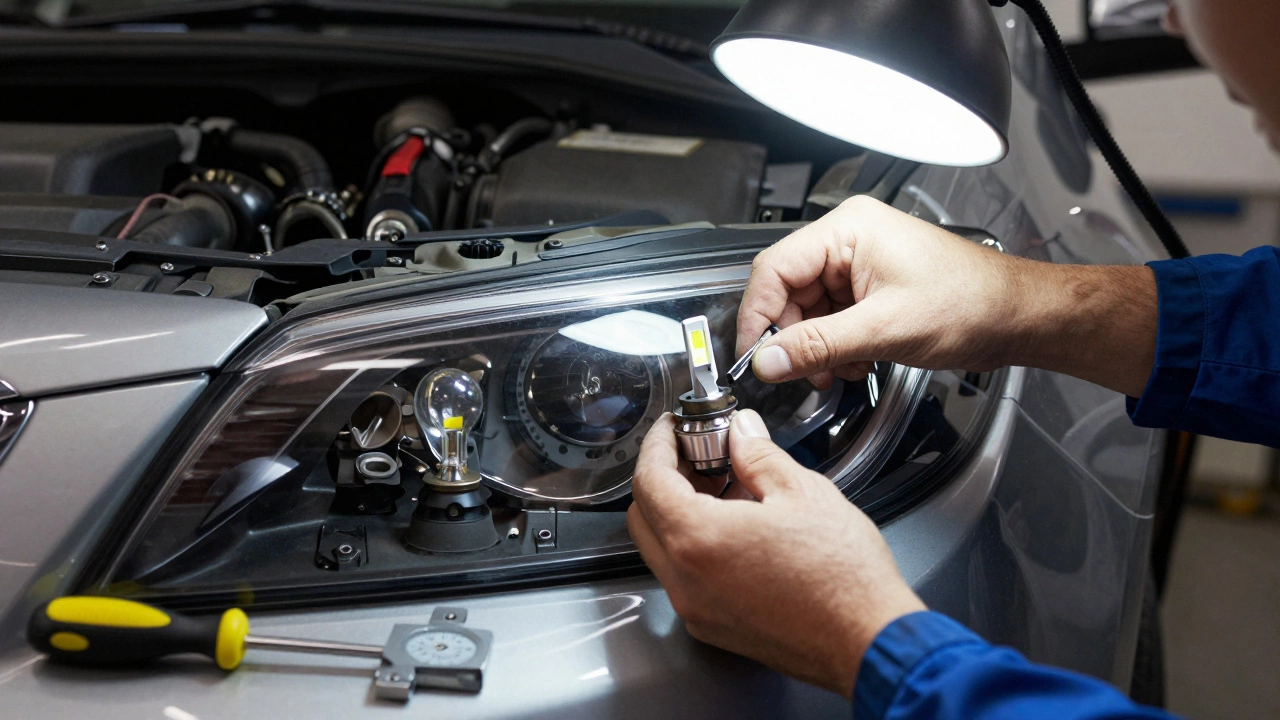
If you decide to go ahead with LED upgrades, proper installation is non-negotiable. Here is how to ensure your lights help rather than harm.
- Check the Fitment: Remove your old halogen bulb. Compare its length and base size to the LED. If the LED is longer, it will sit deeper in the reflector, causing glare. Look for "slim" or "compact" LED models designed for tight housings.
- Cooling Matters: LEDs run hot at the diode junction. They need fans or heatsinks. Ensure the fan doesn’t vibrate excessively, which can loosen connections over time. Place the heatsink away from plastic components to prevent melting.
- Align the Beams: After installation, park facing a flat wall. Turn on the lights. Mark the center of the beam. It should be slightly lower than the height of the headlights. If the beam is too high, adjust the screw on top of the headlight assembly until the cutoff line is sharp and level.
- Test for Flickering: Some cars have CANbus systems that detect low power draw and trigger error codes. If your lights flicker, you may need resistors or a decoder module. Don’t ignore this-it affects reliability.
When Should You Stick with Halogens?
It’s not all sunshine and rainbows for LEDs. There are scenarios where sticking with halogens-or even looking at factory HID/LED projects-is smarter.
If your car has projector lenses (the clear bubble inside the headlight), LEDs work beautifully. Projectors focus light tightly, minimizing glare. But if you have older reflector-style housings (the silver bowl shape), aftermarket LEDs often struggle to focus properly. In these cases, the scattered light can be worse than the original halogen.
Also, consider the cost. A quality LED kit costs $100-$200. A set of premium halogen bulbs costs $20-$40. If you drive mostly during the day or in well-lit city centers, the upgrade might not be worth the investment. Save the LEDs for rural drives, unlit suburbs, or frequent night commuters.
Final Thoughts on Night Driving Safety
So, are LED lights good for night driving? Absolutely-if chosen and installed correctly. They offer superior brightness, better color temperature, and longer life than halogens. They reduce eye strain and help you see hazards sooner.
But remember: Brighter isn’t always better. Focused is better. Always prioritize beam pattern and legality over raw lumen counts. Test your lights regularly, keep them clean, and never compromise on alignment. Your safety, and the safety of others, depends on it.
Do LED headlights blind other drivers?
Cheap or improperly installed LED kits can definitely blind other drivers due to poor beam focus. High-quality LEDs designed for your specific headlight housing, when aligned correctly, should not cause excessive glare. Always choose brands with precise optical engineering and ensure the bulb fits snugly in the socket.
Are LED headlights legal in Australia?
It depends. If your car was factory-equipped with halogens, replacing them with LEDs may violate Australian Design Rules (ADR) unless the LEDs are certified replacements for that specific socket. Check for SAI Global certification and ensure the light pattern matches the original equipment manufacturer (OEM) specifications to pass inspections.
What Kelvin rating is best for night driving?
A color temperature between 5,000K and 5,500K is ideal. This produces a crisp white light similar to daylight, which reduces eye fatigue and improves contrast. Avoid temperatures above 6,000K, as the blue tint can scatter in fog or rain, reducing visibility and increasing glare.
How long do LED headlights last?
Quality LED headlights typically last between 20,000 to 50,000 hours. This is significantly longer than halogen bulbs (approx. 1,000 hours) and HID bulbs (approx. 3,000 hours). With average daily use, a good LED kit could last the lifetime of your vehicle.
Can I install LED bulbs myself?
Yes, most LED bulb swaps are DIY-friendly and take about 30-60 minutes. However, you must ensure proper fitment and alignment. If your car has complex wiring or CANbus errors, you might need professional assistance to add decoders or resistors to prevent flickering and dashboard warnings.