Exhaust Backfire Risk Calculator
Air-Fuel Ratio Calculator
Enter your current air-fuel ratio to see if it's causing backfire risk.
Ever hear a loud bang or pop from your car’s exhaust when you let off the gas? It might sound cool-like a race car-but is it actually bad? For owners of custom exhaust systems, backfires are common. But they’re not always harmless. Understanding what causes them and whether they’re a problem can save you money, prevent damage, and keep your ride running right.
What Is Exhaust Backfire?
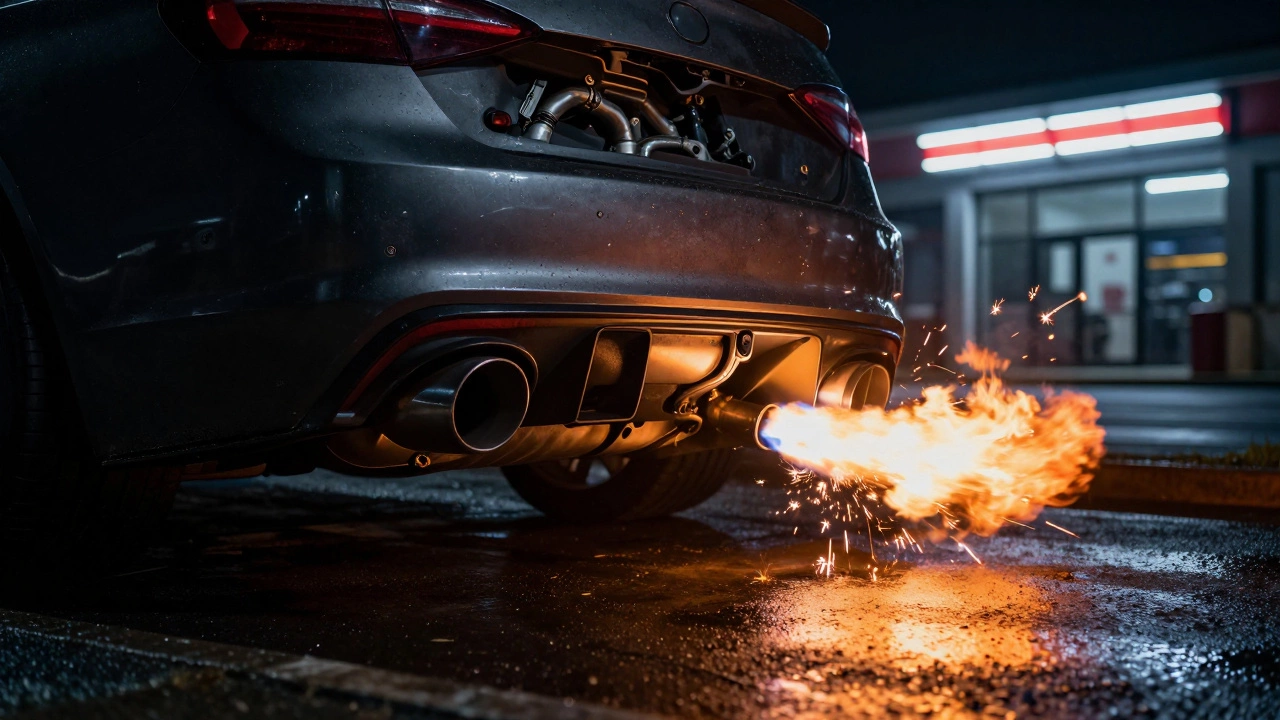
Exhaust backfire happens when unburned fuel ignites in the exhaust system instead of inside the engine’s combustion chamber. You’ll hear it as a sharp pop, sometimes followed by a second bang. It can happen during deceleration (when you lift off the throttle), during acceleration, or even at idle. The sound comes from the flame traveling backward through the exhaust pipe and igniting fuel-air mixtures outside the engine.
This isn’t just noise. Backfires are a symptom of something out of balance in your fuel-air mixture or timing. On a stock car, they’re rare. But with custom exhausts-especially those paired with aggressive tuning-they become more frequent. And that’s where confusion sets in.
Why Do Custom Exhausts Cause Backfires?
Custom exhaust systems don’t cause backfires on their own. They’re just pipes. But they’re often installed alongside other modifications:
- High-flow catalytic converters or catless systems
- Aftermarket ECU tunes that lean out the fuel mixture
- Performance air intakes that increase airflow
- Long-tube headers that change exhaust gas flow dynamics
When you remove the stock catalytic converter or install a less restrictive exhaust, exhaust gases flow faster. That changes how pressure builds and releases in the system. If your engine is tuned to run lean (less fuel, more air) for more power, unburned fuel can slip past the combustion chamber and into the hot exhaust. Then-pop.
It’s like leaving the gas on in your kitchen stove and lighting it. The flame doesn’t stay at the burner-it travels back through the pipe. That’s what’s happening in your exhaust.
Is Exhaust Backfire Dangerous?
Not always. Occasional, mild backfires during deceleration are common on performance cars and usually harmless. But repeated or loud backfires can be serious. Here’s what to watch for:
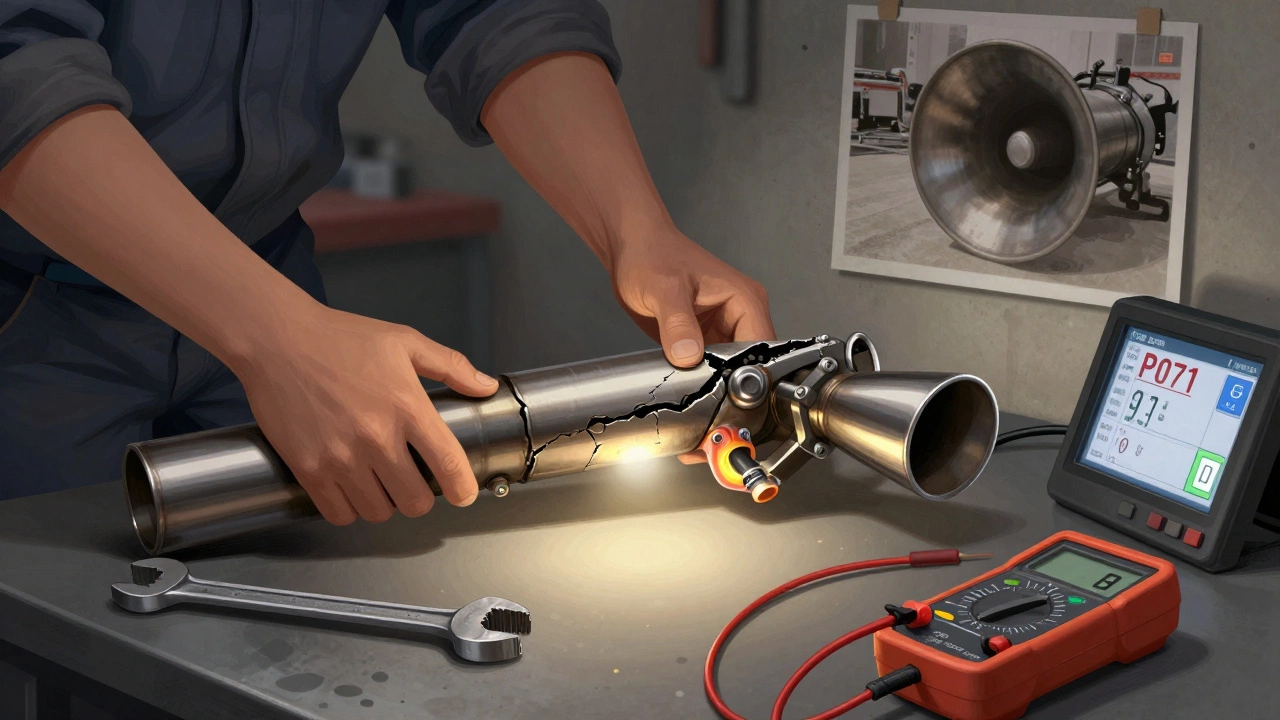
- Damage to exhaust components: Repeated explosions can crack headers, melt catalytic converters (even aftermarket ones), or warp exhaust valves.
- Fire risk: If fuel is pooling in the exhaust and igniting near flammable materials (like insulation, wiring, or dry grass under your car), you’ve got a real hazard.
- Engine performance loss: If fuel is burning in the exhaust instead of the cylinder, you’re losing power and efficiency. You’re not getting the full benefit of your tune.
- Check engine light: Modern cars log misfires and lean conditions. Frequent backfires will trigger error codes like P0300 (random misfire) or P0171 (system too lean).
One owner in Brisbane reported a $2,400 repair bill after his custom catless exhaust caused repeated backfires that melted his downstream O2 sensor and warped two exhaust valves. He thought the noise was "cool." It wasn’t.
When Is Backfire Acceptable?
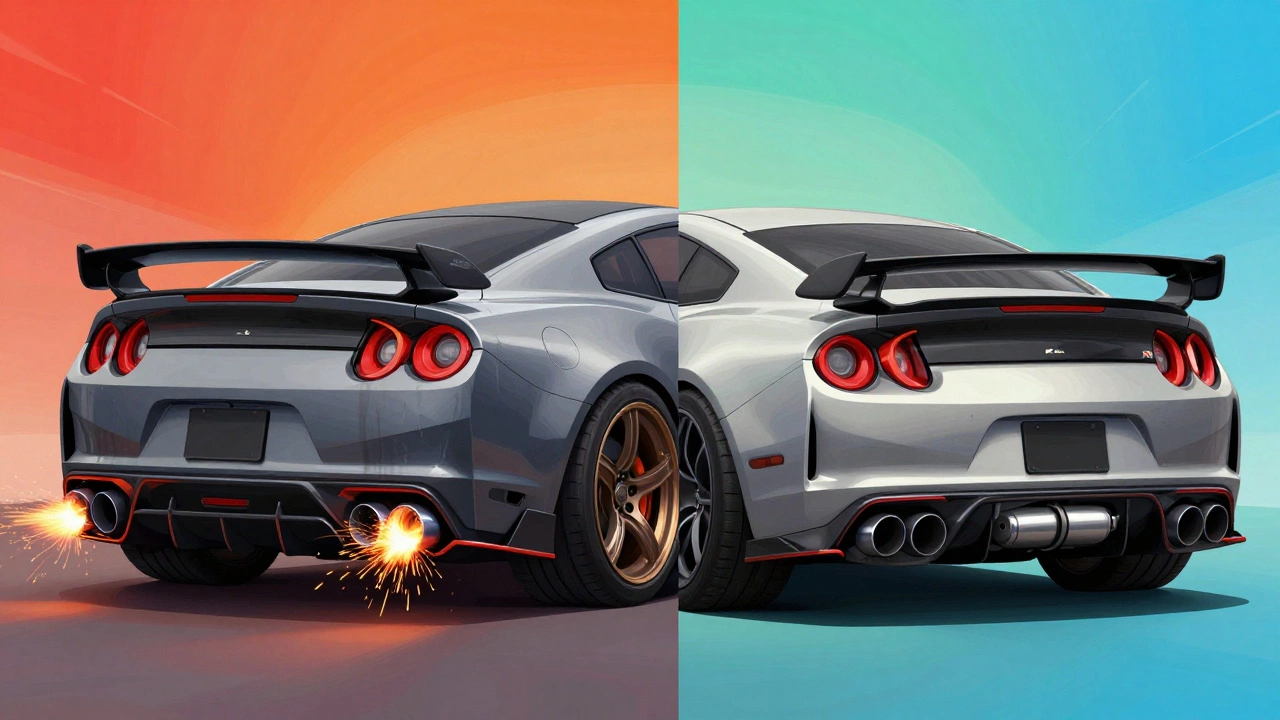
Some drivers actually tune their cars to backfire on purpose-especially for drag racing or show cars. In those cases, it’s intentional. You’ll see it on YouTube with loud pops on gear shifts. That’s done with a specific fuel cut strategy: the ECU cuts fuel momentarily during deceleration, then injects a burst of fuel into the hot exhaust to create a controlled explosion.
But here’s the catch: that’s not a mistake. It’s a programmed feature. If your car wasn’t tuned for it, and you’re getting backfires randomly, you’re not showing off-you’re risking damage.
How to Fix or Prevent Backfires
If you’re getting unwanted backfires, here’s what to check:
- Check your tune: A lean air-fuel ratio (AFR) is the #1 cause. Most street cars run best at 13.5:1 to 14.7:1 AFR under load. If your tune is running 15:1 or higher, you’re too lean. Get your car re-tuned by a shop experienced with your exhaust setup.
- Inspect for exhaust leaks: Air leaking into the exhaust system (from a cracked header or loose gasket) can cause lean conditions and trigger backfires. Listen for hissing sounds near the manifold.
- Verify ignition timing: If timing is too advanced, combustion can continue after the exhaust valve opens. This dumps unburned fuel into the pipe. A timing issue is less common but still possible.
- Test your O2 sensors: If your upstream or downstream oxygen sensors are faulty, the ECU can’t adjust fuel properly. Replace them if they’re older than 80,000 km.
- Consider a catalytic converter: Even performance cars benefit from a high-flow cat. It reduces backfire risk and helps with emissions. Plus, it’s often required for legal street use in Australia.
Don’t just "tune it louder." A good tuner will balance power, reliability, and safety. A shop in Brisbane that specializes in custom exhausts told me: "If your car backfires every time you lift off the throttle, you’re not fast-you’re broken."
Legal and Safety Concerns
In Australia, modified exhausts must meet noise and emissions standards. The Road Transport (Vehicle Registration) Regulation 2023 limits exhaust noise to 95 decibels at 20 meters. Repeated backfires often exceed that-especially with open headers.
Police in Queensland and New South Wales have started using handheld decibel meters on modified cars. A loud, popping exhaust can get you pulled over-not just for noise, but because it’s a sign of unsafe tuning. In some cases, vehicles have been deemed unroadworthy.
Also, if you’re caught with a catless exhaust and get into an accident, your insurance company might deny your claim. They’ll argue the modification increased risk.
Bottom Line: Is It Bad?
Occasional backfires? Maybe not. Frequent, loud ones? Yes. It’s not about the sound-it’s about what’s causing it. If your custom exhaust is paired with a tune that’s too lean, you’re asking for trouble. Damage to valves, sensors, or headers can cost thousands. And you might get fined or even lose registration.
Backfires aren’t a badge of honor. They’re a warning sign. If you want that aggressive sound, get it right-with proper tuning, quality parts, and professional setup. Don’t let the noise fool you. A healthy engine doesn’t explode out the back.
Is exhaust backfire normal on performance cars?
Mild backfires during deceleration can be normal on heavily modified cars with aggressive tunes, especially those with catless exhausts. But if it happens frequently, loudly, or at idle, it’s a sign of a problem-usually a lean air-fuel mixture or faulty tuning. It’s not something you should ignore.
Can backfires damage my engine?
Yes. Repeated backfires can overheat and warp exhaust valves, crack headers, melt catalytic converters, or damage O2 sensors. In extreme cases, the pressure from explosions can even damage the exhaust manifold or cause a fire. It’s not just about noise-it’s about mechanical stress.
Do I need a catalytic converter with a custom exhaust?
For street use in Australia, yes. Even high-flow catalytic converters are legal and help reduce backfires by burning off excess fuel before it exits. Catless systems are popular for racing, but they increase the risk of backfires and are often illegal on public roads. They also trigger check engine lights and can void insurance.
Why does my car backfire only when I let off the gas?
This is the most common type of backfire and happens because the throttle closes, cutting off air. But if the ECU is still injecting fuel (or your tune doesn’t cut fuel fast enough), unburned fuel flows into the hot exhaust and ignites. It’s called a deceleration backfire and is usually caused by a lean condition or poor fuel cut strategy.
Can I tune out backfires myself?
Only if you have the right tools and experience. Most aftermarket ECUs (like Haltech, Motec, or Link) let you adjust fuel maps and decel fuel cut settings. But without a wideband O2 sensor and dyno time, you’re guessing. Most drivers should leave this to a professional tuner who’s worked with your exact setup.
Are backfires illegal in Australia?
Not directly, but the conditions that cause them often are. If your exhaust is too loud (over 95 dB), lacks a catalytic converter, or causes emissions violations, you can be fined or have your registration revoked. Police can also deem your car unroadworthy if backfires indicate unsafe tuning.
What to Do Next
If you’ve got a custom exhaust and are hearing pops, don’t assume it’s fine. Grab a friend, park on a quiet street, and listen. Does it happen every time you lift off? Is it getting louder? Is your check engine light on? If yes to any, it’s time to get it checked.
Talk to a reputable tuner who’s worked with your car model and exhaust brand. Ask them about AFR targets under deceleration. Ask if your setup is street-safe. Don’t let pride or noise override common sense. A quiet, reliable engine is always better than a loud, broken one.