LED Headlight Compatibility Checker
Assess Your Vehicle Setup
Result Title
Result description goes here.
It’s a Friday night in Brisbane, the humidity is high, and you’re stuck behind a truck on the outskirts of the city. Your stock halogen beams are doing nothing but illuminating the road directly in front of your bumper. You’ve seen the ads for those bright white LED headlight bulbs that promise to double your visibility. The box says "Plug and Play." It sounds easy. But before you drop $80 on a pair of LEDs and swap them into your car’s existing housing, you need to know one critical thing: does your headlight housing actually support them?
The short answer is yes, you can physically put LED bulbs in most OEM (Original Equipment Manufacturer) headlights. They fit into the socket. They plug in. But just because they fit doesn’t mean they work well-or safely. In many cases, swapping a halogen bulb for an LED in a standard reflector housing creates a mess of scattered light, blinding oncoming traffic, and leaving you with worse visibility than when you started.
Why Physical Fit Doesn't Mean Optical Fit
The biggest misconception in automotive lighting is that brightness equals visibility. When manufacturers designed your car’s headlight assembly years ago, they engineered it around a specific light source: the halogen filament. That tiny tungsten wire inside a glass tube has a precise focal point. The reflector behind it is curved mathematically to catch that light and throw it forward in a tight, controlled beam pattern.
Halogen bulbs emit light from a single, small point. LEDs, however, are different. An LED bulb consists of multiple diodes mounted on a small circuit board or emitter array. This emitter is often wider and longer than a halogen filament. If you place this larger light source into a reflector designed for a pinpoint source, the light reflects off the wrong angles. Instead of throwing a sharp beam down the road, the light scatters upward and sideways.
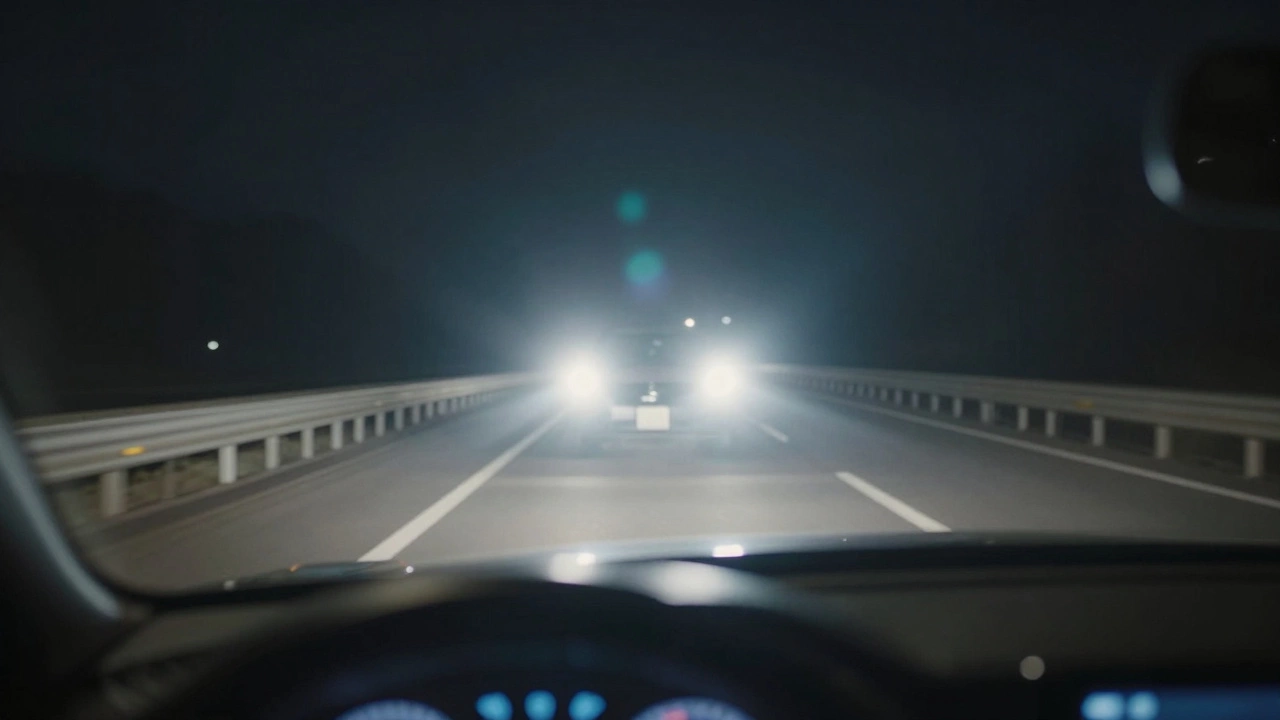
This phenomenon is called "hotspotting" or glare. You might think your lights look brighter because the interior of the housing glows intensely, but that light isn’t reaching the road. Worse, it’s shooting directly into the eyes of drivers coming toward you. On busy roads like the Bruce Highway or even suburban streets in Queensland, this is dangerous and illegal.
Projector Lenses vs. Reflector Housings
To understand if LEDs will work in your car, you first need to identify what kind of headlight housing you have. There are two main types: reflectors and projectors.
- Reflector Housing: These use a large, silver-colored mirrored bowl to bounce light forward. Most older cars, economy vehicles, and base-model trucks use this design. Halogens work perfectly here. LEDs usually fail here because the reflector cannot focus the broad emission area of an LED chip.
- Projector Housing: These feature a distinct circular lens at the front, often with a clear plastic cover over a smaller bulb chamber. Inside, there is a convex lens that focuses the light onto a cutoff shield. Projectors are much more forgiving with LED upgrades because the lens does the focusing, not the reflector shape alone. Many modern mid-range and luxury cars come with factory projectors.
If you look at your headlight from the outside and see a round, glass-like circle embedded in the housing, you likely have a projector. If you see a large, open silver bowl, you have a reflector. For reflector housings, sticking with high-quality halogen bulbs or upgrading the entire housing to a projector setup is often the smarter move.
| Housing Type | Light Source Design | LED Performance | Risk of Glare |
|---|---|---|---|
| Reflector | Mirrored Bowl | Poor (Scattered Light) | High |
| Projector | Convex Lens + Cutoff Shield | Good (Focused Beam) | Low (if aligned correctly) |
| Bi-LED Projector | Dedicated LED Optics | Excellent | None |
The Heat Factor: Why Cooling Matters
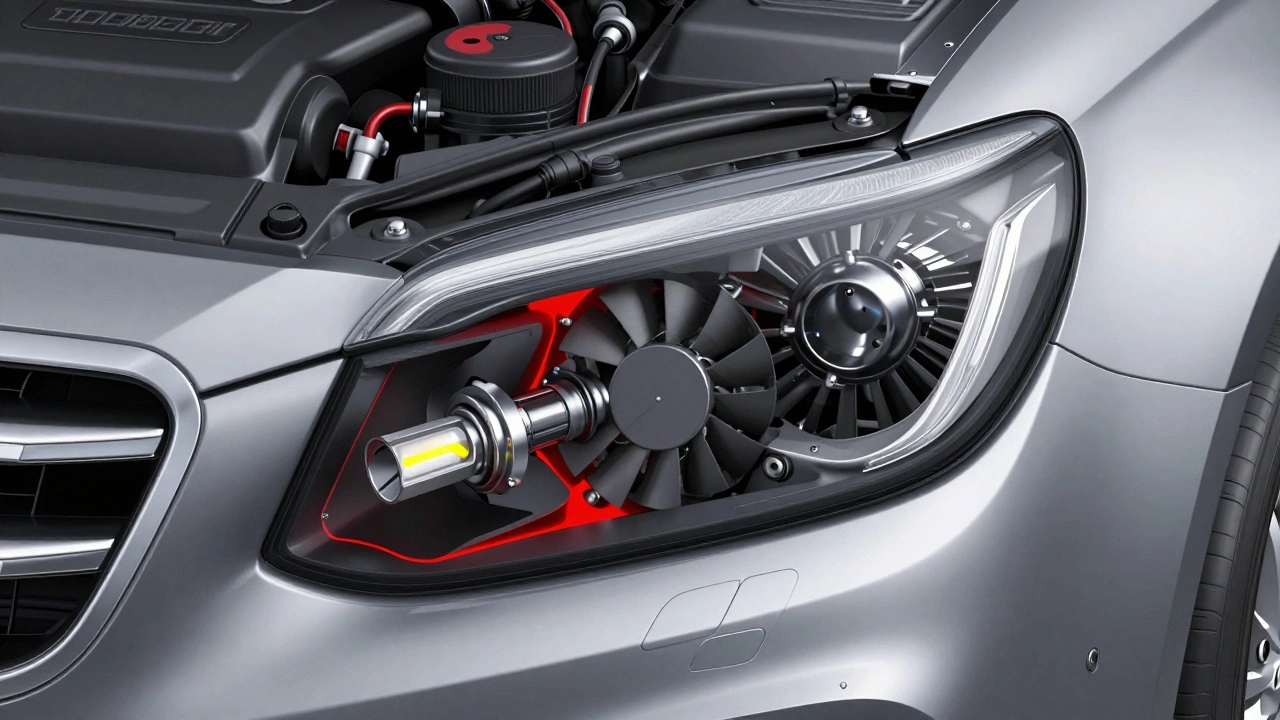
You might wonder why LEDs need fans if they produce less heat than halogens. Here’s the twist: LEDs don’t get hot where the light comes out. The heat builds up at the base of the diode. If that heat isn’t dissipated, the LED chips degrade rapidly, losing brightness within months. Halogen bulbs run hot but self-regulate through their gas-filled environment.
Aftermarket LED bulbs typically require active cooling, meaning they come with small electric fans and heatsinks attached to the base. This makes the bulb significantly bulkier than a standard halogen. In tight engine bays or cramped headlight assemblies, these fans can rub against wiring harnesses, melt insulation, or simply not fit back into the housing.
Before buying, measure the depth of your headlight cavity. Remove your old bulb and check how much space exists behind the socket. If the new LED’s fan diameter is larger than the opening of your dust cap, you’ll have a problem. Some premium brands offer "fanless" designs using advanced ceramic or aluminum bases, but these are expensive and still generate heat that needs to escape through the metal body.
Electrical Compatibility and Error Codes
Modern cars are computers on wheels. Your vehicle’s Body Control Module (BCM) monitors the electrical resistance of your headlight bulbs. Halogen bulbs have a specific resistance value. LEDs draw far less power-often 70% less. To the car’s computer, this sudden drop in resistance looks like a broken bulb.
This triggers "bulb out" error codes on your dashboard, warning lights, or flickering indicators. In some European and Asian models, this can even disable daytime running lights or cause erratic behavior in the lighting system. To fix this, you may need to install resistors or decoders. These components trick the computer into thinking a halogen bulb is still present by drawing extra current to match the expected load.
However, adding resistors generates more heat in your wiring harness. If your car already has marginal wiring, this adds another failure point. Always check if your specific make and model is known for CAN bus errors with LED swaps. Brands like BMW, Mercedes, and Audi are notorious for strict electrical monitoring systems.
Legal Implications in AustraliaIn Australia, vehicle modifications are governed by state laws and Australian Design Rules (ADRs). While there is no explicit ban on LED bulbs in all states, the lights must comply with ADR 19/04 regarding photometric performance. This means the beam pattern must not dazzle other drivers and must provide adequate illumination.
If your LED upgrade causes excessive glare due to poor optics in a reflector housing, you can be fined during a police stop or annual registration inspection. Police officers carry light meters that measure candela intensity. If your low beams exceed legal limits or lack a proper cutoff line, you’ll fail the test. In Queensland, modified lighting that compromises safety can lead to a defect notice, requiring you to revert to stock equipment before driving again.
Always aim for LEDs that are certified as replacements for halogen sockets and marketed specifically for your housing type. Avoid cheap, unbranded bulbs from unknown sources; they rarely meet regulatory standards for color temperature or beam control.
How to Choose the Right LED Upgrade
If you’ve determined your car has projector lenses and ample space for cooling, here’s how to pick a quality set:
- Check the Emitter Size: Look for LEDs with a compact emitter footprint. Smaller emitters mimic the halogen filament better, reducing scatter in projector housings.
- Verify Color Temperature: Stick between 5000K and 6000K. Anything higher (bluish-white) reduces contrast in rain or fog and may appear too harsh for long drives. Lower temperatures (3000K-4000K) are yellowish and less efficient.
- Look for IP Rating: Ensure the bulb has an IP67 or IP68 rating. This guarantees protection against dust and water ingress, crucial for Australian conditions where mud and coastal salt air are common.
- Read Real Reviews: Don’t trust marketing claims of "300% brighter." Look for reviews mentioning beam pattern clarity, longevity, and noise levels from the cooling fans.
Consider reputable brands that offer warranties and technical support. Cheap LEDs often burn out after six months, leaving you with dark roads and wasted money. Investing in a quality brand ensures consistent performance and safer nights on the road.
Will LED bulbs void my car warranty?
Generally, no. Under Australian Consumer Law, installing aftermarket parts does not automatically void your warranty unless the dealer can prove the modification caused specific damage. However, if an electrical fault traces back to your LED installation (like melted wiring), the repair won't be covered. Keep receipts and professional installation records.
Do I need to realign my headlights after installing LEDs?
Yes, always. Even if the new bulb fits exactly like the old one, slight differences in base positioning can shift the beam angle. Use a wall or garage door to check the cutoff line. Adjust the aiming screws until the beam sits level with the original height. Misaligned LEDs blind oncoming drivers.
Are LED headlights better than HID xenon bulbs?
For most users, yes. LEDs start instantly, consume less power, and last longer than HIDs. HIDs require a warm-up period and complex ballasts that can fail. However, HIDs still offer superior raw lumen output in dedicated projector setups. For simple plug-and-play upgrades, LEDs are more reliable and easier to install.
Can I use LED bulbs for my fog lights?
It depends on the housing. Fog lights often use wide-beam reflectors. LEDs can create hotspots that reduce visibility in fog by reflecting light back at you. If your fog lights have deep reflectors, stick with halogens. If they have shallow reflectors or projectors, LEDs can work well for cutting through mist.
How long do aftermarket LED bulbs last?
Quality LEDs are rated for 20,000 to 50,000 hours. In real-world use, this translates to 5-10 years depending on driving habits and heat management. Cheaper bulbs may fade or fail within 1-2 years due to poor thermal design. Look for brands offering multi-year warranties as a sign of durability.