
Ever stared at your dull, yellowing factory headlights and wondered if swapping them for bright white LEDs is as simple as unscrewing a bulb? You’re not alone. Thousands of car owners in Brisbane and beyond have tried it-some with glowing results, others stuck with flickering lights, error messages, or worse, a fine from the police. The truth? You can replace factory headlight bulbs with LED, but it’s not as straightforward as buying a box of bulbs off eBay and calling it a day.
Why People Want to Swap to LED
Most folks make the switch because their halogen bulbs look like weak flashlight beams after 50,000 kilometers. They’re dim, yellow, and fade fast. LED headlights promise a brighter, whiter light that looks modern, improves night visibility, and lasts longer. Some even say they feel safer driving at night on rural roads near the Gold Coast or through the Dandenongs. But here’s the catch: factory headlight housings aren’t designed for LEDs. Halogen bulbs produce light in a specific shape and spread. LEDs emit light differently-often in a straight line or a concentrated dot. If you just plug an LED bulb into a housing made for halogen, you’ll get glare, hot spots, and dark zones. That’s not just annoying-it’s dangerous for oncoming drivers.What Happens When You Plug an LED Bulb Into a Halogen Housing
It’s not magic. It’s physics. Halogen bulbs are filament-based. They glow in all directions, and the reflector inside your headlight is shaped to bounce that light into a controlled beam pattern. LEDs are directional. They shine forward like a laser pointer, and unless the reflector or lens is built to match, you get scattered light. You might notice:- Blinding glare for drivers ahead of you
- Dark patches on the road where the beam should be brightest
- Flickering or error messages on your dashboard (CAN bus errors)
- Overheating that melts the plastic housing or wiring
The Legal Reality in Australia
In Australia, your headlights must meet Australian Design Rule 13/00. That rule says headlights must produce a specific beam pattern-no more, no less. If your LED bulbs change the beam shape, even slightly, your car fails inspection and you’re breaking the law. Police in Queensland and New South Wales have started pulling over vehicles with aftermarket LED bulbs. Fines can hit $500, and you might be ordered to remove them on the spot. If you’re involved in an accident and your lights are deemed non-compliant, your insurance could be voided. You might think, “But I’ve seen tons of cars with LED headlights on the road.” True. Many of them are either factory-installed (designed for LEDs from the start) or have been properly upgraded with full projector housings and legal certification. A bulb swap? Not the same thing.How to Legally Upgrade to LED
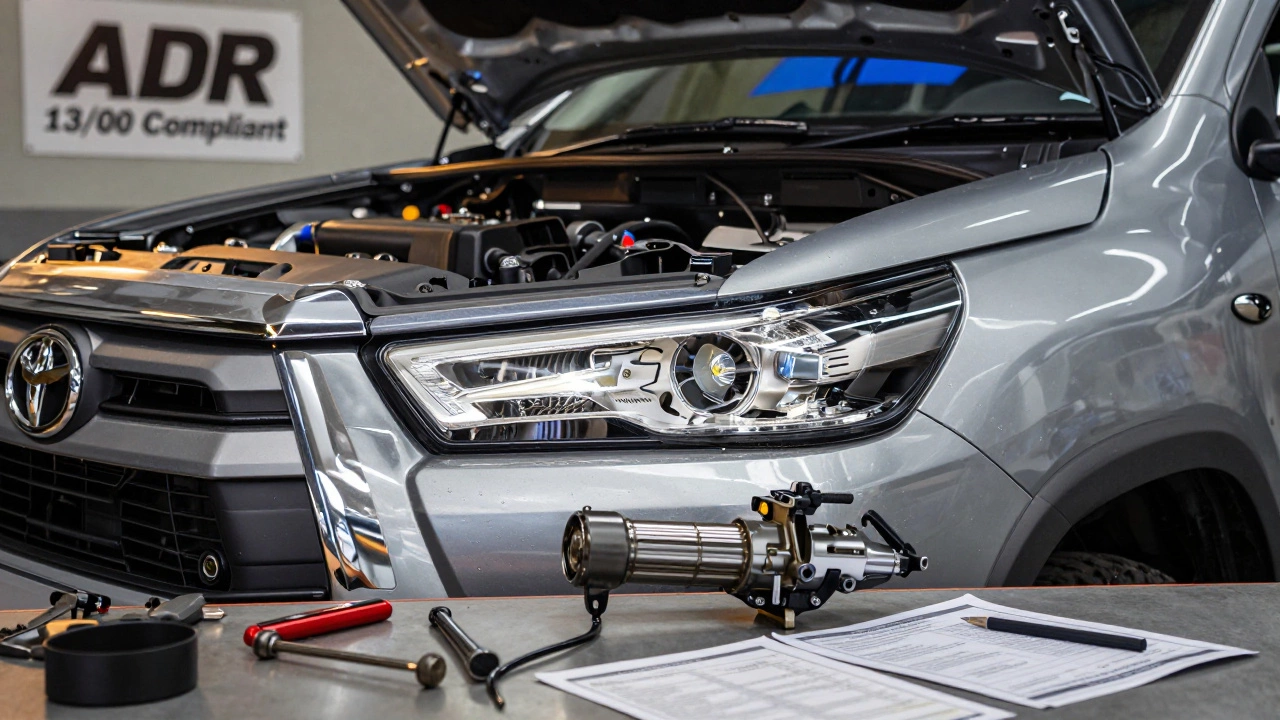
There’s a way to do it right. It just costs more and takes more work. Option 1: Replace the Entire Headlight Assembly Buy OEM or certified aftermarket LED headlights designed for your exact car model. These come with built-in projectors, heat sinks, and beam patterns that match Australian standards. Brands like Hella, Osram, and Philips make certified LED units for popular models like the Toyota Hilux, Ford Ranger, and Subaru Forester. Cost: $800-$1,600 for a pair. Installation: 2-4 hours at a specialist shop. Benefit: Fully legal, no errors, better light output, and often comes with a warranty. Option 2: Retrofit with Projector Lenses If you love your current headlight housing, you can have a professional remove the halogen reflector and install LED-compatible projector lenses. This is a full rebuild-cleaning the housing, sealing it, aligning the beam, and adding proper cooling. It’s not a DIY job unless you’ve done it before. Cost: $1,200-$2,000. Time: 6-8 hours. Benefit: Custom fit, maximum light control, and full compliance. Many shops in Brisbane offer this service with a certificate of compliance. Option 3: Stick with High-Performance Halogens If you want a quick, legal, and cheap upgrade, skip LEDs entirely. Go for premium halogen bulbs like Philips X-tremeVision or Osram Night Breaker Laser. They’re 100% legal, 50% brighter than stock, and cost under $100 for a pair. They’ll last 2-3 years and don’t trigger error codes.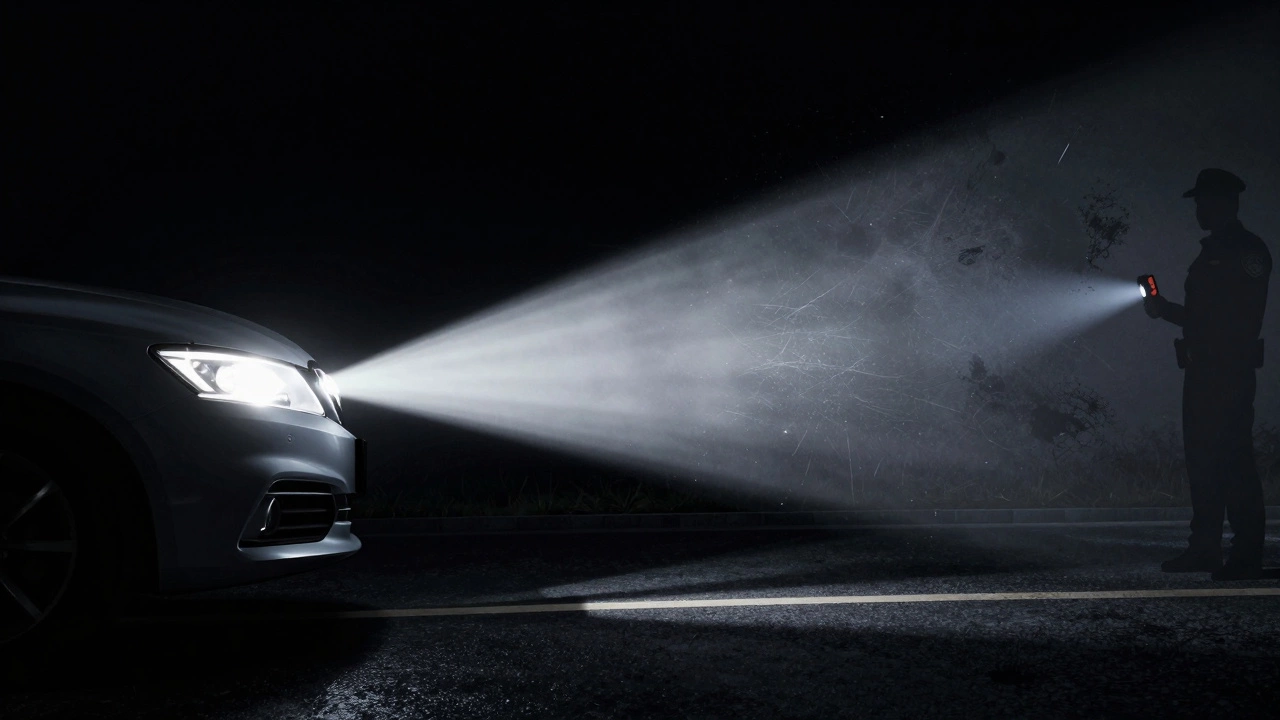
What About LED Bulbs That Say “Plug and Play”?
Those little boxes on Amazon claiming “fits 90% of cars” and “no error codes guaranteed” are mostly marketing. They might have built-in resistors to fool your car’s computer, but they still can’t fix the beam pattern. Your reflector didn’t change. The light still scatters. That’s why most of these bulbs fail roadworthiness tests-even if your dashboard is quiet. Some drivers swear by them. But if you’ve ever been blinded by a car with those bulbs on a dark country road, you know why they’re risky.Real-World Example: A Brisbane Owner’s Story
A 2018 Honda CR-V owner in Logan City swapped his halogens for $60 LED bulbs he found on eBay. The lights looked amazing-until he got pulled over by a traffic officer on the Pacific Highway. The officer used a handheld beam pattern tester and found the cutoff line was blurred, with light spilling above the horizon. He was fined $450 and ordered to restore the original bulbs within 7 days. He went back to halogens, then upgraded to Philips X-tremeVision. His insurance didn’t blink.Bottom Line: What You Should Do
If you want better lighting:- Don’t just swap bulbs. You’re risking safety, legality, and your wallet.
- Do upgrade to certified LED headlight assemblies if you want the full LED experience.
- Do consider high-performance halogens if you want a legal, affordable boost.
- Do get professional help if you’re retrofitting projectors.
What to Look for in a Legal LED Upgrade
When you’re ready to upgrade, check for these:- AS/NZS 1680 certification on the product packaging
- Manufacturer’s statement that it’s compliant with ADR 13/00
- Proof it’s designed for your exact car model
- Warranty and support from a local Australian supplier
Common Myths About LED Headlights
- Myth: LEDs use less power, so they’re better for your battery. Truth: They do use less power, but if your car’s system isn’t designed for them, the control module can overwork trying to compensate.
- Myth: All LEDs are brighter than halogens. Truth: Only properly designed LED systems are. A cheap bulb can be dimmer than a good halogen.
- Myth: If it fits, it’s fine. Truth: Fitment ≠ legality. You can jam a square peg in a round hole-but it won’t work right.
Final Thought
LED headlights aren’t the enemy. But swapping bulbs like you’re changing a fuse? That’s where things go wrong. The goal isn’t just to make your car look cool at night. It’s to see better-and not blind the people coming toward you. If you’re serious about upgrading, go the right way. Invest in a proper system. Your eyes, your insurance, and the other drivers on the road will thank you.Can I legally install LED bulbs in my factory headlights in Australia?
No, not if you’re just swapping the bulbs. Australian law (ADR 13/00) requires headlights to produce a specific beam pattern. Factory housings are designed for halogen bulbs, and LED bulbs change the light distribution, creating glare and unsafe patterns. Even if the bulb fits and your car doesn’t show errors, it’s still illegal and can fail a roadworthy inspection.
Why do my LED bulbs cause dashboard error messages?
Many modern cars use CAN bus systems that monitor bulb resistance. Halogen bulbs draw a specific amount of power. LEDs draw much less, so the car thinks the bulb is blown. Some LED kits include resistors to mimic the resistance, but they don’t fix the beam pattern-just silence the warning light. The error may disappear, but the safety issue remains.
Are LED headlight assemblies more expensive than halogen upgrades?
Yes, but not as much as you might think. A pair of premium halogen bulbs costs $80-$120. A full certified LED headlight assembly runs $800-$1,600. Retrofitting projectors into your existing housing costs $1,200-$2,000. The upfront cost is higher, but LEDs last 10-15 years, so you won’t replace them again. Halogens need replacing every 2-3 years.
Can I get my LED-upgraded car inspected and pass?
Only if the entire headlight unit is certified for your vehicle and meets ADR 13/00. A simple bulb swap will fail. Certified LED assemblies come with documentation proving compliance. If you retrofit projectors, the shop should provide a compliance certificate. Without it, you’ll be asked to revert to stock.
What’s the best alternative if I don’t want to spend a lot?
Upgrade to high-performance halogen bulbs like Philips X-tremeVision or Osram Night Breaker Laser. They’re 50% brighter than stock, fully legal, cost under $100, and don’t cause errors. They’re the smartest balance of price, performance, and legality for most drivers.