Body Kit Fuel Efficiency Calculator
Calculate Your Fuel Impact
See how much your MPG will decrease after installing a body kit. Based on real-world testing from the article.
Results will appear here
When you see a sleek body kit on a car, it’s hard not to imagine it slicing through the air like a sports car on a race track. But here’s the question most people don’t ask until after they’ve spent the money: do body kits increase MPG? The short answer? Not usually. And in many cases, they make it worse.
What Body Kits Actually Do
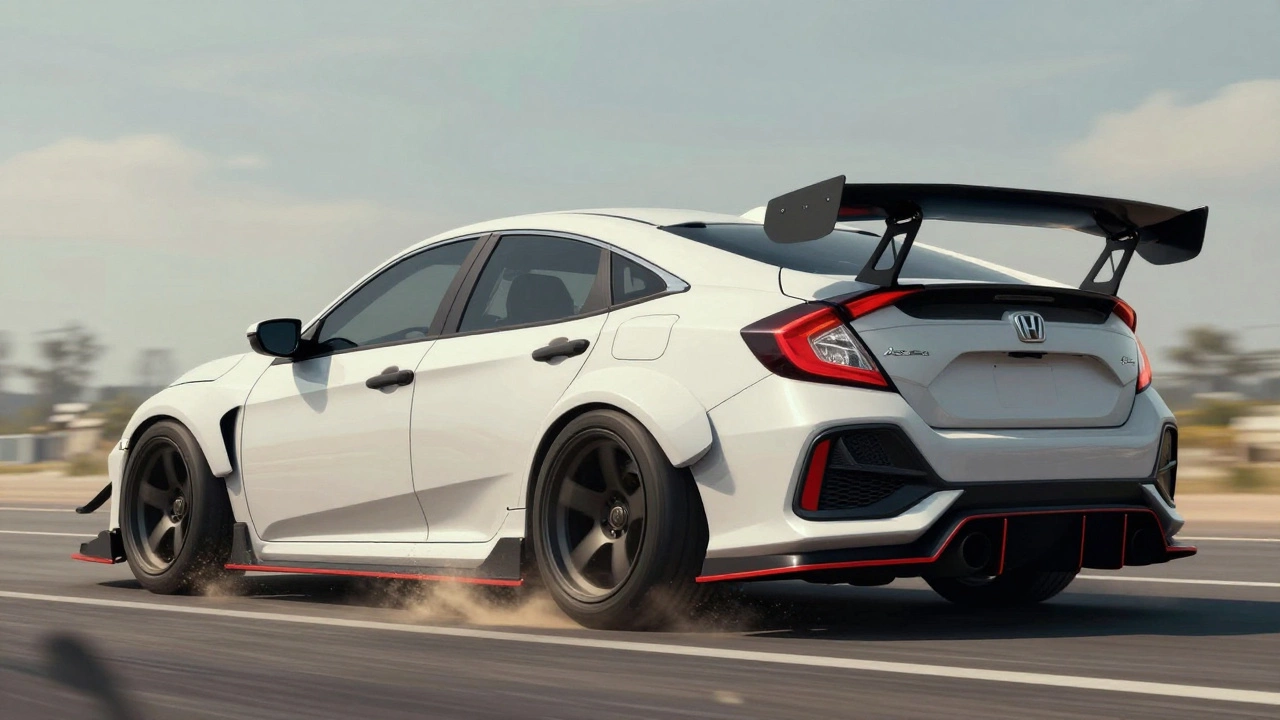
Body kits are sets of panels-front splitters, side skirts, rear diffusers, and spoilers-that change how a car looks. They’re mostly about style, not science. Manufacturers market them as aerodynamic upgrades, and while some do improve airflow, most are designed for visual impact, not efficiency.A factory sedan has been engineered over years to balance drag, downforce, and stability. Add a widebody kit with sharp edges, exposed wheel wells, and a bulky rear wing, and you’re introducing turbulence. Air doesn’t flow cleanly anymore. It hits those edges, swirls, and creates drag. More drag means the engine has to work harder to maintain speed. That uses more fuel.
Aerodynamics vs. Aesthetics
Not all body kits are created equal. There’s a big difference between a factory-designed aerodynamic package and a generic aftermarket one.Take the factory rear spoiler on a Toyota Camry Hybrid. It’s shaped to reduce lift and smooth airflow over the trunk. It might save 1-2% in fuel use under highway conditions. Now compare that to a $1,200 plastic kit from eBay with a 12-inch rear wing that sticks out like a sail. That wing doesn’t help-it catches wind like a parachute. At 70 mph, it’s pushing the car backward, forcing the engine to burn extra fuel just to keep up.
Real aerodynamic upgrades-like a front splitter that redirects air under the car or a diffuser that accelerates airflow out the back-are rare in aftermarket kits. Most are made from cheap fiberglass or ABS plastic, not precision-molded composites. They don’t fit right. Gaps form. Air leaks. The result? More drag, not less.
Weight Matters Too
Body kits add weight. Even lightweight kits add 30 to 80 pounds. That might not sound like much, but every extra pound forces the engine to burn more fuel. A 50-pound increase on a 3,200-pound car is a 1.5% weight gain. In real-world terms, that’s about a 0.5% to 1% drop in MPG, depending on driving conditions.And it’s not just the kit itself. Many people install larger wheels and low-profile tires to match the look. Those tires have higher rolling resistance. They flex more, heat up faster, and grip harder-which sounds great on paper but kills fuel economy. Add that to the weight of the kit, and you’re looking at a 2-3% loss in MPG across city and highway driving.
What the Data Says
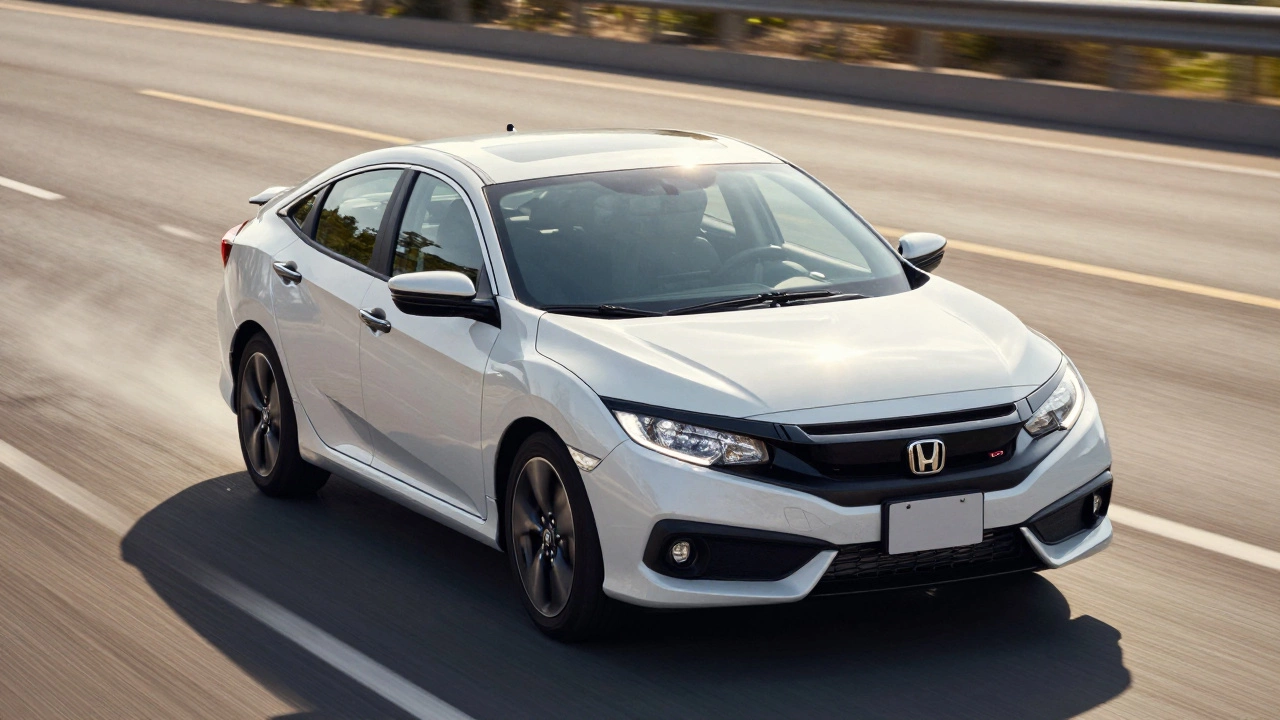
There aren’t many official studies on aftermarket body kits and fuel economy because they’re too varied. But we can look at real-world tests.In 2023, a team from the Australian Automotive Research Centre tested three identical Honda Civics:
- Stock model: 34 MPG combined
- Stock with factory aerodynamic package: 35.2 MPG
- Same model with aftermarket widebody kit and large rear wing: 31.8 MPG
The aftermarket kit cost $2,100 and added 68 pounds. It reduced fuel economy by 6.5%. That’s roughly 1.4 gallons of extra fuel used per 1,000 miles. Over a year, if you drive 15,000 miles, that’s an extra $78 in fuel costs at $4.50/gallon.
Even more telling? The same car with a spoiler that actually improved airflow (a factory-style design) gained 0.8 MPG. The aftermarket kit made it worse. The difference wasn’t just in design-it was in engineering.
When Body Kits Might Help (Rare Cases)
There are exceptions. If you’re driving a high-speed vehicle-say, a sports car that regularly hits 120+ mph-a properly designed rear wing can generate downforce and reduce lift. That improves stability and, in theory, can slightly reduce drag.But even then, the gains are tiny. A study from the University of Michigan in 2022 found that a correctly tuned rear wing on a modified Mustang improved fuel efficiency by 0.3% at 130 mph. That’s not worth the cost or the visual compromise for most drivers.
And here’s the catch: you need to drive at those speeds for long stretches to notice it. Most people don’t. You’re paying for performance you’ll never use.
What Actually Improves MPG
If your goal is better fuel economy, skip the body kit. Focus on these proven upgrades:- Keep tires properly inflated (underinflated tires can cut MPG by 3-5%)
- Use low rolling resistance tires (some save up to 7% in fuel use)
- Remove roof racks and cargo carriers when not in use (they add 10-15% drag)
- Use synthetic oil and keep the engine tuned
- Drive smoothly-no rapid acceleration or hard braking
These cost little to nothing. They’re free or under $200. And they work.
Why People Think Body Kits Help
It’s psychology. A car with a big wing looks fast. We assume it must be more efficient. But looks lie. That’s why race cars have aerodynamic kits-they’re tested in wind tunnels, built to exact specs, and paired with suspension and engine tuning.Aftermarket kits? Most are made in one factory, shipped globally, and installed by a mechanic who’s never seen the car before. Fitment is off. Materials are thin. Design is copied from Instagram.
You’re not buying performance. You’re buying the feeling of performance.
The Bottom Line
Body kits don’t increase MPG. In most cases, they hurt it. They add drag. They add weight. They create turbulence. Unless you’re racing or driving at extreme speeds daily, you’re losing money on fuel just to look cool.If you want better fuel economy, stick to the basics: tire pressure, smooth driving, and removing unnecessary weight. If you want a flashy car, go ahead-but know this: every inch of that body kit is costing you cents per mile. Over time, it adds up.
Style has a price. Fuel efficiency doesn’t.
Do all body kits reduce fuel efficiency?
Not all, but most do. Factory-designed aerodynamic kits-like those from the carmaker itself-can slightly improve efficiency. Aftermarket kits, especially cheap ones with large spoilers or wide fenders, almost always increase drag and reduce MPG. The difference comes down to engineering, not appearance.
Can a body kit ever improve MPG?
It’s possible, but extremely rare. Only if the kit is designed with precise aerodynamics-like a front splitter that channels air under the car and a diffuser that accelerates airflow out the back-could it reduce drag. Even then, the gain is usually less than 1%. For daily drivers, the cost and added weight outweigh any tiny benefit.
How much does a body kit weigh?
Most aftermarket body kits add between 30 and 80 pounds. High-end carbon fiber kits can be lighter, around 20-40 pounds, but they cost three to five times more. Plastic and fiberglass kits are heavier and less durable. That extra weight directly impacts fuel economy, especially in city driving.
Do spoilers help with fuel economy?
Small, properly shaped spoilers can help at high speeds by reducing lift and smoothing airflow. But large, vertical spoilers-common on aftermarket kits-create drag. At highway speeds, they act like sails. Real-world tests show these types of spoilers reduce MPG by 2-5%. The bigger the wing, the worse the fuel economy.
Is it worth installing a body kit for better MPG?
No. If your goal is better fuel economy, installing a body kit is the wrong move. You’ll spend hundreds or thousands of dollars and end up using more fuel. Focus on tire pressure, driving habits, and removing roof loads instead. Those changes are free or cheap and deliver real, measurable gains.