Air Filter Performance Simulator
1. Select Filter Type
Choose a filter type based on your vehicle's needs.
OEM Paper
StockMaximum protection. High restriction, high filtration (>99.5%).
Cotton Gauze
PerformanceReusable & washable. Good balance of flow (~98%) and protection.
Foam
Off-RoadRugged durability. Medium flow, requires frequent cleaning in dust.
Dry Flow
SyntheticLong life, no oiling needed. High flow with good filtration.
2. Adjust Engine Setup
Estimated Results
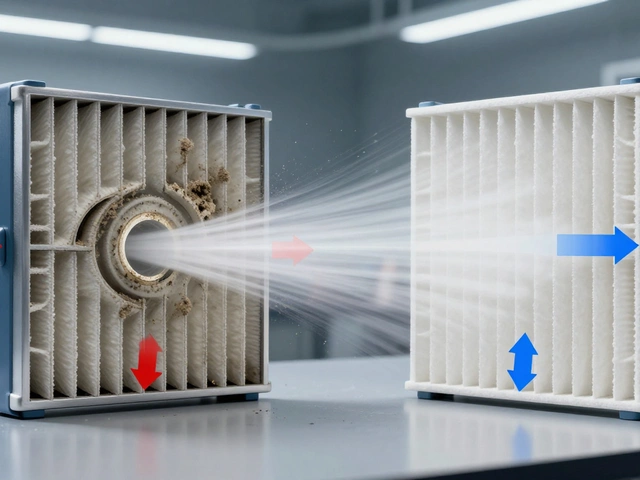
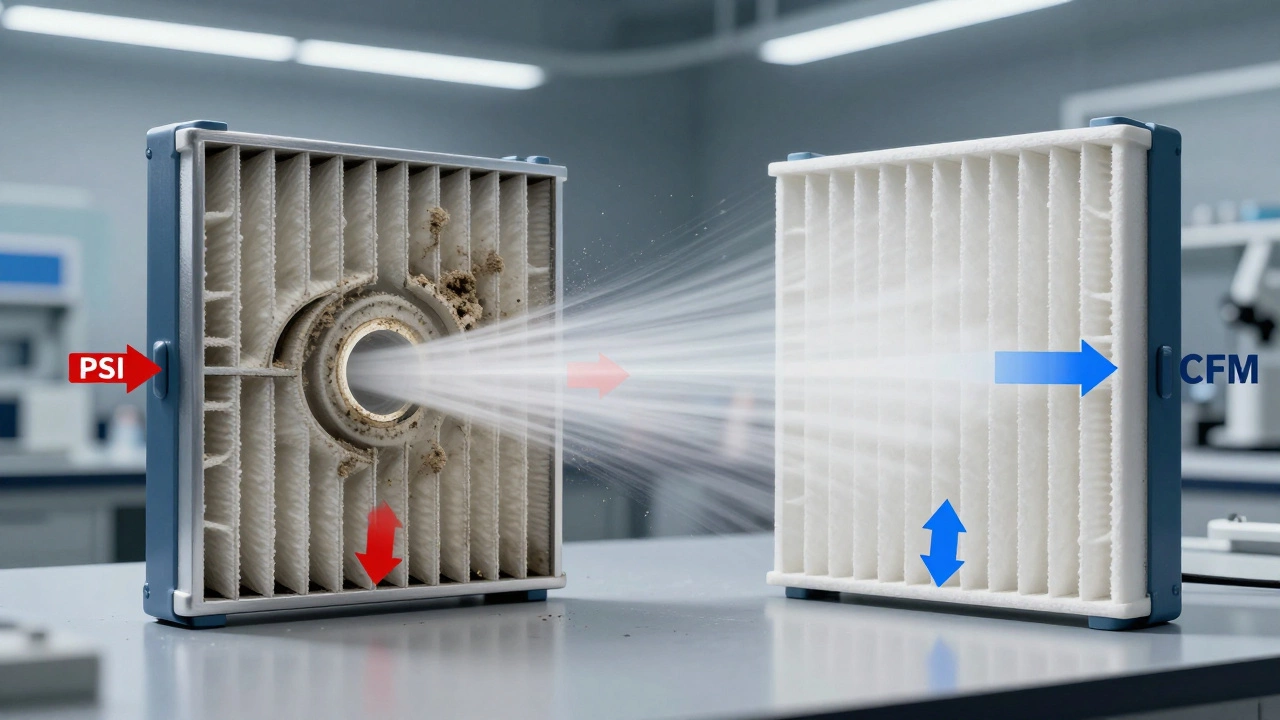
You’ve probably seen the marketing charts. A sleek graph showing a line for CFM (Cubic Feet per Minute) skyrocketing as the PSI (Pounds per Square Inch) requirement drops. It looks like magic: less effort to breathe in, more air flowing through. But if you’re sitting there wondering if lowering the PSI actually *causes* an increase in CFM, you need to pause. The relationship isn’t quite that simple, and misunderstanding it can lead you down a rabbit hole of bad upgrades.
The short answer is no. Lowering the PSI does not inherently create more air volume. In fact, they are two sides of the same coin, linked by the physics of fluid dynamics. When we talk about air filters being efficient, we mean they allow high CFM *while maintaining* low PSI. If you just lower the PSI without changing the filter media or geometry, your CFM will likely drop, not rise. Let’s break down why this happens and what actually moves the needle on engine breathing.
The Physics of Airflow: Understanding the Trade-Off
To understand why PSI and CFM don't move in the direction marketers want you to think, we have to look at how air behaves inside an intake system. Imagine blowing through a straw. Now imagine blowing through a garden hose. The hose has a larger diameter, so it offers less resistance. You don't have to blow as hard (lower PSI) to get the same amount of air out (same CFM). Or, if you keep the same breath strength, you get way more air out (higher CFM).
In automotive terms, pressure drop is the measure of that resistance. It is the difference in air pressure between the upstream side of the filter (the open atmosphere) and the downstream side (inside the engine intake manifold). High PSI means the engine is working harder to suck air through the filter. Low PSI means the path is clear.
Here is the critical distinction:
- Scenario A: You have a clogged paper filter. It has high PSI (high resistance). To get any air through, the engine creates massive vacuum. The result? Low CFM because the restriction chokes the flow.
- Scenario B: You swap to a high-flow oiled cotton gauze filter. It has low PSI (low resistance). Because the path is easier, the engine can pull more air with the same vacuum level. The result? Higher CFM.
So, did lowering the PSI *increase* the CFM? Technically, the reduction in resistance (PSI) *allowed* the CFM to increase. But the causal factor was the change in the filter's permeability, not the PSI number itself dropping in isolation. If you simply reduced the atmospheric pressure (like driving up a mountain), your PSI requirement might stay similar relative to the manifold, but your absolute CFM would plummet because the air is thinner. Context matters.
Why Marketers Love the "Low PSI" Narrative
If you browse sites selling performance air filters, you’ll see claims like "30% more airflow than stock." They back this up with a chart comparing their filter against a standard OEM paper filter. The test usually involves a constant flow rate (fixed CFM) and measuring the resulting pressure drop (PSI). Their filter shows a lower PSI reading. Then, they flip the test: they hold the pressure drop constant and measure the max CFM. Their filter wins again.
This is scientifically valid testing, but it’s often presented deceptively. The implication is that you install the filter, and suddenly your engine is guzzling air effortlessly. In reality, the gain is real, but it’s marginal in most naturally aspirated street cars. The "low PSI" claim is a proxy for "less restriction." Less restriction enables higher potential flow. But unless your engine is restricted by the intake system to begin with, you won’t feel the difference behind the wheel.
Consider the OEM paper filter. It is designed to be restrictive enough to stop microscopic dust particles from entering the cylinder walls. This protection is paramount. Paper filters are pleated to maximize surface area while keeping the media thick. This thickness increases PSI. High-flow filters use thinner media or open-cell foam/cotton structures. They sacrifice some filtration efficiency for lower PSI. That trade-off is the core of the debate.
Real-World Impact: Does It Actually Make Power?
Let’s talk numbers. On a typical 4-cylinder naturally aspirated engine, swapping from a stock paper filter to a high-performance aftermarket filter might yield a pressure drop reduction of 0.1 to 0.3 inches of water column (which translates to a tiny fraction of PSI). In dyno tests, this often results in a horsepower gain of 1 to 3 HP. Sometimes zero. Why? Because modern engines are electronically controlled. The Mass Air Flow (MAF) sensor detects the incoming air and adjusts fuel injection accordingly. If the intake tract isn’t the bottleneck, removing a small restriction doesn’t magically create power.
However, the story changes with forced induction. If you run a turbocharger or supercharger, the compressor wheel is already moving massive volumes of air. Any restriction before the compressor inlet (the "pre-filter") can cause compressor surge or reduce efficiency. Here, lowering the PSI across the filter becomes much more significant. A high-flow filter ensures the turbo isn’t choking on its own intake, allowing it to spool slightly faster and maintain boost pressure more efficiently. In this context, the correlation between low PSI and high CFM directly impacts thermal efficiency and peak power.
For diesel engines, the stakes are even higher. Diesels rely heavily on precise air-fuel ratios for combustion stability and emissions control (especially with DPFs and EGR systems). A restricted filter (high PSI) can cause lean conditions, leading to excessive exhaust temperatures and potential damage to the turbo or aftertreatment devices. In diesels, maintaining low PSI isn’t just about performance; it’s about longevity.
Filtration Efficiency vs. Airflow: The Golden Mean
This brings us to the most important metric that rarely gets discussed: filtration efficiency. You can achieve near-zero PSI by using a piece of window screen. You’ll also get maximum CFM. But you’ll destroy your engine in weeks as sand and grit grind the cylinder walls. Conversely, you can achieve 99.99% filtration efficiency with a HEPA-grade medical mask over your intake. Your engine will starve for air.
Good engineering seeks the "Golden Mean"-the point where you maximize airflow (CFM) while minimizing pressure drop (PSI) without compromising particle capture. Most reputable performance filters aim for 98-99% efficiency against particles larger than 5 microns. Stock paper filters often exceed 99.5%. The question is: do those last 0.5% of filtered particles matter for your daily commute? Probably not. Do the extra 10% of airflow matter? Maybe, if you track your car.
| Filter Type | Pressure Drop (PSI) | Airflow (CFM Potential) | Filtration Efficiency | Maintenance Required |
|---|---|---|---|---|
| OEM Paper | High | Low/Medium | Very High (>99.5%) | Replace every 15k-30k miles |
| Cotton Gauze (Reusable) | Low | High | High (~98-99%) | Clean/oil every 40k-100k miles |
| Foam (Off-Road) | Medium | Medium/High | Medium-High | Clean frequently in dusty conditions |
| Dry Flow (Synthetic) | Low-Medium | High | High | Replace every 60k-100k miles |
Maintaining Your Setup: When Low PSI Becomes High Risk
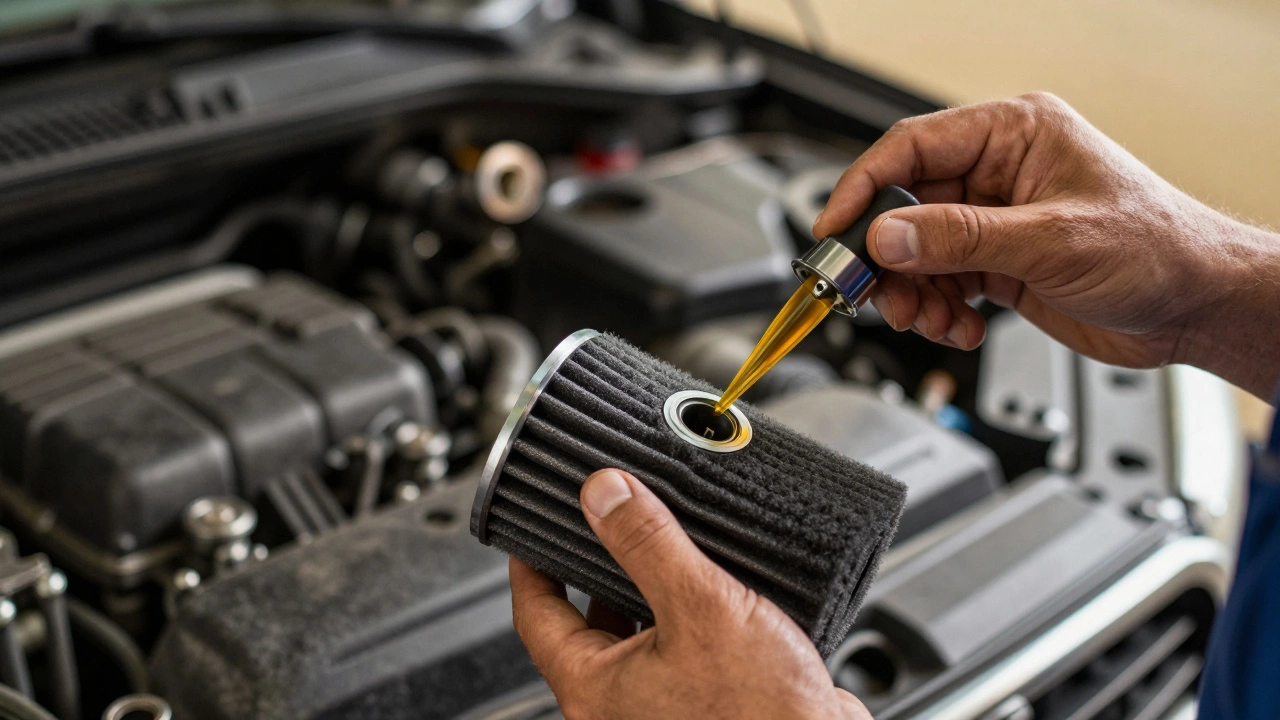
There is a catch with high-flow reusable filters. Over time, they collect dirt. As the pores clog, the PSI required to push air through increases. If you ignore maintenance, your "high-flow" filter eventually performs worse than a fresh paper filter. Worse yet, if you oil it too heavily during cleaning, the excess oil can coat the MAF sensor, causing erratic readings and poor drivability. This is a common issue reported by owners of popular brands like K&N or aFe.
To keep the benefits of low PSI and high CFM, you must follow a strict maintenance schedule. Wash the filter with a specialized cleaner, let it dry completely, and apply a thin, even layer of filter oil. Too little oil reduces filtration efficiency (particles pass through). Too much oil increases restriction (clogs pores) and risks contaminating sensors. It’s a delicate balance.
Also, consider your environment. If you live in a desert region or drive on unpaved roads, a standard cone filter exposed in the engine bay might ingest large debris that tears the media. In these cases, a sealed airbox with a cold-air intake design is superior. It uses the vehicle’s bodywork to shield the filter, allowing for denser media (higher initial PSI) without sacrificing long-term reliability. The goal is consistent performance, not just peak lab numbers.
Conclusion: What Should You Choose?
Does lowering PSI increase CFM? No, but reducing restriction allows for higher CFM at a given vacuum level. If you are looking for a noticeable power gain in a stock naturally aspirated car, a new air filter alone won’t deliver it. The gains are minimal. However, if you value throttle response, sound, and ease of maintenance, a quality performance filter is a worthwhile upgrade. For turbocharged or diesel applications, the benefits are more pronounced due to the critical nature of unrestricted airflow for compressor efficiency and emissions management.
Ultimately, choose based on your needs. Prioritize filtration if you drive in dusty conditions. Prioritize airflow if you track your car or have forced induction. And never forget that the cheapest filter is the one that doesn’t require replacing your engine block later. Balance is key.
Will a high-flow air filter void my warranty?
In the United States, the Magnuson-Moss Warranty Act prevents manufacturers from voiding your entire vehicle warranty solely because you installed an aftermarket part. However, if the dealership can prove that the specific air filter caused damage to the engine (e.g., dirt ingestion due to poor filtration), they can deny coverage for repairs related to that damage. Keep records of your maintenance and choose reputable brands to mitigate risk.
How often should I clean a reusable performance air filter?
It depends on your driving conditions. For normal street driving, every 40,000 to 100,000 miles is typical. If you drive in dusty, sandy, or off-road environments, you may need to clean it every 5,000 to 10,000 miles. Always check the manufacturer’s guidelines and inspect the filter visually for heavy dirt buildup or discoloration.
Can I wash a paper air filter?
No. Paper air filters are disposable. Washing them destroys the adhesive holding the pleats together and ruins the microfiber structure, rendering the filter useless. Once a paper filter is dirty, it must be replaced. Attempting to clean it will likely lead to engine damage due to loss of filtration capability.
What is the difference between CFM and PSI in air filters?
CFM (Cubic Feet per Minute) measures the volume of air flowing through the filter. PSI (Pounds per Square Inch) measures the pressure drop or resistance across the filter. High CFM means lots of air is moving. Low PSI means the engine doesn't have to work hard to pull that air. Ideally, you want high CFM with low PSI.
Do cold air intakes actually increase horsepower?
Cold air intakes can provide modest horsepower gains, typically 3-8 HP on naturally aspirated engines, by drawing cooler, denser air into the engine. However, the gains are highly dependent on the vehicle and the quality of the intake system. Many cheap kits offer little to no benefit and may introduce heat soak or water ingestion risks. Proper tuning is often required to realize full potential.