Headlight Compliance Checker
Check if your LED headlight replacement complies with Australian regulations. Input your vehicle details to see if your setup is legal.
Swapping out your old halogen headlight bulbs for LEDs sounds like a smart upgrade. Brighter light, lower power use, longer life - it’s tempting. But here’s the real question: is it illegal to replace halogen headlight bulbs with LEDs? The answer isn’t a simple yes or no. It depends on where you are, how the bulbs are installed, and whether they meet safety standards. In Australia, and in many other countries, putting LED bulbs into halogen housings is often against the law - even if the bulbs themselves look fine.
Why Halogen Housings Don’t Work with LEDs
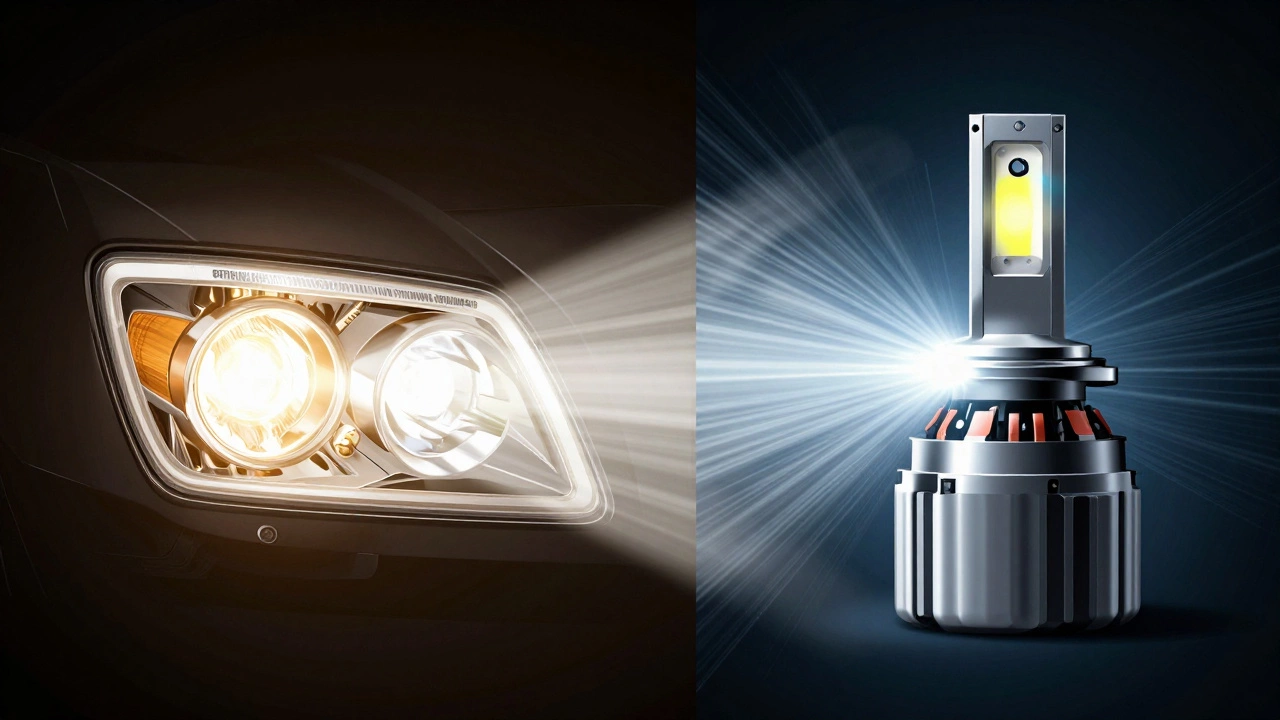
Halogen headlights are designed for a very specific kind of light source: a tiny tungsten filament glowing inside a gas-filled bulb. The reflector and lens inside your headlight housing are shaped to focus that light in a precise pattern - a sharp cutoff on top to avoid blinding oncoming drivers, and a wide spread on the road ahead.
LED bulbs, on the other hand, emit light from multiple small diodes arranged in a flat or clustered pattern. They don’t produce light the same way. When you stick an LED bulb into a halogen housing, the light scatters in all directions. The reflector, built for a filament, can’t control it. The result? Glare. Blinding glare for other drivers.
It’s not just about brightness. It’s about beam pattern. A 2023 study by the Australian Road Research Board found that aftermarket LED bulbs in halogen housings increased glare by up to 400% compared to factory halogen units. That’s not an upgrade - it’s a safety hazard.
Australian Laws on Headlight Upgrades
In Australia, vehicle lighting must comply with Australian Design Rule 13/00 - Lamp Units. This rule says every headlight must be certified for its intended use. Factory-installed halogen lights? Certified. Factory-installed LED lights? Certified. Aftermarket LED bulbs shoved into halogen housings? Not certified. And that makes them illegal.
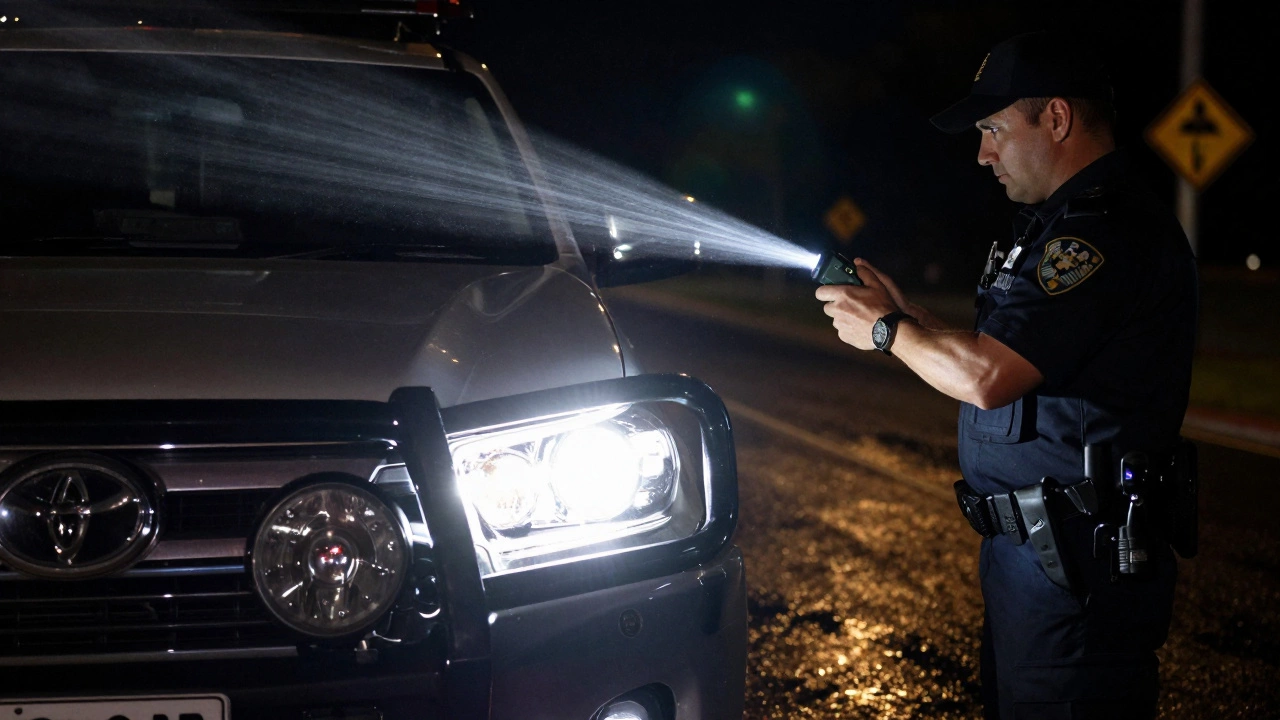
Police in Queensland, New South Wales, and Victoria have been pulling over vehicles with aftermarket LED bulbs since 2022. In Brisbane, traffic officers now carry portable beam pattern testers. If your headlights scatter light above the horizontal cutoff line - meaning they shine into other drivers’ eyes - you’ll get a defect notice. You won’t be fined immediately, but you won’t pass your next registration either until the issue is fixed.
Some people think, “But my LED bulbs are ‘DOT approved’ or ‘ECE certified’.” That’s misleading. Those certifications apply to complete headlight assemblies - not individual bulbs meant for retrofitting. A bulb that’s certified for use in a factory LED headlight unit won’t magically become legal when you drop it into a halogen housing.
What Happens If You Get Caught?
Getting pulled over for LED bulbs doesn’t mean you’ll lose your license. But it does mean trouble. Here’s what typically happens:
- You’re issued a Defect Notice - usually Form 22 in Queensland.
- You have 14 days to fix the issue and get it inspected.
- If you don’t fix it, your registration can be suspended.
- If you’re caught driving with the defect still active, you can be fined up to $400 in NSW or $300 in Victoria.
- In rare cases, if your lights caused an accident, you could face charges for dangerous driving.
Insurance companies also take note. If you’re in a crash and they find your headlights are non-compliant, they may deny your claim - even if you weren’t at fault. That’s because your vehicle is no longer considered roadworthy under Australian law.
What’s the Legal Way to Get LED Headlights?
You want LED lights? Fine. But you need to do it right.
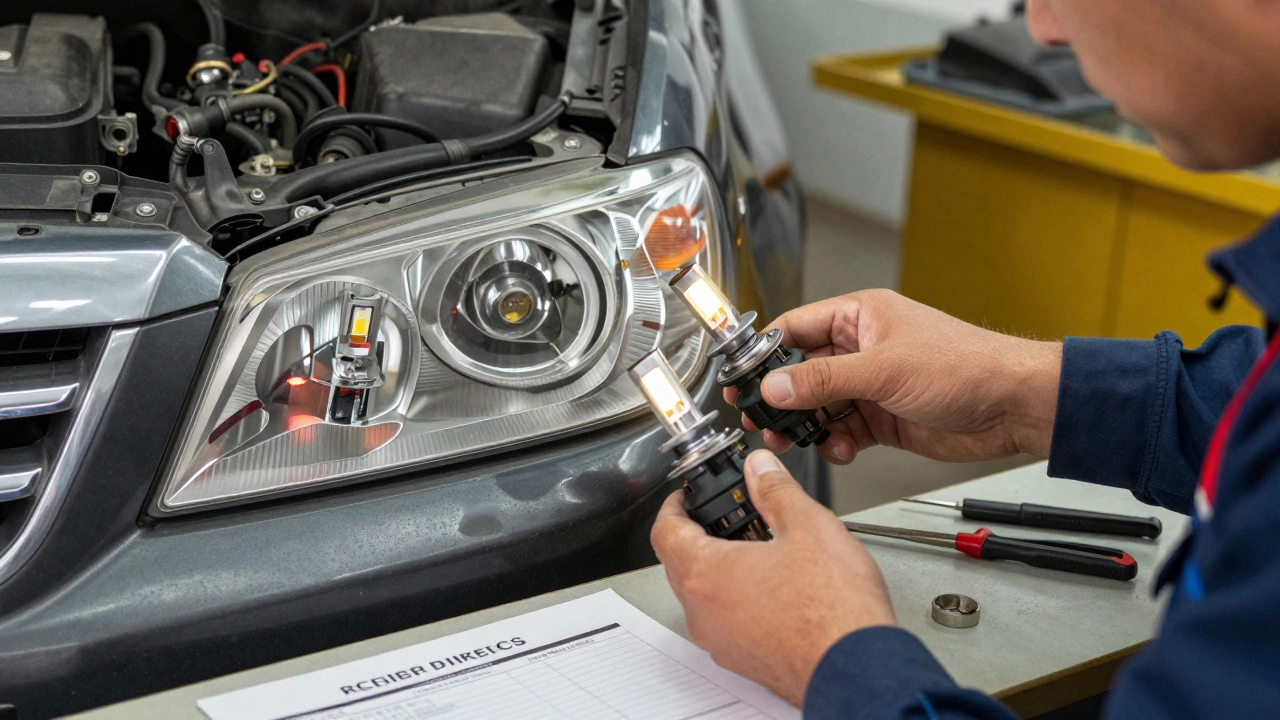
The only legal way to switch to LED headlights is to replace the entire headlight assembly - not just the bulb. That means buying a pair of headlight units that are certified for your specific vehicle model. These assemblies come with built-in LED modules, proper lenses, and reflectors designed to work with LED technology. They’re more expensive - often $800 to $1,500 for a pair - but they’re road legal and pass inspection.
Brands like Philips, Osram, and OEM suppliers like Hella or Valeo make these complete LED headlight units for popular models like the Toyota Hilux, Ford Ranger, and Subaru Forester. Check your vehicle’s manual or visit the manufacturer’s website to see if LED upgrades are offered as factory options. If they are, you’re safe to install them.
Some aftermarket companies, like Morimoto and Anzo, sell complete LED headlight kits designed as direct replacements. These are legal if they’re certified to ADR13/00 and come with proper documentation. Always ask for the certification paperwork before buying.
Why People Still Do It (And Why They Shouldn’t)
Let’s be honest - a lot of people still swap in LED bulbs. Why? Because they’re cheap. You can buy a pair of “10,000K super white” LED bulbs for $30 online. They look cool at night. They make your car feel more modern.
But here’s what they don’t tell you: those bulbs often have a blue tint that reduces visibility in rain or fog. They also tend to overheat, which can melt the plastic housing or damage the wiring. And because they’re not designed for halogen housings, they create dark spots on the road - meaning you’re less likely to see pedestrians, animals, or road signs.
It’s not just about the law. It’s about safety. A 2024 RACQ survey found that drivers using aftermarket LED bulbs reported 27% more difficulty seeing at night compared to those with factory halogen or proper LED systems. That’s not a myth. That’s data.
What About LED Fog Lights or Auxiliary Lights?
Here’s a gray area: LED fog lights and driving lights. These are often mounted separately from your main headlights. If they’re installed correctly - meaning they’re aimed low, not too bright, and mounted in approved housings - they’re usually legal. Many 4WD owners add LED bars to their bullbars. As long as they’re not shining into other drivers’ eyes and meet ADR standards for auxiliary lighting, they’re fine.
But if you’re trying to use LED fog lights as your main headlights? That’s a problem. They’re not designed for that. They don’t have the right beam pattern. And they’ll definitely get you pulled over.
What Should You Do?
If you’ve already installed LED bulbs in your halogen housings:
- Remove them before your next registration check.
- Reinstall the original halogen bulbs - they’re safe, legal, and reliable.
- If you want better lighting, save up for a full LED headlight upgrade.
- Don’t rely on “it’s just for night driving” or “no one ever checks.” Police do.
If you’re thinking about doing it:
- Don’t. The risk isn’t worth the $30 you save.
- Look into certified LED headlight assemblies instead.
- Ask your mechanic if your car model has a factory-approved LED upgrade kit.
There’s no shortcut to safe, legal lighting. If you want brighter, clearer vision at night, invest in the right system - not the cheap bulb that breaks the law.
Can I get fined for LED headlights in Australia?
Yes. While you won’t always get an on-the-spot fine, you’ll receive a defect notice that prevents you from renewing your registration. If you drive with the defect still active, fines of up to $400 apply in some states. Insurance companies may also deny claims if your headlights are non-compliant.
Are LED bulbs legal if they’re certified?
Only if they’re part of a certified headlight assembly. A standalone LED bulb with a DOT or ECE mark is certified for use in a factory LED headlight unit - not for retrofitting into halogen housings. That’s a common misunderstanding. The certification doesn’t transfer to the wrong housing.
Do LED headlights last longer than halogen?
Yes - but only if they’re properly installed. Factory LED headlights can last over 15 years or 200,000 kilometers. Aftermarket LED bulbs in halogen housings often fail sooner due to overheating or poor heat dissipation. The lifespan claim only applies to systems designed for LEDs from the start.
Can I install LED bulbs in my fog lights?
Yes, if they’re installed in approved fog light housings and aimed correctly. Fog lights must not shine above the horizontal plane and must be separate from your main headlights. Many LED fog light kits are legal if they meet ADR standards for auxiliary lighting.
What’s the cheapest legal way to get LED headlights?
There isn’t one. The cheapest legal option is to buy a factory-approved LED headlight upgrade kit for your vehicle model - these start around $800. Avoid cheap LED bulbs. They’re not just illegal - they’re dangerous and can cost you more in fines, repairs, or insurance issues.