Car Lowering Safety & Suitability Calculator
Your Configuration
Recommended Method
Method Name
CategoryExplanation goes here.
Warning text goes here.
Select your preferences and click calculate to find the safest lowering option for your vehicle.
You want that aggressive stance. You want the car hugging the road like it’s glued to the asphalt. But there is a fine line between looking sharp and destroying your suspension-or worse, causing an accident on a speed bump. The question isn't just "how" to lower your car, but "what is the safest way" to do it without compromising handling, comfort, or structural integrity.
Lowering a vehicle changes its geometry. It alters camber, toe, and roll center heights. If you do this blindly, you trade stability for aesthetics. The safest method depends entirely on your driving habits, budget, and whether you plan to keep the car daily-driven or track-focused. Let's break down the options from least invasive to most complex, focusing on safety and reliability.
The Gold Standard: High-Quality Lowering Springs
For most drivers who want a clean look without sacrificing daily usability, lowering springs are replacement coil springs designed to reduce ride height while maintaining original shock absorbers are the best starting point. Unlike cheap "slam springs" that compress your factory shocks beyond their limits, quality lowering springs (like those from Eibach, H&R, or Bilstein) are engineered to work with your existing dampers.
Why are they safe? Because they preserve the factory damping ratio. Your shocks still control the spring movement properly. You get a drop of 1.5 to 2 inches, improved cornering due to reduced body roll, and no need for major mechanical surgery. However, you must ensure the springs are rated for your specific vehicle model and weight class. Using generic springs can lead to bottoming out or premature shock failure.
- Safety Benefit: Maintains factory damping characteristics.
- Cost: Moderate ($300-$600).
- Installation: DIY-friendly if you have basic tools and jack stands.
Precision Control: Coilover Suspension Systems
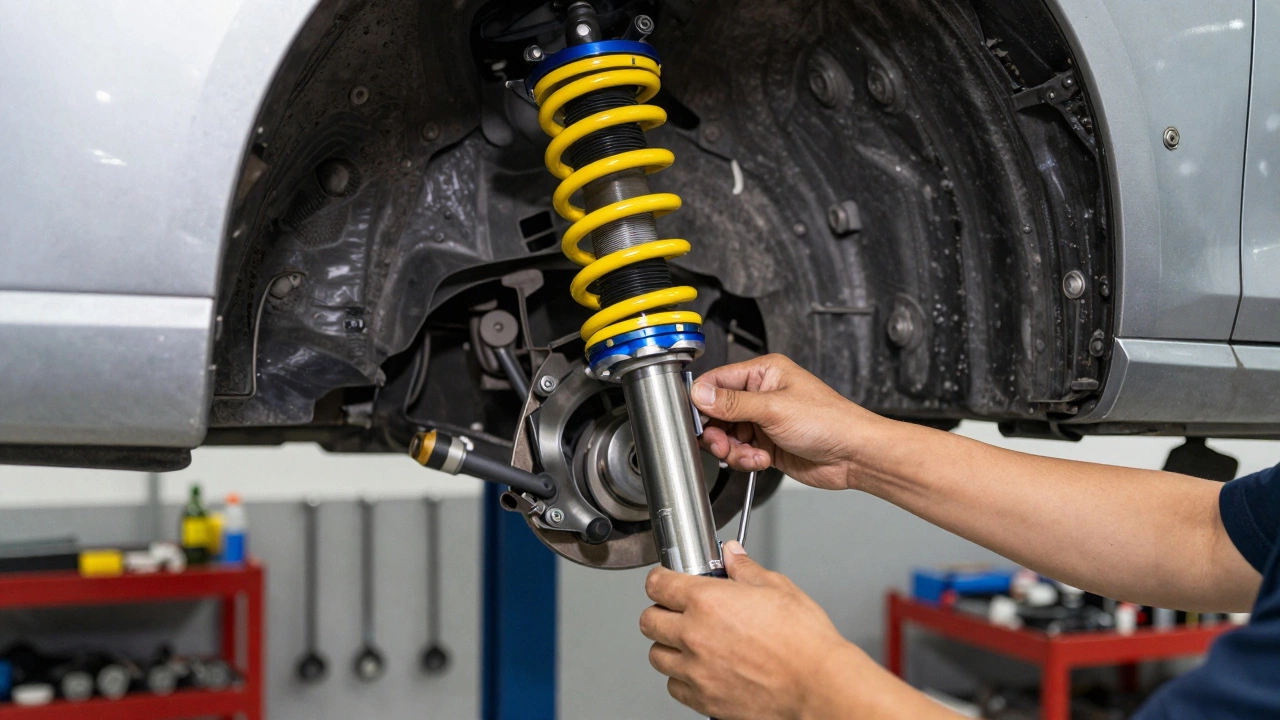
If you need more than a simple drop, or if you want to adjust ride height for different conditions, coilovers are integrated suspension units combining a shock absorber and spring into one adjustable assembly offer superior safety through precision tuning. Unlike static springs, coilovers allow you to adjust preload, rebound, and sometimes compression damping.
The safety advantage here is alignment control. When you lower a car, negative camber increases (the top of the tire tilts inward). This causes uneven tire wear and reduced grip in straight-line braking. Quality coilovers often come with camber plates or adjustable upper mounts, allowing you to correct this geometry. Brands like KW, BC Racing, and Tein provide systems that let you dial in the perfect balance between low stance and safe handling.
| Method | Ride Comfort | Handling Precision | Maintenance Risk | Best For |
|---|---|---|---|---|
| Lowering Springs | Good | Moderate | Low | Daily Drivers |
| Coilovers | Adjustable | High | Medium | Enthusiasts/Track |
| Air Suspension | Excellent | Variable | High | Show Cars/Cruisers |
| Slam Springs | Poor | Unsafe | Very High | None (Not Recommended) |
The Luxury Option: Air Suspension Kits
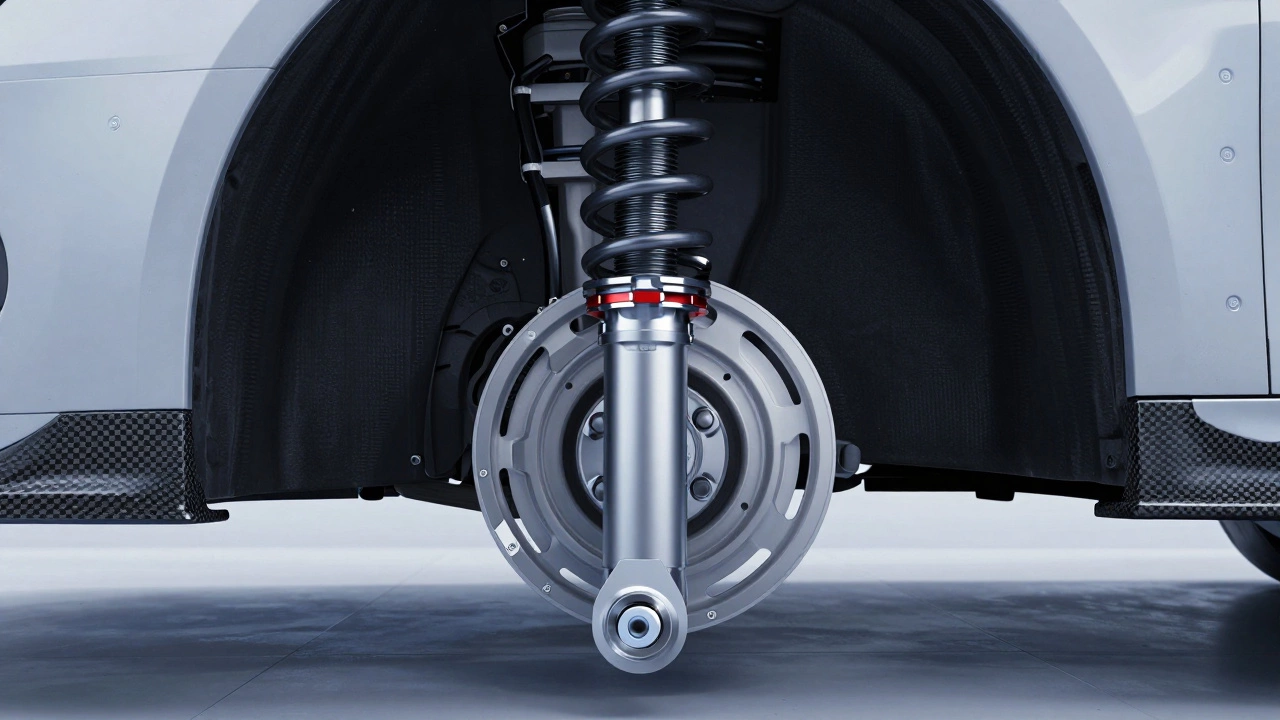
Air suspension is a system using compressed air bladders instead of steel springs to support vehicle weight offers the ultimate versatility. You can drive low at shows and raise the car for highway speeds or potholes. From a safety perspective, this is ideal because you can maintain optimal ground clearance when needed.
However, air suspension introduces complexity. Compressors, air lines, valves, and ECUs add points of failure. A burst bladder or compressor failure can leave you stranded. To use air suspension safely, you must invest in high-quality components (like Air Lift Performance or Air Ride Technics) and regular maintenance. Never run air bags without proper leveling kits or height sensors to prevent over-compression, which can damage the chassis.
Critical Safety Steps After Lowering
No matter which method you choose, the installation is only half the battle. The "safest way" includes post-installation procedures that many skip. Ignoring these steps turns a safe modification into a hazard.
- Professional Wheel Alignment: Lowering changes camber, caster, and toe. An alignment ensures tires contact the road evenly. Without it, you’ll experience rapid tire wear and unpredictable steering.
- Bumper and Lip Inspection: Ensure your front splitter or bumper doesn’t scrape driveways or speed bumps. Scraping can cause sudden loss of control or damage to sensors.
- Shock Absorber Check: If using lowering springs, verify your factory shocks aren’t leaking or worn. Old shocks combined with stiff springs create a harsh, uncontrollable ride.
- Test Drive Gradually: Start with slow speeds. Listen for clunks or rattles. Feel for instability during emergency stops. If the car feels "floaty" or unresponsive, revert to stock or consult a specialist.

What to Avoid: The Danger Zones
Avoid "slam springs" at all costs. These ultra-low, non-engineered springs force your suspension to its absolute limit. They bypass damping control, leading to wheel hop, brake fade, and potential axle failure. They also make it nearly impossible to pass inspection in many regions, including Australia.
Also, avoid cutting factory springs. Some DIYers cut coils to lower the car. This weakens the metal structure, creating a risk of catastrophic spring fracture under load. It’s never worth the savings.
Legal and Insurance Considerations in Australia
In Brisbane and across Australia, vehicle modifications must comply with the Australian Design Rules (ADR) and state regulations. While lowering springs are generally acceptable if they don’t compromise safety, extreme drops may require engineering certification. Always check with your insurer before modifying suspension, as some policies void coverage for unauthorized changes.
Remember, the goal isn’t just to look good-it’s to drive safely. Choose quality parts, prioritize alignment, and respect the limits of your vehicle’s design.
Are lowering springs safe for daily driving?
Yes, high-quality lowering springs from reputable brands are safe for daily use. They improve handling by reducing body roll and maintain factory damping. Avoid cheap slam springs, which compromise safety.
Do I need new shocks if I install lowering springs?
Not always. Quality lowering springs are designed to work with factory shocks. However, if your shocks are old or worn, replacing them with performance struts is recommended for optimal safety and comfort.
How much should I lower my car for safety?
A drop of 1.5 to 2 inches is generally considered safe for daily driving. This lowers the center of gravity for better handling without risking bottoming out on curbs or speed bumps.
Is air suspension safer than coilovers?
Air suspension can be safer for varied terrain because you can raise the car. However, it has more mechanical parts that can fail. Coilovers are more reliable for consistent performance if maintained correctly.
Will lowering my car void my warranty?
It may. In Australia, manufacturers can deny warranty claims related to suspension issues if aftermarket parts caused the damage. Always check with your dealer and insurer before modifying.