Carbon Fiber Spoiler Risk Assessment Tool
Carbon fiber is strong in tension but brittle under impact and sensitive to environment. Use this tool to evaluate the current health and future risk profile of your aftermarket or OEM carbon fiber component.
Risk Profile
Low RiskRecommended Actions:
You just spent a fortune on a glossy carbon fiber spoiler that promises both aerodynamic efficiency and aggressive styling. It looks incredible in the sunlight. But then you hear it-a sharp crack after hitting a pothole, or maybe you notice white spiderweb lines spreading across the clear coat. Is your expensive upgrade ruined? Does carbon fiber shatter like glass, or does it bend like steel?
The truth is messier than marketing brochures suggest. Carbon fiber isn't indestructible; it’s anisotropic, meaning its strength depends entirely on direction. While it’s incredibly strong against pulling forces (tension), it has specific weaknesses that can lead to catastrophic failure if you don’t know what to look for. This guide breaks down exactly how these parts fail, why they break, and what you can do to keep your spoiler attached to your car rather than your neighbor’s windshield.
The Myth of Indestructibility
People often confuse stiffness with toughness. Carbon fiber composites are exceptionally stiff-they resist bending under load far better than aluminum or fiberglass. This is why they’re used in aircraft wings and Formula 1 chassis. However, stiffness doesn’t mean unbreakable. In fact, high stiffness often correlates with brittleness.
Think of it this way: a steel ruler bends when you push it hard enough, but it rarely snaps unless you exceed its yield point repeatedly. A carbon fiber ruler, however, might not bend much at all before it suddenly fractures. This sudden failure mode is what scares owners. When a metal bumper hits a pole, it crumples. When a carbon fiber spoiler hits a garage ceiling, it cracks. The energy has nowhere to go except into breaking the resin matrix holding the fibers together.
Impact Damage: The Most Common Killer
For street cars, especially those fitted with rear wings or lip spoilers, impact damage is the number one cause of failure. Unlike metals that dent, carbon fiber tends to chip, crack, or delaminate upon impact.
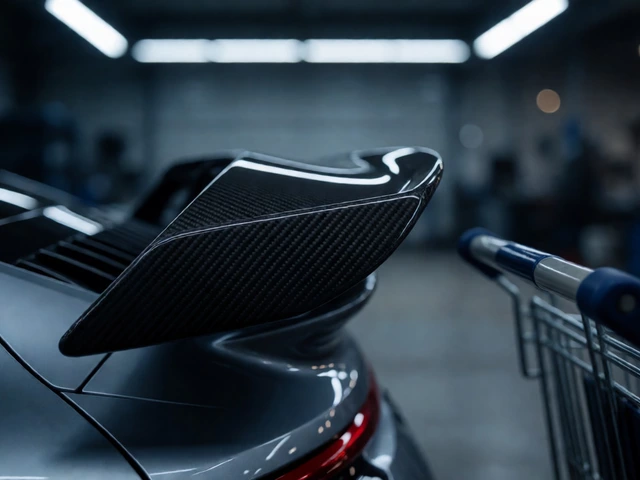
- Low-Velocity Impacts: Hitting a curb, a shopping cart, or even a heavy branch can cause "delamination." This is where the layers of fabric separate from each other because the epoxy resin bond fails. You might see a blister-like bubble under the surface. Once air gets between the layers, moisture follows, accelerating decay.
- High-Velocity Debris: Rocks kicked up by trucks can chip the leading edge. While a small chip might seem cosmetic, it creates a stress riser. Under high-speed airflow, vibrations concentrate at that tiny notch, eventually propagating a crack through the entire panel.
- Tool Drops: If you’re working on your car and drop a wrench on a dry carbon part, it will likely crack. Wet layup parts (hand-made) are slightly more forgiving due to higher resin content, but vacuum-infused parts are denser and more brittle.
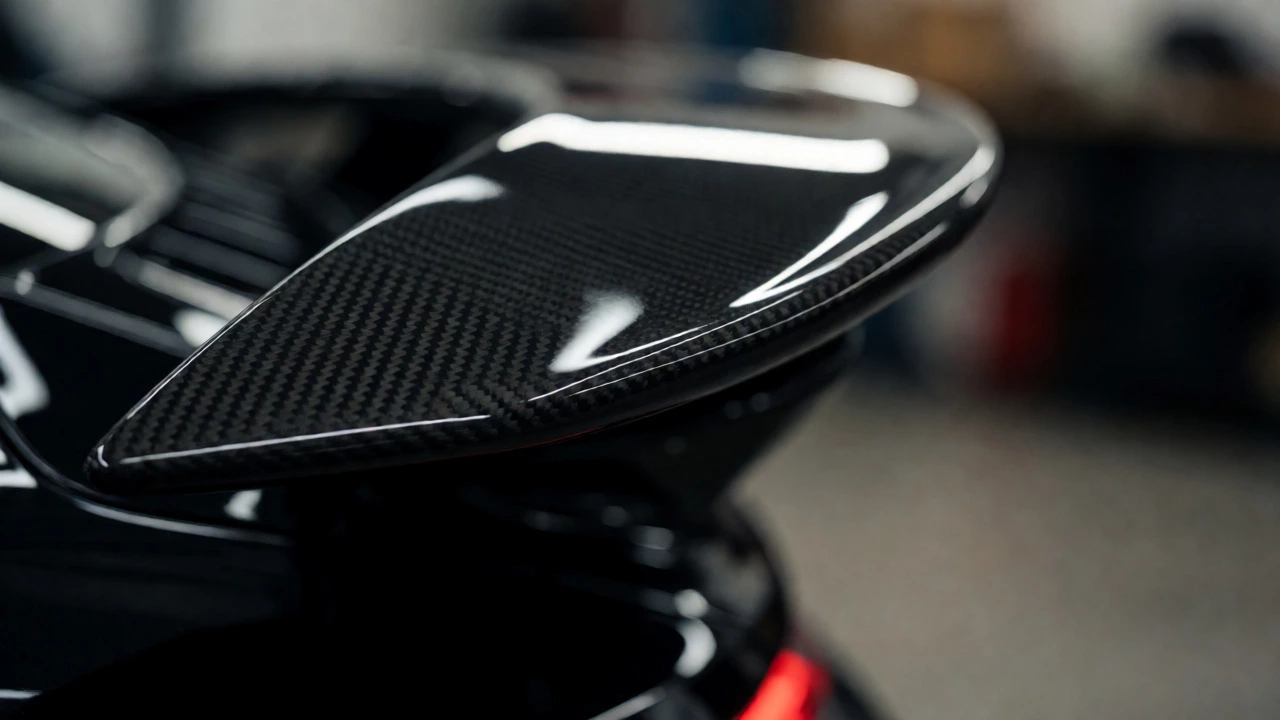
It’s worth noting that the severity depends on the weave and orientation. A 3K twill weave (the common checkerboard pattern) offers different impact characteristics than a unidirectional sheet. Unidirectional fibers run in one direction; hit them perpendicular to the grain, and they snap easily. Hit them parallel, and they hold strong. Most spoilers use multi-directional weaves to mitigate this, but no angle makes the material immune to sharp impacts.
Environmental Degradation: UV and Heat
Carbon fiber itself-the black threads-is chemically inert. It won’t rust, corrode, or rot. The problem lies in the glue: the epoxy resin matrix. Resins are organic polymers, and they hate ultraviolet light and extreme heat.
| Factor | Effect on Resin Matrix | Visible Symptom | Prevention Strategy |
|---|---|---|---|
| UV Radiation | Breaks chemical bonds, causing yellowing and embrittlement | Chalking, loss of gloss, micro-cracking | Apply UV-resistant clear coat or ceramic coating |
| Extreme Heat | Exceeds Glass Transition Temperature (Tg) | Softening, warping, loss of structural rigidity | Avoid direct contact with exhaust headers; use heat shielding |
| Moisture Ingress | Hydrolysis weakens fiber-resin interface | White haze, bubbling, delamination | Seal edges properly; repair chips immediately |
In hot climates like Brisbane, Australia, where summer temperatures regularly exceed 35°C (95°F), thermal cycling becomes a real issue. Your car heats up during the day and cools at night. Metal mounts expand and contract at different rates than the carbon fiber. Over time, this differential expansion stresses the mounting points. If the resin is already degraded by UV exposure, these stresses can pull the fibers out of the matrix, leading to loose bolts and cracked mounting tabs.
Manufacturing Defects and Quality Control
Not all carbon fiber is created equal. There is a massive gap between aerospace-grade autoclave-cured parts and budget-friendly aftermarket accessories. Understanding the manufacturing process helps you predict failure modes.
Vacuum Infusion vs. Hand Layup: Vacuum infusion pulls resin through dry fiber using pressure, resulting in fewer air bubbles and consistent fiber-to-resin ratios. Hand layup involves brushing resin onto fabric, which often traps air pockets. These voids act as internal defects. Under load, cracks start at these invisible voids and spread rapidly. If you bought a cheap spoiler from an online marketplace, inspect the backside. If it feels rough, sticky, or shows visible white spots (dry fibers), it’s prone to premature failure.
Poor Bonding: Many spoilers are bonded to the trunk lid using double-sided tape or sealant. If the installer didn’t clean the surfaces with isopropyl alcohol, or if the temperature was too cold during application, the bond fails. The spoiler doesn’t break; it falls off. This is technically a system failure, but it results in the same outcome: a broken part and a damaged car.
Stress Concentrations and Design Flaws
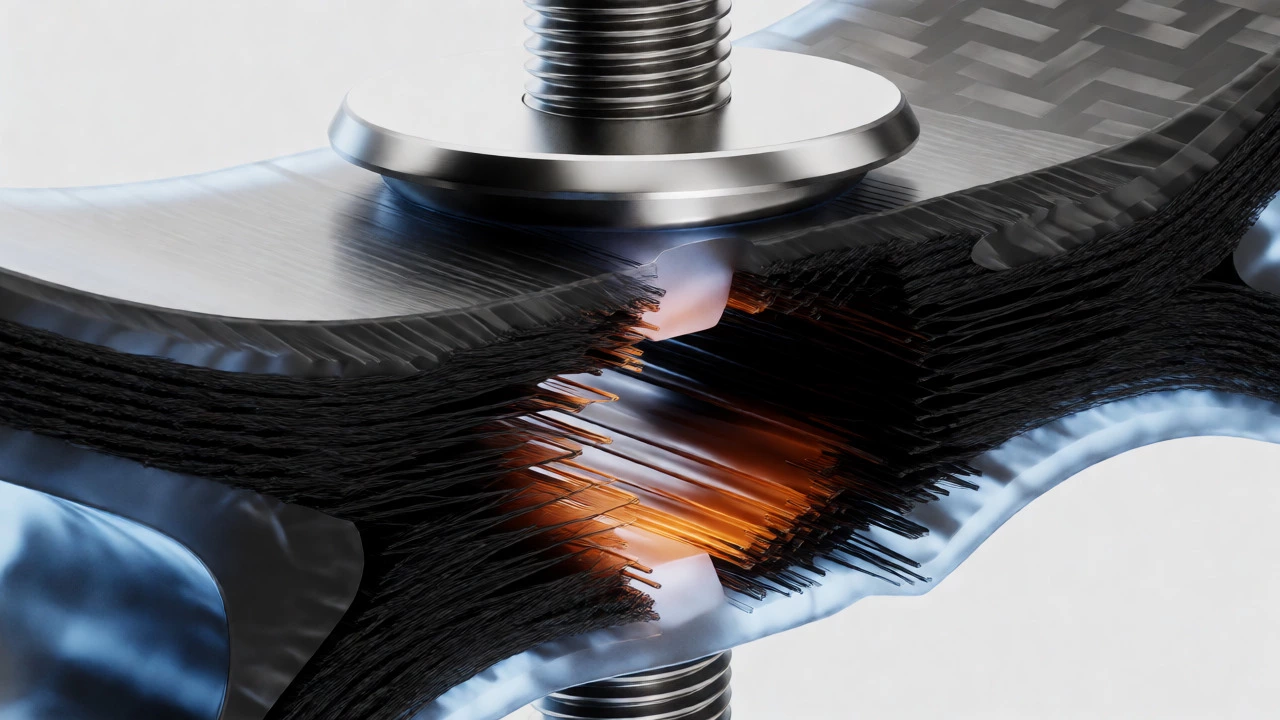
Even perfect materials fail if designed poorly. Carbon fiber hates concentrated loads. Engineers design metal brackets to distribute force over a wide area. With carbon, sharp corners and drilled holes become critical weak points.
If you drill a hole through a carbon spoiler without reinforcing the surrounding area, you create a stress riser. Every time you drive over a bump, vibration focuses on that single point. Eventually, the fibers around the hole fray and tear. This is why high-quality parts use bushings or sleeves in mounting holes. Cheap parts just drill straight through.
Another common issue is improper support. A large GT wing relies on struts to transfer downforce to the chassis. If the strut base is mounted directly to thin sheet metal without backing plates, the metal deforms. The carbon strut then twists excessively, exceeding its torsional limits. The result? The strut cracks near the base, rendering the wing useless.
How to Spot Early Signs of Failure
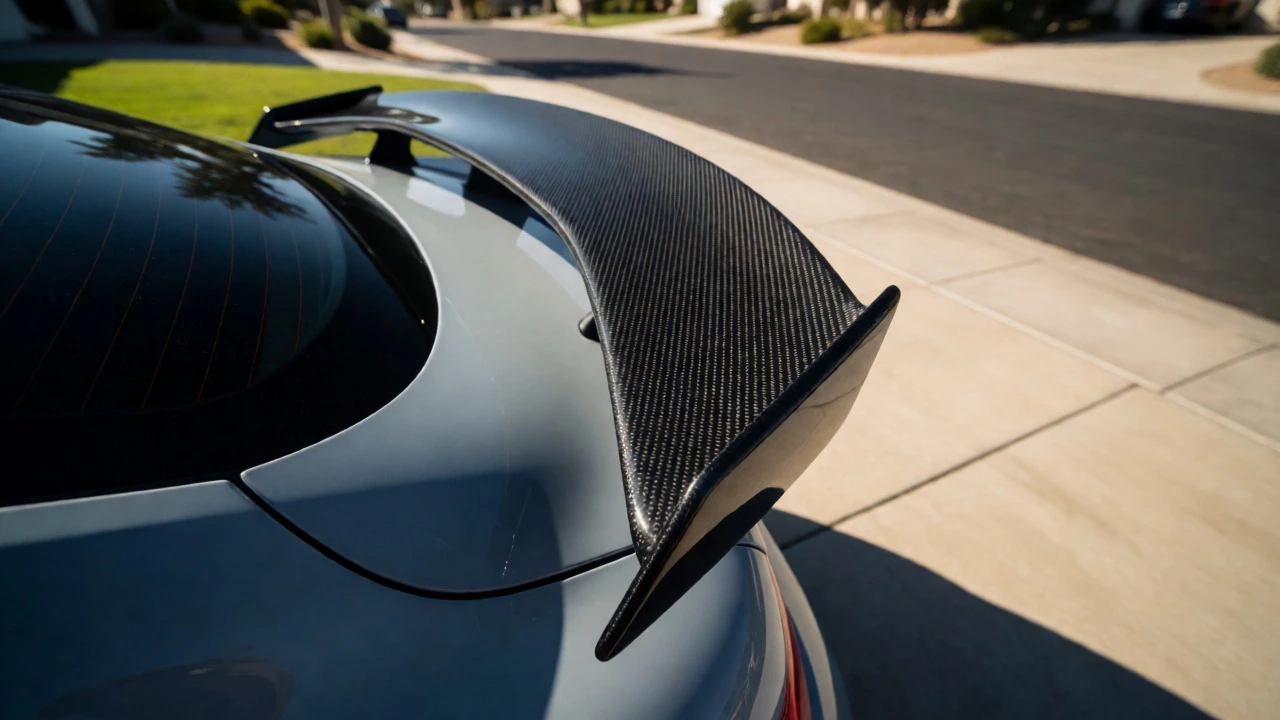
You don’t need X-ray equipment to check your spoiler. Regular visual inspections can save you thousands.
- The Tap Test: Gently tap the surface with a coin or key. Solid carbon produces a sharp, high-pitched "ting." Delaminated areas sound dull or hollow, like tapping on cardboard. Mark any dull spots with masking tape and monitor them.
- Check the Edges: Look closely at the cut edges of the spoiler. Are there frayed fibers? White powdery residue? This indicates moisture ingress or mechanical wear. Apply a fresh coat of edge sealer if you find issues.
- Inspect Mounting Points: Remove the spoiler periodically (if accessible). Check the bolt holes for elongation. If the holes look oval instead of round, the part is moving under load. Tighten bolts to manufacturer specs-over-torquing crushes the fibers, while under-torquing allows movement.
Repairability: Can You Fix It?
Yes, but it’s not always cost-effective. Small chips can be filled with epoxy and polished. Larger cracks require injecting resin into the fissure and clamping it until cured. For structural failures, like a snapped strut, professional repair shops can splice in new carbon layers and cure them with heat lamps.
However, if the clear coat is failing extensively (alligator cracking), refinishing the whole part is labor-intensive. Often, replacing the part is cheaper than repairing it, especially for mass-produced accessories. For custom, hand-laid parts, repair is usually preferred because the original mold might no longer exist.
Protecting Your Investment
You can’t prevent every rock strike, but you can significantly extend the life of your carbon fiber components.
- Coat It: Apply a high-quality ceramic coating or paint protection film (PPF) to the clear coat. This shields the resin from UV rays and minor abrasions.
- Wash Carefully: Avoid automatic car washes with rotating brushes. Those bristles can catch on lifted fibers or chips, ripping them open. Hand wash only.
- Watch the Heat: Keep carbon parts away from direct exhaust heat. Use heat wrap on exhaust pipes if necessary. Never rest hot tools on bare carbon.
- Torque Correctly: Use a torque wrench when installing. Follow the manufacturer’s specifications. Loctite blue threadlocker helps prevent bolts from vibrating loose.
Does carbon fiber rust?
No, carbon fiber itself does not rust because it is made of carbon atoms, not iron. However, the metal inserts used for mounting can rust if water gets inside the component through cracks or unsealed edges. Additionally, galvanic corrosion can occur if carbon fiber touches certain metals like aluminum in the presence of an electrolyte (water/salt).
Is carbon fiber stronger than steel?
By weight, yes. Carbon fiber has a much higher strength-to-weight ratio than steel. It is lighter and stiffer. However, in terms of absolute toughness and ability to absorb impact energy without breaking, steel is superior. Steel bends; carbon fiber snaps.
Can I drive with a cracked carbon fiber spoiler?
You can, but it is risky. A crack compromises structural integrity. At high speeds, wind load could cause the cracked section to detach, potentially damaging your car or becoming a road hazard. Inspect the crack size; if it is small and stable, you may proceed cautiously, but plan for immediate repair.
Why does my carbon fiber turn white?
This is called "crazing" or UV degradation. The clear coat or resin matrix breaks down under prolonged sun exposure, causing microscopic cracks that scatter light, appearing white. It can also happen if moisture penetrates the layers. Applying UV-protective coatings prevents this.
How long does a carbon fiber spoiler last?
With proper care, a high-quality carbon fiber spoiler can last the lifetime of the vehicle (10+ years). Budget parts with poor resin systems may degrade visibly within 3-5 years, especially if parked outdoors in harsh climates.