Air Filter Performance & Dust Protection Estimator
Recommended Filter Type
--Select your options and click "Analyze My Needs" to see the best filter choice for your vehicle.
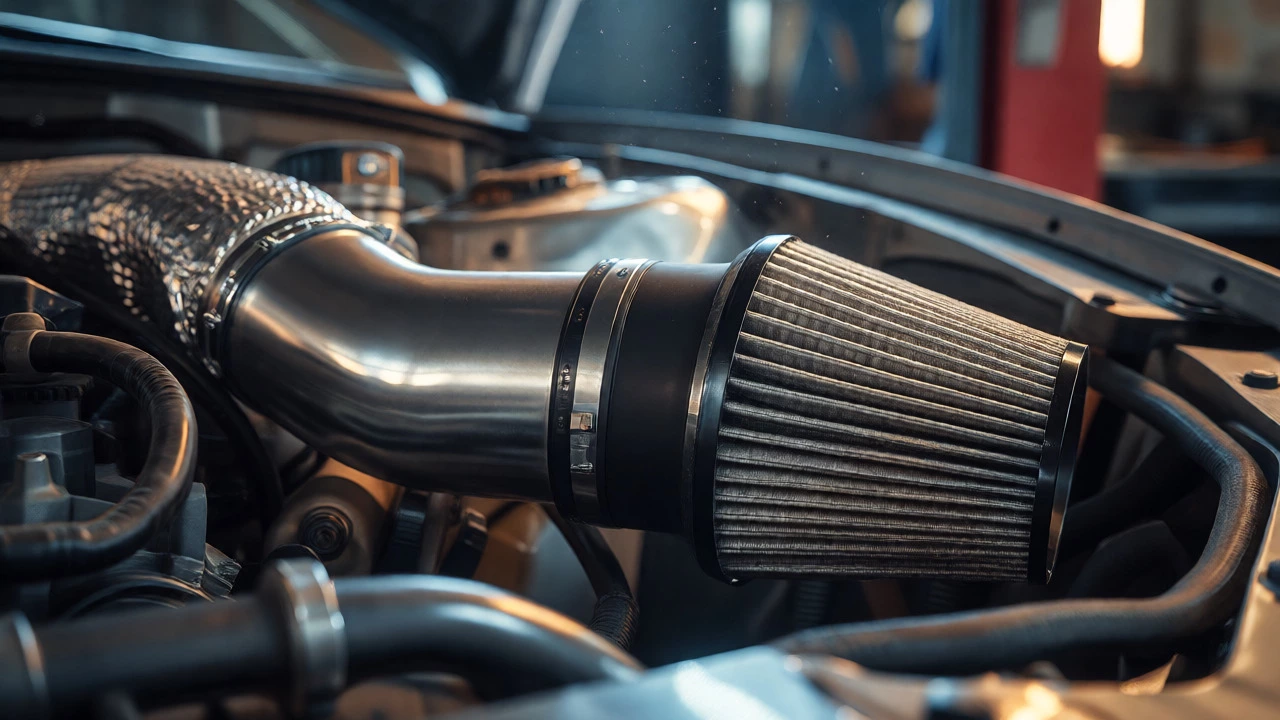
You just spent good money on a cold air intake and a shiny new heat shield. You want your car to breathe better, make more power, and sound aggressive. But there is a catch that many enthusiasts ignore until it’s too late: dust. Not all air filters are created equal when it comes to keeping dirt out of your engine. Some high-flow options let in so much air they also let in microscopic particles that can scour your cylinder walls over time. So, which filter actually removes the most dust while still letting you enjoy those performance gains?
This isn’t just about picking the shiniest cone in the shop. It’s about understanding how different materials trap particles, what "efficiency" really means, and why a standard paper filter might be beating your expensive aftermarket unit in the lab tests. If you’re driving daily, especially in dusty areas or construction zones, this choice matters for your engine’s longevity.
The Myth of "More Flow Equals Better Engine"
We need to clear up a misconception first. Many people think that if an aftermarket air filter flows more air, it’s automatically better for the engine. That’s only half true. Yes, less restriction helps horsepower. But if that unrestricted path lets in grit, you’re trading short-term power for long-term wear. Think of it like wearing sunglasses with no UV protection. They look cool, but they’re frying your eyes.
Dust particles range from visible sand grains to sub-micron silica. The dangerous ones are the tiny bits-often smaller than 10 microns-that bypass traditional barriers and embed themselves in oil rings and piston skirts. Over thousands of miles, this abrasive action increases internal friction and reduces compression. Your goal isn’t just flow; it’s filtration efficiency balanced with airflow.
How Different Filter Materials Handle Dust
To know which filter wins, you have to look at what it’s made of. There are three main contenders in the market today, each with distinct pros and cons regarding dust capture.
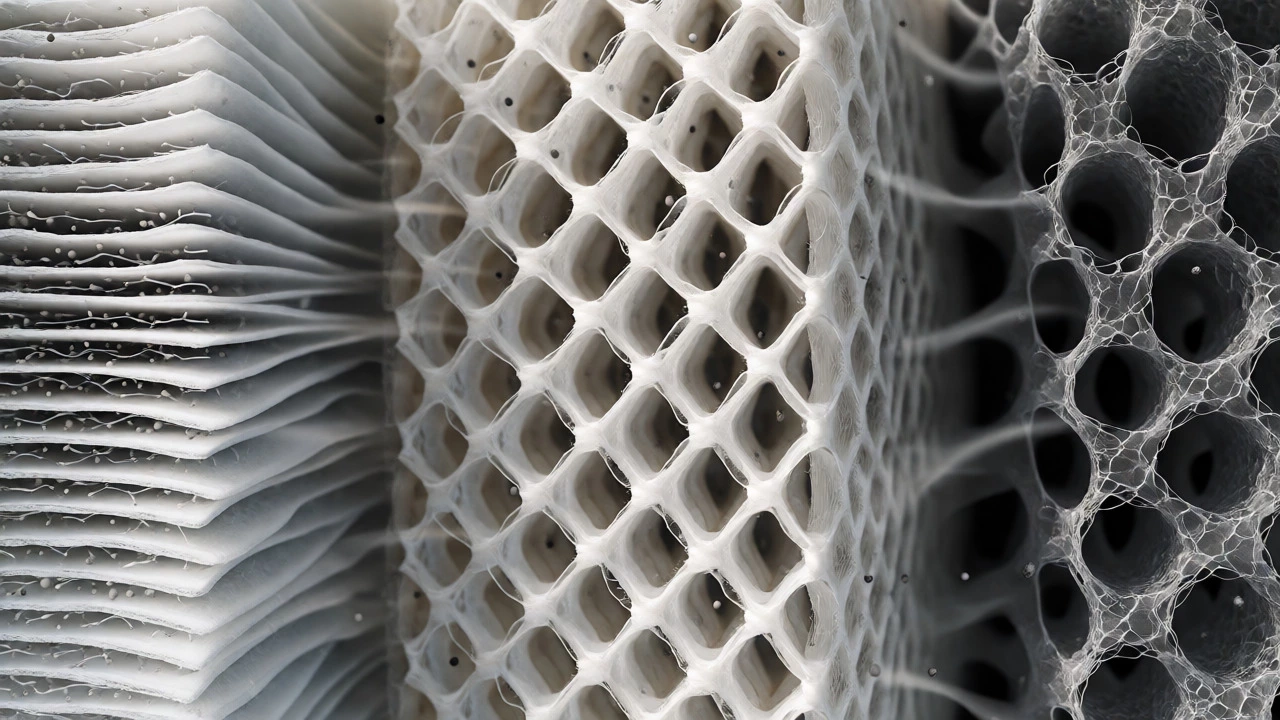
- Paper (Cellulose) Filters: These are the stock filters found in 90% of cars. They are incredibly efficient at trapping dust, often capturing over 99% of particles down to 5-10 microns. Why? Because the fibers are dense and layered. However, they clog faster and restrict airflow as they get dirty.
- Cotton Gauze (Washable): Brands like K&N popularized these. They use multiple layers of cotton gauze coated in oil. They allow significantly more airflow than paper. But here’s the kicker: independent tests often show lower initial efficiency, sometimes dropping to 95-98% for fine dust. The oil helps trap particles, but if it dries out or gets blown off by high velocity, dust sneaks through.
- Foam Filters: Common in off-road trucks and motorcycles. Foam is excellent at catching large debris like leaves and bugs. For fine dust, its performance varies wildly based on pore size. High-quality open-cell foam with proper oiling can match paper efficiency, but cheap foam acts more like a sieve.
If your primary concern is removing the most dust, paper filters generally win the raw numbers game. They are designed specifically for maximum particle capture, not maximum speed. But if you refuse to go back to stock, you need to look closer at premium cotton gauze options.
Understanding Micron Ratings and ISO Standards
When manufacturers claim "high efficiency," they aren’t always using the same yardstick. This is where things get tricky for the average buyer. You need to look for specific testing standards, primarily ISO 5011, which is the global standard for automotive air filter testing.
A filter might say it captures 99% of dust. But which dust? And how big? In technical terms, we look at beta ratios or efficiency curves. A top-tier filter will maintain high efficiency across a wide range of particle sizes. Cheaper filters might hit 99% on large particles (like 20+ microns) but drop to 85% on critical 5-micron particles. Those 5-micron particles are the killers.
| Filter Type | Airflow Restriction | Dust Holding Capacity | Fine Particle Efficiency (<10µm) |
|---|---|---|---|
| Standard Paper | High | Moderate | 99.5% |
| Premium Cotton Gauze | Low | High | 96-98% |
| Off-Road Foam | Medium | Very High | 94-97% |
| Nano-Fiber Synthetic | Low-Medium | High | 99.0% |
Notice the last row. Nano-fiber synthetic filters are becoming the sweet spot. They use engineered fibers thinner than traditional paper, creating a tortuous path that traps dust without blocking air. They offer near-paper efficiency with better durability and lower restriction.
Why Oil Matters More Than You Think
If you choose a washable cotton filter, the oil is not optional-it’s part of the filtration media. The sticky surface catches particles that would otherwise bounce off dry fibers. But there is a common mistake: over-oiling.
Too much oil doesn’t mean better cleaning. It means oil getting sucked into your Mass Air Flow (MAF) sensor. A dirty MAF sensor sends incorrect data to the ECU, causing poor fuel economy and hesitation. Worse, excess oil can coat the throttle body and intake valves, leading to carbon buildup.
On the flip side, under-oiling exposes bare cotton threads, allowing dust to pass straight through. Always follow the manufacturer’s spray pattern guidelines. If you see dark spots or drips after reassembly, you’ve applied too much. Wipe it down. The filter should feel slightly tacky, not wet.
The Real World Factor: Environment and Maintenance
Data sheets don’t account for reality. Your location dictates which filter is best. If you live in Phoenix, Arizona, or drive through agricultural fields in Iowa, your dust load is vastly different from someone in Seattle, Washington.
In high-dust environments, even the best filter needs more frequent attention. A cotton filter that lasts 50,000 miles in clean city traffic might need cleaning every 15,000 miles on gravel roads. Neglecting maintenance turns a high-efficiency filter into a low-efficiency one rapidly. Once the pores are clogged, airflow drops, and unfiltered air may force its way past seals.
Also, consider the housing. An open-element cone filter sitting in the engine bay sucks in hot air and loose debris from the radiator fans. Enclosed housings (like those in OEM setups or sealed intakes) protect the filter element itself. If you run an open pod, wrap it in a pre-filter sleeve during winter road salt season or spring pollen storms. It adds a layer of defense against large particulates before they reach the main media.
Top Contenders for Maximum Dust Removal
So, who actually wins in the real world? Based on aggregated test data and mechanic feedback, here is how the major players stack up for dust removal specifically.
- OEM Paper (e.g., Fram Extra Guard, Bosch Aerotwin): Unbeatable for pure cost-to-efficiency ratio. If you want the absolute least amount of dust entering your engine and don’t care about max horsepower, stick with these. Change them frequently.
- K&N Series 1000 (Cotton): The industry standard for performance. Recent improvements in their coating technology have boosted efficiency closer to 98%. Good balance, but requires strict maintenance discipline.
- BMC Race Filters (Cotton/Synthetic Hybrid): Often cited in dyno tests for having slightly higher filtration efficiency than competitors due to denser mesh layers. Excellent for track days where dust isn’t the primary enemy, but still solid for street use.
- AEM DryFlow (Synthetic Media): Uses a non-oiled synthetic material. No risk of oil blowing onto sensors. Efficiency is very high, often rivaling paper, with reusable benefits. Great for those who hate the mess of oiling.
For the enthusiast who wants both protection and performance, AEM DryFlow or similar synthetic nano-fiber options currently offer the best compromise between high airflow and superior dust capture compared to traditional oiled cotton.
Checklist Before You Buy
Before you click "add to cart," run through this quick audit:
- Do you drive in dusty conditions? If yes, prioritize efficiency over flow. Consider a dual-stage system or a high-quality pre-filter.
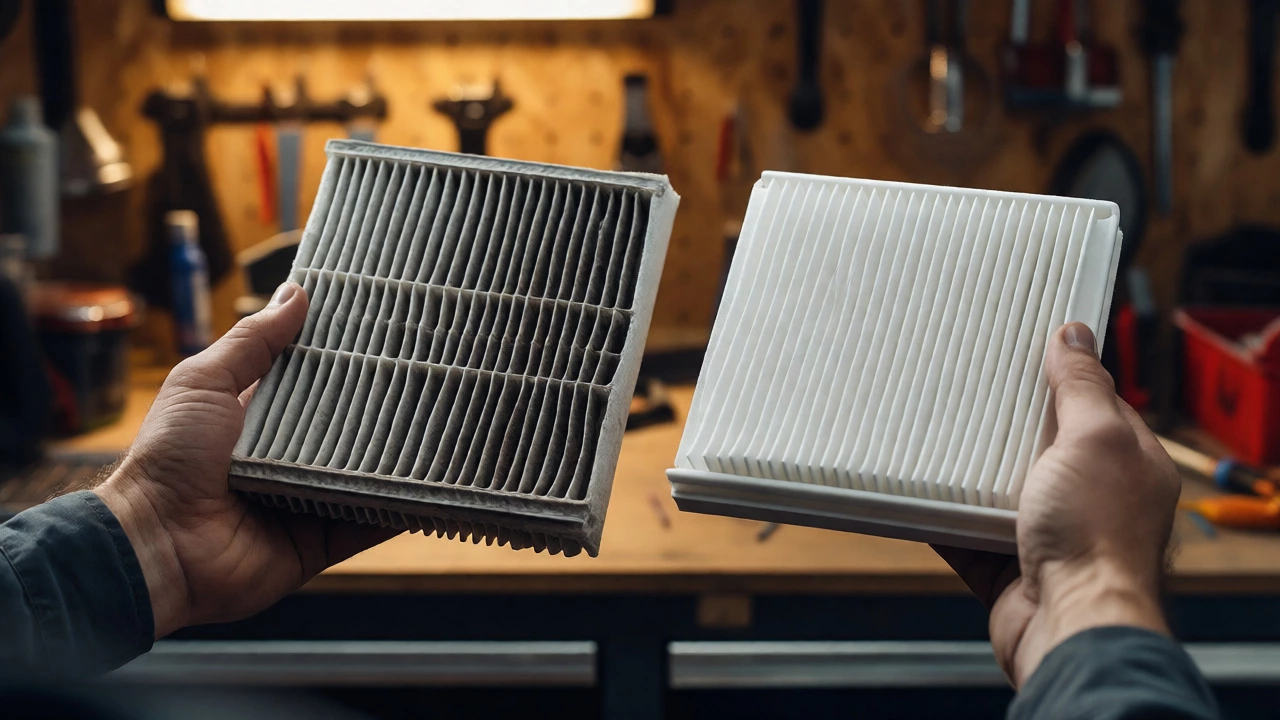
- Are you willing to clean the filter? If you won’t clean it properly, buy disposable paper. A dirty cotton filter is worse than a fresh paper one.
- Is your MAF sensor sensitive? If you’ve had issues with MAF errors, avoid heavily oiled filters. Go for dry synthetic or paper.
- What does your warranty require? Some dealerships argue that aftermarket filters void powertrain warranties if dirt damage occurs. Keep receipts and cleaning logs if you go aftermarket.
Ultimately, the filter that removes the most dust is the one that fits your lifestyle. For most daily drivers, a high-quality synthetic or premium paper filter provides the safest bet. For weekend warriors who don’t mind maintenance, modern cotton gauze has closed the gap significantly. Just remember: clean air makes power. Dirty air kills engines.
Does a high-flow air filter reduce engine life?
Not necessarily, provided it is maintained correctly. Modern high-quality cotton or synthetic filters have improved filtration efficiencies to nearly match paper. However, neglecting cleaning or using excessive oil can lead to increased wear or sensor issues, potentially reducing lifespan indirectly.
Is paper better than cotton for dust removal?
In laboratory settings, high-quality paper filters typically exhibit higher initial filtration efficiency for fine particles (under 10 microns) compared to standard cotton gauze. However, the difference is marginal in well-maintained systems. Paper is disposable and consistent; cotton is reusable but variable depending on user maintenance.
How often should I change my air filter?
For paper filters, follow your owner's manual, usually every 15,000-30,000 miles. For washable cotton/synthetic filters, inspect every 10,000 miles and clean as needed, typically every 50,000 miles. If you drive in dusty or unpaved conditions, halve these intervals.
Can a dirty air filter damage my engine?
Yes. A severely clogged filter restricts airflow, causing the engine to run rich (too much fuel), which fouls spark plugs and wastes gas. Conversely, if the filter is damaged or poorly sealed, unfiltered dust enters the combustion chamber, acting as an abrasive that wears down cylinders, pistons, and bearings.
What is the best filter for desert driving?
For desert or heavy dust environments, a two-stage filtration system is ideal. Use a high-capacity pre-filter (like a foam sleeve) combined with a high-efficiency main filter (premium paper or high-density synthetic). Regular inspections are crucial, as dust loads accumulate faster than in urban settings.