Car Sound Modification Simulator
Select Your Modification
Choose a part to see how it affects your car's volume compared to stock.
Simulation Result
-- dB
Waiting for input...
Pop the hood of your car and swap out that paper factory filter for a shiny oiled cotton gauze one. You start the engine, expecting a roar like a V8 muscle car from the 1970s. Instead, you hear... exactly what you heard before. Maybe slightly less muffled. But definitely not louder.
This is the single biggest myth in the world of performance air filters is an aftermarket automotive component designed to increase airflow into the engine compared to standard restrictive paper filters. Marketing brochures promise aggressive induction noises and sporty exhaust-like growls. In reality, unless you are changing more than just the filter, your neighbors won’t notice a thing. Here is why that happens, and what you actually need to do if you want that deeper, angrier sound.
The Physics of Engine Noise: Where It Actually Comes From
To understand why swapping a filter rarely changes volume, we have to look at where engine noise originates. An internal combustion engine creates sound through two main pathways: the intake system (air going in) and the exhaust system (gas coming out).
Most of the loud, throaty rumble you associate with high-performance cars comes from the exhaust. The exhaust system is designed to manage backpressure and tune harmonics. When you rev the engine, pressure waves travel down the exhaust pipes. If those pipes are wide and straight, the sound escapes freely. This is why people install cat-back exhausts or downpipes to get louder.
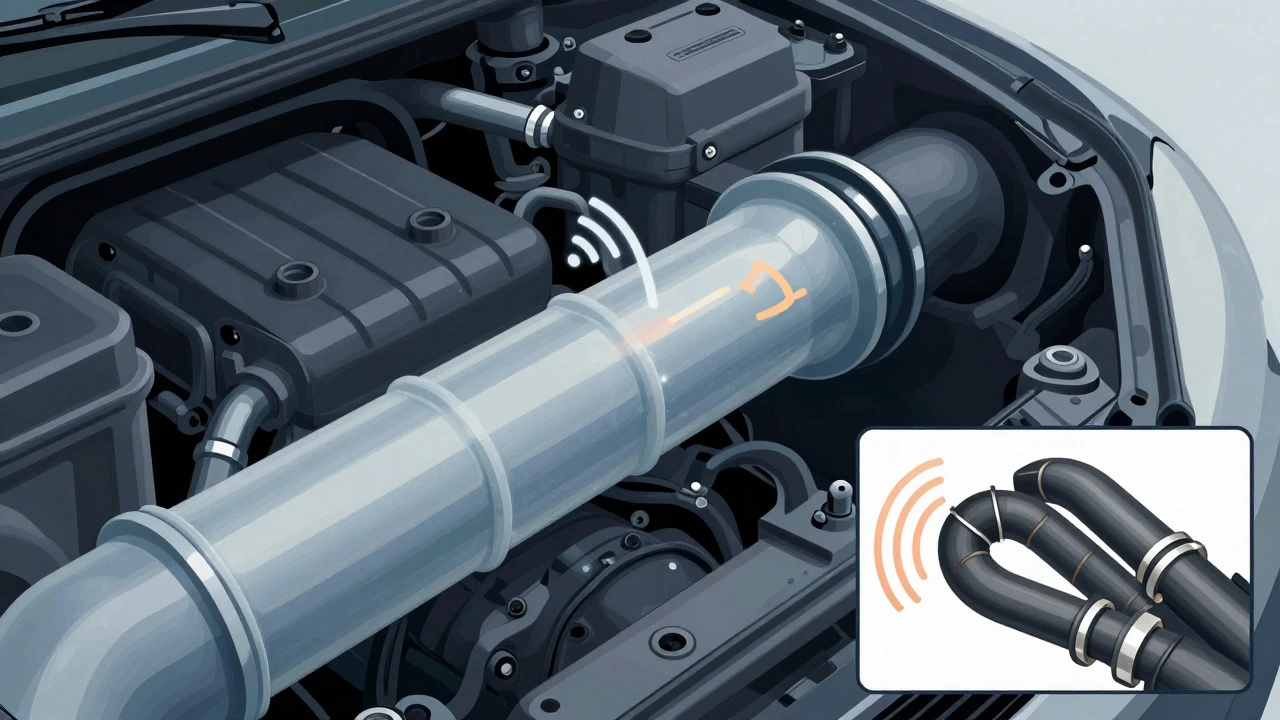
The intake side is different. The engine sucks air in through the throttle body. This process does create noise, often described as a "whoosh" or a subtle whine under hard acceleration. However, the stock intake tube acts as a resonator and a silencer. It is long, curved, and made of thick plastic to dampen vibrations and block noise from reaching the cabin or the outside world.
When you install a drop-in performance filter is a reusable air filter that fits directly into the existing factory air box without removing other components., you are keeping all that heavy-duty plumbing intact. The air still has to travel through the same long, muffling tubes. The only thing that changes is the material the air passes through at the very end of the journey.
Drop-In Filters vs. Cold Air Intakes
There is a massive difference between a drop-in filter and a full cold air intake system, and this distinction matters greatly for sound levels.
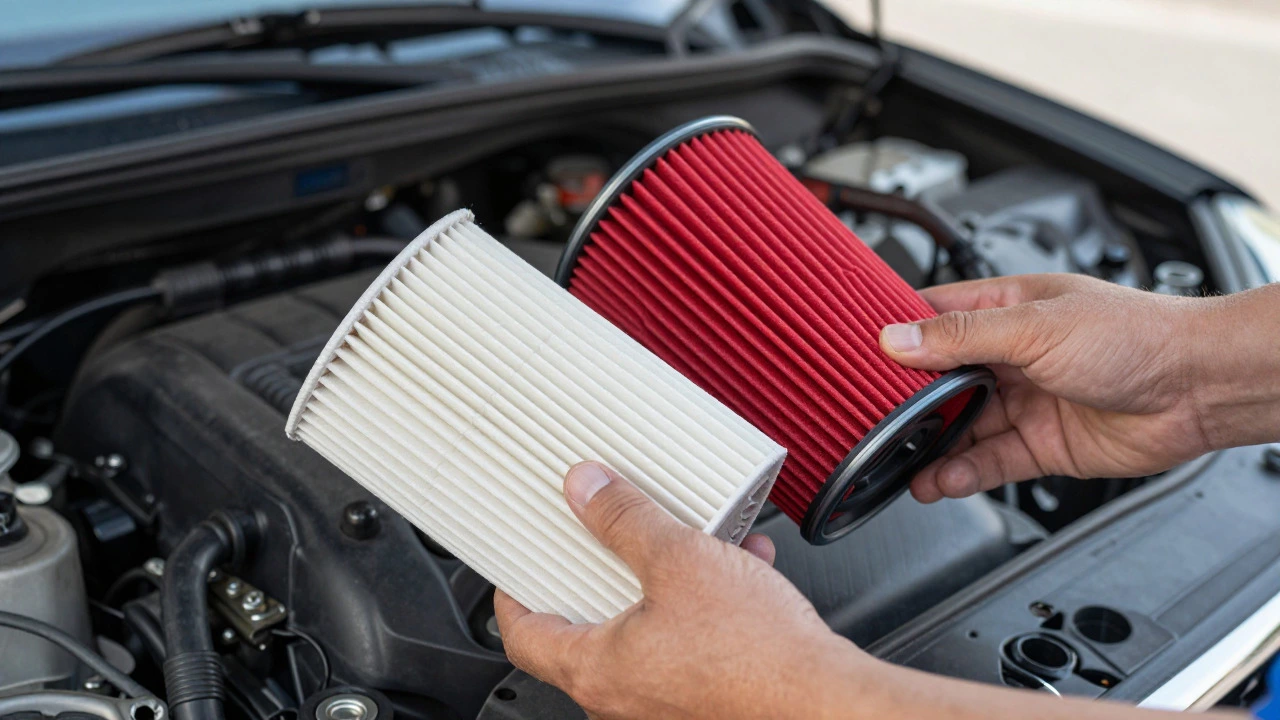
A drop-in filter replaces only the media inside the factory air box. Brands like K&N is a leading manufacturer of high-flow reusable air filters known for their red oiled cotton gauze construction. or AEM make these popular because they are easy to install. You open the clamp, pull out the old paper filter, put in the new one, and close it up. Since the factory air box remains sealed, the acoustic properties of the intake path stay largely unchanged. You might hear a tiny bit more turbulence noise at wide-open throttle, but it is negligible for most drivers.
A cold air intake, on the other hand, replaces the entire air box and tubing. These systems use shorter, smoother pipes to reduce restriction. Because the pipe is often shorter and lacks the complex baffles of the factory design, it can transmit more noise. Some cold air intakes include a resonator chamber specifically to keep noise down, while others remove it entirely for maximum flow-and maximum noise. Even then, the increase is usually a higher-pitched whine rather than a deep roar.
| Modification Type | Installation Difficulty | Sound Change Level | Primary Benefit |
|---|---|---|---|
| Stock Paper Filter | N/A | None | Cheapest option, adequate filtration |
| Drop-In Performance Filter | Easy (5-10 mins) | Minimal to None | Reusable, slight airflow improvement |
| Cold Air Intake System | Moderate (1-2 hours) | Noticeable (Whine/Whoosh) | Better airflow, potential power gain |
| Exhaust System Upgrade | Hard (Professional recommended) | Significant (Roar/Rumble) | Major sound change, weight reduction |
Why Do Some People Say Their Car Got Louder?
If you browse forums, you will see claims that a simple filter swap made their car sound aggressive. There are three reasons for this perception error.
First, confirmation bias plays a huge role. You spent money on a performance part. You want it to do something visible or audible. Your brain starts listening for any change. The normal idle noise of the engine, which you previously ignored, now sounds "different" because you are hyper-aware of it.
Second, some vehicles have poorly designed factory intake systems that leak air. If the rubber couplers around the throttle body are cracked or loose, unmetered air enters the engine. This can create a vacuum hiss or whistle. Replacing the filter might involve tightening clamps or resealing the air box, which could inadvertently fix a leak. Paradoxically, this makes the car quieter, not louder. But sometimes, if the new filter doesn't seal perfectly, it might let in a bit more turbulent noise.
Third, modern engines are incredibly quiet. They are balanced to perfection and insulated with foam and plastic covers. Any small change in airflow dynamics can be perceived as a significant shift in an otherwise silent environment. A slight increase in induction noise during hard acceleration might feel dramatic to the driver, even if a passenger in the back seat hears nothing.
The Role of Material: Oiled Cotton vs. Dry Paper
The material of the filter itself affects how air moves through it, which indirectly influences sound. Stock filters are made of pleated paper. They are dense and restrictive by design to catch microscopic dust particles. This density also absorbs sound waves.
Oiled cotton gauze filters is a multi-layer mesh material coated with oil that traps dirt while allowing greater airflow than paper. used in many performance filters are less restrictive. Air moves through them faster and with less resistance. Less resistance means less damping of the airflow noise. Think of it like speaking through a thick towel versus a thin sheet. The towel muffles your voice; the sheet lets it pass through more clearly. The oiled cotton is the thin sheet. It allows the natural sound of the air rushing into the engine to be transmitted more faithfully, but it does not amplify it.
Dry synthetic filters, often used in racing applications, behave similarly. They offer high flow rates and minimal sound dampening. However, without the oil coating, they can be noisier in terms of debris ingestion if not maintained properly, but acoustically, they still rely on the surrounding piping to determine the final output volume.
How to Actually Get That Aggressive Sound
If your goal is a louder, more aggressive engine note, a performance air filter is the wrong tool for the job. You need to target the exhaust system or modify the intake structure significantly.
For exhaust upgrades, consider a performance muffler or a cat-back system. These components replace the restrictive stock mufflers with larger chambers and perforated tubes that allow sound waves to escape more freely. Brands like Borla, MagnaFlow, and Borla offer options ranging from mild to wild. This is where you get the deep rumble and the crackle on deceleration.
If you are set on intake noise, you need a true cold air intake with a removed resonator. Look for systems that advertise "induction noise" as a feature. These systems often use a large-diameter cone filter exposed to the engine bay. The lack of an enclosing box means the sound of the air being sucked in is much more pronounced. Be aware, though, that this can introduce water ingestion risks in heavy rain and may trigger check engine lights due to mass airflow sensor discrepancies.
Another option is a throttle body spacer or a resonator delete kit, though these are niche modifications with diminishing returns. The most effective way to change your car's personality audibly is through the exhaust. The intake contributes to the character, but the exhaust dictates the volume.
Pros and Cons of Expecting Sound Changes
Understanding what a performance filter does and doesn't do helps manage expectations. Here is a quick breakdown of what you should anticipate regarding sound and performance.
- Realistic Expectation: You will likely hear zero difference in daily driving. At best, you might notice a slight whoosh when flooring the gas pedal on an empty road.
- Power Gains: On naturally aspirated engines, power gains from a drop-in filter are often less than 1 horsepower. Turbocharged engines may see slightly better response due to reduced restriction, but again, not enough to move the needle significantly.
- Maintenance: Oiled filters require cleaning every 50,000 to 100,000 miles. If you over-oil them, the excess oil can contaminate your Mass Air Flow (MAF) sensor, causing rough idling and poor fuel economy. This is a common pitfall for beginners.
- Filtration Efficiency: While performance filters are good, they are generally less efficient at filtering fine dust than high-quality paper filters. If you drive in dusty environments, you risk letting grit into your engine cylinders.
Is It Worth It Just for the Sound?
Short answer: No. If sound is your primary motivation, save your money. A $50-$150 drop-in filter will not transform your sedan into a sports car. You would be better off investing in a quality exhaust tip or a mid-pipe upgrade, which offers a much higher return on investment for auditory satisfaction.
However, if you value convenience, reusability, and the psychological boost of owning a performance part, a filter swap is a great entry-level modification. It teaches you how to work on your car, improves airflow marginally, and looks cool under the hood. Just don't expect your wife to complain about the noise level after the swap.
Troubleshooting Unusual Noises After Installation
Sometimes, installing a performance filter introduces new problems that manifest as noise. If your car suddenly starts making strange sounds after the swap, check these common issues.
- Vacuum Leaks: Ensure the air box lid is seated correctly. Rubber gaskets can shift during installation. A hissing sound under acceleration usually indicates unmetered air entering the engine. Tighten all clamps securely.
- Loose Components: Check that the filter isn't rattling against the air box walls. Use zip ties or Velcro straps to secure the filter in place if necessary.
- MAF Sensor Contamination: If the engine runs rough and makes a chugging noise, you may have over-oiled the filter. Clean the MAF sensor with specialized cleaner and reinstall the filter with a thinner layer of oil.
- Intake Tube Resonance: In rare cases, the new filter's shape can alter the harmonic resonance of the intake tube, creating a drone at specific RPMs. This is usually harmless but annoying. Switching to a different brand or style of filter may resolve it.
Will a K&N filter make my car louder?
A drop-in K&N filter will likely make little to no noticeable difference in volume. While it allows more airflow, the factory intake piping still muffles the sound. You might hear a slight increase in induction noise at wide-open throttle, but it is not a significant change.
What is the best way to make my car louder?
The most effective way to increase engine noise is upgrading the exhaust system. Cat-back exhausts, performance mufflers, or axle-back systems provide the most dramatic sound changes. Intake modifications contribute less to overall volume.
Do cold air intakes make more noise than drop-in filters?
Yes, cold air intakes typically produce more audible induction noise because they replace the factory air box and resonators. However, the sound is usually a high-pitched whine rather than a deep roar, and the increase varies by vehicle and intake design.
Can a dirty air filter affect engine sound?
A severely clogged air filter can cause the engine to run rich, leading to misfires or rough idling, which may alter the engine's sound. However, simply replacing a dirty filter with a clean one restores normal operation rather than increasing volume.
Is it worth buying a performance air filter for sound?
No, if sound is your only goal, a performance air filter is not cost-effective. The acoustic changes are minimal. Invest in exhaust modifications for a noticeable difference in engine note and volume.