
Oiled Air Filter Health & Risk Calculator
Enter your filter details below to assess the current filtration efficiency and potential risks to your engine.
You spent good money on a performance air filter. It promises more horsepower, better throttle response, and that satisfying induction roar. But here is the catch most people ignore: it’s not a "set it and forget it" part like your stock paper filter. If you skip the oiling step after cleaning, or if you let the existing oil dry out completely, you aren’t just losing performance-you’re actively inviting disaster into your engine.
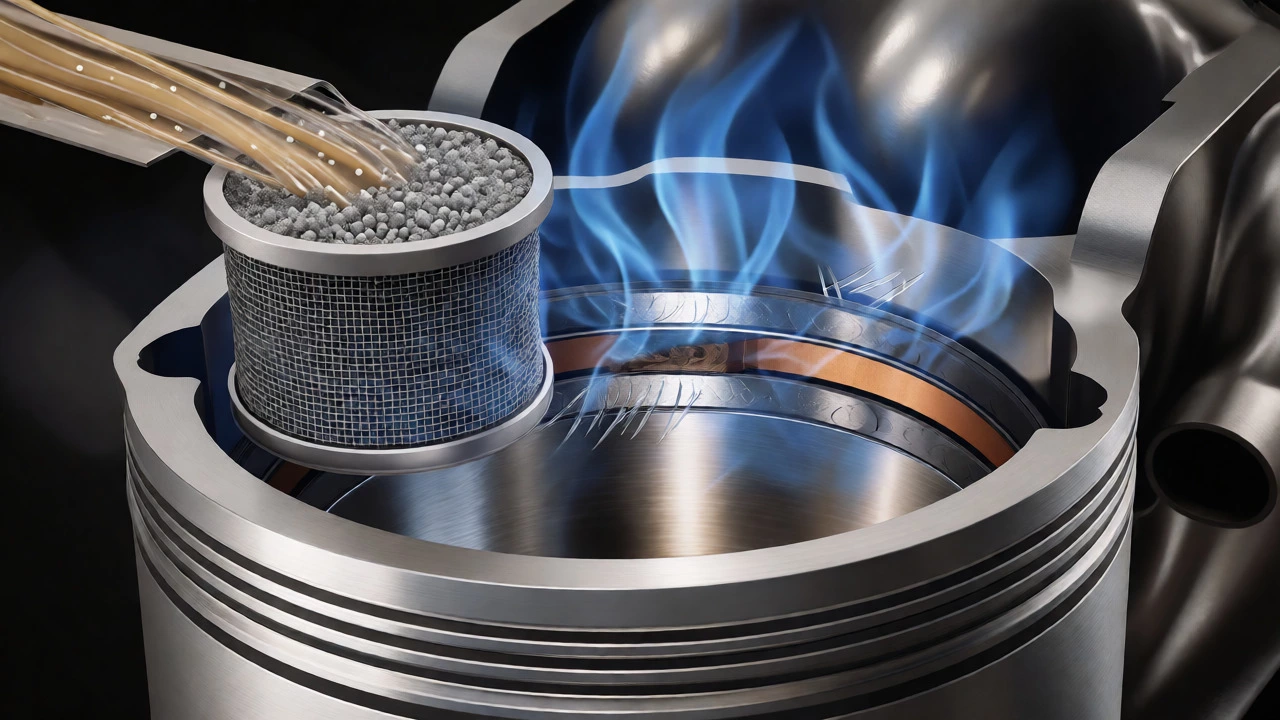
Think of an oiled cotton gauze filter as a sticky trap. The oil isn’t there to lubricate moving parts; it’s there to grab dirt. Without that tacky surface, the filter becomes little more than a mesh sieve. Dust particles, road grit, and pollen slide right through the cotton fibers and straight into your intake manifold. From there, they go where all air goes: into your combustion chambers. And unlike fuel, dirt doesn’t burn up. It stays put, grinding against metal surfaces with every piston stroke.
The Immediate Impact: Loss of Filtration Efficiency
When you run a dry oiled filter, the primary job-filtration-fails. A properly oiled K&N or similar high-flow filter relies on a specific viscosity of synthetic oil to capture particles as small as 5 microns. When that oil evaporates or washes away, the filtration efficiency drops from around 98% to nearly zero for fine particulates.
You might think, "It’s just dust." But in automotive terms, "dust" includes silica (sand), which is harder than steel. Silica is the main component of sandpaper. Imagine running your engine while someone gently sprinkles sandpaper dust into the intake. That’s essentially what happens. The larger particles get caught by the mesh, sure, but the microscopic abrasive stuff passes right through because there’s no sticky medium to hold it.
Engine Wear: The Silent Killer
The real cost isn’t immediate; it’s cumulative. Once those unfiltered particles enter the engine, they cause two main types of damage:
- Cylinder Wall Scoring: Piston rings rely on a tight seal against the cylinder wall. Abrasive dust creates micro-scratches (scoring) on the walls. Over time, this increases blow-by, reduces compression, and leads to power loss.
- Bearing Damage: Tiny particles can make their way past the rings into the oil system. They circulate and act like lapping compound on your crankshaft and camshaft bearings. This accelerates wear exponentially, especially under high RPMs.
A study by the Society of Automotive Engineers (SAE) has long established that abrasive wear is one of the top causes of premature engine failure. While modern engines are built tighter than ever, they have less tolerance for debris. A 0.001-inch gap between a bearing and its journal can become a problem if filled with silica dust. Running a dry filter turns your expensive performance upgrade into a cheap, ineffective screen that lets contaminants destroy the very engine you’re trying to protect.
Mass Air Flow Sensor Contamination
This is perhaps the most annoying side effect of skipping the oil-or worse, over-oiling a dry filter that suddenly gets re-oiled improperly. Modern cars use a Mass Air Flow (MAF) sensor to measure how much air enters the engine. The ECU uses this data to calculate exactly how much fuel to inject.
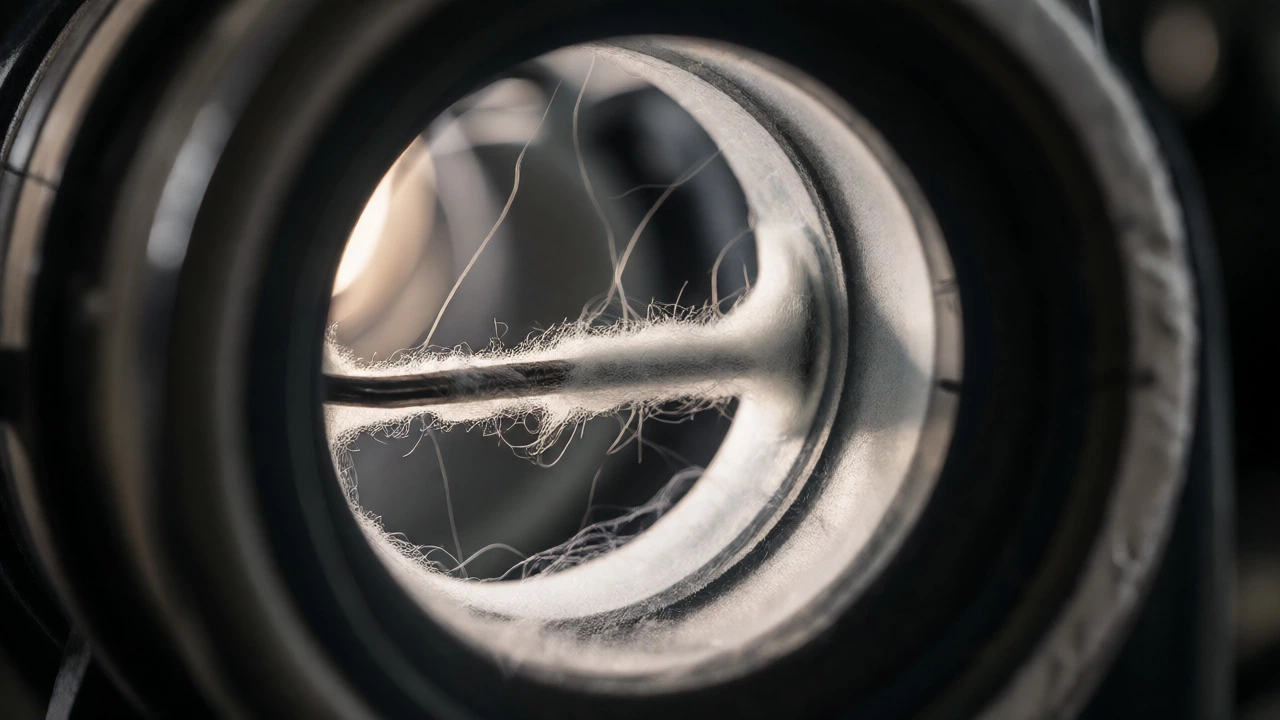
If your filter is dry, it sheds cotton fibers. These tiny hairs drift downstream and coat the delicate hot wire of the MAF sensor. A dirty MAF sensor reads incorrectly. It might tell the computer there’s less air coming in than there actually is, causing the engine to run rich (too much fuel). Or it might read too much air, causing a lean condition.
The symptoms? Rough idling, hesitation during acceleration, poor fuel economy, and eventually, a Check Engine Light. Replacing a MAF sensor costs anywhere from $100 to $300+ depending on the car. All because you didn’t spend five minutes applying filter oil.
How to Spot a Dry Filter
You don’t need a lab test to know if your filter is dry. Visual and tactile checks work perfectly:
- Color Check: Most oiled filters (like K&N) turn red or orange when properly serviced. If your filter looks white, beige, or faded yellow, the oil has likely degraded or washed off.
- Tactile Test: Gently touch the outer edge of the filter element (not the center mesh, which supports the structure). It should feel slightly tacky. If it feels dry, powdery, or slick without stickiness, it needs oil.
- Age Check: Even if it looks okay, oil degrades over time due to heat cycles. If it’s been more than 6-12 months since your last service, check it regardless of appearance.
| Feature | Properly Oiled Filter | Dry/Old Filter |
|---|---|---|
| Filtration Efficiency | ~98-99% | <50% (Fine particles pass through) |
| Dust Capture Method | Adhesion via synthetic oil | Mechanical blocking only (mesh) |
| MAF Sensor Risk | Low (if not over-oiled) | High (cotton shedding) |
| Engine Longevity | Neutral/Positive | Negative (Accelerated wear) |
| Cost of Neglect | $10-$20 per service | $500-$5,000+ (Engine repairs) |
Common Misconceptions About Filter Oil
Some drivers argue, "My mechanic said I don’t need to oil it," or "I’ll just use motor oil." Both are dangerous habits.
Motor oil is not filter oil. Motor oil is designed to stay liquid at high temperatures and resist oxidation. Filter oil is specifically formulated to be extremely tacky and resistant to evaporation under hood heat. Using regular motor oil can lead to clogging because it breaks down faster or flows differently, potentially coating the MAF sensor heavily.
"I cleaned it with solvent, so it’s clean." Cleaning removes dirt, but it also strips all the oil. A clean filter is a dry filter. Unless you apply fresh oil immediately after drying, you’ve just created a high-flow vacuum cleaner hose that catches nothing.
Step-by-Step: What to Do If You Find a Dry Filter
If you inspect your filter and find it dry, don’t panic. Here’s how to fix it correctly:
- Remove the Filter: Take it out of the housing. Inspect the rubber seals for cracks. Replace them if necessary.
- Clean (If Dirty): If there’s visible dirt, wash it with a dedicated filter cleaner. Rinse thoroughly and let it air dry completely. Never use compressed air, as it can tear the cotton gauze.
- Apply Oil: Use a spray bottle of dedicated filter oil. Apply it lightly to the outer edges first, then mist the inner folds. You want a uniform color change (usually red/orange).
- Wipe Excess: This is critical. Too much oil is just as bad as none-it ruins the MAF. Let it soak for 20 minutes, then wipe off any pooling oil with a clean cloth. The filter should look colored but not dripping wet.
- Reinstall: Put it back in the housing, ensuring the rubber gasket seats properly to prevent unmetered air leaks.
When to Replace Instead of Re-Oil
Not all dry filters can be saved. If the cotton gauze is torn, brittle, or crumbling, oil won’t help. Cotton fibers degrade over years of heat cycling. If you see tears larger than a pinhead, or if the material feels crunchy rather than flexible, replace the filter. A damaged filter allows large chunks of debris to enter the engine, which can cause catastrophic valve or piston damage.
Can I drive my car with a dry oiled air filter?
Yes, you can drive it, but you shouldn’t. Driving with a dry filter means you are ingesting unfiltered air. For short trips, the risk is low. However, prolonged driving, especially in dusty conditions, will accelerate engine wear and likely contaminate your Mass Air Flow sensor, leading to rough running and potential repair bills.
How often should I oil my performance air filter?
Typically, you should clean and re-oil your filter every 30,000 to 50,000 miles, or once a year, whichever comes first. Always check the manufacturer's recommendation. High-dust environments may require more frequent servicing. Visually inspect it every few months; if it looks dry or faded, service it.
Does using too much oil hurt the engine?
Excess oil doesn’t usually hurt the engine internals directly, but it severely affects the Mass Air Flow (MAF) sensor. Oil coating the MAF sensor causes inaccurate readings, leading to poor fuel mixture, rough idling, and reduced performance. In extreme cases, it can foul spark plugs. Always wipe off excess oil after application.
Can I use WD-40 instead of filter oil?
No. WD-40 is a solvent and light lubricant, not a high-tack adhesive. It evaporates quickly and lacks the viscosity needed to trap fine dust particles. Using it will leave your filter effectively dry within days and may leave residues that attract dirt without trapping it effectively.
Will a dry filter void my warranty?
Generally, aftermarket air filters do not void vehicle warranties under the Magnuson-Moss Warranty Act, provided they don’t cause the failure. However, if you neglect maintenance and the resulting dirt ingestion damages the engine, the manufacturer might argue lack of proper maintenance caused the issue. Proper upkeep protects both your engine and your warranty claim.
Final Thoughts
An oiled air filter is a performance part that demands respect. It’s not magic; it’s engineering. The oil is the active ingredient that makes the filtration work. Skipping it turns your premium investment into a liability. Treat it like any other critical fluid in your car-check it, maintain it, and don’t assume it’s working just because it’s installed. Your engine will thank you with smoother power and a longer life.